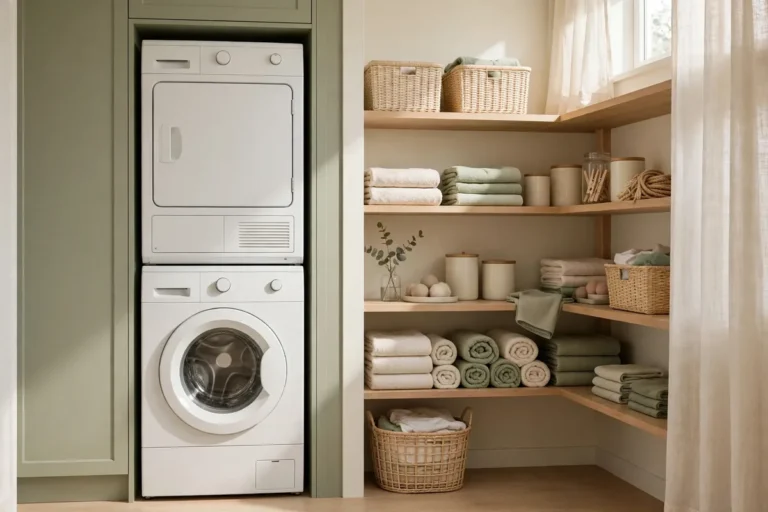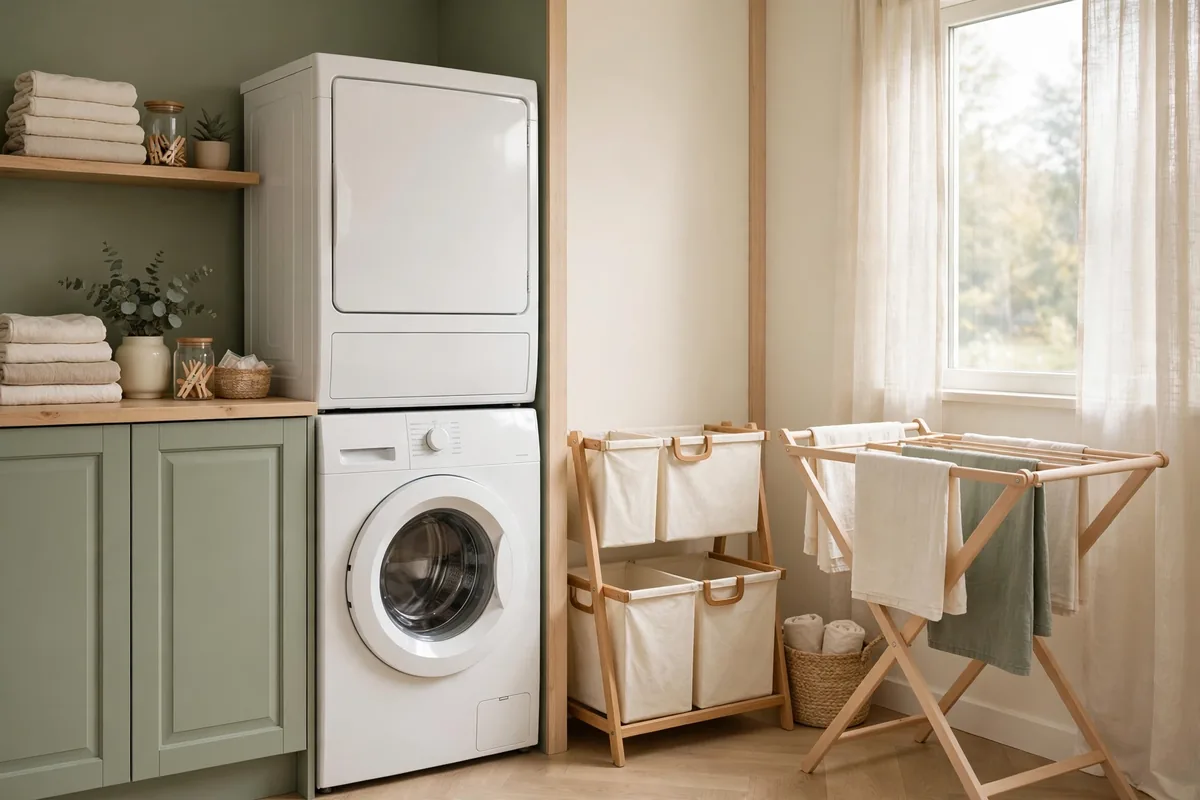
The laundry room in my second rental was a laundry closet with delusions of grandeur: a washer, a dryer, and a door that only opened if you pressed yourself against the dryer. The ironing board lived behind the door, the detergent lived on top of the dryer, and everything else lived on the floor. It worked, technically, but every load felt like a negotiation.
Small laundry rooms do not need more space. They need every surface assigned a job and nothing on the floor that does not have to be there. This guide works zone by zone: the machines, the walls, sorting, drying, and supplies. Most ideas cost under $35, and the whole room can be transformed in a weekend. Here is what actually works.
Treat the Machine Tops as Counter Space

In a small laundry room, the tops of the washer and dryer are the biggest flat surfaces you have. Treat them like counters, not shelves. A non-slip mat or a shallow tray ($10 to $15) across the top of each machine keeps detergent bottles from walking off during the spin cycle and gives you a defined spot for the laundry basket.
The rule is simple: active load only. The basket for the load in progress lives on top; everything else lives somewhere else. Machine tops that become permanent storage eat your folding space, and folding space is the scarcest resource in a small laundry room.
Front-loaders make this easy since the tops are flat and stable. Top-loaders need the lid clear, so keep one machine top fully empty and use the other for supplies. Know which machine needs clearance and plan around it.
Vibration walks things off machine tops, so give bottles a corral. A shallow tray with a lip, or a strip of museum putty under the detergent bottle, stops the slow migration toward the edge during the spin cycle. It is a small fix for the mysterious crashes you hear from the next room.
One Sturdy Shelf Above the Machines
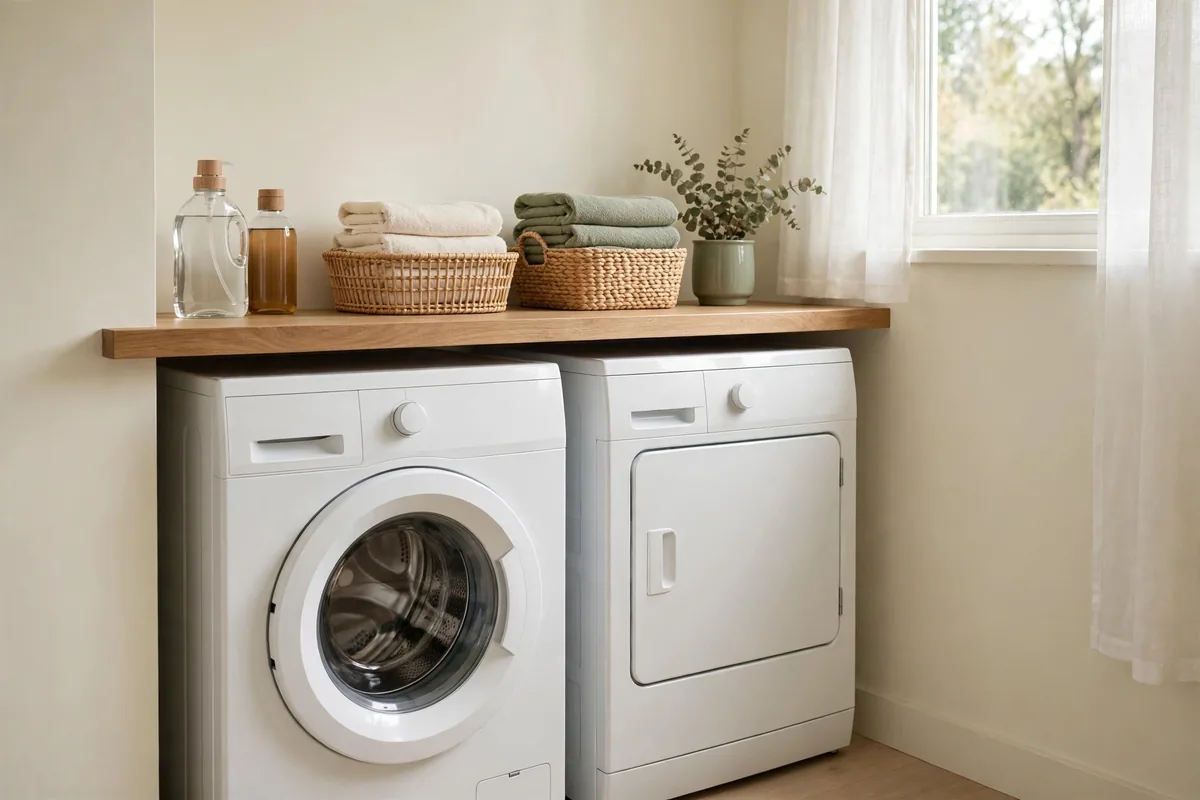
The wall above the washer and dryer is the highest-value real estate in the room. A single sturdy shelf ($20 to $30, mounted into studs) holds detergent, stain remover, dryer sheets, and the baskets you reach for every load. One deep shelf beats three shallow decorative ones; this is a workroom, not a gallery — the same go-vertical logic behind our reach-in closet organization ideas.
Keep the everyday items at the front edge and the backups behind. Detergent you use weekly lives where your hand lands without looking; the spare bottle lives behind it. When the front bottle empties, the backup slides forward, and the shopping list writes itself.
Do not let the shelf become the junk shelf. It is tempting to park the light bulbs and the gift wrap up there because it is out of the way, but a laundry shelf full of non-laundry items stops being useful. If it is not used on laundry day, it lives somewhere else.
A Fold-Down Drying Rack on the Wall
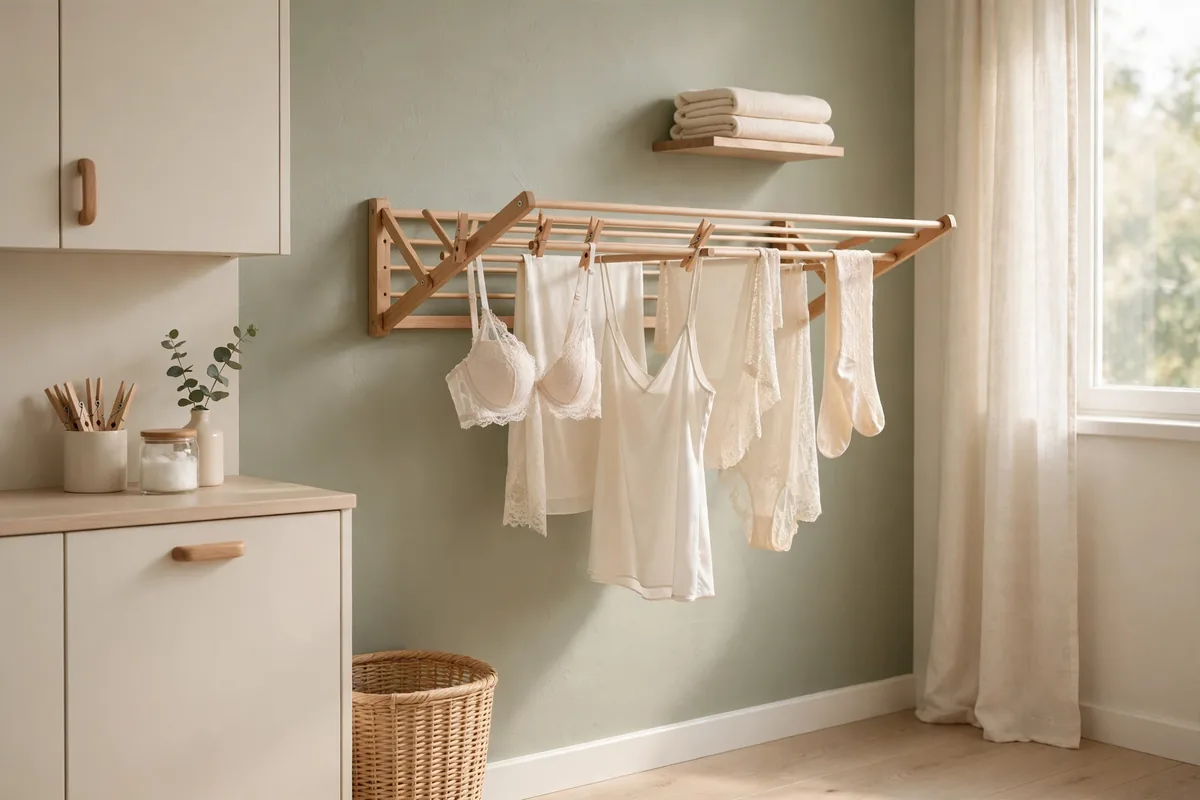
Air-dry items need a home that does not eat floor space. A wall-mounted fold-down drying rack ($25 to $40) gives you several feet of drying bars that disappear flat against the wall when the load is done. Hang it on the wall opposite the machines or on the back of the door.
Size it to your actual delicates load, not your ambitions. Most households air-dry five to ten items per week: bras, sweaters, the good jeans. A two-bar rack handles that easily. If you regularly air-dry more, get the wider model rather than draping extras over the shower rod.
Let the rack dry the room too. Wet laundry raises humidity fast in a small space, so leave the door open or the fan running while things dry. A $15 humidity-sensing plug for the exhaust fan automates the whole thing.
Sort at the Source With a Multi-Bag Hamper

Sorting on laundry day is the chore everyone hates, so stop doing it on laundry day. A two- or three-bag rolling sorter ($30 to $45) in the laundry room lets every load arrive pre-sorted: lights, darks, and delicates or towels. You wheel the right bag to the machine and start.
Keep the sorter where dirty laundry actually lands. If the bedrooms are upstairs and the laundry is in the basement, put a small hamper upstairs and the sorter by the machines. The system has to match the house’s traffic pattern or nobody follows it.
The Slim Rolling Cart for the Gap

Almost every laundry setup has a dead gap: between the machines, or between the machine and the wall. If your whole laundry lives in a closet, our guide to organizing a laundry closet adapts these ideas to stacked machines and bi-fold doors. A slim rolling cart ($25 to $35, the 6-to-8-inch-wide kind) slides into that gap and holds detergent pods, stain sticks, dryer sheets, and the lint roller in tiered shelves. Pull it out when you need something, push it back when you do not.
Measure the gap before you order. Gaps vary from 5 inches to a full foot, and carts come in fixed widths. A cart half an inch too wide is a sculpture, not storage. Measure twice, and measure at both the front and back since walls are rarely straight.
Decant Detergent Into Pump Bottles

Those giant detergent jugs are designed for the store shelf, not your shelf. Decanting liquid detergent into a pump bottle ($10 to $15 for a good one) and pods into a lidded jar turns a cluttered shelf into a tidy row — the same decant-and-label system we use when organizing a small bathroom. You also stop over-pouring, which is what those giant caps are secretly designed to make you do.
Label everything you decant. Detergent, fabric softener, and stain remover all look identical in matching bottles, and grabbing the wrong one mid-load is a mistake you make exactly once. A label maker or even masking tape and a marker does the job.
Keep the original bottles for the refill info. Store them under the sink or on a high shelf with the safety and dosing instructions intact. Pretty bottles are for dispensing; the originals are for reference.
Pegboard for Tools and Small Things

A small pegboard panel ($15 to $25) on the laundry room wall organizes everything that is not a bottle: the lint roller, the mesh wash bags, the sewing kit, the stain chart, the drying rack’s extra bars. Hooks and small baskets rearrange in seconds as your routine changes, which fixed shelving never does — see how vertical storage works in small closets for more wall-first tricks.
Hang the iron and ironing board on the pegboard wall too. Heavy-duty hooks hold a folded ironing board flat against the wall, getting it off the floor and out from behind the door. It is the single biggest floor-space win in most small laundry rooms.
A Retractable Line for Air-Dry Overflow
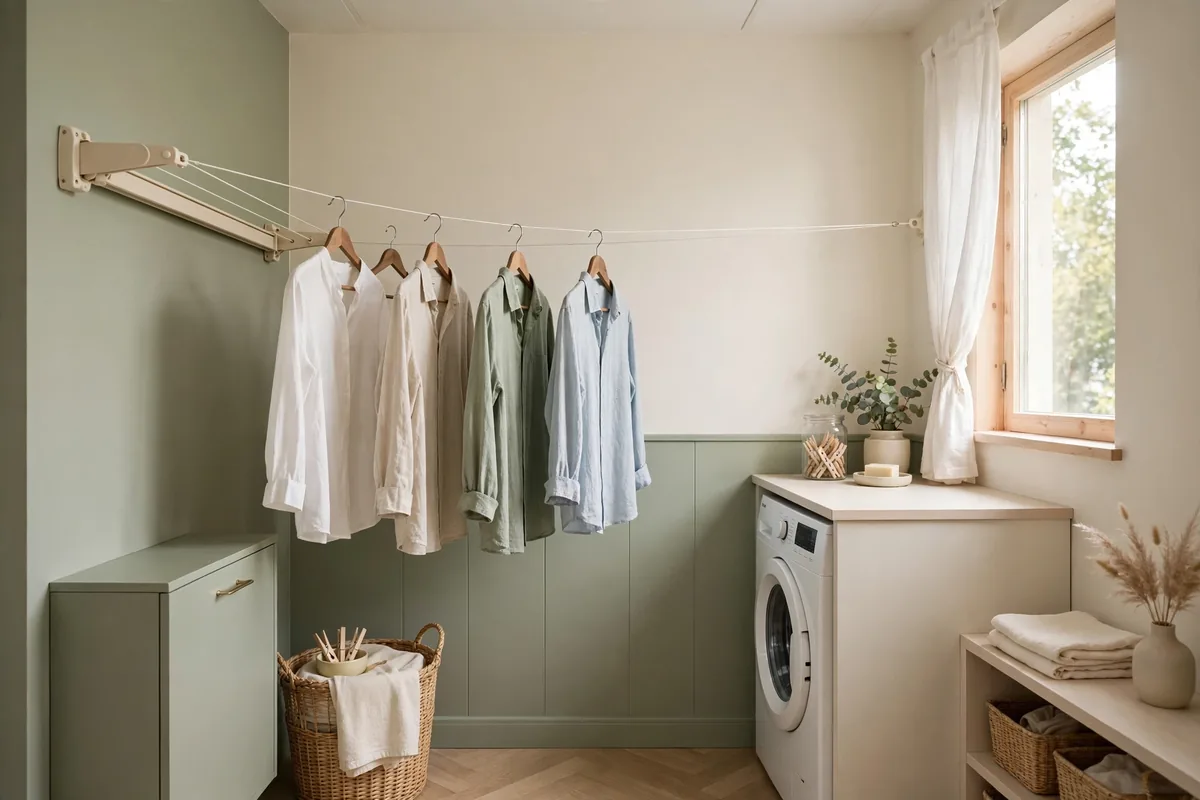
When the fold-down rack is full, a retractable clothesline ($12 to $18) stretches across the room for the overflow and vanishes into its housing when you are done. It is perfect for the occasional big delicates load or for drying the bath mats that never fit on a rack.
Mount it high and out of the walkway. Chest height across the middle of the room turns laundry day into an obstacle course. Up near the ceiling, above the machines or along one wall, it stays out of the way and the warm air up there dries things faster anyway.
Check the weight rating before you trust it with wet jeans. Most retractable lines handle 10 to 15 pounds, which is plenty for shirts and delicates but not for a load of wet towels. Heavy items stay on the rack.
The Lost-Sock Station
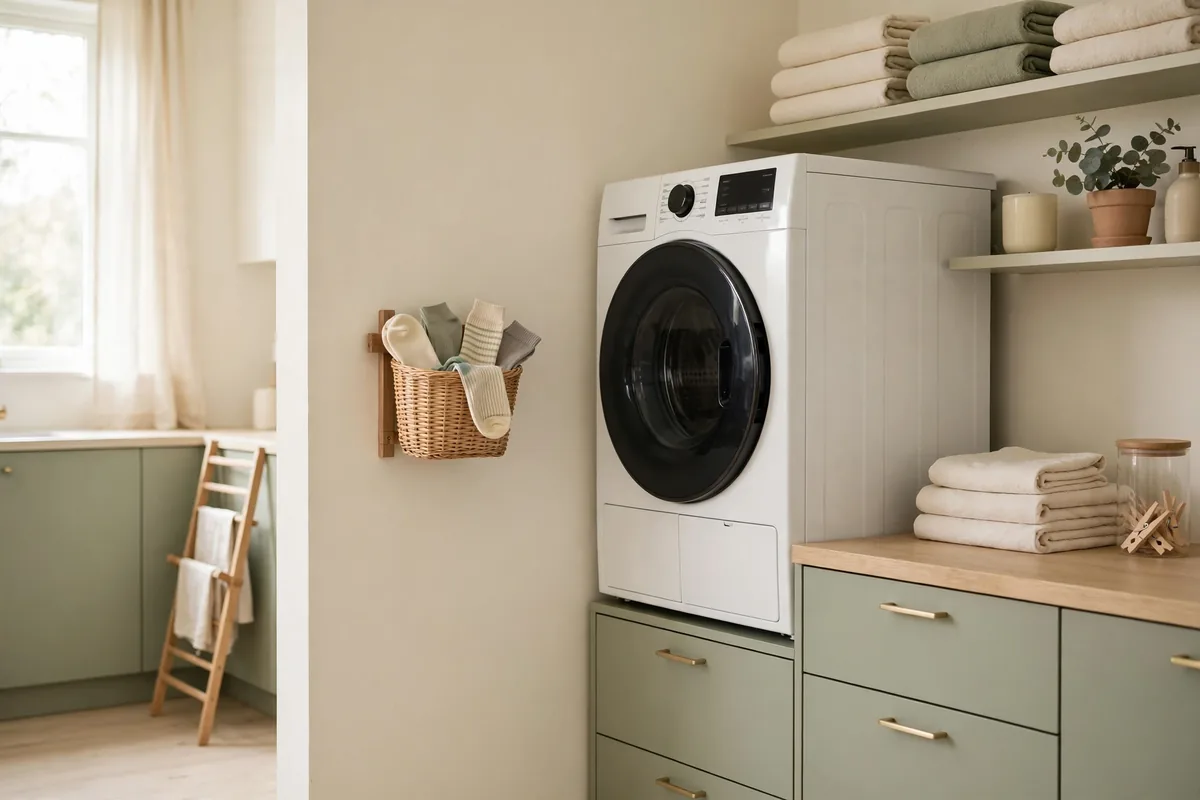
Every laundry room needs a lost-sock station: one small basket or a mesh bag ($5 to $8) hung on the wall or the side of the dryer. Single socks go in the moment they appear. Once a month, pair up what matches and retire the rest to the rag bin without guilt.
The station works because it ends the real problem, which is not lost socks but sock limbo. Singles scattered across the laundry room, the bedrooms, and the dryer top never get reunited. One basket means every single has exactly one place to wait, and matching becomes a two-minute monthly job.
A Folding Surface, Even a Small One
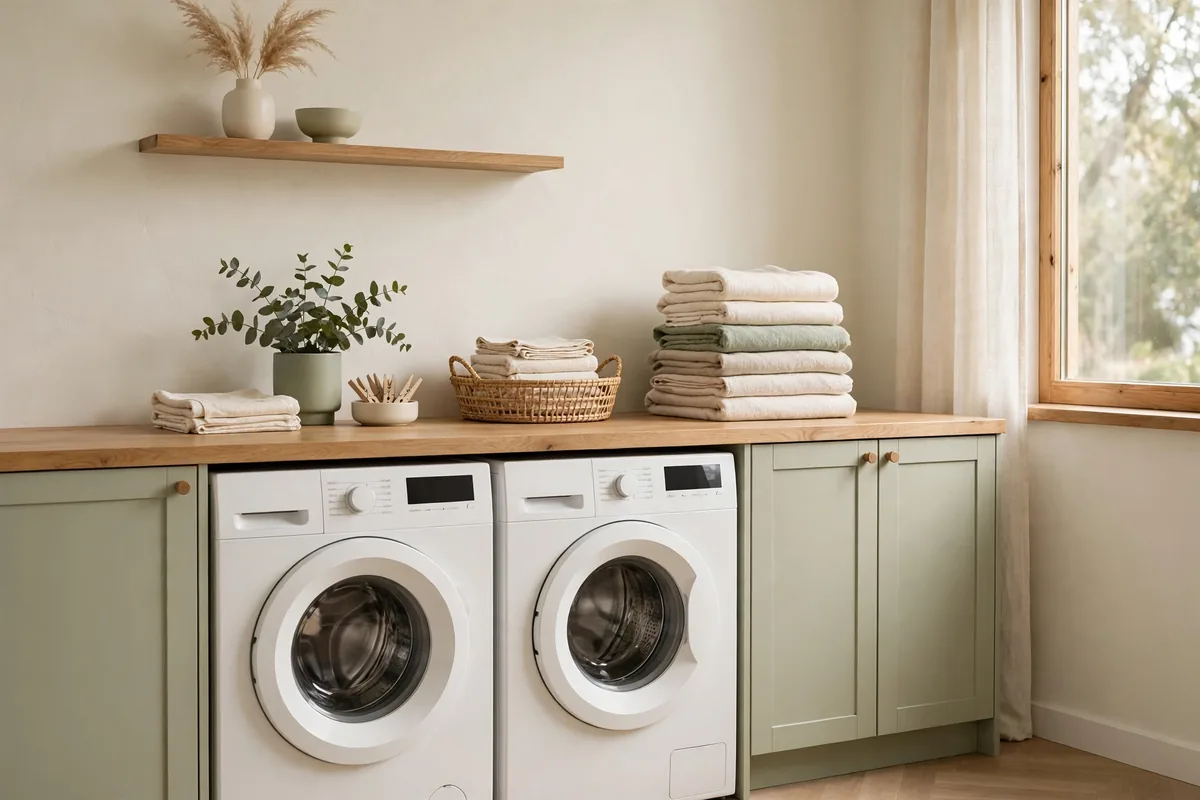
Clothes that do not get folded promptly become the chair pile, so a folding surface matters more than it seems. A countertop across the top of front-loaders, a wall-mounted drop-leaf table ($40 to $60), or even a sturdy board laid across the open washer gives you the flat space to fold each load as it comes out.
Fold straight from the dryer while things are warm. It takes five minutes per load and prevents the wrinkles that send clothes back through the wash. Keep a small basket on the folding surface for the items that belong to other rooms, and deliver them on your next trip upstairs.
Decide the fold-or-hang rule once and stop re-deciding it — and for the hang half of that rule, our guide to organizing a small closet keeps the destination sorted. Work shirts and dresses get hung immediately; everything else gets folded. Hanging the hangables straight from the folding surface takes seconds and skips the chair pile entirely.
The Back of the Door for Cleaning Gear

The inside of the laundry room door holds an over-the-door organizer ($12 to $18) for the spray bottles, the vacuum attachments, and the cleaning caddy. It keeps the floor clear and puts the cleaning tools where the messes happen, which means small spills get handled instead of scheduled — over-door organizers pull the same weight when organizing a tiny bathroom.
Keep it light and balanced. A door loaded with full spray bottles gets heavy and stresses the hinges over time. Cleaning concentrates in small bottles, a microfiber cloth roll, and one all-purpose spray cover 90 percent of laundry room messes.
Pick a Wash Rhythm and Protect It

The most organized laundry room still fails without a rhythm. Pick your laundry days, two or three per week for most households, and run full loads on schedule instead of emergency loads whenever the hamper overflows. A rhythm keeps every zone in this guide at baseline: the sorter never overflows, the drying rack never stays up for days, the folding surface stays clear.
Put the rhythm where you will see it. A small whiteboard or a note on the inside of the laundry room door with the week’s plan takes ten seconds to check. It sounds fussy until the first month you never run out of clean towels.
The rhythm also tells you when the system is broken. If the sorter overflows every week, you need more wash days or fewer clothes, not a bigger sorter. Let the schedule diagnose the problem.
Get the household on the same rhythm. Laundry fails when one person washes randomly while everyone else follows the schedule, because the machines are never free when they should be. A shared rhythm, even just agreed out loud, beats the best organizer. And if you want to trim the energy side too, ENERGY STAR’s no-cost laundry tips cover the big wins: wash cold, dry full loads, and clean the lint trap every time.
Start With the Shelf and the Sorter This Weekend
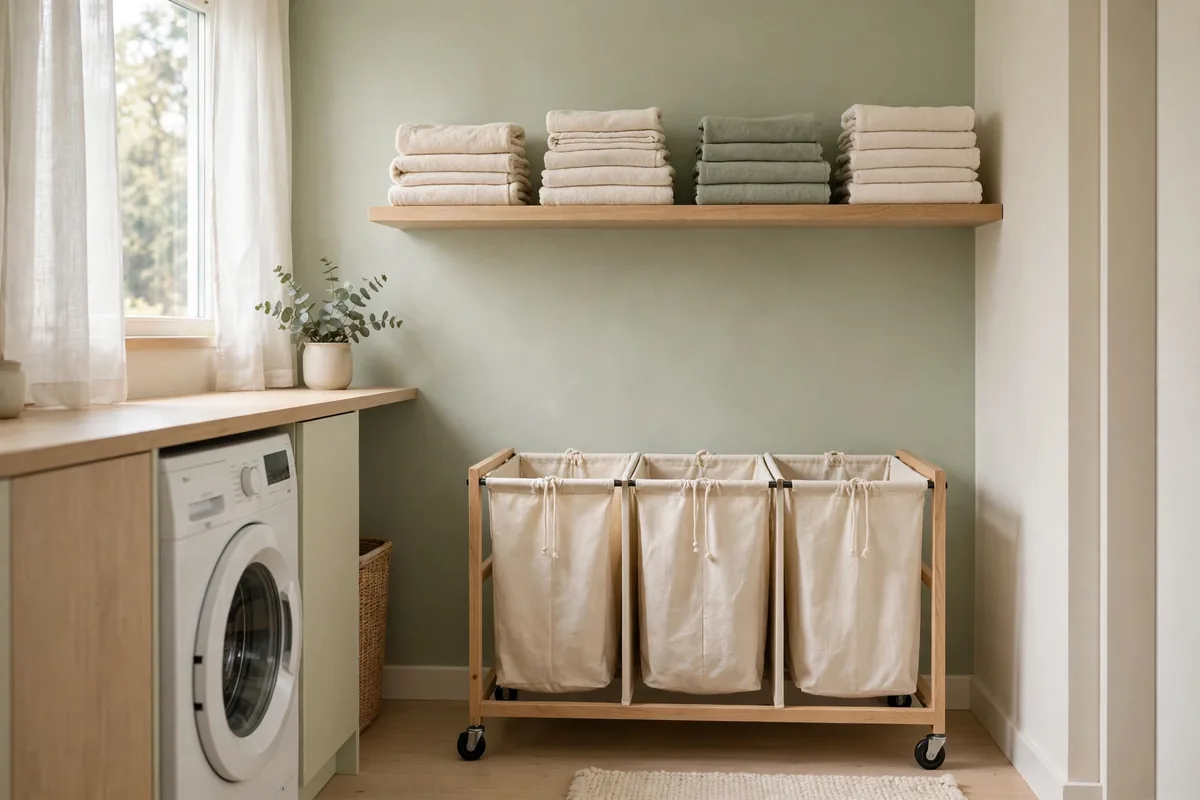
If the whole list feels like a lot, do the two highest-impact things first: mount the shelf above the machines and set up the multi-bag sorter. Together they cost under $75, they take an afternoon, and they fix the two messes that define a chaotic laundry room: supplies everywhere and sorting dread.
Then run one full laundry day with the new setup before buying anything else. You will feel exactly which zone is still missing, and the next purchase will be the right one.