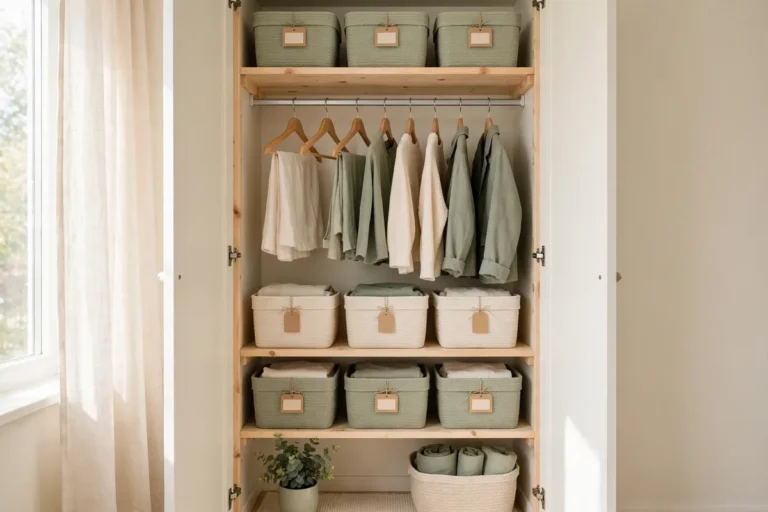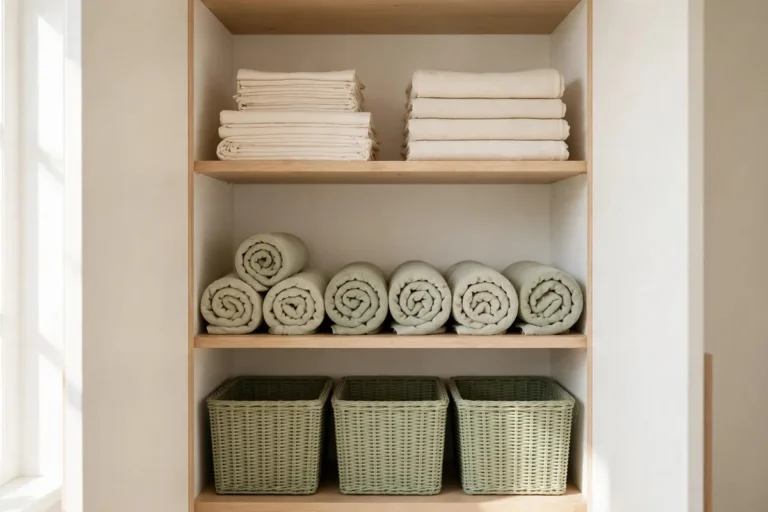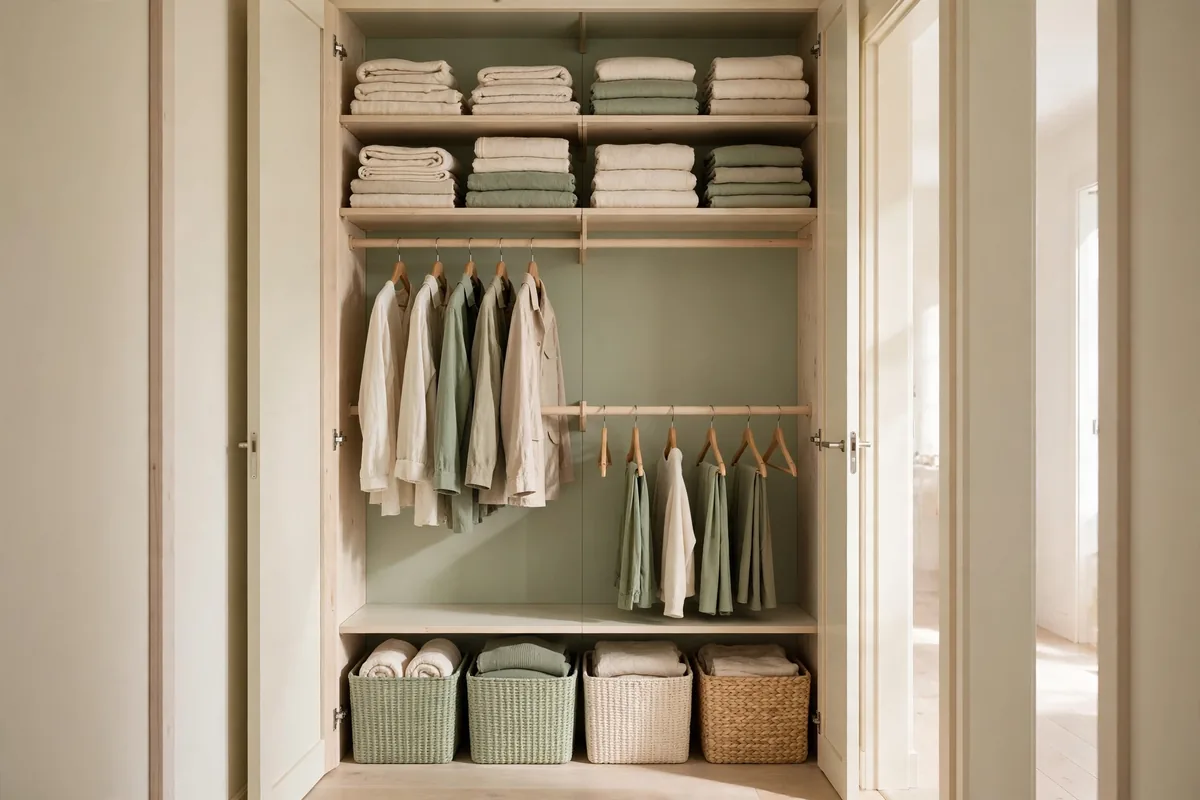
The first apartment I rented had four small closets: a reach-in by the front door, a coat closet that had become a cleaning-supply graveyard, a linen closet I never opened on purpose, and a utility closet with the water heater. I organized exactly one of them — the coat closet — and the other three slowly filled with whatever didn’t have a home. It took me two years to realize the mistake wasn’t laziness. Each closet had a different job, and I was treating them all like generic extra space.
That is what this guide is about. Ten small closet organization ideas that work across every kind of small closet — reach-in, coat, linen, and utility — because most closet problems aren’t really about size. They are about the closet never getting a clear job description. No renovations, no custom systems; the priciest idea here costs less than a dinner out — and for the full cheapskate playbook, here’s how to organize a small closet on a budget.
Count Your Closets Before You Touch One
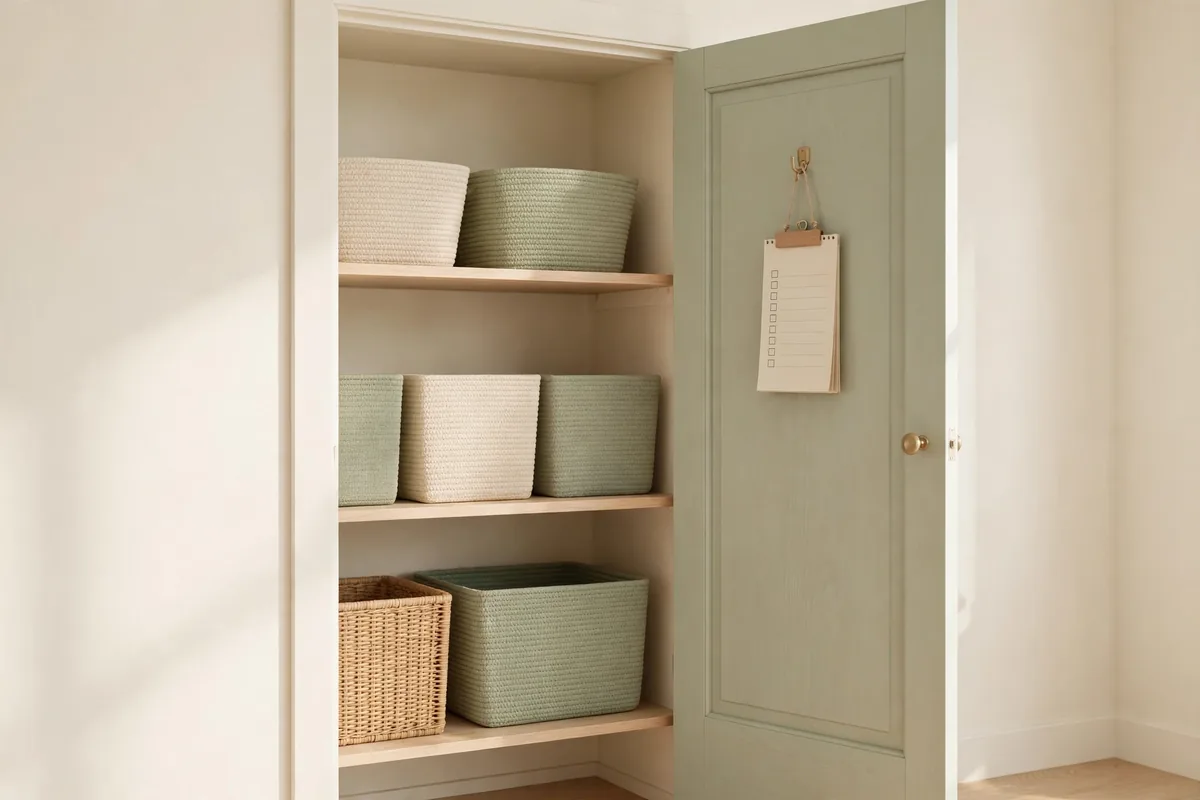
Walk the house with a notepad and write down every closet, its location, and what actually lives in it right now. Most homes have more closets than people think: the shallow reach-in in the hallway, the coat closet, the linen closet, sometimes a utility closet near the water heater or under the stairs.
This inventory sounds like busywork, but it prevents the classic mistake: buying perfect organizers for the wrong closet. A stackable shoe rack you love is useless in a 14-inch-deep reach-in where shoes don’t fit side by side. Ten minutes with a notepad saves you the return trip and the money.
While you’re at it, note which closet annoys you most and why. That ranking becomes your project order later. The closet that slows you down every morning gets fixed first; the one you open twice a month can wait.
Photograph each closet too, doors open, as it looks right now. The photos do two jobs: they show you which closet is actually the worst (it’s never the one you think), and six months later they prove how far the system has come. Before-and-after photos are the cheapest motivation in organizing.
Give Every Closet a Single Job
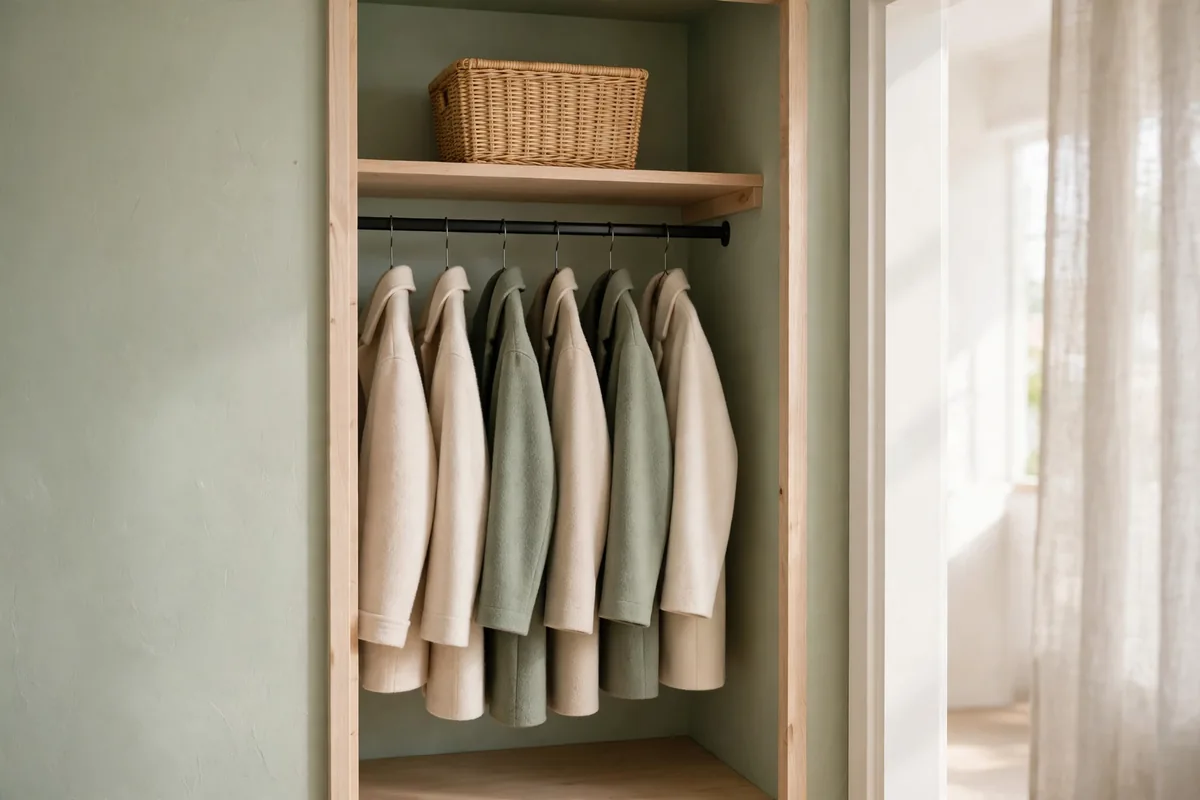
A coat closet that also stores the vacuum, the wrapping paper, and three generations of paint cans is not a coat closet. It is a junk drawer with a door. Pick the job that matches the location: the closet by the front door holds coats and shoes (see these small coat closet ideas for the entryway workhorse), the one by the bathroom holds linens, the hallway one holds cleaning gear.
When everything in a closet serves one purpose, you stop playing memory games every time you open the door. The spare batteries stop hiding behind the winter coats because the spare batteries don’t live in the coat closet anymore. Single-purpose closets practically organize themselves.
The single-job rule also settles household arguments. When the coat closet is only for outerwear, nobody has to negotiate whether the air mattress belongs there. It doesn’t. The rule decides, not a person, which ends the debate before it starts.
Respect the Depth
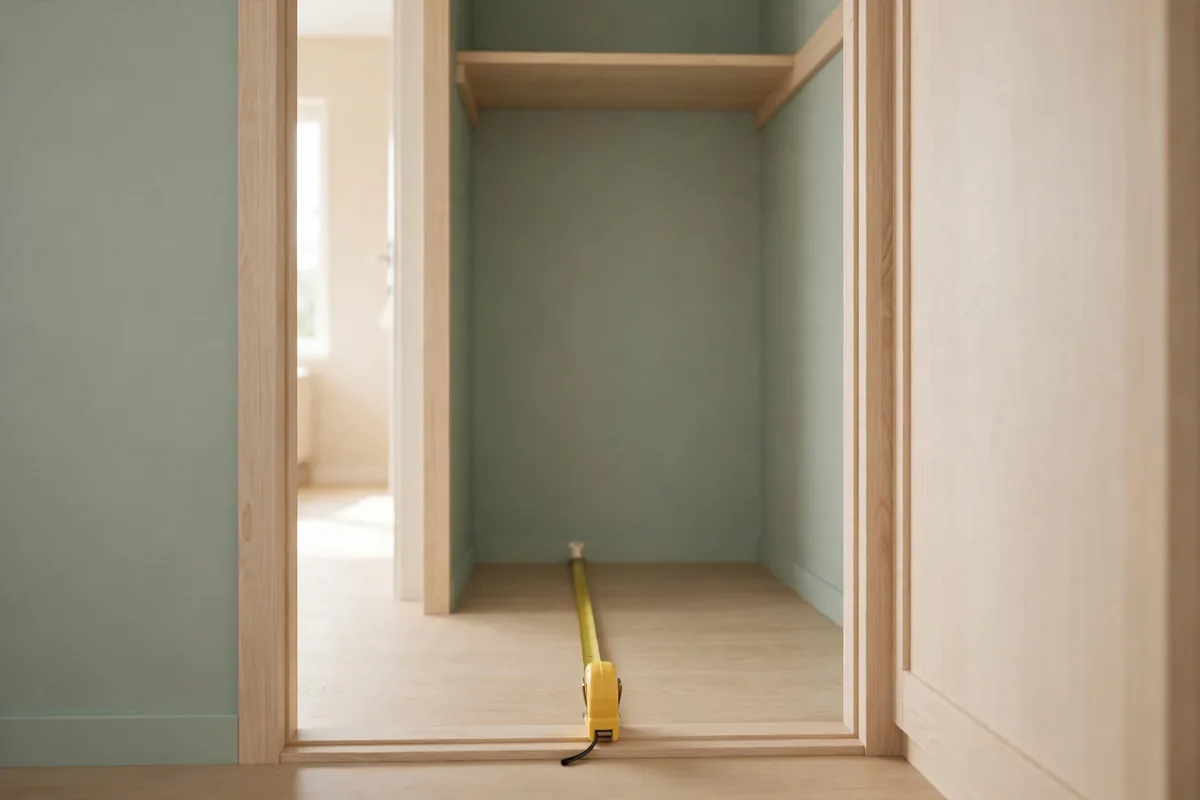
Reach-in closets are often only 20 to 24 inches deep, and coat closets can be even shallower. Standard hangers need about 22 inches, which means in a shallow closet clothes hang diagonally or bunch at the doors. Measure from the back wall to the inside of the door before you buy anything — my reach-in closet organization guide walks through the full measuring routine for shallow closets. That number runs every decision that follows.
Shallow closets do better with narrow-profile solutions: slim hangers, hooks instead of rods for bulky items, and bins no deeper than the shelf they sit on. A bin that sticks out past the shelf is a door that won’t close, and a door that won’t close is a closet you stop using.
If you’re renting, depth limits are also your negotiating tool with yourself. You can’t change the closet, so stop shopping like you can. Every organizer you consider gets one question first: does it fit 20 inches? No is a complete answer.
Depth also decides what the closet can never be. A 16-inch-deep closet will never be a good coat closet, no matter how motivated you are. Let the shallow ones hold linens, shoes, and supplies — my linen closet organization ideas start from this exact constraint — and give the coats to the deepest closet in the house.
Double the Rod, Keep the Hangers Slim
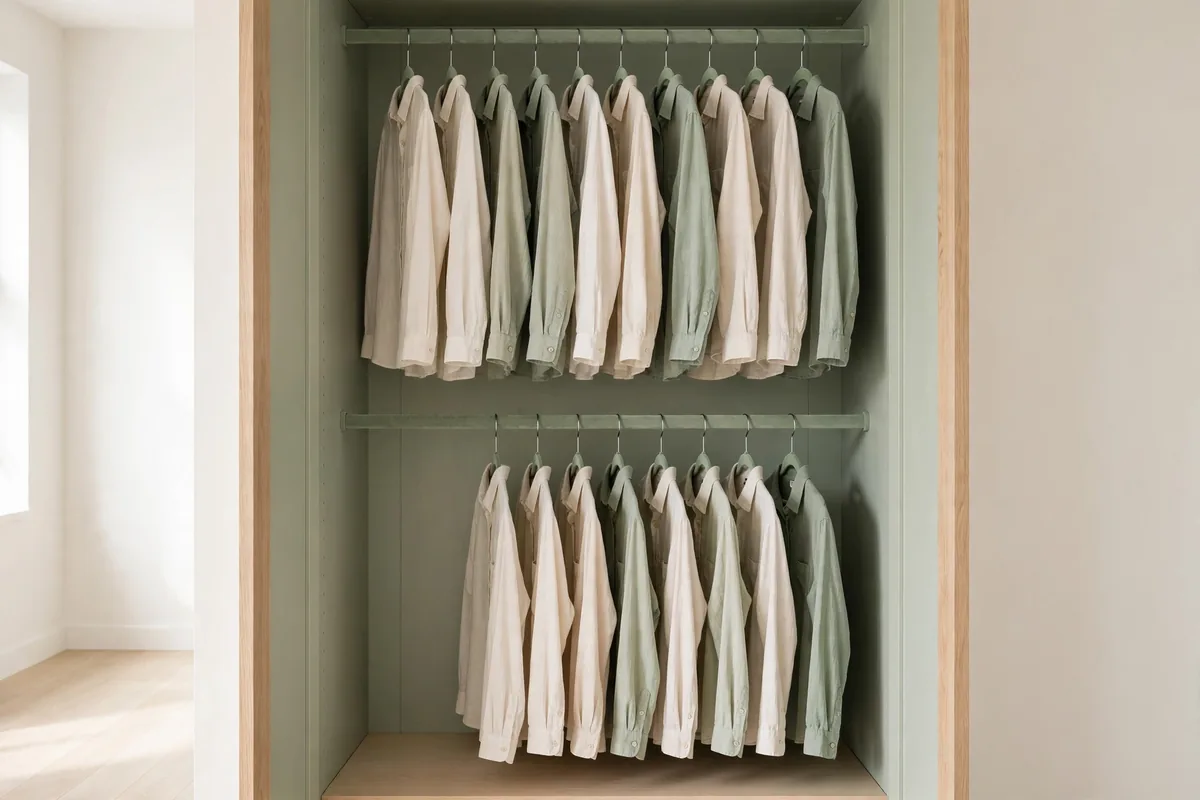
Almost every small closet has one rod and a big empty airspace underneath it. A tension-mounted double-hang rod hangs from the existing rod and creates a second tier for about $12 to $15. Shirts on top, shorter items below, and you’ve doubled capacity without a single screw.
Then swap the hangers. Slim velvet or flocked hangers (around $15 for a 50-pack) are half the thickness of plastic tube hangers. Across thirty hangers that reclaims several inches of rod, and the non-slip surface stops the silk blouse from sliding to the floor every week.
Keep one section of rod free for long items if the closet holds dresses or long coats. Nothing kills a double-rod setup faster than shoving a floor-length coat into a space built for shirts. In a coat closet, that means the long-coat end stays single-rod.
Heavy items go on the main rod, lighter items on the add-on. Tension rods hold a surprising amount, but a full tier of winter coats will eventually defeat most of them. Coats belong on the fixed rod; the add-on is for shirts, scarves, and the lightweight stuff.
Rescue the Dead Zone Above the Rod
The shelf above the rod is usually a leaning tower of boxes you haven’t touched since the move. Pull everything down and ask what actually earns that prime real estate: off-season items, guest supplies, and things you touch quarterly, not daily.
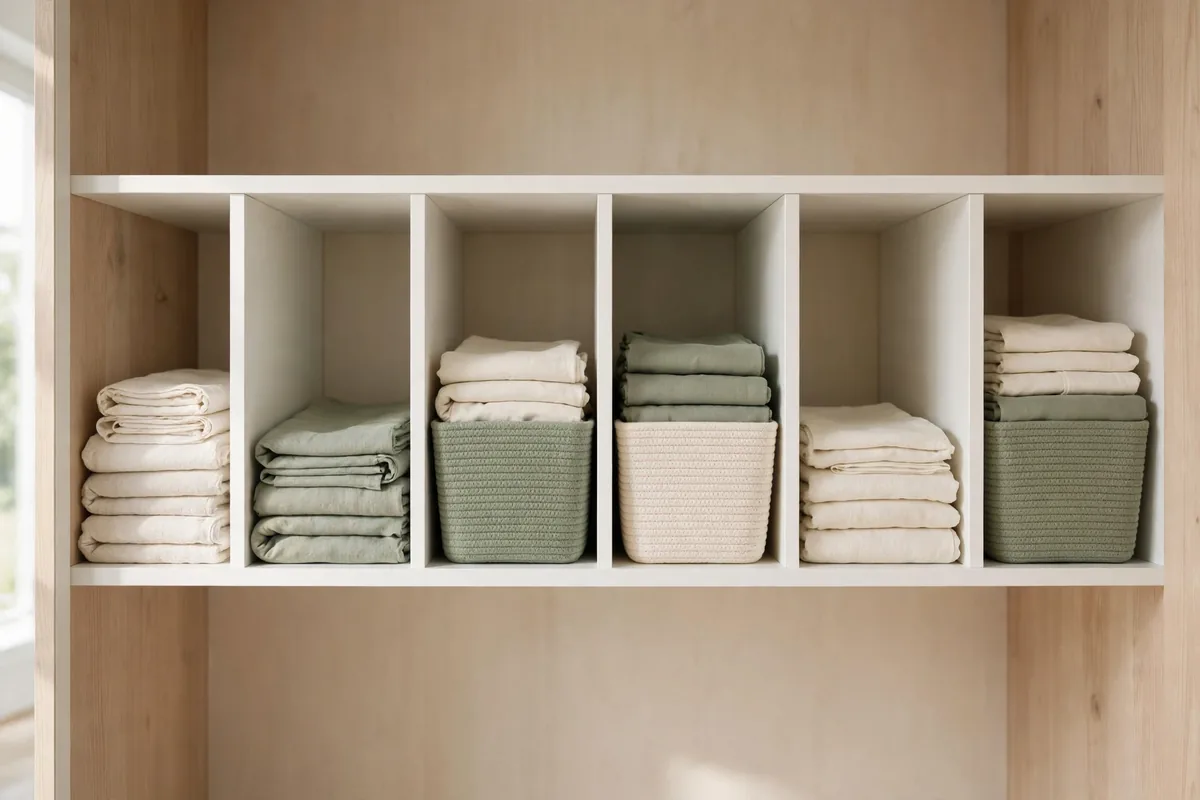
Shelf dividers, about $10 for a set, turn one long shelf into cubbies that keep folded stacks and bags upright. Without them, everything leans into a pile, and you knock the whole row over reaching for one bag.
Use bins up there for the soft, shapeless stuff: spare pillowcases, sleeping bags, gift bags. Bins make the top shelf retrievable instead of decorative. Label them, because the top shelf is the one place you’ll forget what you stored within a month.
Group the top-shelf bins by season, not by category. One bin for winter accessories, one for summer gear, one for holiday supplies. When the season turns, you swap one bin, not six loose items. The top shelf works best as a small number of big, labeled units.
Put the Floor on the Payroll
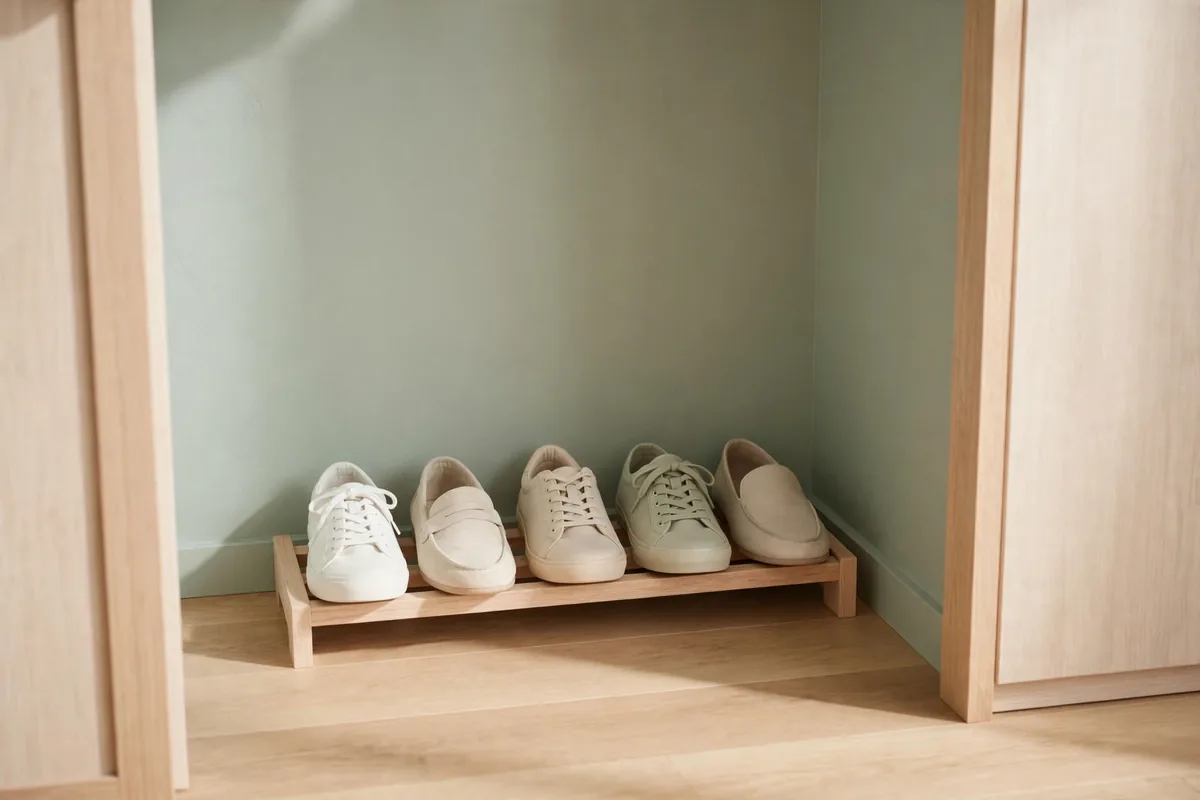
Closet floors collect things by default: the shoes you kicked off, the bag of bags, the thing you meant to put away. Give the floor an assignment instead. A low shoe rack, a single row of labeled bins, or one lidded tub for the category that lives in that closet.
The rule is one layer deep. If you have to move something to reach something else, the floor is overcrowded and you’ve built yourself a chore. One visible row, everything reachable, nothing hiding.
Resist the urge to buy a rolling cart for the closet floor. Carts migrate, they block the door swing, and they turn into junk drawers on wheels within a month. The floor wants one static, visible row. Boring beats clever here.
Labels Are Wayfinding, Not Decorating
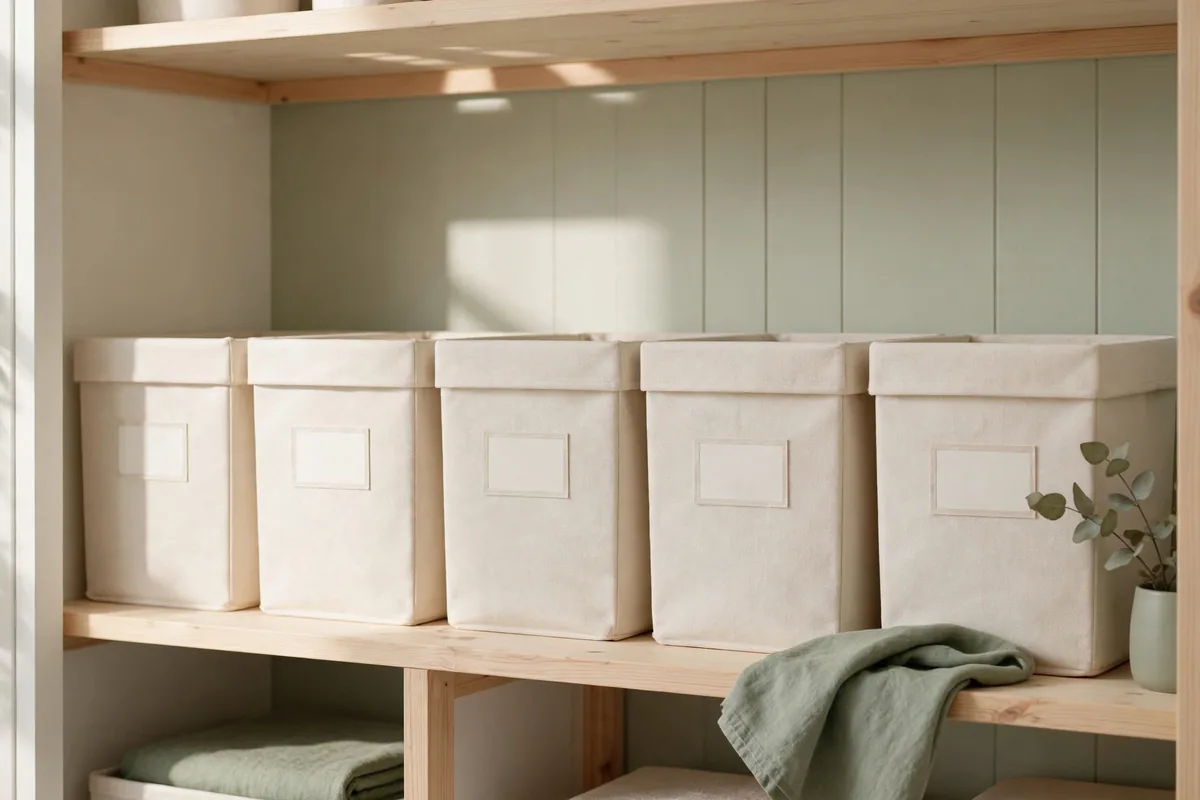
Labels in a closet aren’t about aesthetics; they’re about not thinking. When the bin says “winter gloves,” nobody asks where the winter gloves are. That includes you, at 7 a.m., half-awake, in a hurry.
Label the category, not the contents. “Cleaning” beats “sponges, sprays, and the blue bottle.” Broad categories survive change; specific labels go stale the week you switch brands.
A label maker is nice, but a strip of masking tape and a marker works just as well, and you’ll actually redo it when the category changes. Fancy labels you hesitate to peel off defeat their own purpose.
The real test of a label is whether a guest could find the thing. If your sister visits and can locate the spare towels without asking, the labels are doing their job. If she can’t, the labels are decoration.
The Fifteen-Minute Closet Edit
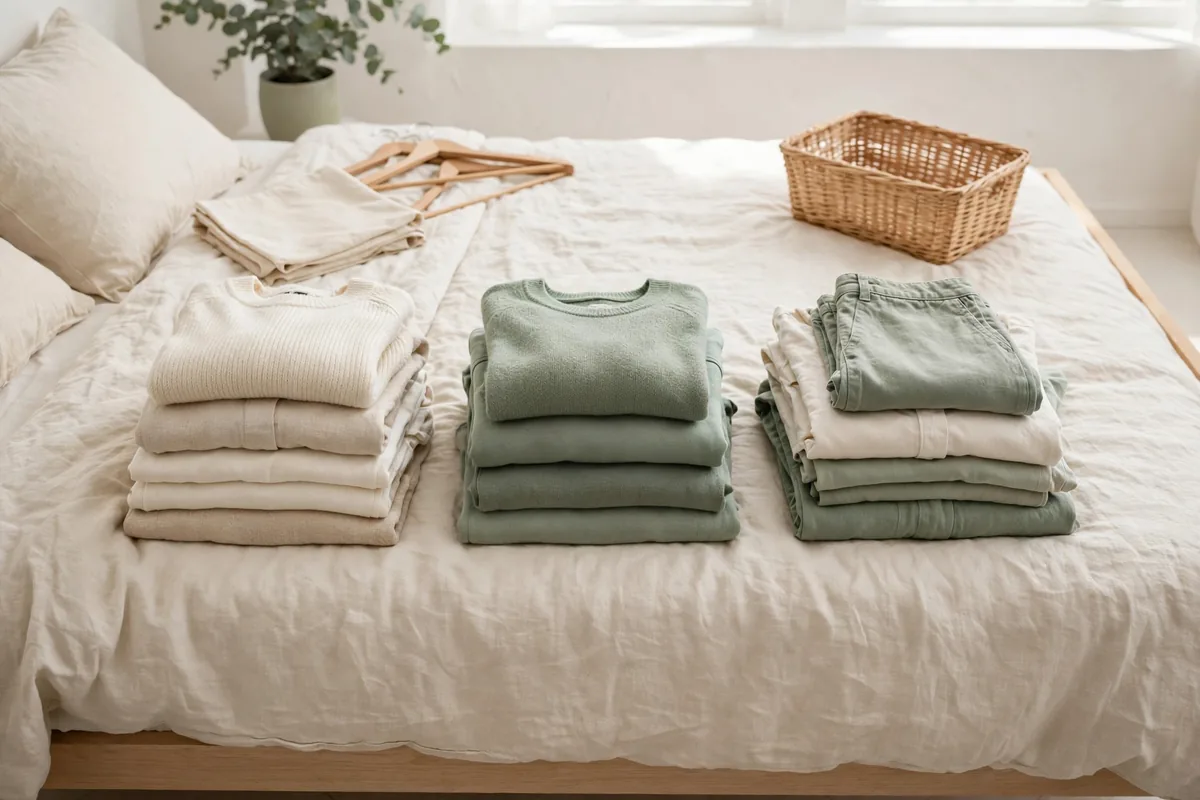
Every closet needs a purge before it needs a product. Set a timer for fifteen minutes, pull everything out, and sort into three piles: belongs here, belongs elsewhere, and gone. The “belongs elsewhere” pile is usually the biggest, and clearing it is free square footage.
Be honest about duplicates. Four umbrellas in a coat closet means three umbrellas for guests who never arrive with one. Keep the best one, keep one spare if you genuinely host people, and let the rest go.
Broken and expired things leave first. The flashlight with corroded batteries, the sunscreen from three summers ago in the linen closet’s toiletry stash, the vacuum bags for a vacuum you no longer own. They take up the same space as things you use.
Finish by putting back only what earned the single job you assigned earlier. If it doesn’t serve that job, it doesn’t live in that closet. This edit takes fifteen minutes and beats every organizer on this list.
Do the edit with bags and boxes ready: trash bag, donation box, and a laundry basket for the belongs-elsewhere pile. The basket is key. Without it, the belongs-elsewhere pile becomes a new pile on the bed, and you’ve just moved the mess.
Keep Closets Close to Where Things Get Used
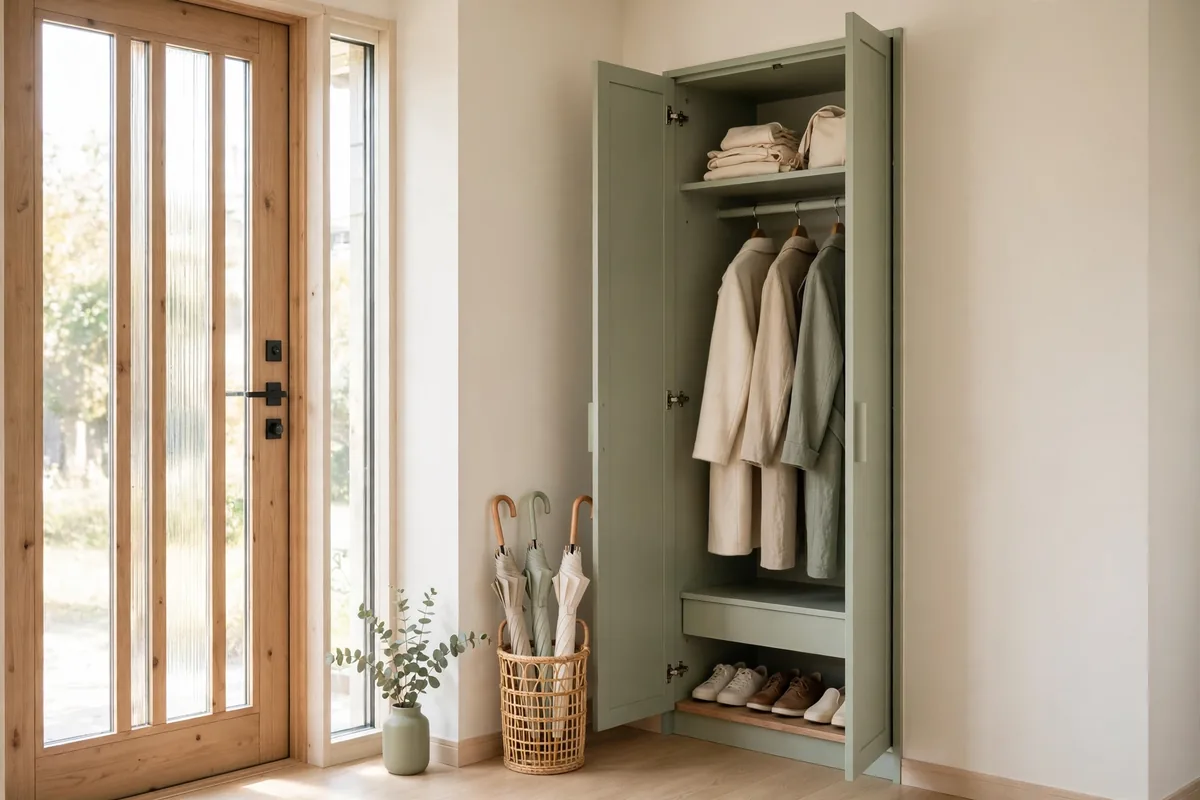
The cleaning supplies belong in the closet nearest the mess, not the biggest closet. Coats belong by the door you actually leave through, not the prettier entryway. A closet’s location is half its organization system.
If the layout fights you, and the only linen closet is two rooms from the bedrooms, cheat with a staging bin. One labeled bin of daily-use items near the point of use beats a perfect closet you never walk to.
This is also the argument against consolidating everything into one “storage closet.” A central closet sounds efficient until you’re carrying cleaning supplies across the whole house twice a week. Distributed beats centralized when the distances are real.
Audit the walk once a year. Habits change: the door you leave through changes, the kids’ rooms move, the home office appears. The closet assignments should follow the traffic, not the floor plan from move-in day.
Run a Twice-a-Year Swap
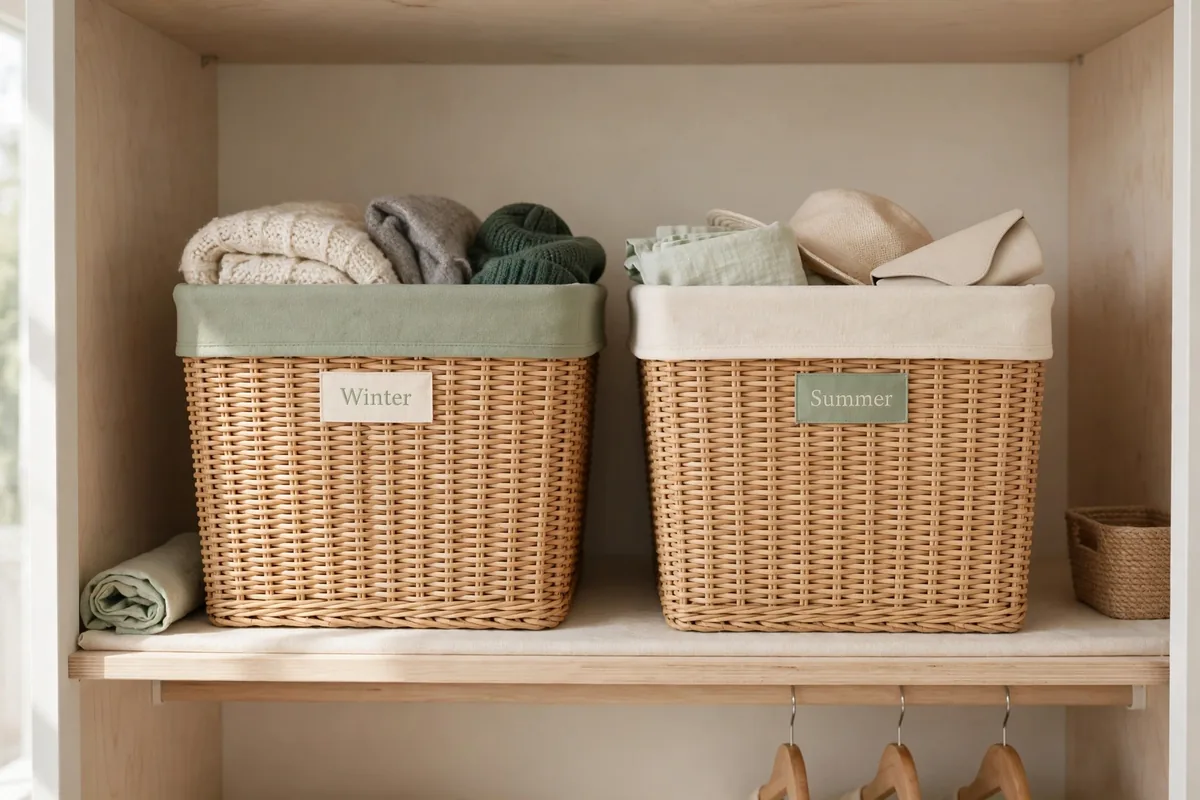
Closets drift. Summer sandals creep into the coat closet’s shoe row; holiday stuff migrates to the linen shelf. Twice a year, when the seasons turn, spend twenty minutes per closet swapping what’s in front for what’s relevant.
The swap is also your edit trigger. If you didn’t touch it this season, ask whether it still earns its spot. Closets don’t fill up all at once; they fill up one “I’ll deal with it later” at a time.
Use the swap to check the infrastructure too. Tighten the tension rod, re-tape the peeling labels, wipe the shelf that collected dust all winter. Small maintenance during the swap prevents the slow decay that turns organized closets back into junk closets.
Put it on the calendar: the first weekend of spring and fall, or piggyback it on the daylight-saving clock change. The routine matters more than the timing. A closet you revisit twice a year never gets the chance to become a mystery.
The swap gets faster every time. The first one takes an hour because you’re making decisions. The third one takes twenty minutes because the decisions are already made and you’re just executing them.
Keep a one-line log on the inside of the closet door: the date of the last swap and what changed. It takes ten seconds and it answers the only question that matters next time: did I actually do this in the spring, or did I just think about it?