Last spring I reached under my bathroom sink for the drain cleaner and pulled my hand back sticky. A bottle of body wash had been leaking for weeks, maybe months, and I never saw it because the cabinet was too full to see the back of it. The cleanup took an hour. The reorganization I should have done years earlier took one afternoon, and the cabinet has stayed sane ever since.
This guide covers small bathroom cabinet organization ideas that work around real plumbing, real renters, and real budgets: the under-sink cabinet, the medicine cabinet, wall cabinets, cabinet doors, and the vanity drawer. Most of these ideas cost under $20, none require a drill unless you want one, and every one of them assumes your cabinet is shaped like an obstacle course. Here is how to make each cabinet earn its space.
Empty the Cabinet and Meet the Plumbing
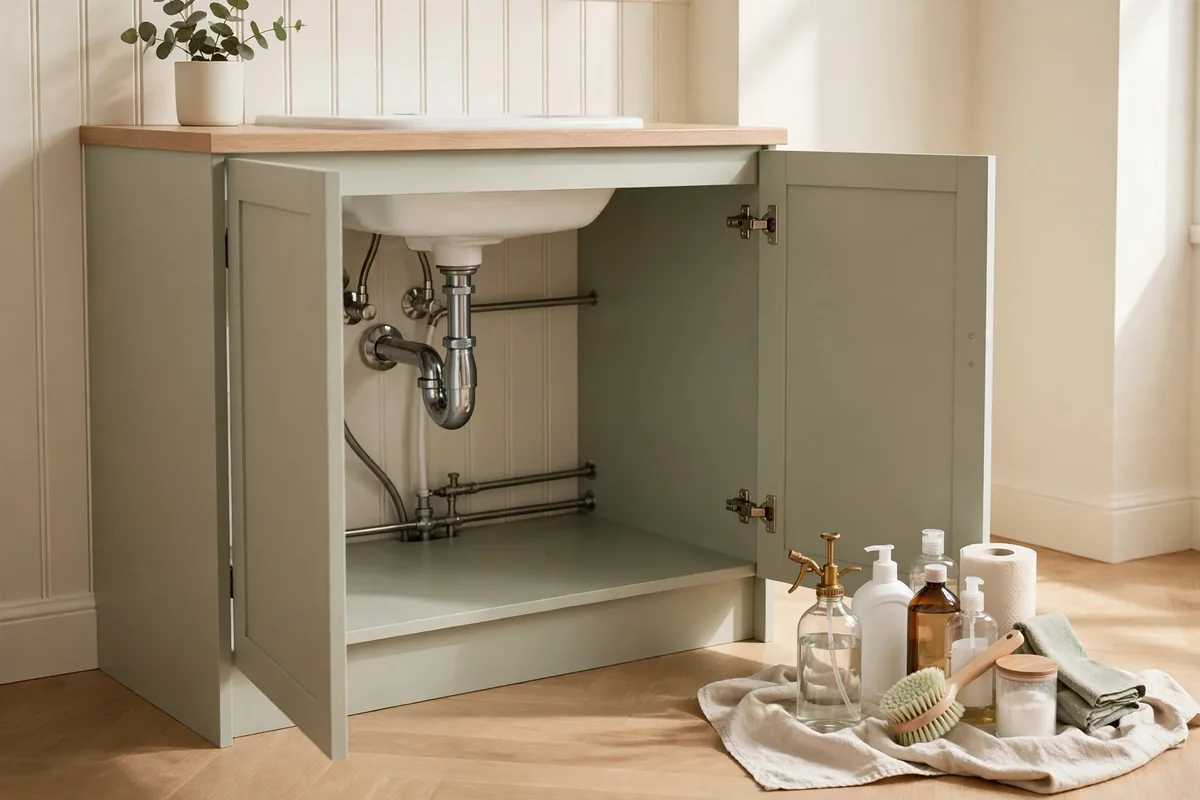
Pull everything out onto a towel on the floor. This is the only way to see what you actually own, and it is the moment most people discover they own four half-empty bottles of the same conditioner. Sort into keep, toss, and relocate. Anything expired, rusty, or bought for a guest who never comes goes.
While it is empty, look at the plumbing. The P-trap and supply lines dictate everything about what fits where. Measure the usable width on each side of the pipes, the depth of the cabinet, and the height from the cabinet floor to the lowest pipe. Write the numbers on your phone. Every organizer you buy has to fit around this.
Wipe the cabinet floor and lay down a waterproof liner or an under-sink mat ($10 to $15). This is the cheapest insurance in the bathroom: the next leak pools on the mat instead of swelling the cabinet floor. It also makes future cleanouts a two-minute job instead of an excavation.
Give the Pipes Their Own Lane
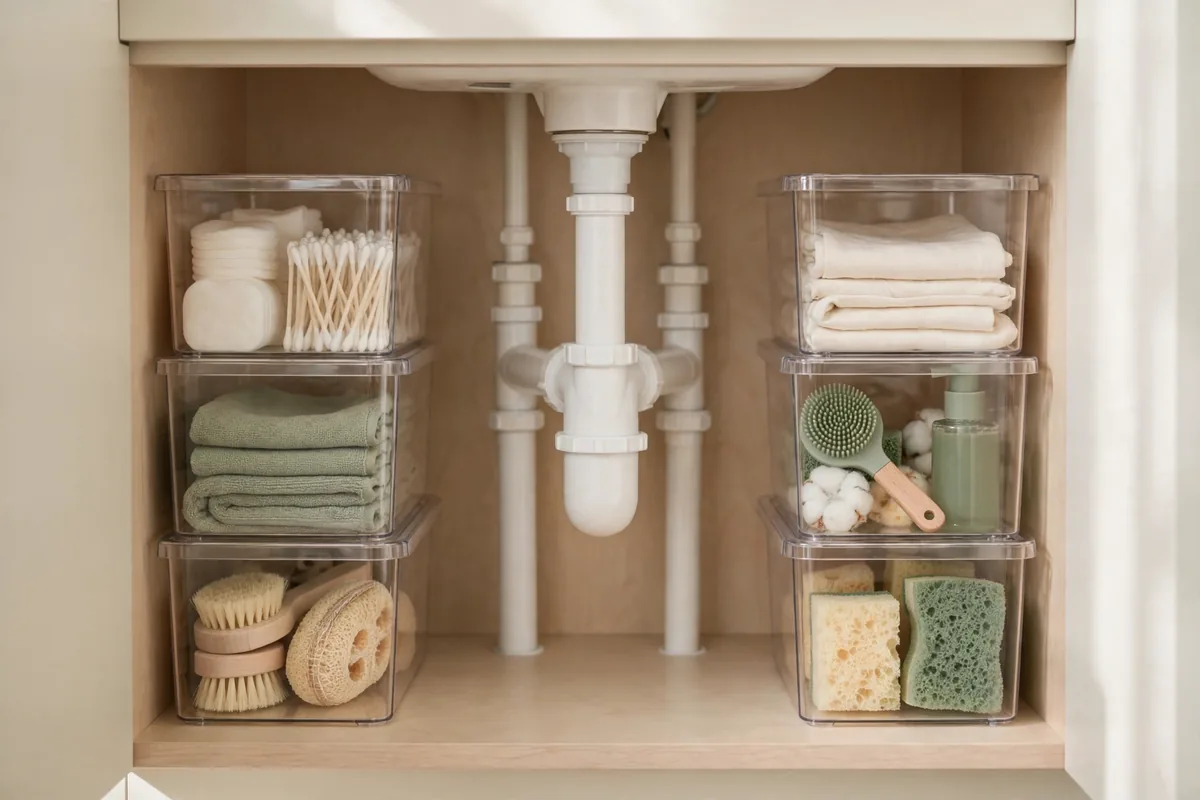
The biggest mistake in under-sink cabinets is treating the whole box as one open zone. The pipes run down the middle, so organize in lanes: left of the pipes, right of the pipes, and the narrow strip in front. Bins that straddle the plumbing get stuck, tip over, and make you hate the cabinet.
Use stackable bins or a two-tier under-sink organizer with adjustable shelves that work around the pipes. The expandable two-tier units ($18 to $28) are the default for a reason: they slide around supply lines and double the usable levels. Put cleaning products on one side and personal care on the other, so a leak in one category never ruins the other.
Keep the tallest bottles at the back and the daily items at the front. If you have to move three things to reach the thing you use every morning, the system is wrong. Rearrange until the morning routine needs zero digging.
A Tension Rod for the Spray Bottles
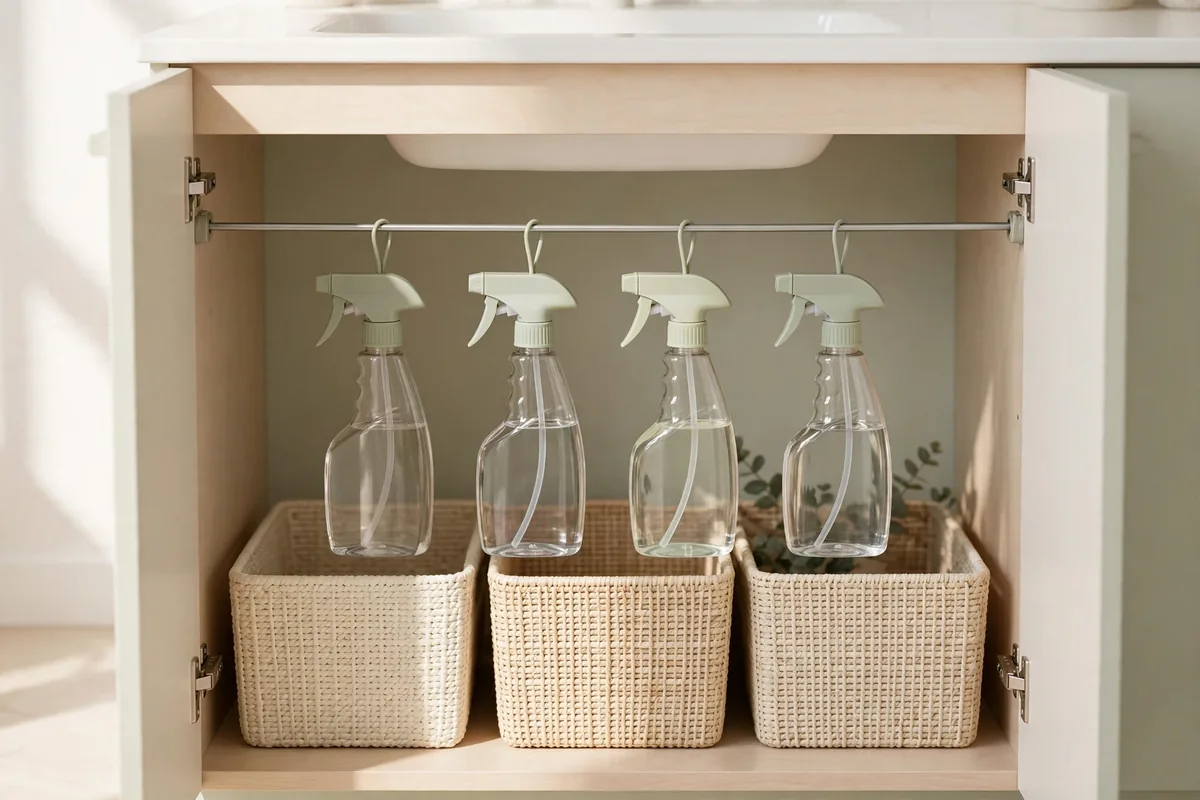
A $8 to $12 tension rod wedged across the upper part of the cabinet, just below the pipes, turns dead air into hanging storage. Hang spray bottles by their triggers and small caddies with S-hooks. The floor below stays clear for bins, and you can see every bottle at a glance. No drilling, no damage, and it comes out in seconds when you move. This same tension-rod trick genuinely doubles what the top half of the cabinet holds.
One caution: tension rods hold light loads. Spray bottles and small caddies are fine; a gallon jug of anything is not. If the rod slips, shorten it slightly and reset it. The pressure fit is the whole mechanism, so snug beats long.
Stackable Drawers Beat One Deep Cavern
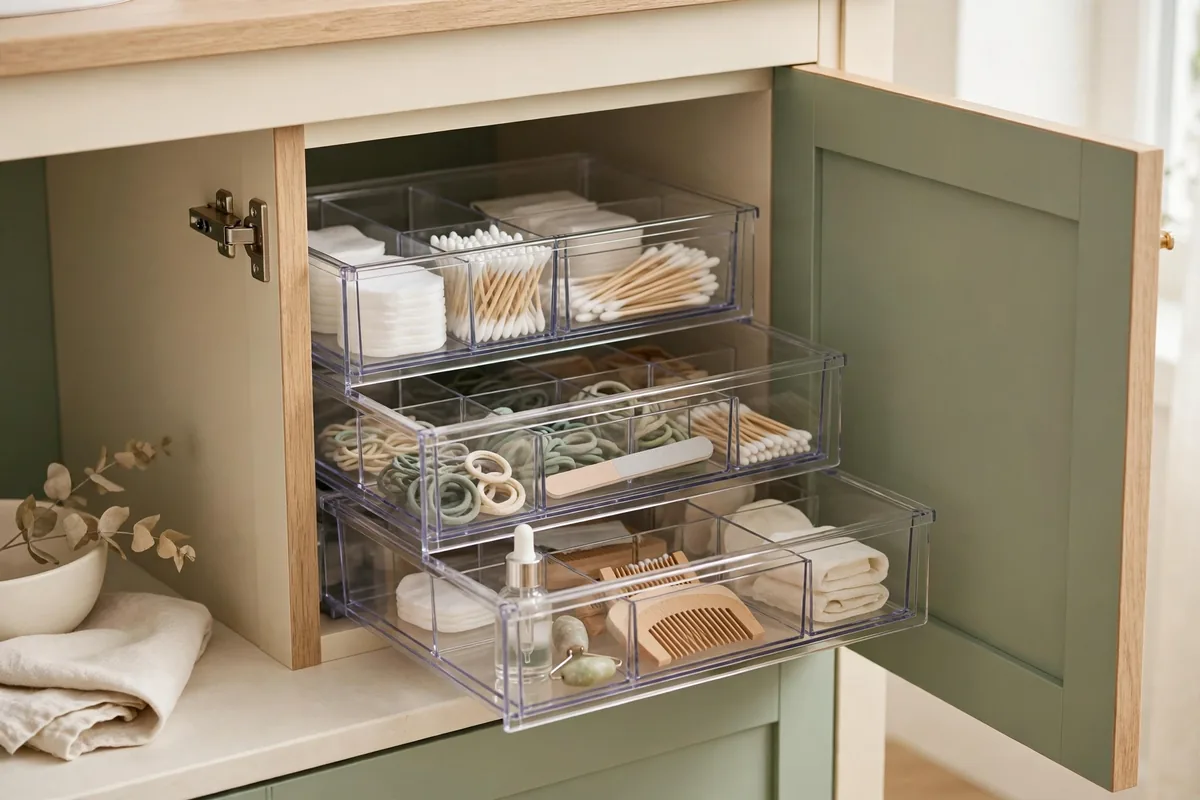
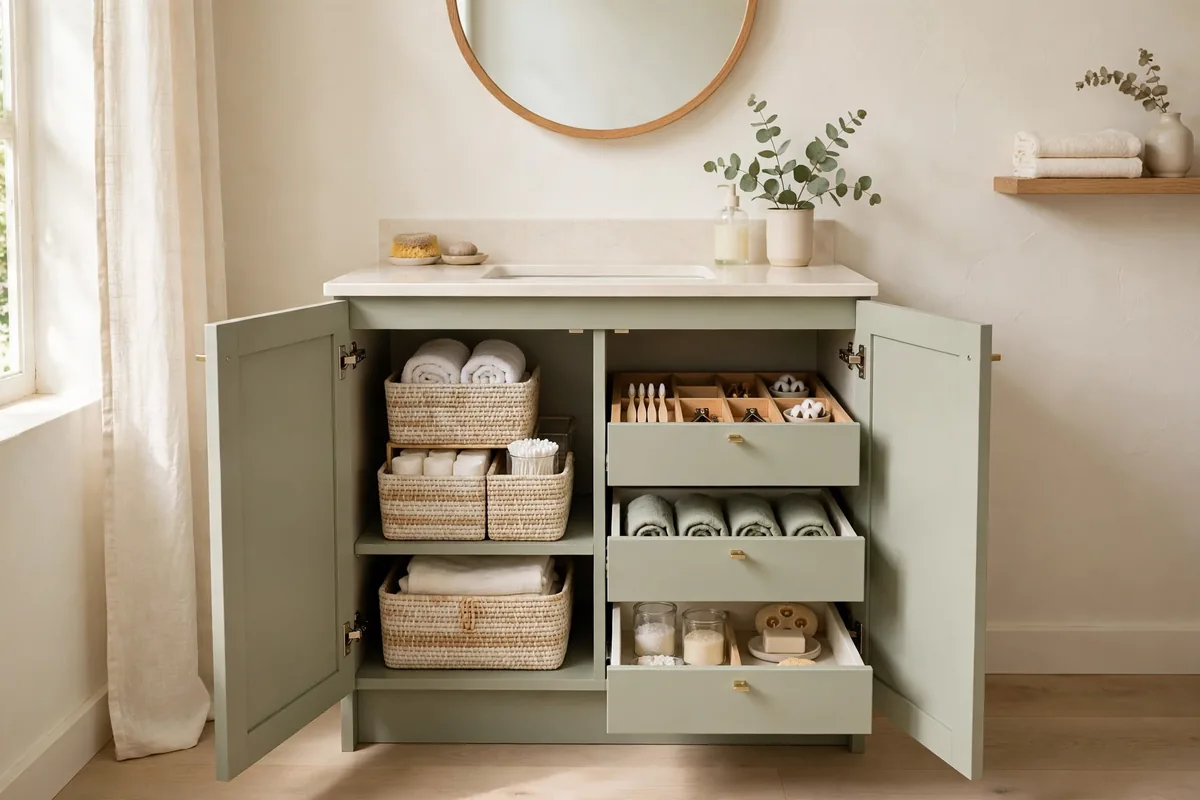
A deep vanity cabinet without shelves is a cavern where things go to be forgotten. Stackable drawers ($15 to $25 for a two-pack) fix the geometry: each drawer slides out and shows you everything at once. No more kneeling and reaching into the dark back corner for the contact solution.
IKEA’s under-sink bathroom storage guide makes the same case for stackable, transparent containers over open shelves. Clear matters more than matching: when you can see the contents, you stop buying duplicates of things you already own.
Dedicate one drawer per category so nothing migrates. A setup that survives real life:
- Top drawer: daily skincare, toothbrush, and contact lens stuff.
- Middle drawer: hair products and styling tools.
- Bottom drawer: backstock and cleaning supplies.
Label the drawer fronts with a label maker or painter’s tape. It feels fussy for exactly one day, then everyone in the house starts putting things back where they belong. Labels are the cheapest behavior change in home organization.
Corral the Daily Stuff in a Grab Caddy
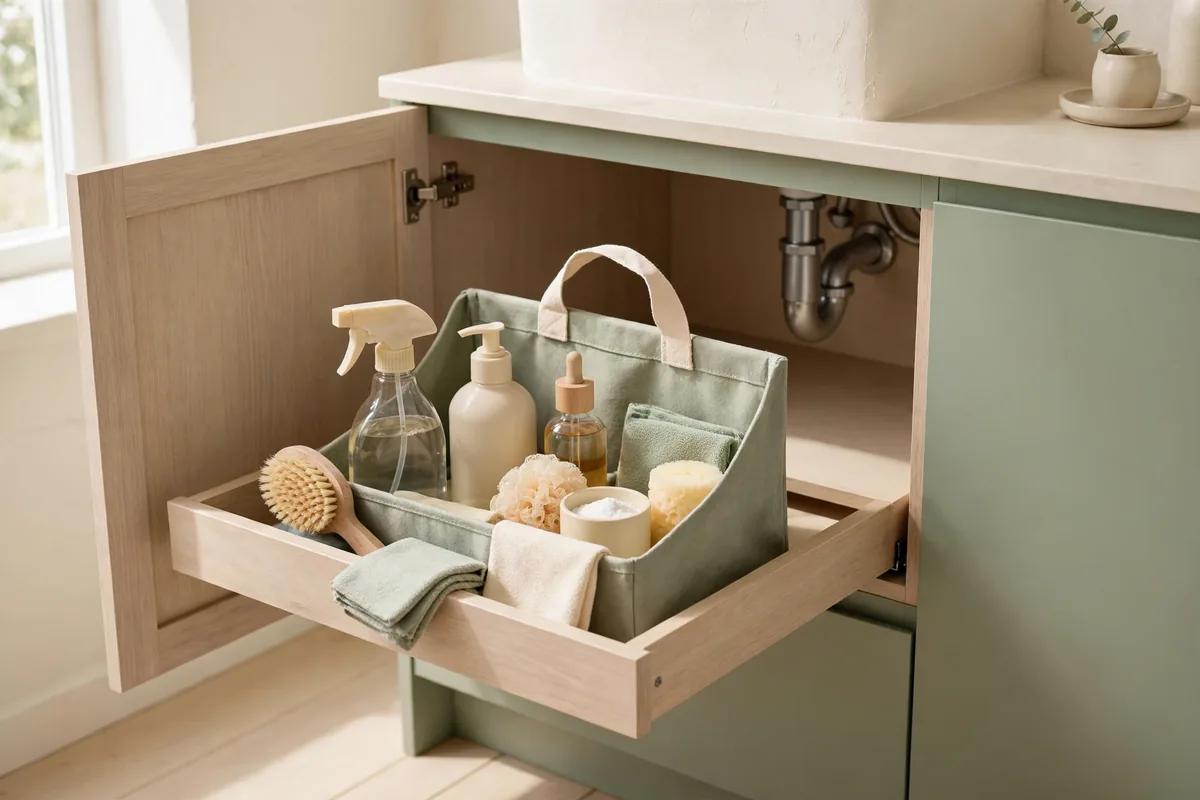
If your mornings involve the same five products, they should live in one handled caddy ($6 to $10) that slides out of the cabinet in one motion. Use it, put it back. This kills the slow drift where daily items end up on the counter and stay there for a month.
The caddy also makes cleaning the cabinet trivial: lift it out, wipe the shelf, drop it back. Shared bathroom? Give each person their own caddy in a different color. It ends the negotiations about whose bottle is whose, permanently.
Give the Medicine Cabinet Three Zones
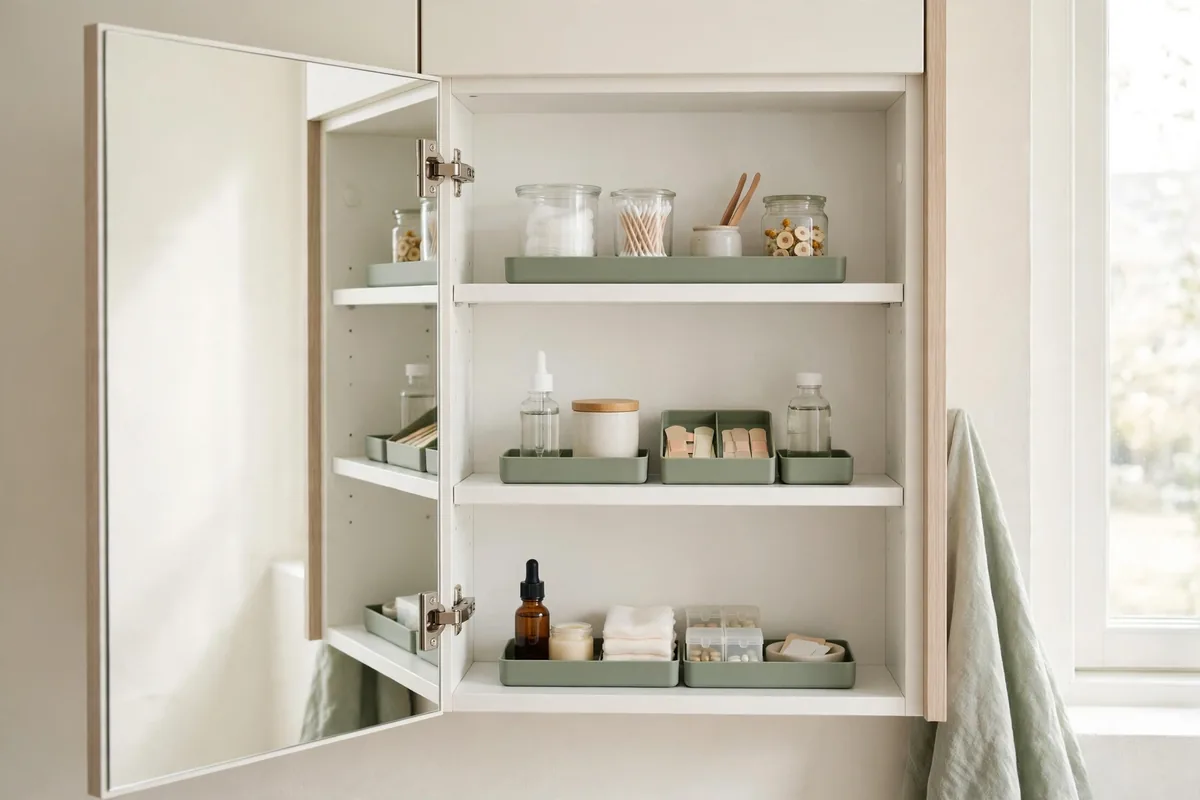
Medicine cabinets fail for one reason: everything lands on whichever shelf has space. Assign each shelf a job. Top shelf: medicine and first aid, the stuff you need rarely but must find fast. Middle shelf: daily face and teeth. Bottom shelf or door racks: the overflow and the travel minis.
Use small acrylic risers or stackable trays ($8 to $12) so the back row stays visible. Bottles in a single row waste depth; a riser turns one row into two visible rows. Keep the heaviest bottles low so nothing topples when you open the door in a hurry.
Purge the expired stuff twice a year. Medicines, sunscreen, and opened eye drops all have real shelf lives, and a medicine cabinet full of old sunscreen is not storage. Tie the purge to daylight saving time so you actually remember to do it.
Stick a Magnetic Strip Inside the Door
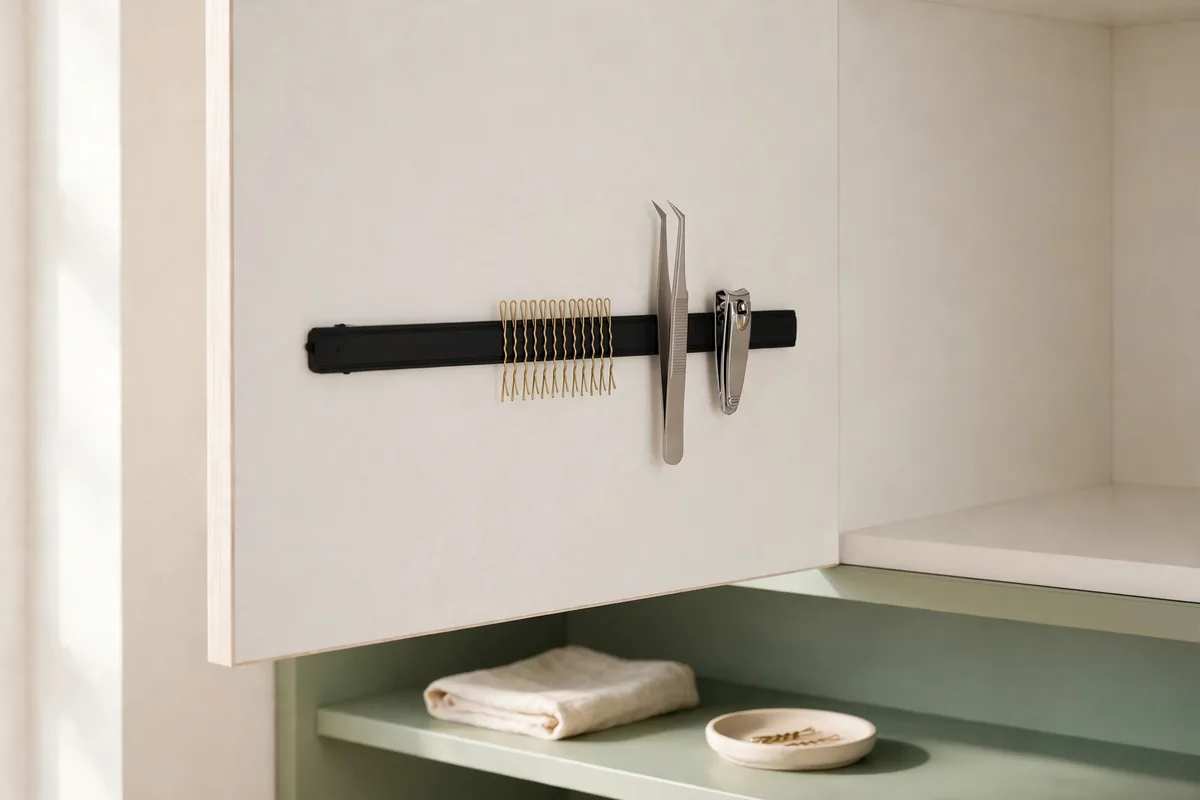
A magnetic knife strip ($8 to $12) mounted with adhesive on the inside of a cabinet door holds bobby pins, tweezers, nail clippers, and small scissors where you can actually see them. These are the items that vanish into drawers and reappear in pairs on the bathroom floor.
Test the magnet strength before you load it up. Cheap strips drop tweezers at 2 a.m. with a clatter you will remember. And keep the strip away from anything with a magnetic stripe you care about, though in practice a hotel key card is the only casualty most people ever report.
Command Hooks for Hot Hair Tools
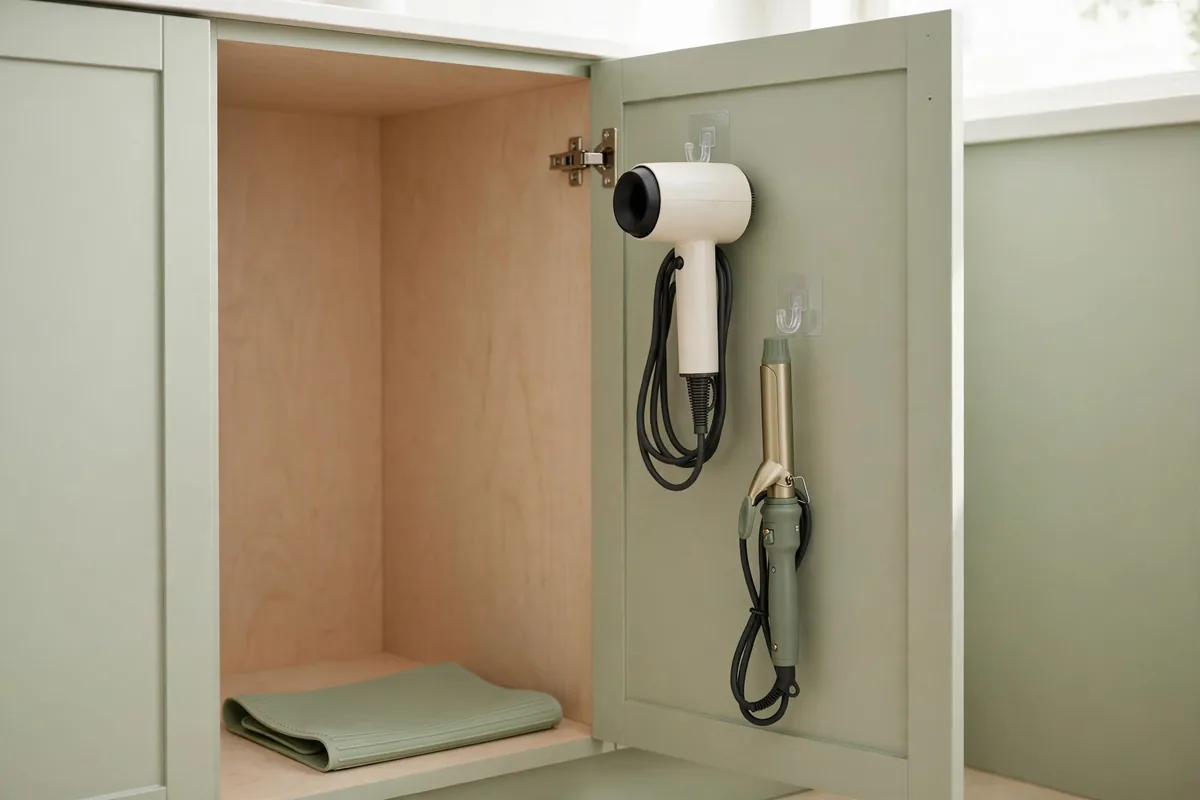
Hair dryers and straighteners are the bulkiest things most people store in a bathroom cabinet, and they tangle with everything. Two large Command hooks ($4 to $6 for a pack) on the inside of the cabinet door give each tool its own hanging spot. Wrap the cord loosely around the tool before hanging so it does not become a net for everything else.
Let hot tools cool before you stow them. Everyone knows this and everyone violates it. A silicone heat mat ($7) on the cabinet floor gives you a safe landing pad for the five minutes between use and storage, and it protects the cabinet finish from scorch marks.
Renters, this whole section is for you: nothing here needs a screw. Command hooks, tension rods, and adhesive magnetic strips all come off cleanly. When you move, the cabinet looks untouched and your whole system moves with you.
Clear Slide-Out Bins for the Deep Wall Cabinet
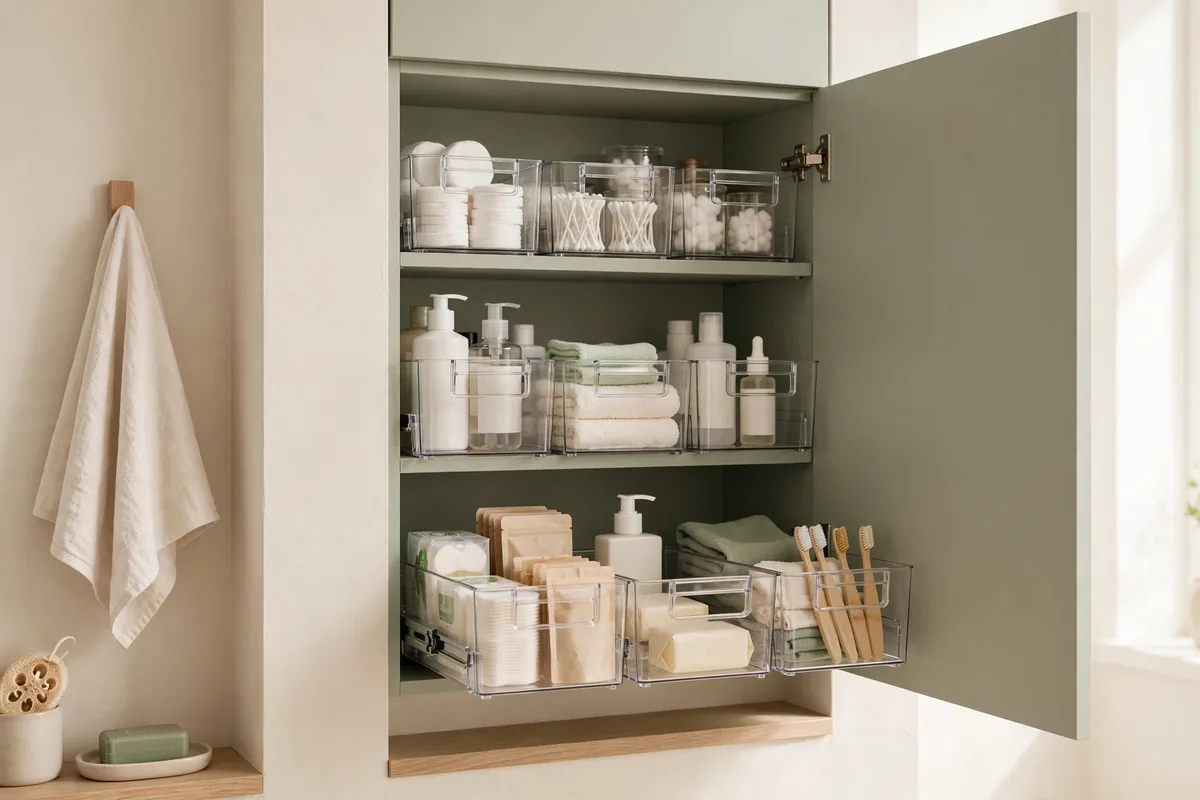
Wall cabinets over the toilet or beside the mirror are usually deep and dark, which means the back half becomes a graveyard. If you would rather skip the cabinet altogether, open shelves above the toilet hold the same daily items where you can see them. Clear slide-out bins ($12 to $18 for a set) with handles turn the depth into an advantage: pull the bin, see everything, push it back.
Assign each bin a category and label it. Toilet paper and backstock in one, cleaning supplies in another, the guest supplies in a third. Clear plastic wins here over pretty baskets because you can inventory the backstock without pulling anything out.
Put the things you grab daily at the front of the bottom shelf and the backstock up high. The golden rule of cabinet organization: frequency of use sets the height. Daily at hand level, weekly at eye level, rarely touched above your head.
Decant and Label the Backstock
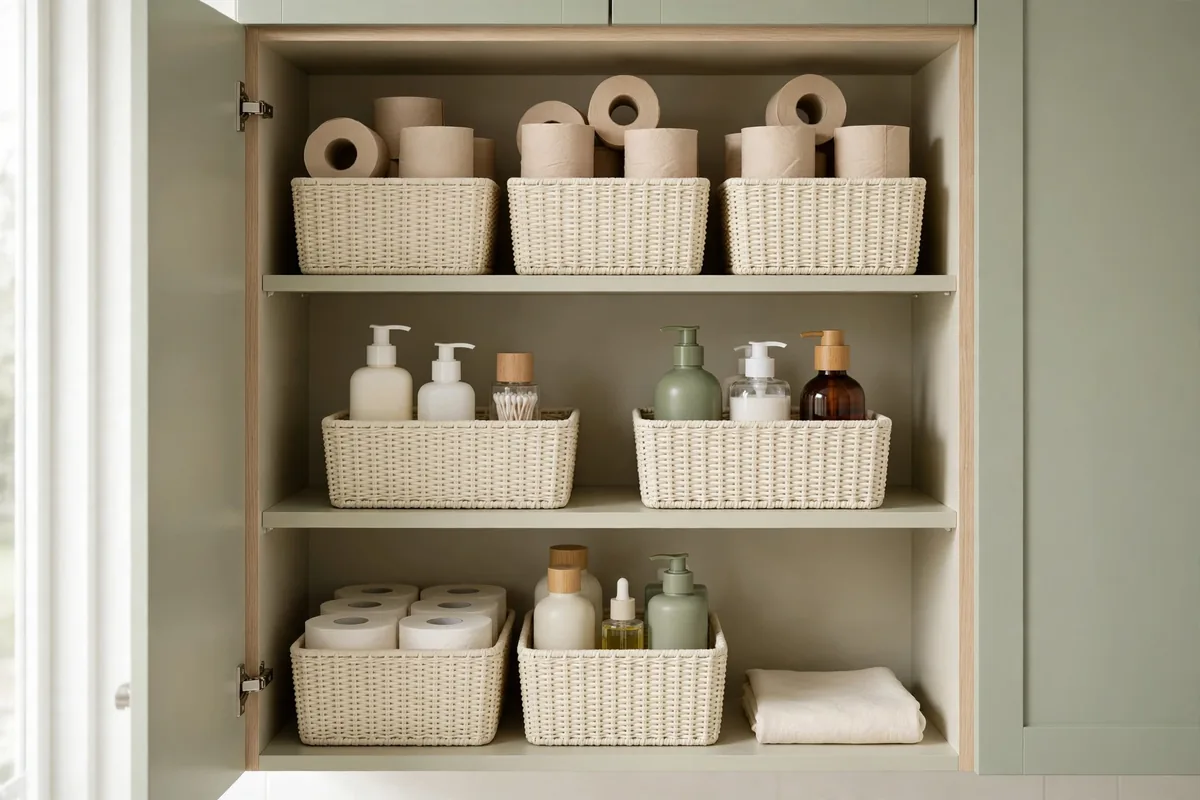
Backstock is where cabinets go to die: six travel shampoos, three half-used lotions, the fancy soap nobody opens. Decant the keepers into matching pump bottles or clear jars, label them, and donate or toss the rest. Matching containers look calmer and take up less room than a dozen mismatched bottles.
Keep a simple rule for backstock: one backup, not five. When you open the backup, the empty slot on the shelf is your shopping list. This one rule prevents the slow refill creep that fills every cabinet eventually. For the bigger picture of where backstock and everything else should live, our guide to planning storage in a small bathroom covers the rest.
File the Vanity Drawer With Simple Inserts
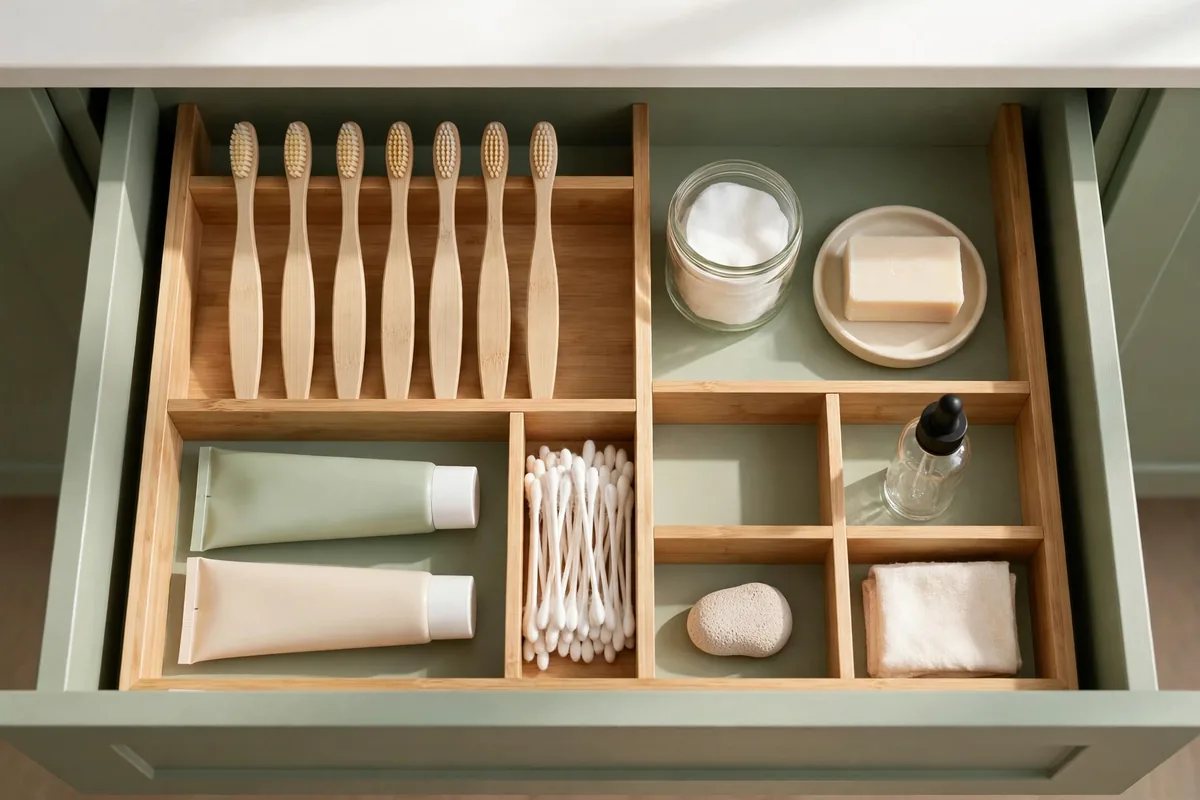
Vanity drawers are shallow and wide, which means everything slides into one tangled layer. A bamboo drawer insert ($8 to $15) or even a kitchen silverware organizer divides the drawer into compartments sized for tubes, brushes, and small bottles. The long compartments fit toothbrushes and toothpaste; the small ones corral lip balm, floss, and bobby pins.
Sort by routine, not by type. Morning items on the left, evening on the right, or one side per person in a shared bath. When the drawer mirrors your routine, you stop thinking about where things go. The drawer becomes invisible in the best way.
If you do not want to buy anything, cut down small boxes to make dividers. Cereal-box cardboard cut to drawer height works for months, and it costs nothing. Upgrade to the bamboo insert later once you know which compartment sizes you actually use.
- Long compartments: toothbrushes, toothpaste, razors.
- Medium compartments: deodorant, small bottles, tweezers.
- Small compartments: lip balm, floss picks, bobby pins, spare batteries.
The Two-Minute Weekly Reset
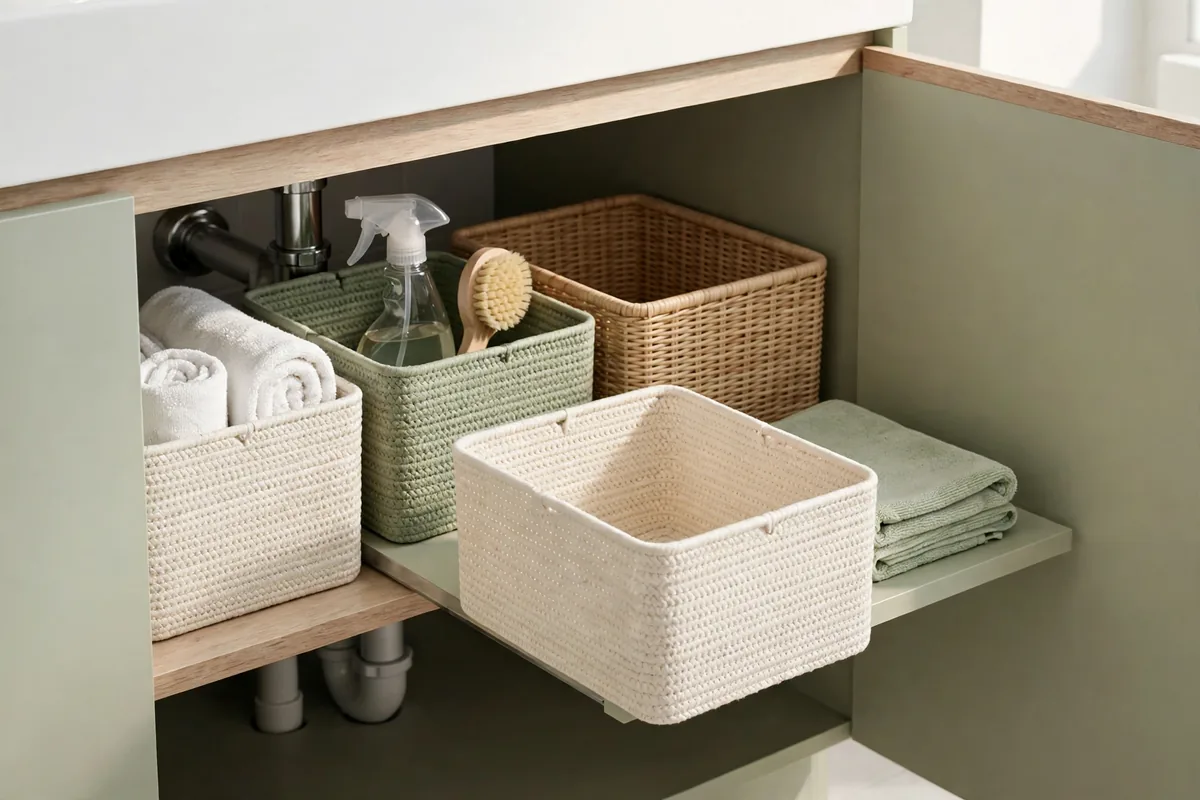
Cabinets drift. A bottle migrates to the counter, the backstock bin gains a stray, the caddy ends up in the wrong lane. Once a week, open every cabinet door and spend two minutes putting strays home. Set a phone reminder for Sunday night until it becomes automatic.
The reset is also your early-warning system. A damp spot under the pipes, a bottle starting to leak, a hook losing its grip: you catch all of it in the weekly two minutes instead of discovering it during the next big cleanup.
Do the Under-Sink Cabinet This Weekend
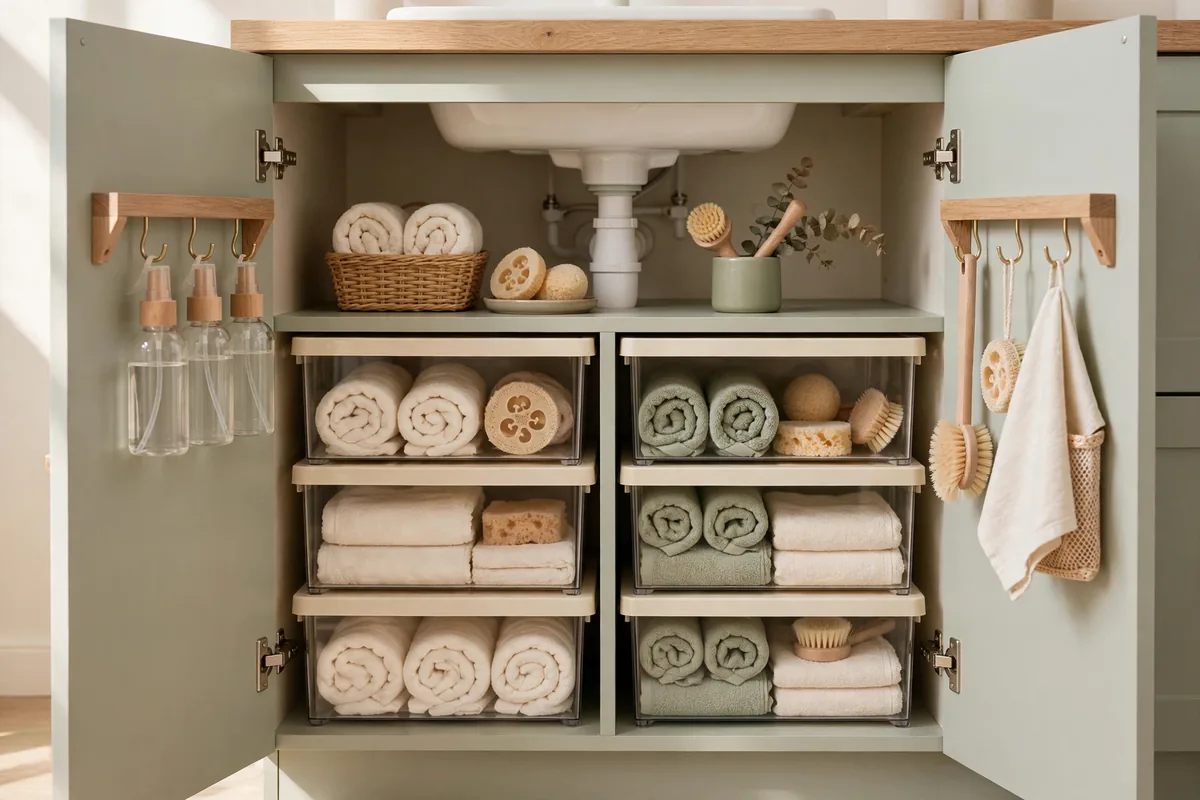
If the whole list feels like a lot, ignore most of it and do one cabinet: the one under the sink. Empty it Saturday morning, lay the mat, add a tension rod and two stackable drawers. Under $40, one afternoon, and it is the cabinet you open most.
Then do the medicine cabinet next weekend, and the drawer the one after. Small bathroom cabinet organization ideas work best one cabinet at a time, in the order that annoys you most. And when the cabinets are done, this guide to organizing the whole small bathroom tackles the counter, shelves, and walls the same way.