The first bathroom I ever had to keep organized belonged to a rental where the door, the toilet, and the sink were arranged like a bad joke. No linen closet, no real cabinet, and a windowsill that was never meant to hold shampoo bottles. Everything I owned ended up on the floor in a slow ring around the toilet base, and every morning started with me kicking bottles out of the way. The bathroom was not dirty. It just had nowhere for anything to go.
Small bathroom storage ideas work best when you think in zones, not products. The air over the toilet, the walls, the cabinet under the sink, the shower, the gaps between fixtures: each is a storage zone waiting for a job. This guide walks through twelve of them, roughly in order of impact. For the zone-by-zone system behind these storage wins, start with our full small bathroom organization guide. Most cost under $40, many need no drilling. Here is how to give every bottle, towel, and roll of toilet paper a home that is not the floor.
Start by Clearing the Floor
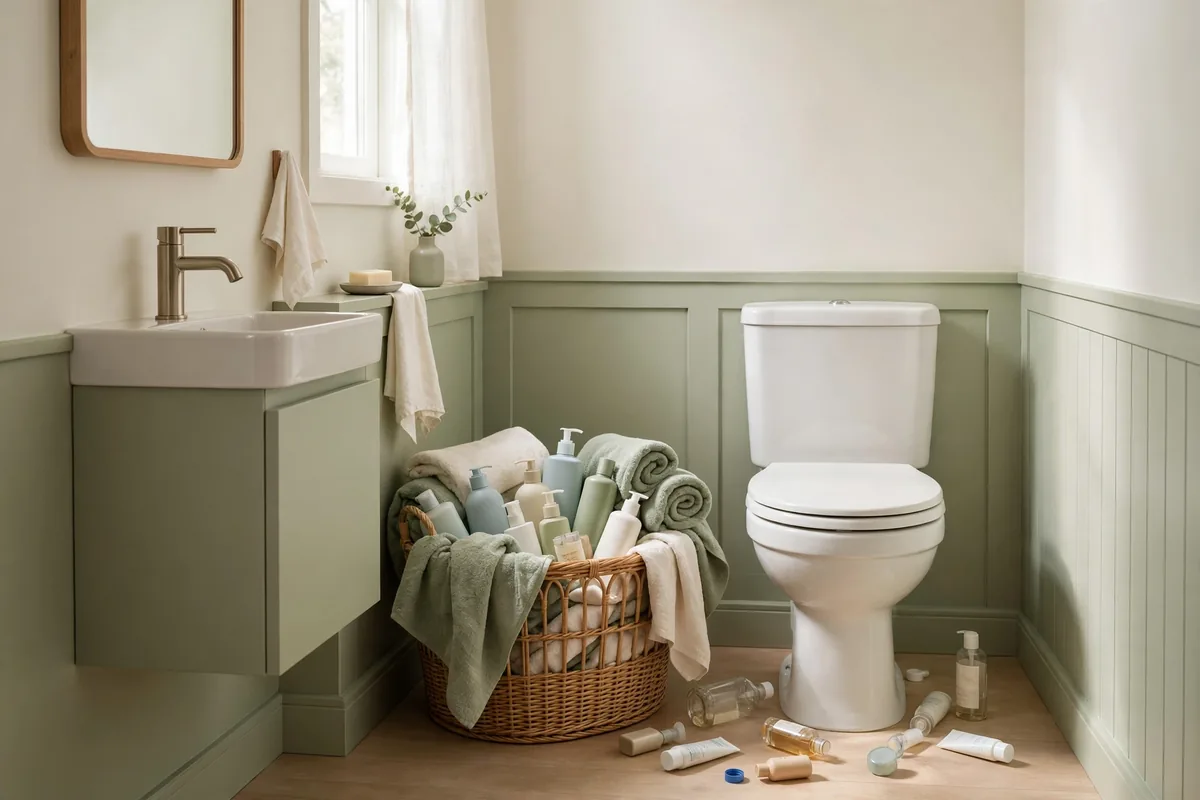
Before you buy anything, get everything off the floor. Grab a laundry basket and sweep the whole bathroom into it: bottles, towels, the scale you step around, the cleaner living behind the toilet. A small bathroom with a clear floor instantly feels twice as big, and it shows you exactly how much stuff is fighting for space.
Sort the basket on your bed, because the bathroom is too small for this part. Toss the empties and the products you stopped using months ago. Group what is left by where it gets used: shower stuff, sink stuff, towels and paper, cleaning supplies. You are not organizing yet, just seeing the inventory honestly.
Put back only what you use weekly. Everything else goes to a hall closet or a donation bag. Storage only works when the volume of stuff matches the room, and most small bathrooms carry a full-size bathroom’s inventory. The purge is free, and it makes every idea below work twice as well.
Put the Space Over the Toilet to Work
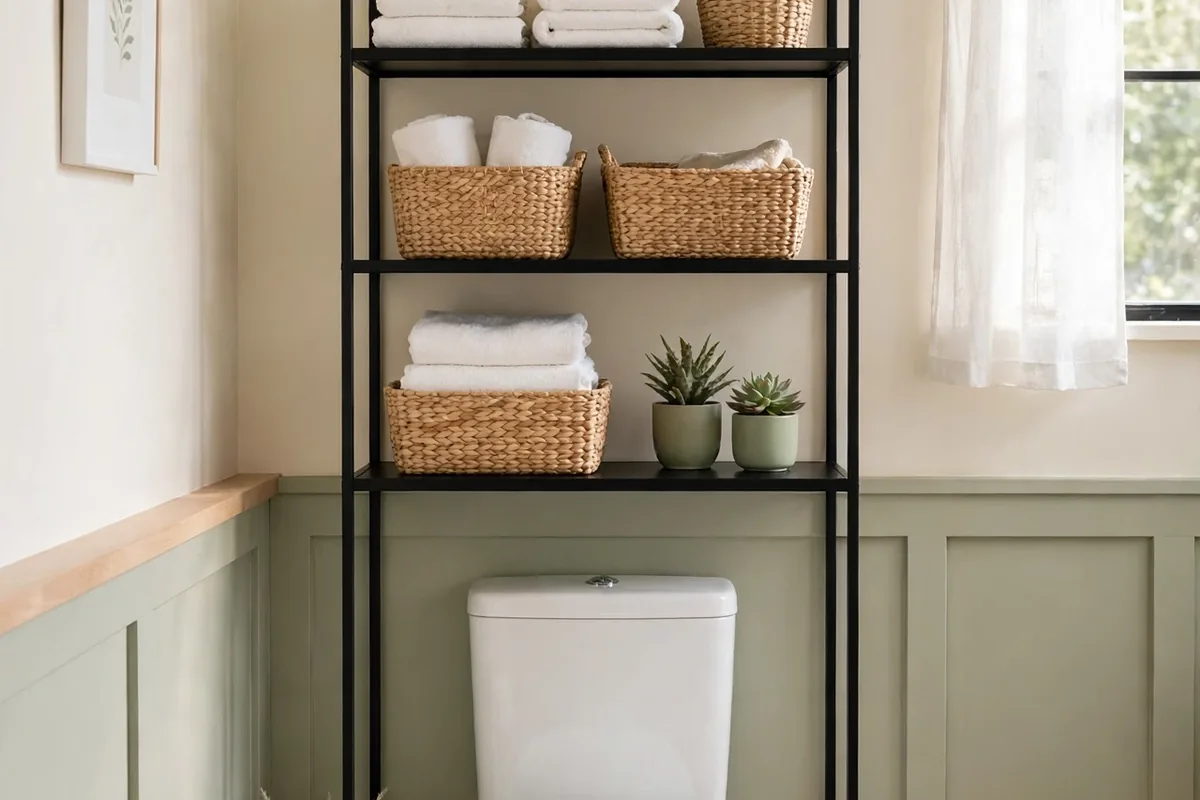
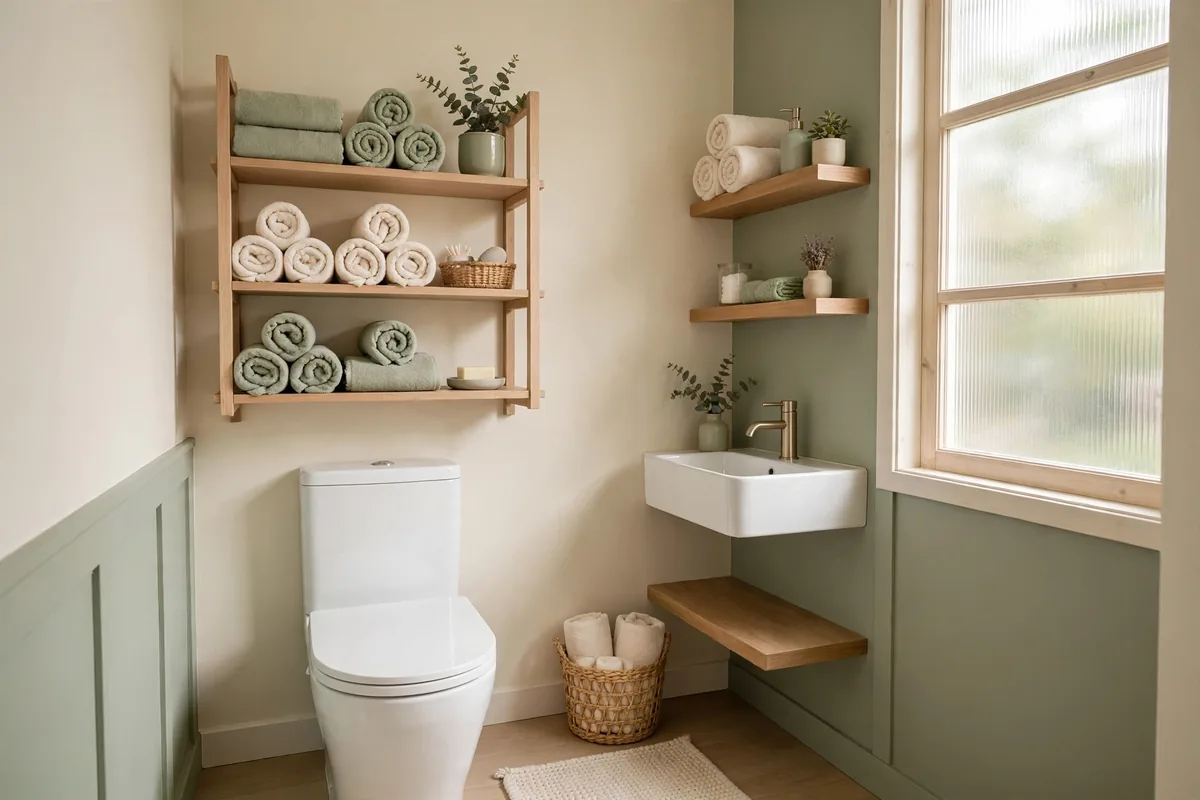
The air above the toilet tank is the biggest unused zone in most small bathrooms. Roughly two feet wide, dead space from the tank lid to the ceiling, with no plumbing you need to reach. An over-the-toilet etagere turns it into three shelves of real storage without touching a square inch of floor.
Measure first, because a wrong purchase here is genuinely annoying. Check the width available, the height from the tank lid to the ceiling, and how far the tank extends from the wall. Freestanding units need clearance around the tank and a flat wall to anchor to. Wall-mounted shelves skip the leg problem entirely.
For a ready-made option, IKEA’s FRÖSJÖN over-the-toilet shelf is the classic pick: three shelves, a front rail so nothing slides off, around $60. Read the reviews for your toilet type first, since the lower bar can conflict with some water lines. Anchor any unit to the wall, even a freestanding one.
Style it heavy-low and pretty at eye level. Toilet paper and cleaning supplies go on the bottom shelf. Folded towels and a small plant live at eye level. The top shelf is for backstock you reach for monthly. Keep a lidded basket up there for anything you would rather not think about.
Run Shelves Up the Wall, Not Out Into the Room
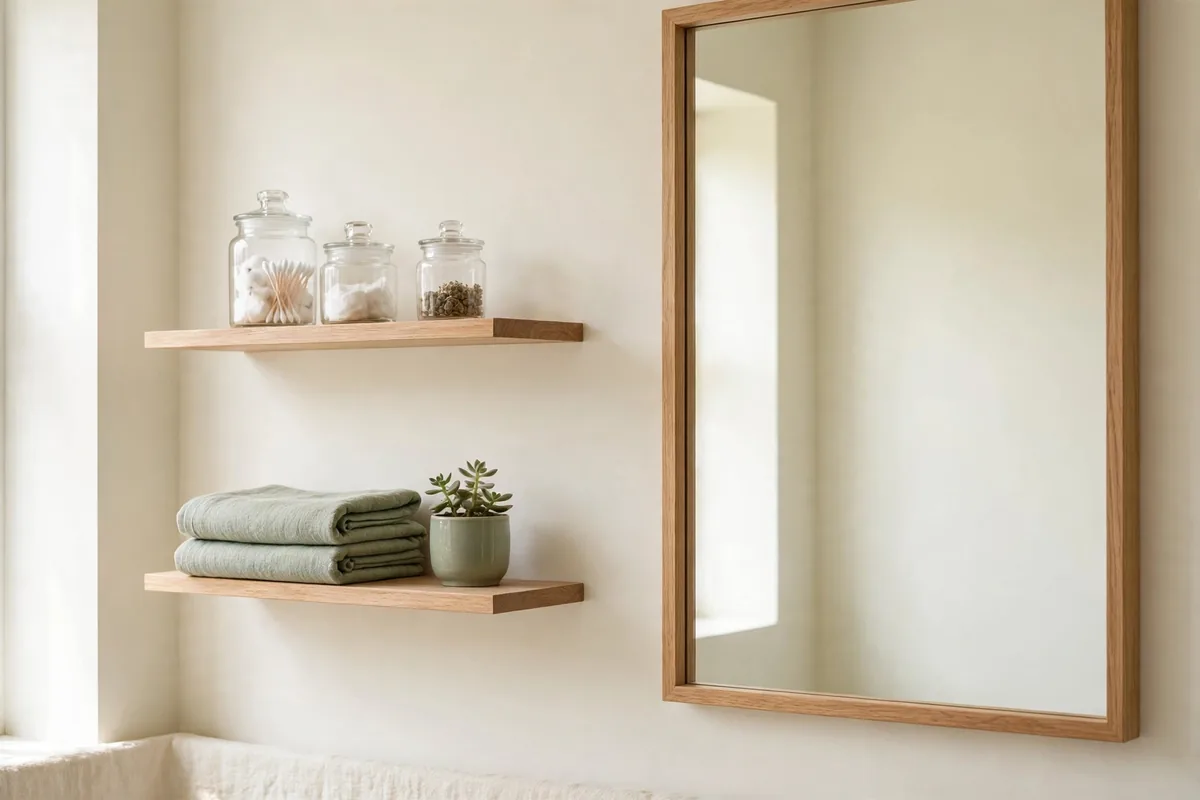
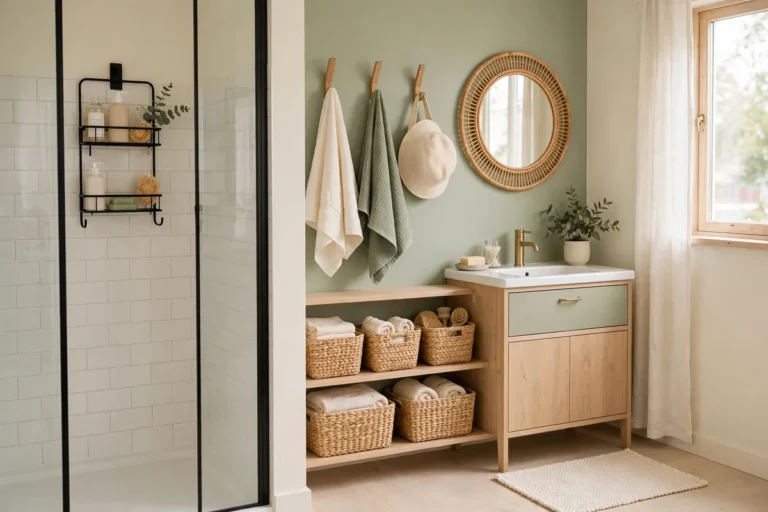
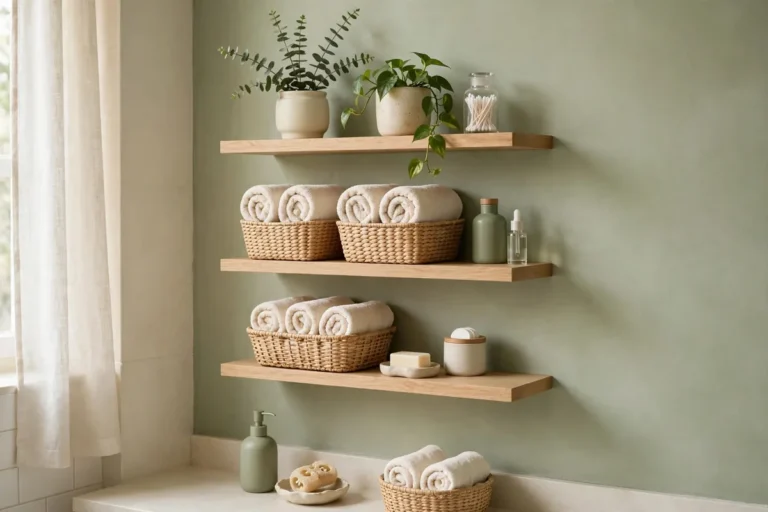
Wall space is the one dimension a small bathroom usually has in surplus. A pair of floating shelves above the towel bar or beside the mirror adds storage that never competes with your elbows. Keep them shallow, ten inches or less, so they read as ledges rather than cabinets jutting into the room.
Renters have good drill-free options. Heavy-duty adhesive shelves hold surprising weight on smooth tile, and tension-mounted corner shelves wedge between floor and ceiling. Whatever you mount, load it with daily-use items and keep the styling sparse. A crammed shelf just moves the clutter from the counter to the wall.
One wall of storage is usually enough. Small bathrooms get visually noisy fast, and three decorated walls will make the room feel smaller than one calm one. Pick the wall that holds the things you reach for most and leave the rest alone. These bathroom shelf ideas for small spaces cover styling and placement for every wall.
Reclaim the Cabinet Under the Sink
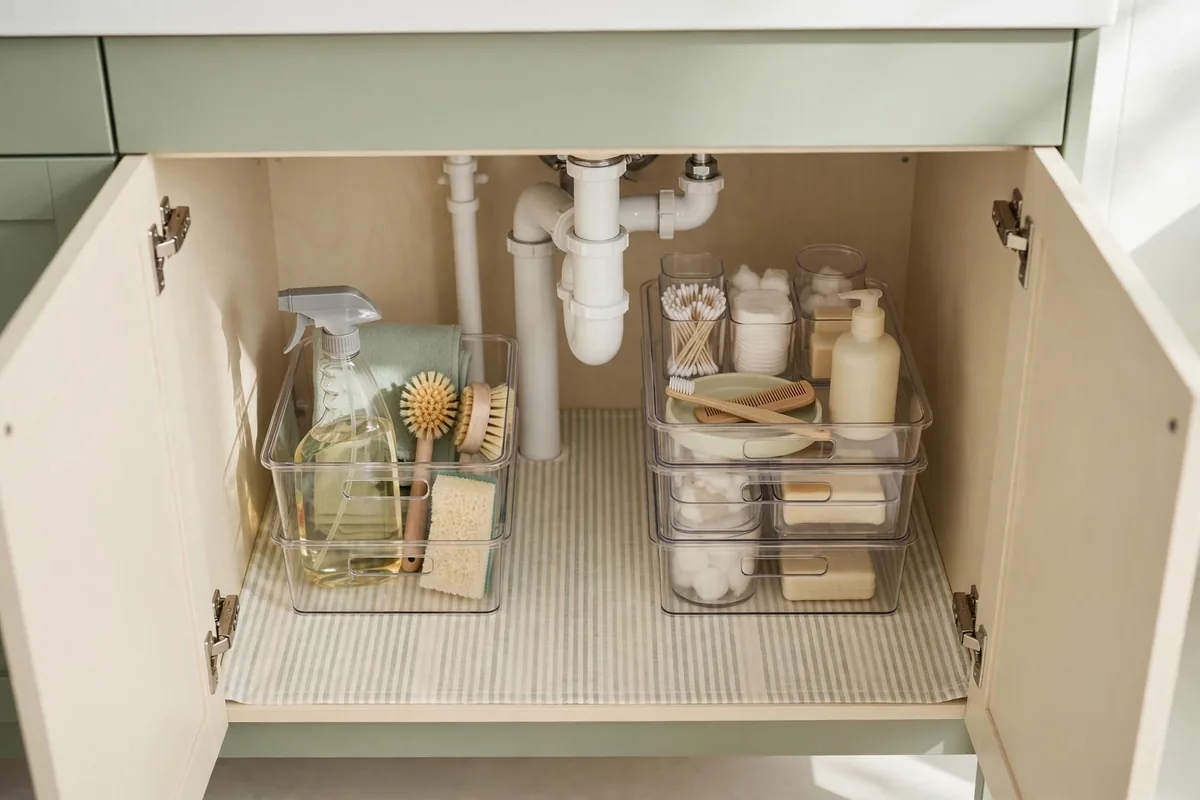
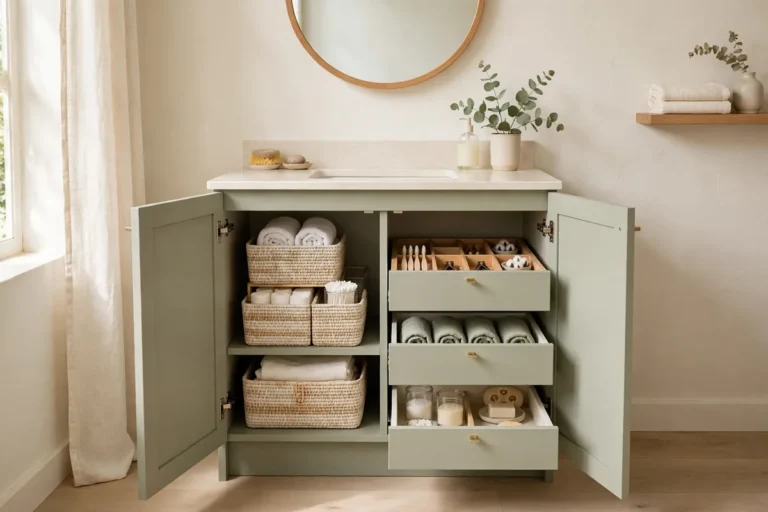
The cabinet under the sink is the Bermuda Triangle of small bathrooms: things go in and are never seen again. The pipes turn the middle into dead space while everything gets shoved to the sides. The fix is stacking and containing, not a bigger cabinet.
Start with two stackable drawers sized to fit around the pipes. Measure the interior height, width, and pipe positions before you shop. Clear bins win here since you can see contents without pulling everything out. One bin for cleaning supplies, one for backstock, a small caddy on the door for daily items.
A tension rod across the cabinet interior is the cheapest upgrade going, usually under $10. More low-effort wins like it are in these clever hacks for organizing small bathrooms. Hang spray bottles from their triggers and the whole cabinet floor stays clear. It takes five minutes and works around any pipe layout.
Keep cleaning products in one lift-out caddy, separate from everything else. For the full cabinet treatment, see these bathroom cabinet organization ideas for tight spaces. When the cabinet needs a wipe-down, you lift one caddy instead of twelve bottles. Put a washable liner on the cabinet floor too. Leaks announce themselves much earlier on a light liner than on dark wood.
Give the Shower Its Own Storage
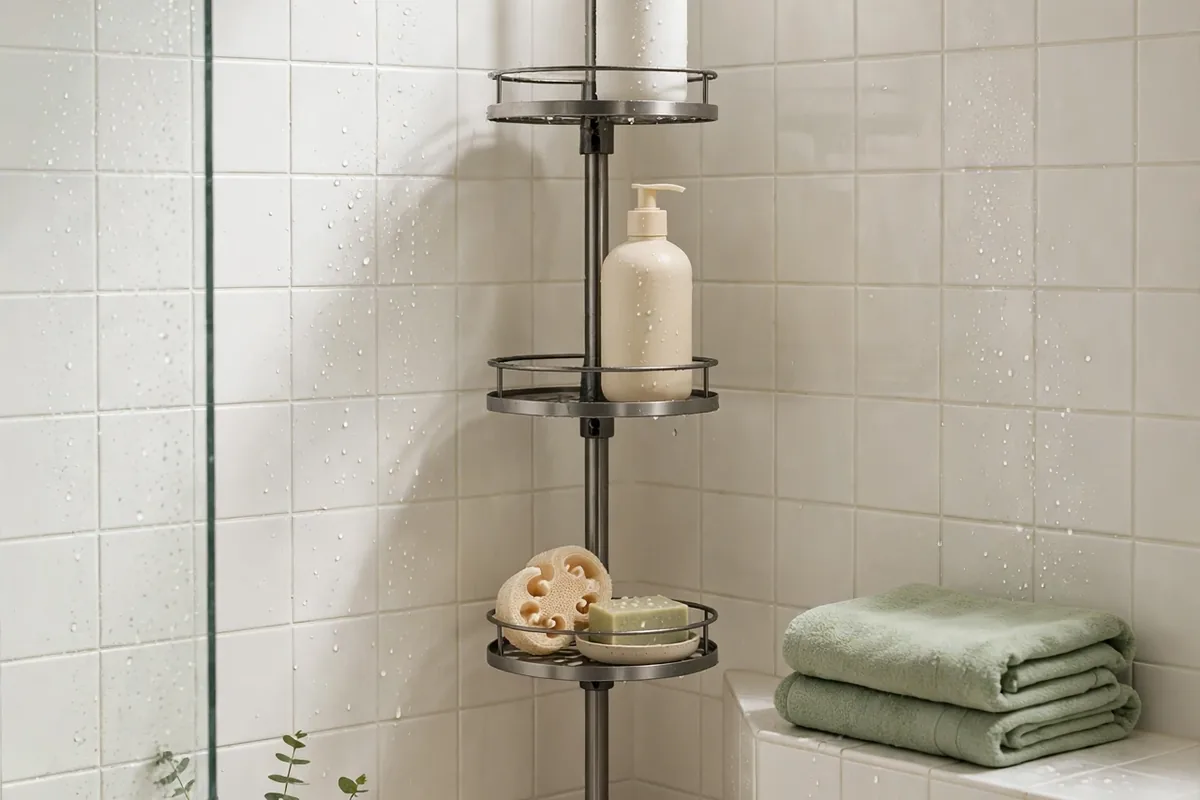
Shower bottles migrate to the tub edge, the floor, and eventually every flat surface in the bathroom. Stop the migration by giving the shower enough storage that leaving is pointless. Once bottles leave the shower, keep them off the vanity too with these counter organization ideas for small bathrooms. A tension-pole corner caddy holds a family’s worth of bottles in about six inches of corner.
In a shared shower, give each person a shelf or hanging basket. Defined zones stop bottles from colonizing each other’s space. Suction shelves are the renter fallback, but they fail on textured tile, so test one before committing. A rust-proof metal caddy outlasts plastic by years in daily steam.
Store Towels Vertically Instead of in Piles
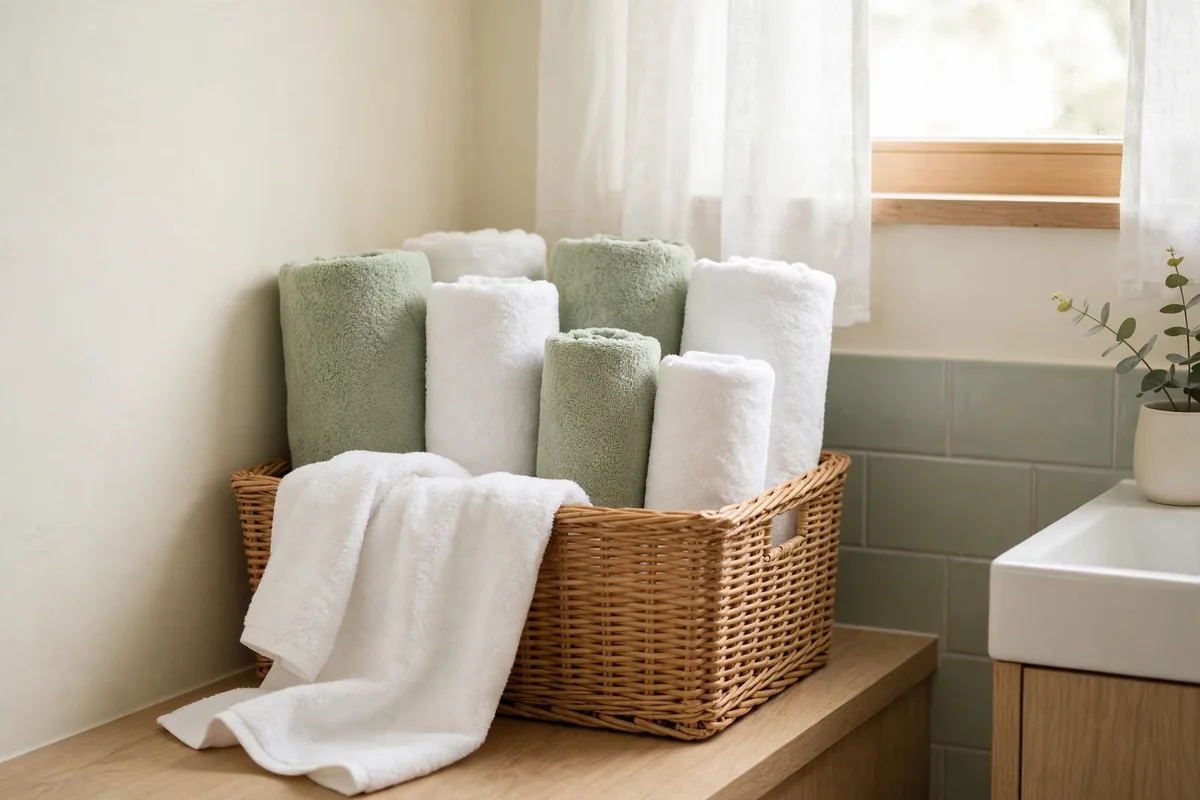
Folded towel stacks are space hogs. Four bath towels rolled and filed upright in a basket fit in half the footprint of a folded stack, and you can grab one without toppling the rest. Rolling also lets air circulate, which matters in a steamy bathroom.
A towel ladder leaning against the wall holds four to six towels in about eighteen inches of width. No room for a ladder? An X-shaped wall-mounted wine rack files rolled towels in cubbies on any empty wall section. Both keep towels aired out so they stop staying damp in the middle.
Keep only two sets of bath towels in the bathroom. The rest live in a linen closet or bedroom shelf. Small bathrooms punish overstocking, and towels are the usual suspect. Two in use, two in the wash, the rest stored elsewhere.
Slot a Narrow Tower Into the Dead Corner
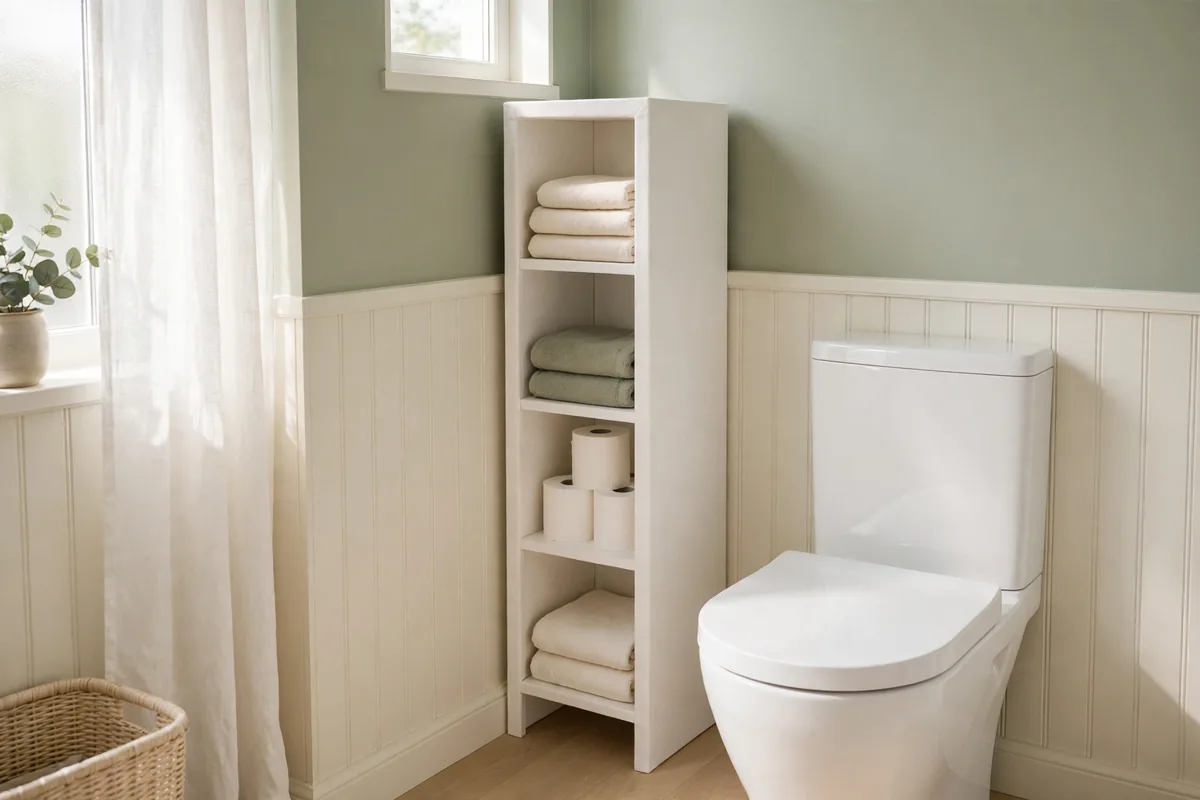
Almost every small bathroom has a dead corner: beside the vanity, next to the toilet, the strip between the door swing and the tub. A narrow tower, twelve inches wide or less, slides into these gaps and adds four or five shelves where nothing fit before.
Anchor it to the wall, always. A tall narrow cabinet loaded with towels is tippy by design, and bathrooms are slippery. Use it for things that need a home but not daily access: spare toilet paper, extra towels, the first-aid kit. Daily items stay at counter height.
Add More Hooks Than Feels Reasonable
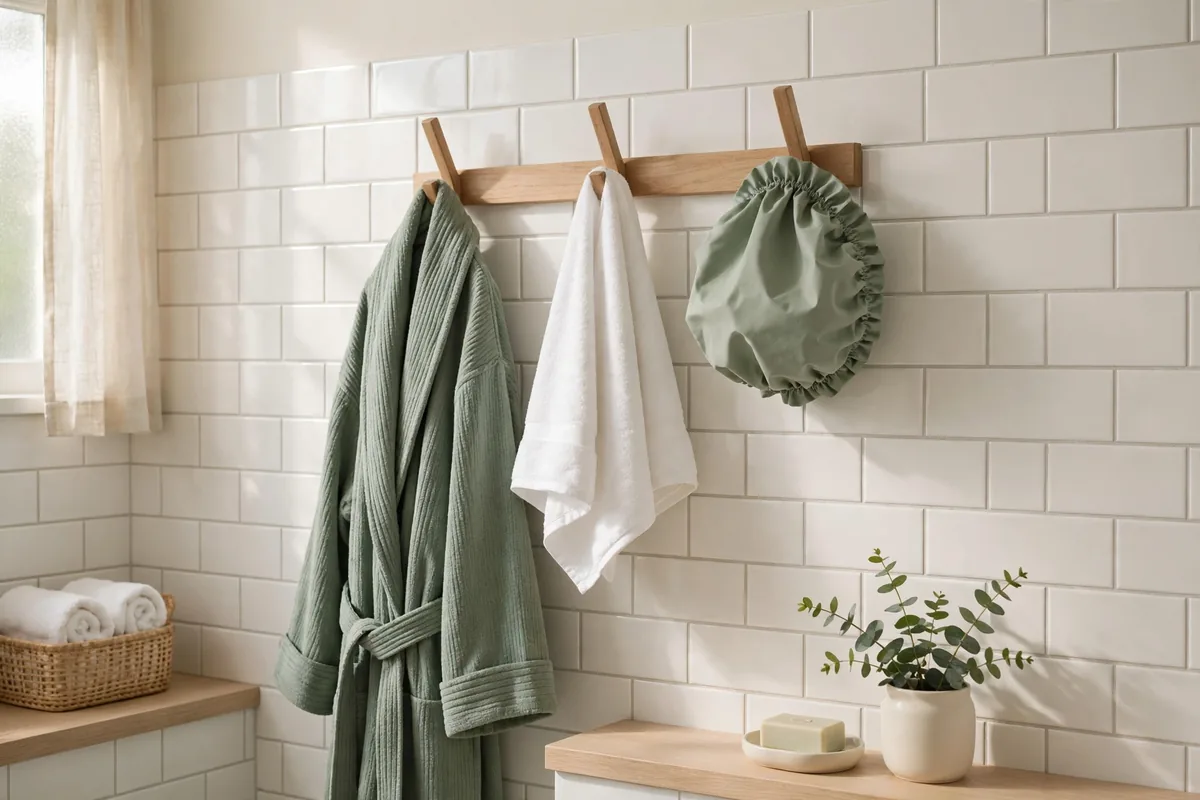
Hooks are the highest storage-per-dollar item in a small bathroom. A row of them holds the bathrobe, the hand towel, tomorrow’s outfit while you shower, and the bag you carried in. Towels on hooks also dry faster than ones draped over a bar, which means less mildew.
Adhesive hooks have gotten genuinely good, with some rated for several pounds on tile and glass. Use them freely as a renter. For heavier loads like a packed toiletry bag, one properly anchored screw hook beats five adhesive ones. Mix both: adhesive for light daily stuff, screws for the heavy hitters.
Put hooks where the motion already happens. Beside the shower for the towel you grab stepping out, facing the vanity for the robe. A hook in the wrong place holds nothing. A hook exactly where your hand goes holds everything.
Use the Back of the Door
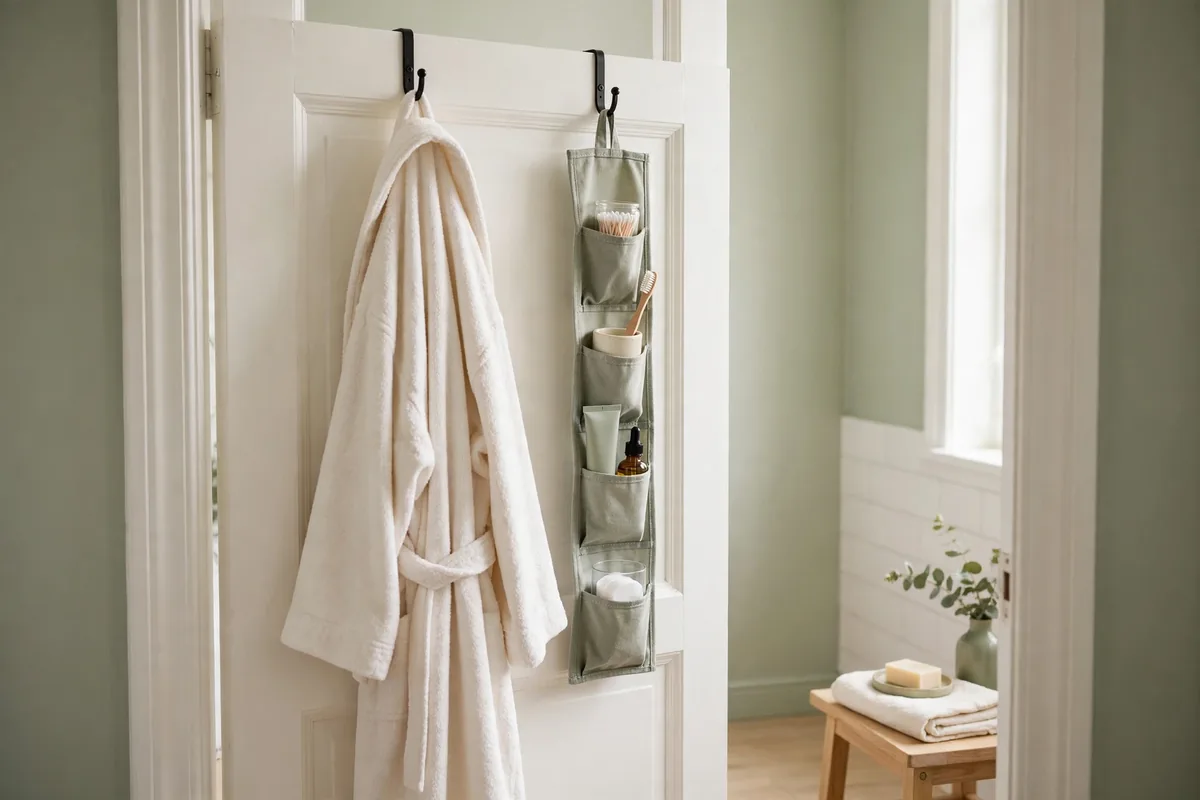
The back of the bathroom door is a full extra wall that swings with the room. Over-the-door hooks or a narrow hanging organizer turn it into storage for the robe, the hair dryer, or cleaning supplies. No screws, no damage, installation measured in seconds.
The one rule is that the door still has to close and latch. Measure the gap between the door and the frame before you buy, since organizers thicker than two inches stop some doors from latching. Keep it to light, flat items so the hinges never notice the load.
Mind the Gaps: Beside the Vanity and Between Fixtures
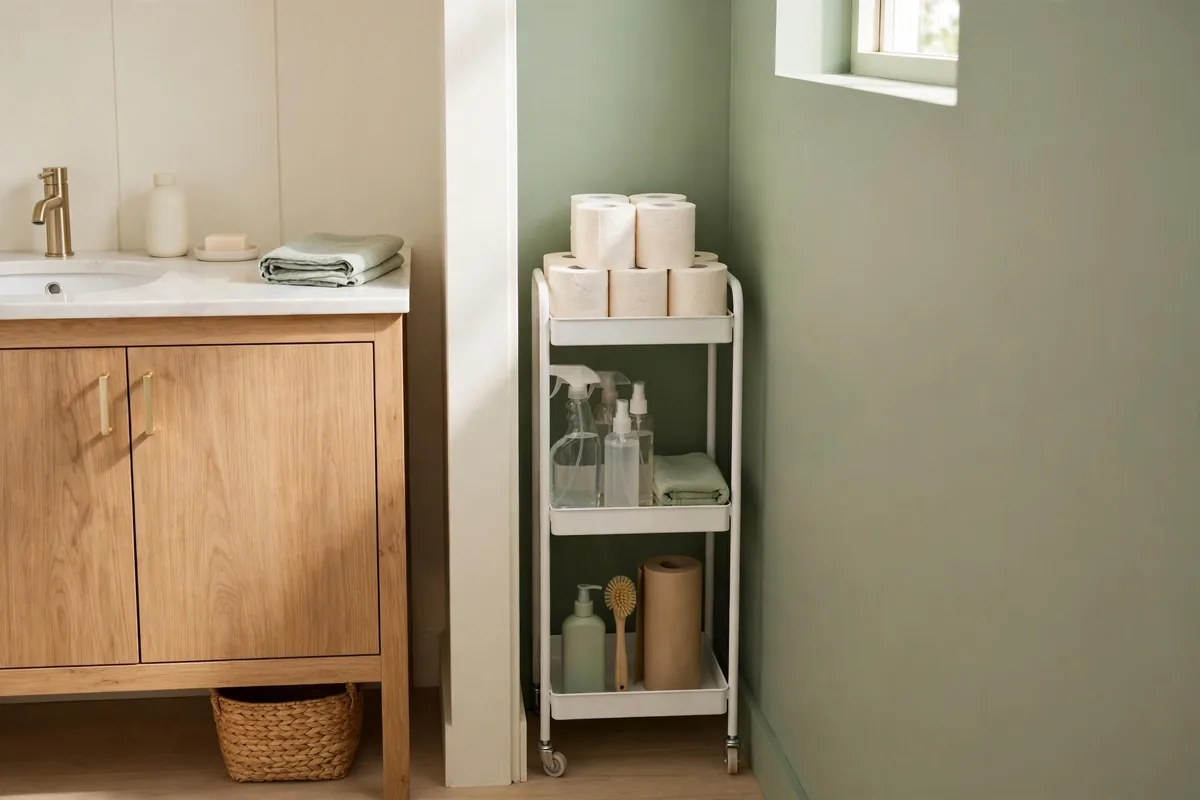
Small bathrooms are full of gaps that look like nothing: four inches beside the vanity, the strip between the toilet and the tub. Slim rolling carts, usually around six inches wide, are built for exactly these spaces. Three tiers of supplies that slide in and roll out on demand.
Measure every gap down to the quarter inch, at the floor and at counter height. Walls lean and vanities bow; a cart that fits at the top may wedge at the bottom. The classic use is toilet paper beside the toilet, but the same cart works beside the vanity for styling tools.
For a quieter look, a slim lidded basket in the same gap hides the plunger and brush out of sight. Honestly the highest-value storage in any small bathroom. Nobody ever regretted hiding the plunger.
Check the gaps seasonally, because they attract clutter. The strip beside the vanity becomes a graveyard for empty bottles if you let it. A quick monthly sweep keeps them as storage instead of dead space.
Float a Shelf Above the Door Frame
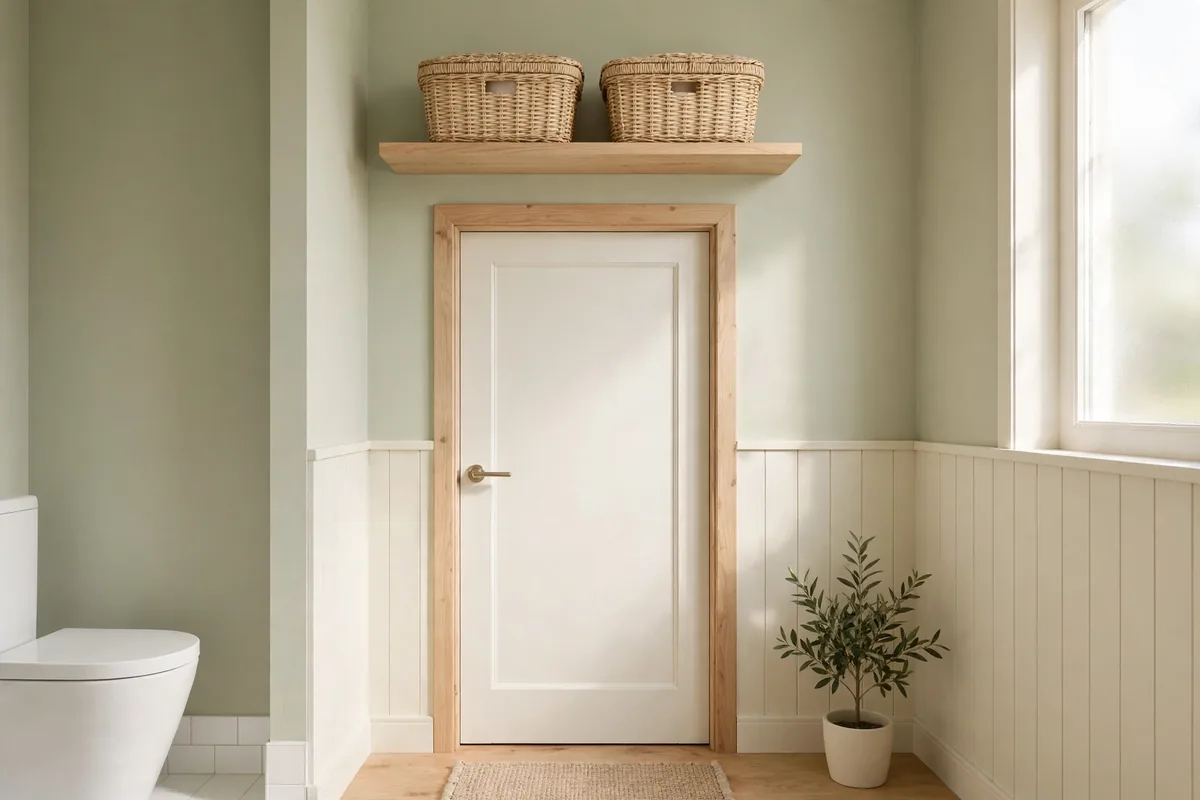
The wall above the bathroom door is storage almost nobody uses. A single floating shelf there holds the things you need rarely but want nearby: spare toilet paper, the first-aid kit, the heavy winter towels. Out of the splash zone and out of sight lines.
Use closed baskets on this shelf, not open display. Anything above eye level should be contained, because you will be reaching blind. Label the baskets so you are not climbing up to check contents. Overlooked spots like this one turn up in every real-small-bathroom makeover.
Stick Small Things to the Inside of Cabinet Doors
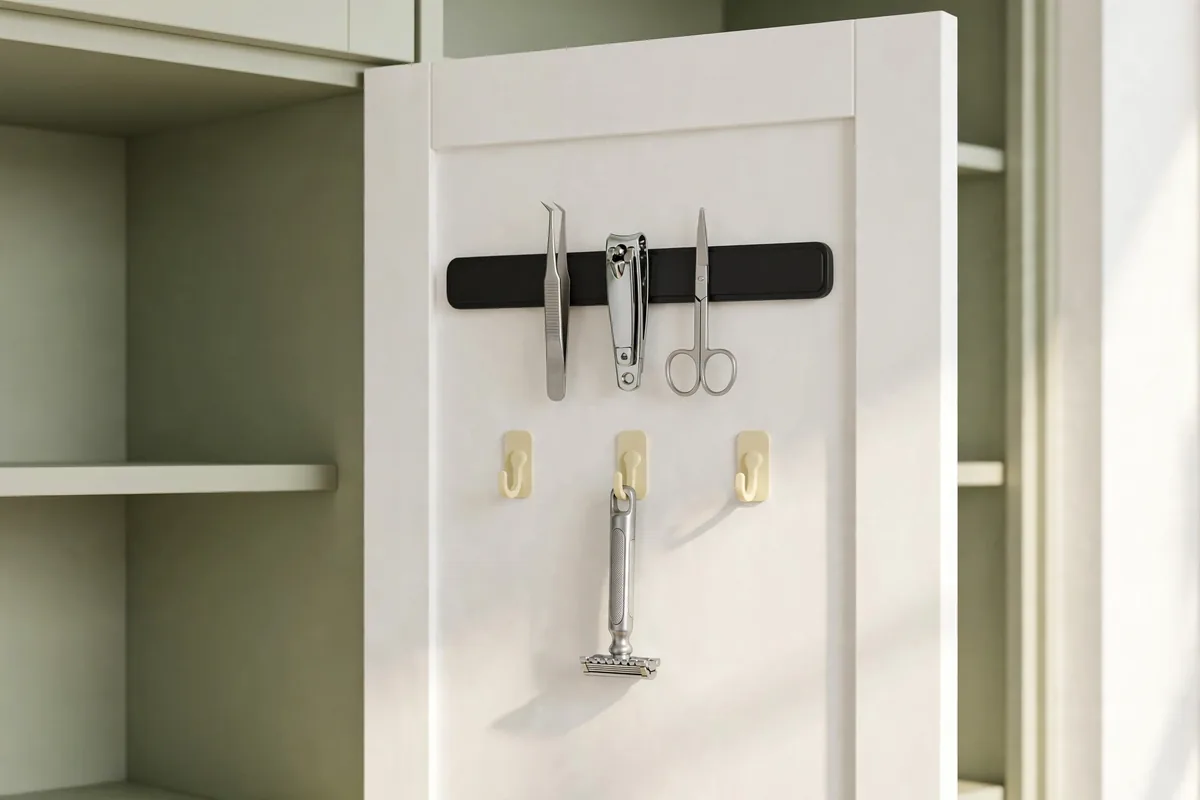
The insides of cabinet doors are flat, reachable, and completely unused in most bathrooms. Adhesive hooks and small magnetic strips turn them into homes for the fiddly things: tweezers, nail clippers, bobby pins, the spare razor.
A magnetic knife strip mounted inside the vanity door is the standout move. Every metal grooming tool in plain sight, zero drawer space used. For non-metal items, small adhesive hooks or a stick-on pocket organizer do the same job. Keep the weight light so the door still closes cleanly.
This is also the spot for things you need rarely but want fast: the thermometer, the spare contact case, the stain stick. Inside the door means one motion to reach, no digging, and the cabinet interior stays clear for bigger items.
Do the Over-the-Toilet Zone This Weekend
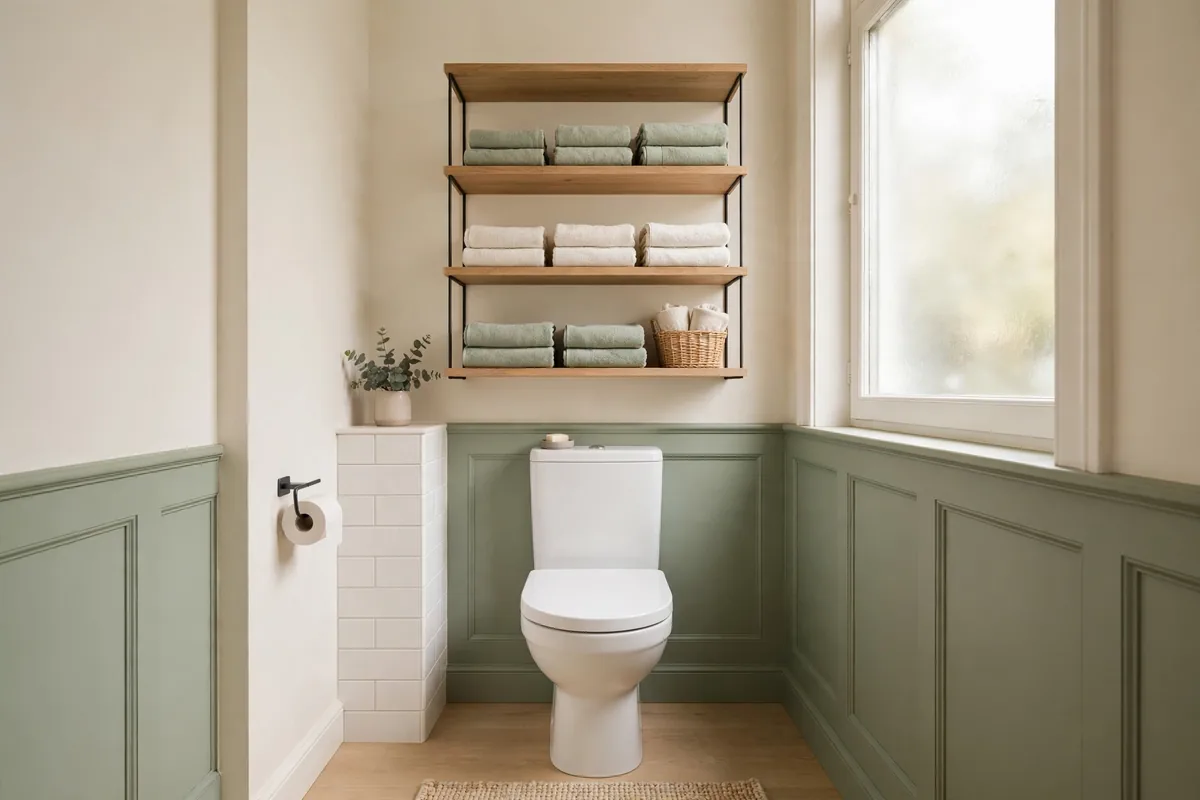
If the whole list feels like a lot, do one zone well: over the toilet. Measure Saturday morning, pick up a unit or a pair of shelves in the afternoon, load it Saturday night. The biggest single storage gain in a small bathroom, for less than a dinner out, and the floor is clear the same day.
Then let the zones happen one at a time, in the order they annoy you. Small bathrooms do not need a full makeover weekend. They need one good decision per zone, starting with the one that gets the bottles off the floor.