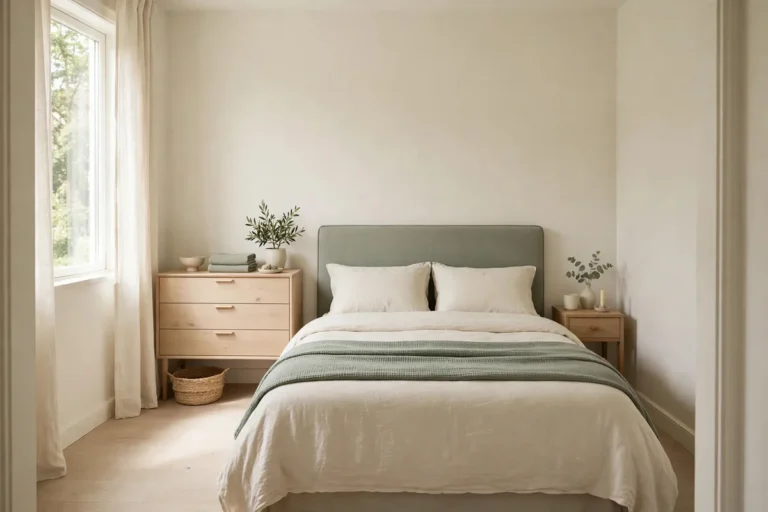
My first apartment bedroom held a full-size bed, a nightstand, and about two feet of empty floor between them. I ordered a dresser online that looked slim in the photos. When it arrived, it did not fit between the bed and the wall. Not even close. That dresser sat in the living room for a month while I figured out what to do with it, and it taught me the one lesson every small bedroom storage idea depends on: measure the room before you buy anything for it.
This guide walks through twelve storage zones, roughly in order of impact: under the bed, up the walls, inside the closet, on the door, and inside the furniture itself. Most ideas cost under $50, many need no tools, and all of them are sized for renters and small rooms. Once you know your gaps, storage stops being guesswork.
Measure Every Dead Zone Before You Shop
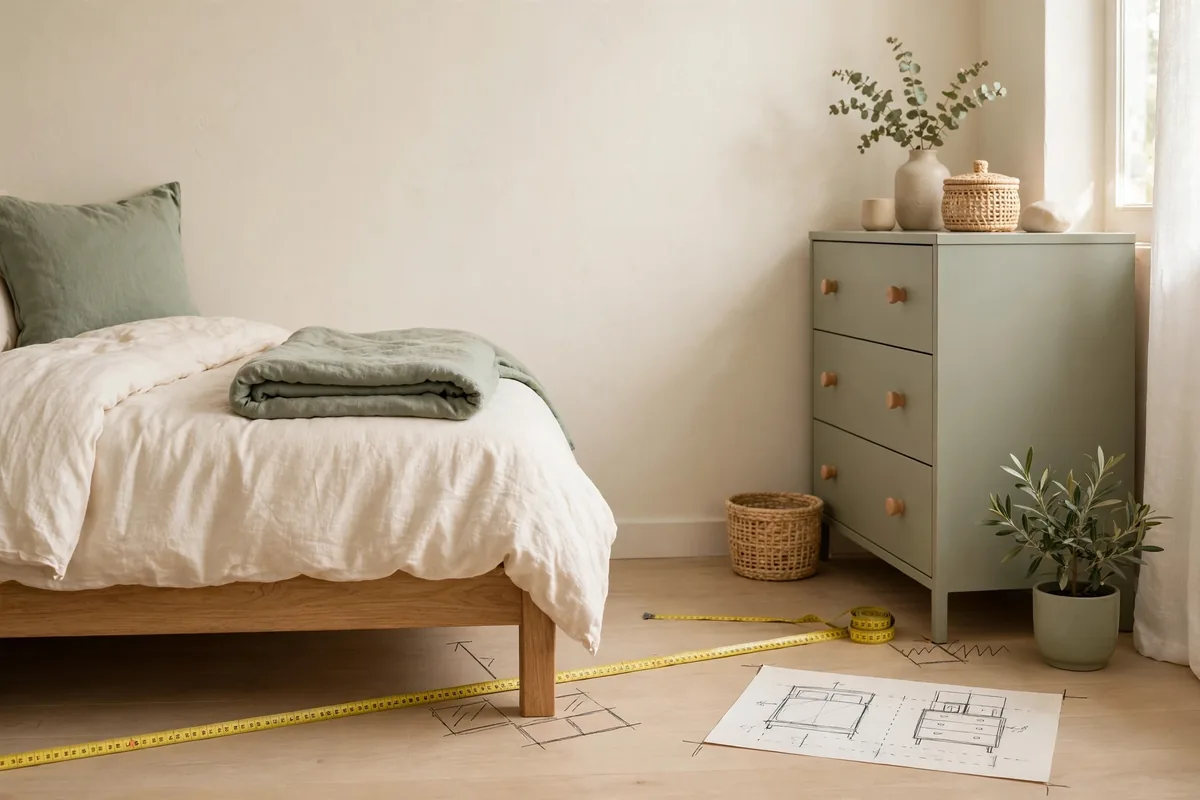
Spend twenty minutes with a tape measure and a piece of paper before you buy a single bin. Sketch the room and mark every gap: the clearance under the bed, the space between the dresser and the wall, the empty wall above the dresser, the depth of the closet, the gap behind the door’s swing. Most small bedrooms hide eight to twelve usable gaps that currently hold nothing.
Write the actual numbers on the sketch. Under-bed clearance decides whether you need low-profile bins or bed risers. The width between the dresser and the wall decides whether a slim rolling cart fits. The closet depth decides whether a freestanding wardrobe is even an option. Guessing is how you end up with organizers that become clutter themselves.
This one free step makes every idea below work better. When you know the exact gap, you filter products by dimension instead of by vibe, and you buy once instead of buying, returning, and rebuying.
Make the Bed Frame Work Harder

The bed eats the biggest footprint in the room, so storage that lives inside the bed’s footprint is free square footage. A platform bed with built-in drawers ($150 to $300) replaces a dresser outright. Four deep drawers hold what a whole dresser did, and you never see them.
If replacing the frame feels like too much, look at lift-up storage beds ($250 to $500). The whole mattress hinges upward on gas struts, revealing a compartment the size of the bed. Winter bedding, suitcases, and the guest linens all disappear in there. Lifting a queen mattress on the struts is a one-hand job.
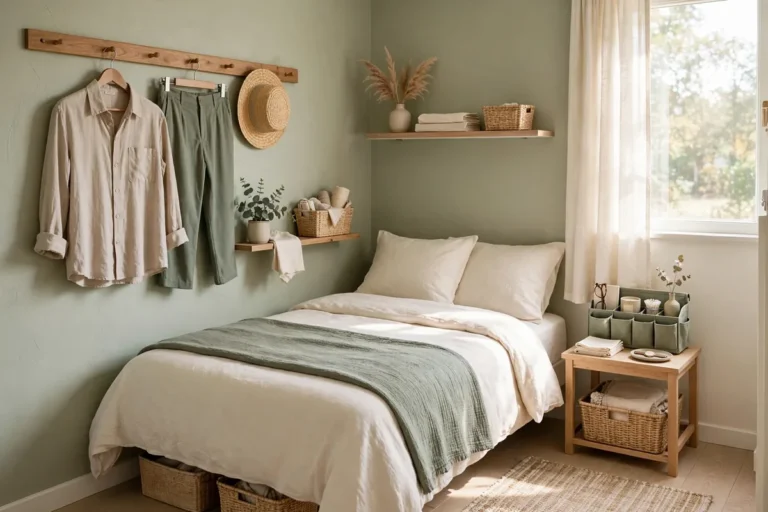
On a tighter budget, keep the frame and add clearance instead. Bed risers ($12 to $18 for a set of four) add five to six inches under most frames, and low bins fill the new space. Or skip the frame entirely: a simple solid platform base with open sides costs less and gives you full access to the space underneath.
One rule for whatever goes under there: keep daily clothes out of it. Dragging bins out while half-asleep gets old within a week. Under the bed is for things you touch weekly or less, which is exactly what organization pros recommend storing under the bed: off-season clothes, extra bedding, luggage, and the rest of the rarely touched list.
Vacuum-Seal the Bulky Stuff
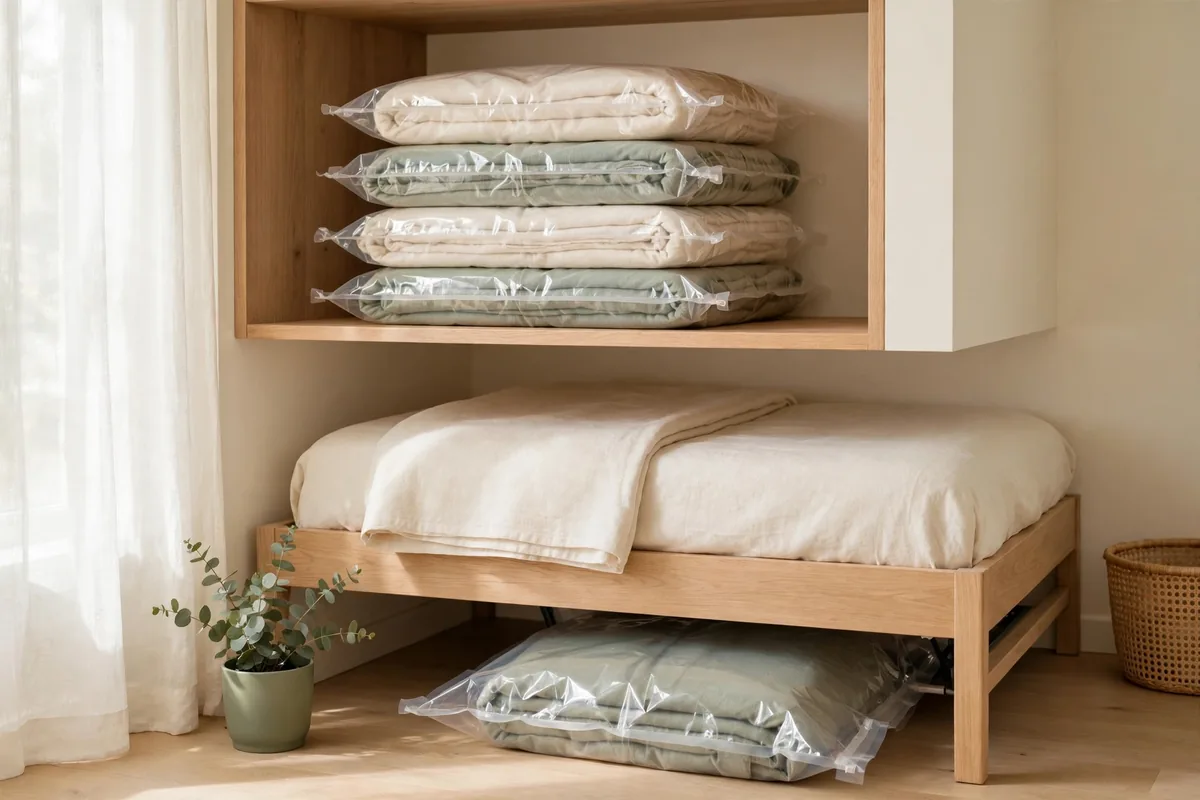
Bulky items eat storage out of proportion to their usefulness. A single winter comforter fills a whole under-bed bin. Vacuum storage bags ($12 to $18 for a multi-pack) compress comforters, spare pillows, and off-season coats to roughly a third of their size, which makes them the cheapest cubic-foot-per-dollar buy in this guide.
The flattened bags slide under the bed, stack on a closet shelf, or tuck behind the dresser. Keep the valve side facing out so you can re-flatten a bag without unstacking everything. One honest caveat: skip vacuum bags for down items you use daily, because repeated compression wears the loft down over time.
Run Shelves All the Way Up

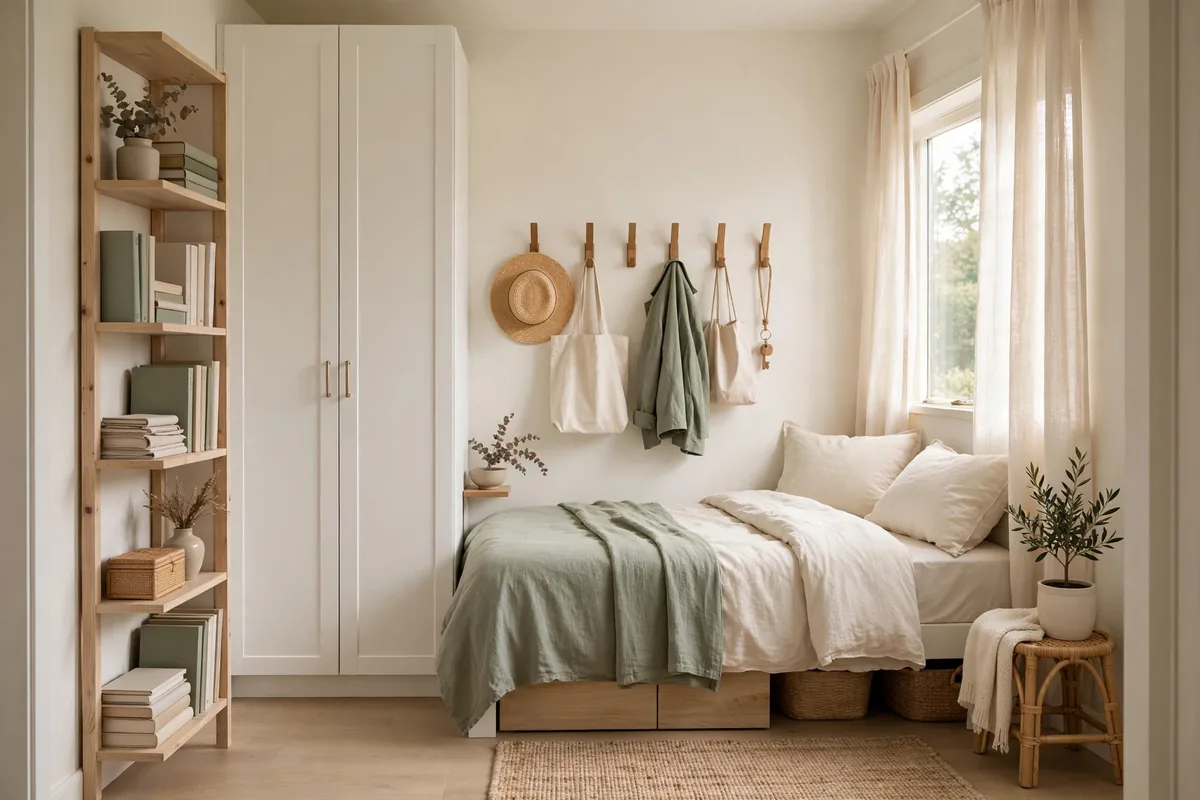
Most bedroom shelving stops at eye level and wastes the top two feet of wall. Tall, narrow bookcases ($40 to $80) use that vertical space for books, bins, and the things that used to live on the floor. Anchor every tall piece to the wall. A loaded bookcase in a small room is a tipping hazard, and the fix costs two dollars.
If you rent and cannot drill much, floor-to-ceiling tension-pole shelving ($30 to $60) presses between floor and ceiling with no holes at all. Units fit gaps as narrow as a foot wide, which makes them perfect for the dead space between the wardrobe and the wall or beside the door.
Keep the top shelves for the rarely touched stuff: luggage, memory boxes, the air mattress for guests. Daily items belong between knee and shoulder height. If you need a chair to reach it, it should not be something you grab every morning.
Add a Wardrobe Where the Closet Runs Out
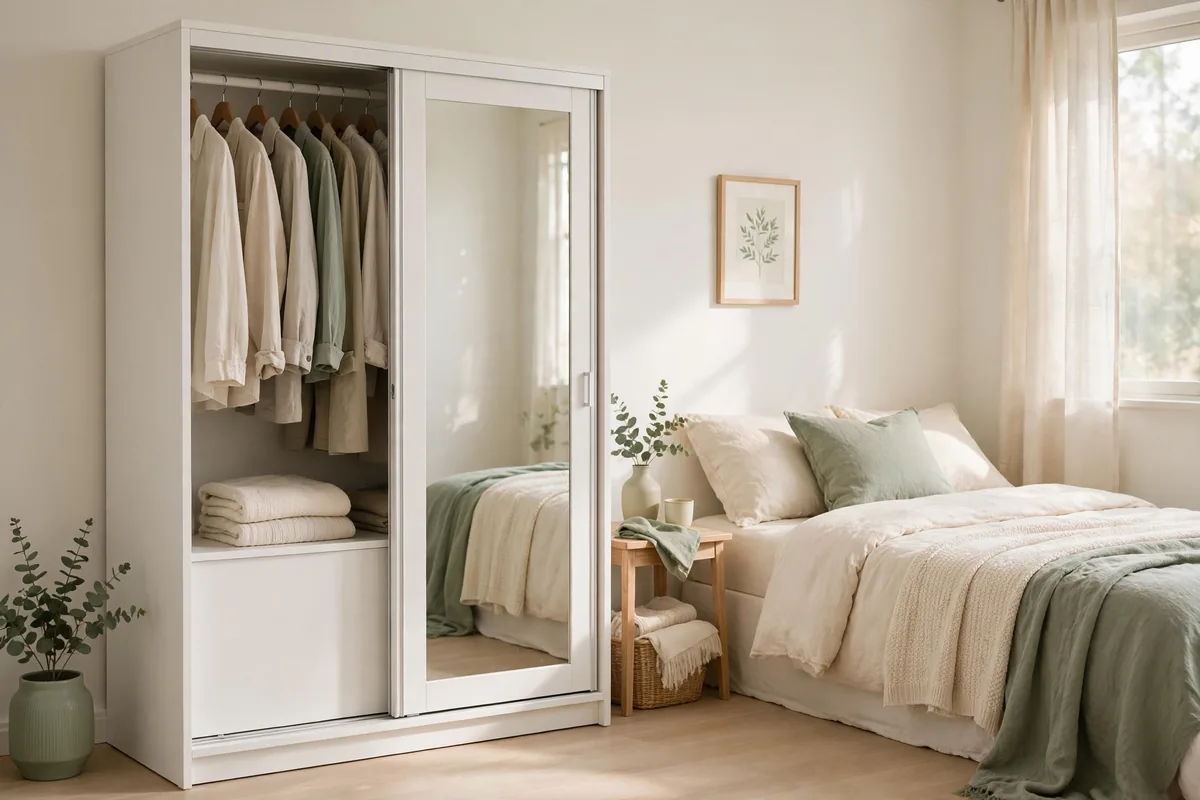
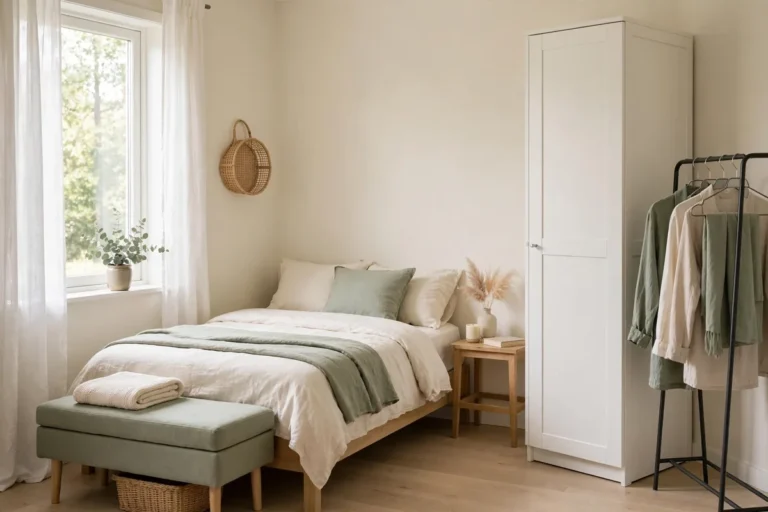
When the built-in closet is full, a freestanding wardrobe is your second closet. Modular systems let you build exactly the width your room allows, down to a single narrow unit, and mirrored doors pull double duty so you can skip a separate full-length mirror.
Before you commit, check IKEA’s guide to choosing a wardrobe for a small bedroom. It lays out which depths and door styles actually fit tight rooms: sliding doors when the walkway is narrow, shallower 35 cm depths for narrow gaps, and why floor-to-ceiling units beat wide bulky ones. The size tables make it easy to match a unit to the numbers from your tape-measure sketch.
A wardrobe can also split a room. Put it perpendicular to the wall and it creates a dressing nook while hiding the bed from the door, which is a genuine upgrade in a studio. Leave at least two feet of clearance in front of the doors or drawers, and check that the door swing does not fight the wardrobe swing.
Renters, look for wardrobes that assemble and disassemble cleanly. Flat-pack units that come apart with an Allen key survive moves; glued-together monsters do not.
Let a Storage Bench Earn Its Floor Space
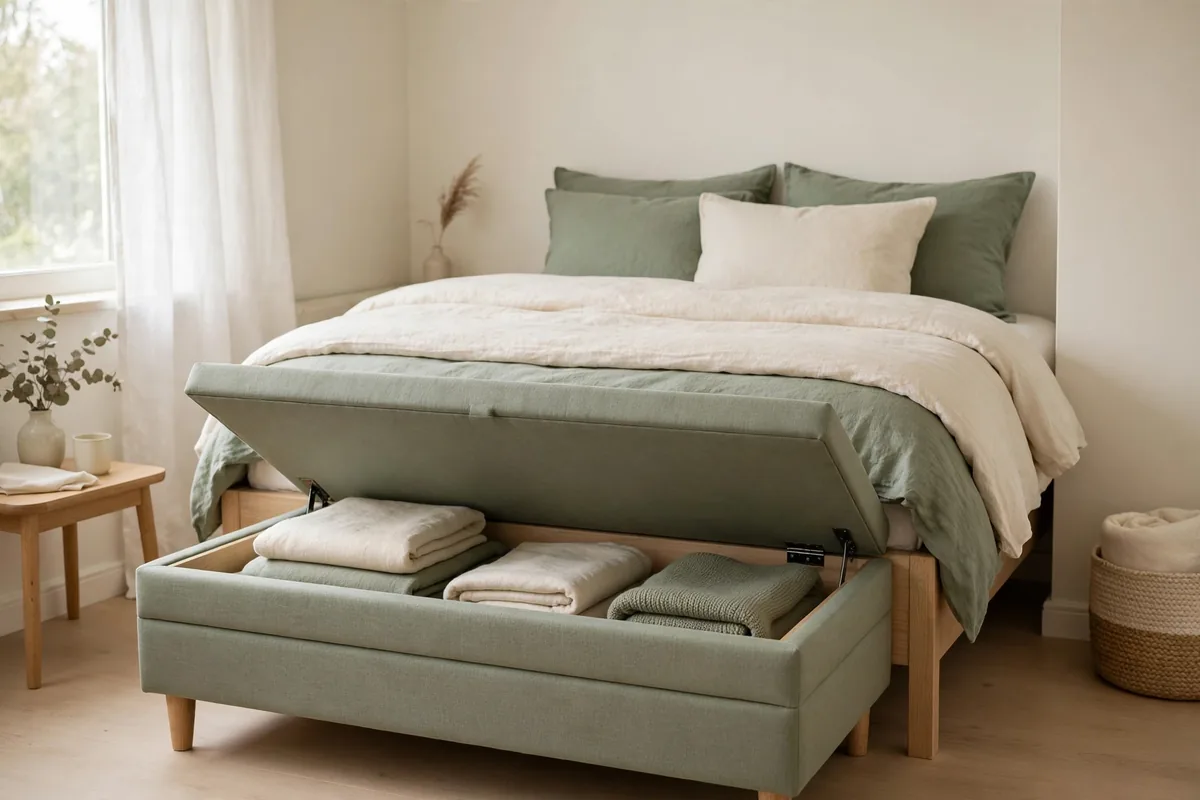
Any furniture that only does one job is suspect in a small bedroom. A storage bench at the foot of the bed ($50 to $120) holds bedding, out-of-season clothes, or the shoe overflow, and it gives you a place to sit while you put shoes on. Two jobs, one footprint.
Pick a bench with a hinged lid rather than a lift-off top. Lift-off lids end up leaning against the wall permanently, which defeats the purpose. A hinged lid stays attached, opens with one hand, and closes by itself.
Turn the Door Into a Storage Wall
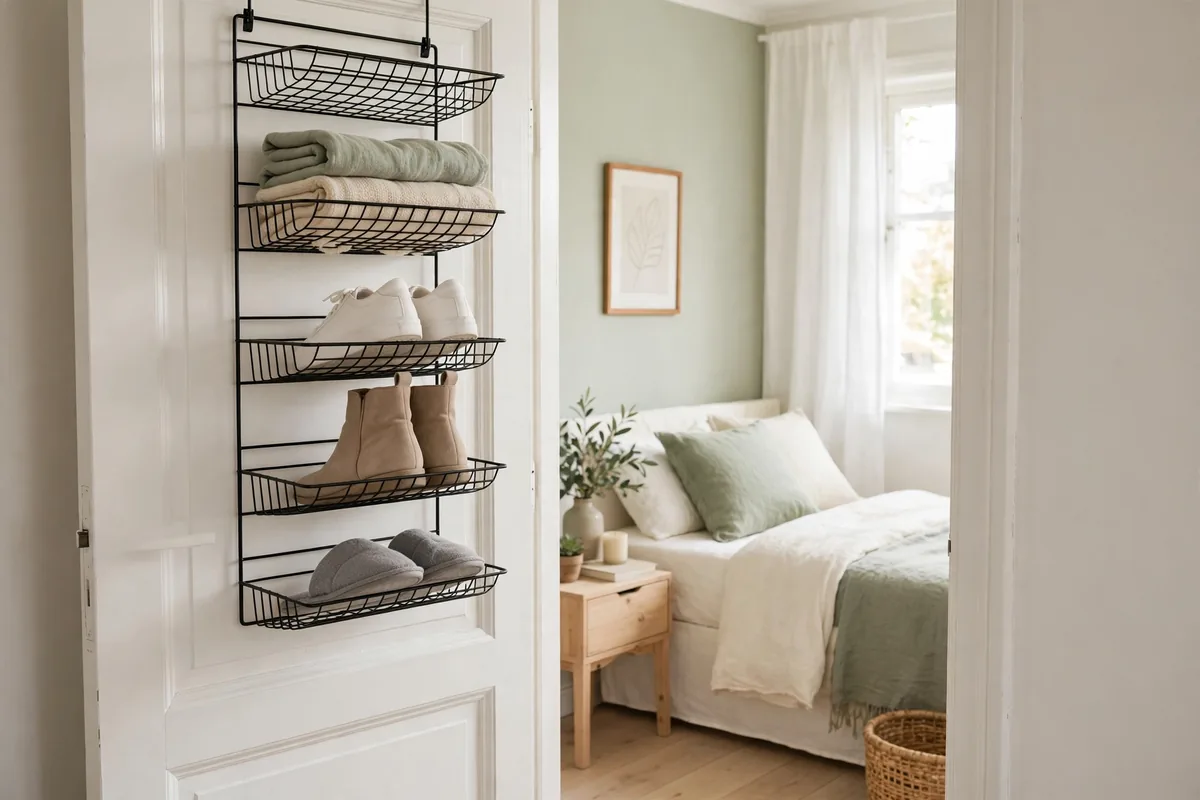
The back of the bedroom door is a full wall that most people never use. Over-the-door wire racks ($15 to $25) hold shoes, accessories, or folded clothes in clear view. Hook-over styles install in seconds with no damage, which makes them a renter favorite.
For smaller items, a hanging fabric organizer with clear pockets corrals chargers, sunglasses, and the random things that migrate to the dresser top. Hang it high enough that it clears the floor when the door swings, and keep it to light items so the hinges never notice the extra load.
The one rule is that the door still has to close and latch. If the organizer stops the door from latching, it is too thick for that door. Measure the gap between the door and the frame before you buy, not after.
Put Hooks and Rails on the Odd Walls
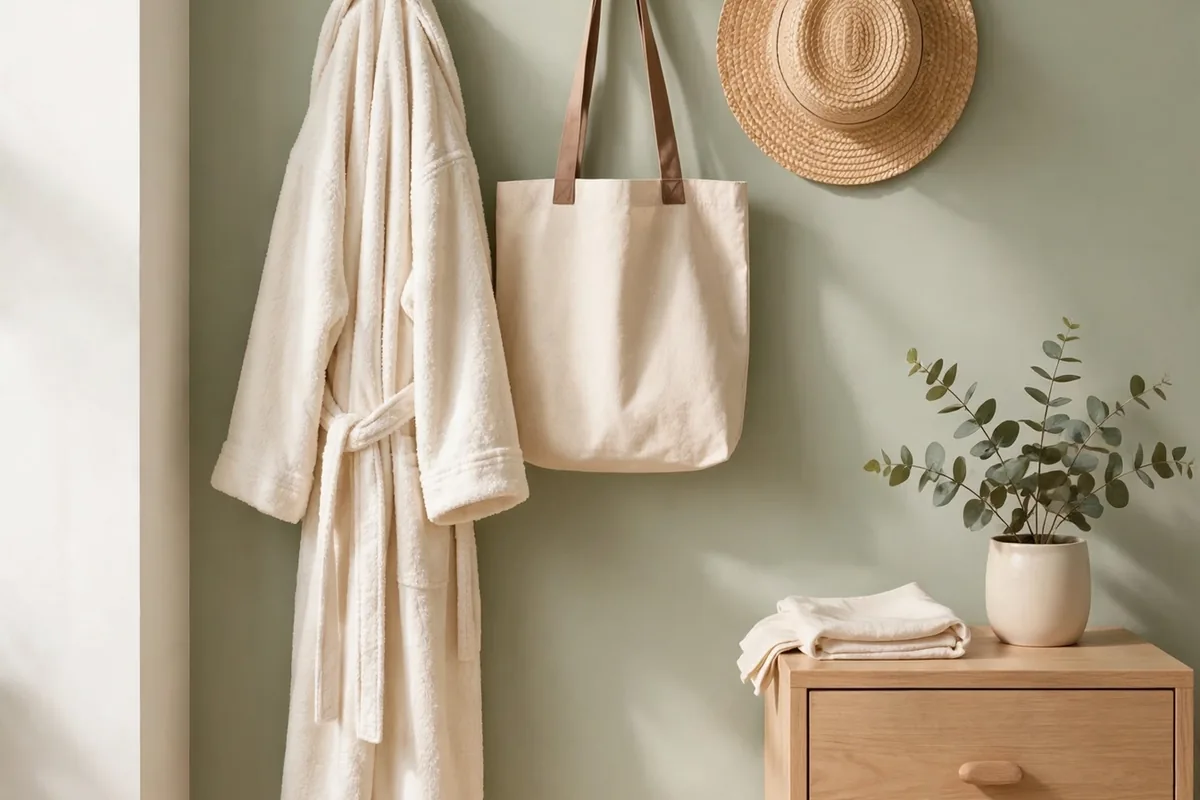
Small bedrooms always have one awkward wall: too narrow for furniture, too visible to ignore. That is hook territory. A row of sturdy wall hooks ($10 to $15) holds tomorrow’s outfit, the bathrobe, the gym bag, and the tote you grab daily. Everything visible, nothing in a pile.
A wall-mounted rail with S-hooks does the same job for accessories: belts, scarves, hats, and the jewelry that tangles in a drawer. Mount it inside the closet or on the wall beside the dresser, wherever you get dressed in the morning.
Use hooks rated for real weight and anchored into studs or with proper wall anchors. The cheap adhesive hooks have their place for a single scarf. They do not have a place for a winter coat, and the coat always ends up on the floor at 2 a.m.
Nest Your Containers
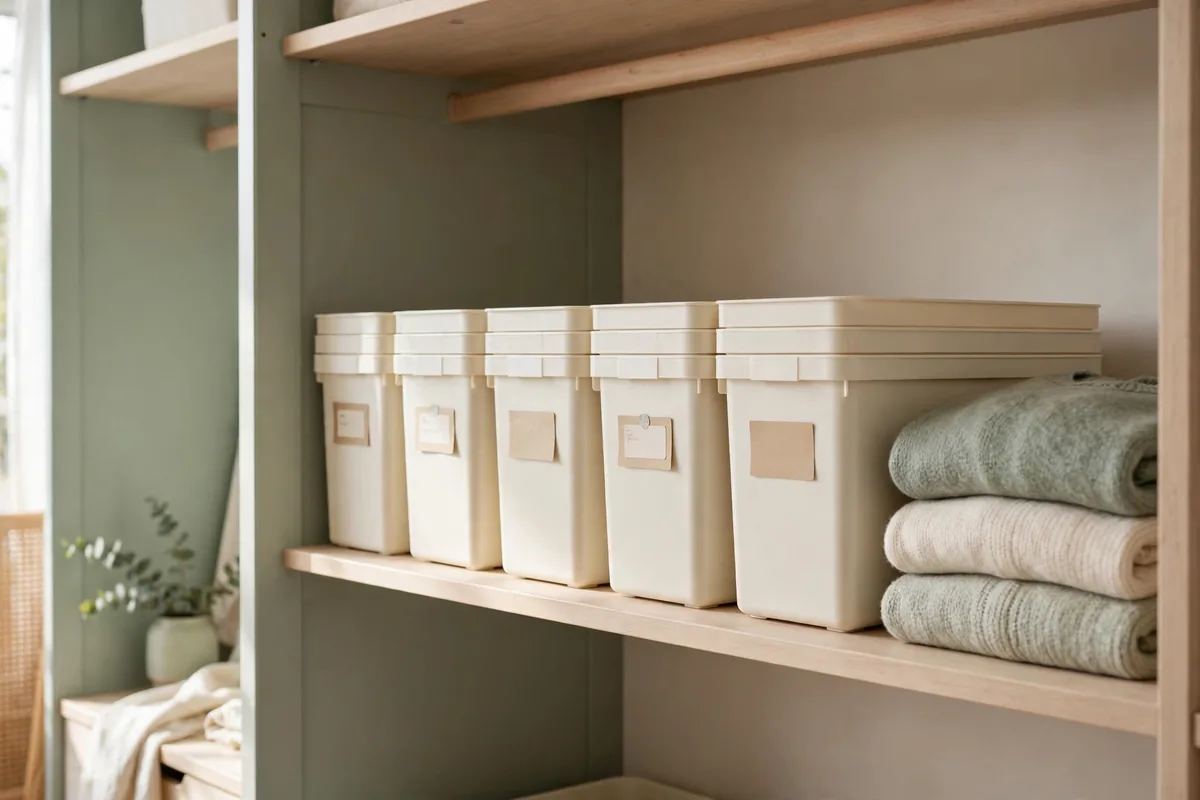
Storage containers multiply. You buy a set of bins, use three, and the other two nest inside each other in the closet for a year. Start from the other direction: buy one set of stackable bins in a single size ($20 to $30 for a four-pack) and let them share one footprint.
Uniform bins stack safely and look calm on an open shelf, while a jumble of mismatched boxes looks like clutter even when every box is full. One size, one color, one job each. Label the front of each bin with painter’s tape and a marker so the system survives a tired Tuesday night.
Give Shoes a Slim Tower
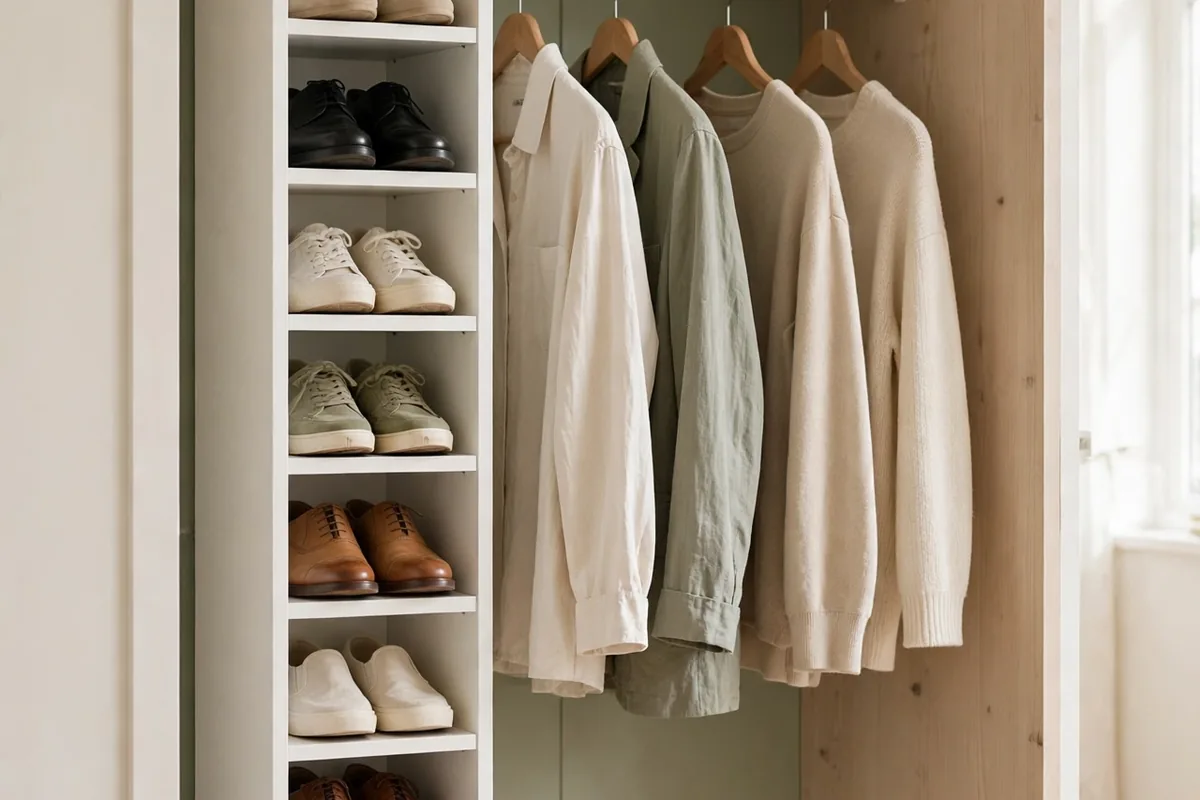
Shoes are the fastest-growing clutter in a small bedroom because they live on the floor by default. A slim vertical shoe tower ($25 to $45) holds ten to fifteen pairs in a footprint barely wider than a single pair. Tuck it in the closet, in the gap beside the dresser, or behind the door.
Be honest about the collection first. Most people wear the same five or six pairs on rotation. Store the rotation in the tower and box the occasion shoes under the bed or on the closet’s top shelf. A tower sized for reality stays tidy; a tower sized for the fantasy collection overflows by March.
If even a slim tower will not fit, an over-the-door shoe rack or a flat under-bed shoe organizer ($15 to $20) keeps pairs paired and off the floor. The enemy is the loose pile by the door, not the number of shoes.
Pick Furniture That Hides Its Storage
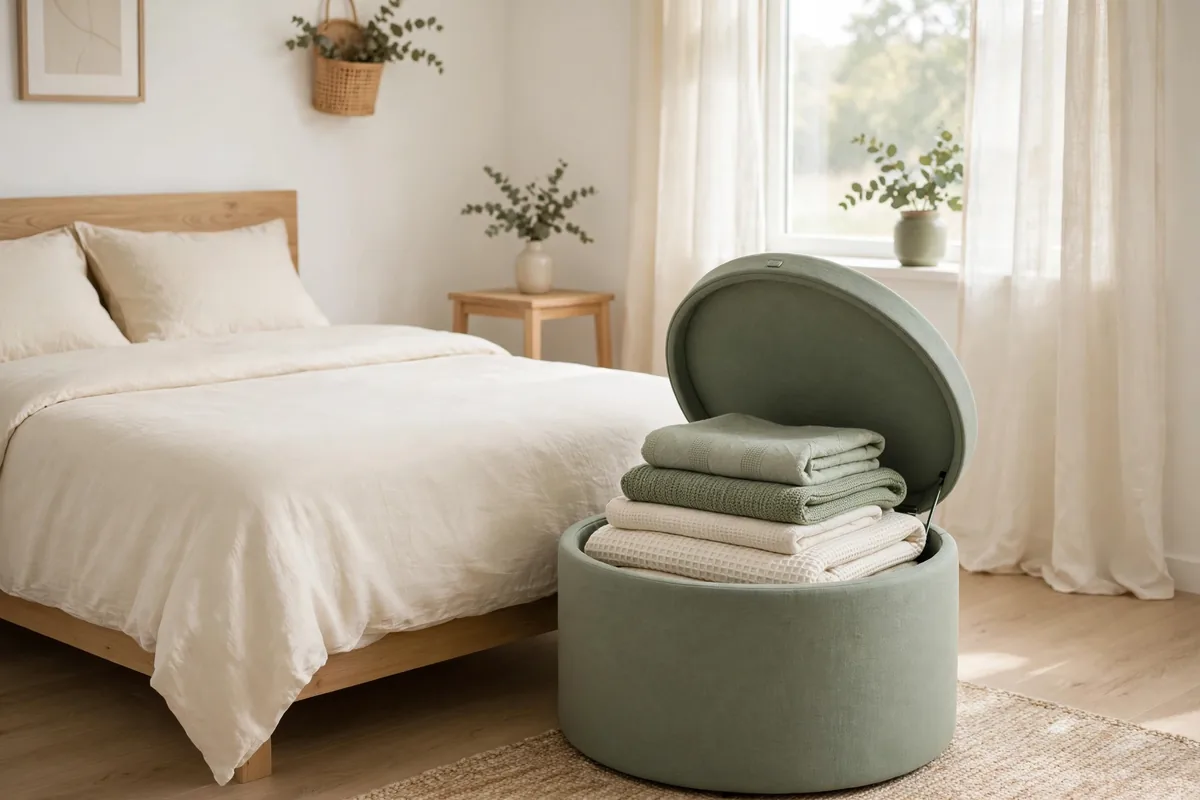
The best small bedroom storage ideas are invisible. A storage ottoman ($30 to $60) holds blankets and doubles as a seat or a footrest. A nightstand with drawers ($40 to $80) hides the chargers, the book, and the hand cream instead of displaying them.
A desk-dresser combo earns its place in a work-from-home bedroom: the top is your workspace, the drawers are your wardrobe. A lift-top coffee table does the same trick in a studio that doubles as a living room. Every piece should answer the question of what it hides, not just what it holds.
When you shop, open the drawers and check the depth. Shallow decorative drawers hold almost nothing and exist to look like storage. Deep drawers with solid bottoms are the ones that actually replace a dresser.
Watch the visual weight too. Furniture with legs shows floor underneath, which makes the room feel bigger even when the piece holds just as much as a blocky one. Same storage, calmer room.
Rotate Seasonal Gear Out of the Room
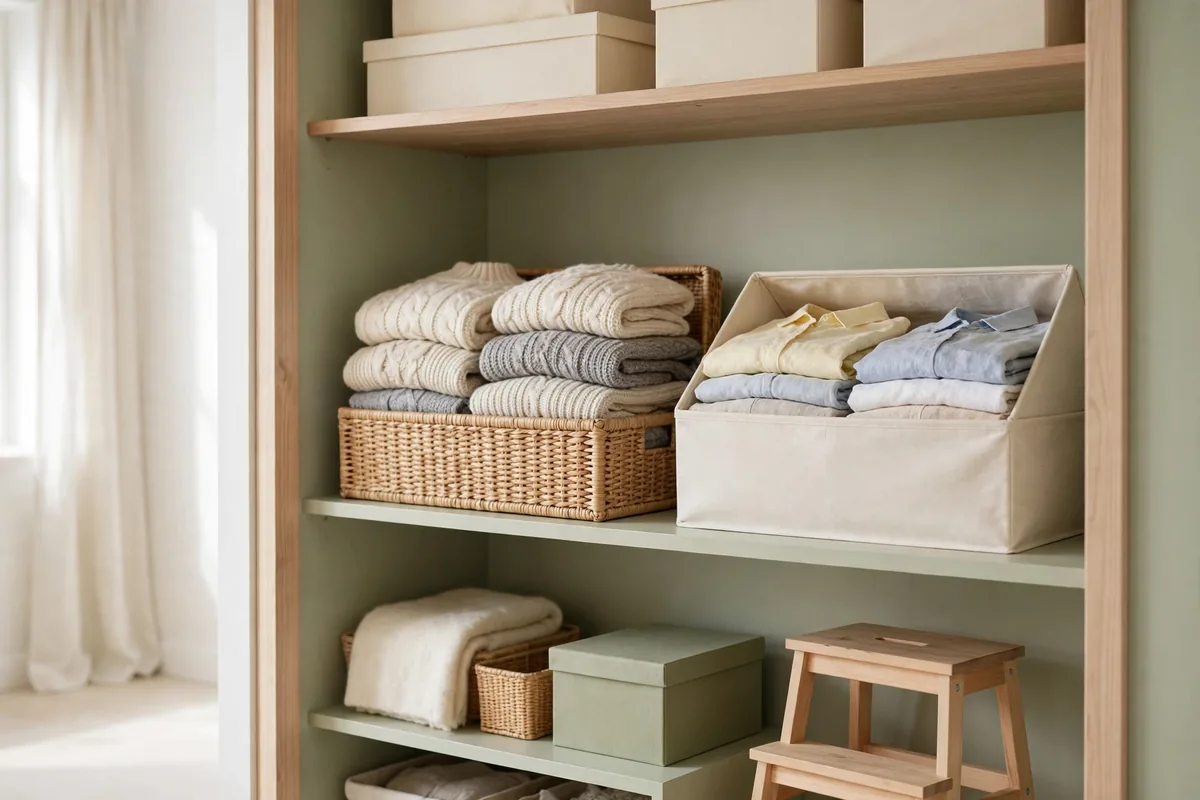
A small bedroom cannot hold a full year of stuff at once, so stop asking it to. Twice a year, swap the seasons: winter coats, heavy blankets, and boots go into vacuum bags and under-bed bins or a hall closet, and the summer versions come out. The room only ever holds the current season.
The rotation itself takes an hour, and it doubles as a built-in declutter. Anything you packed away last season and forgot you owned is a donation candidate. Keep one small box labeled by season so the swap does not turn into a full reorganization every time.
One Gap Is Enough to Start
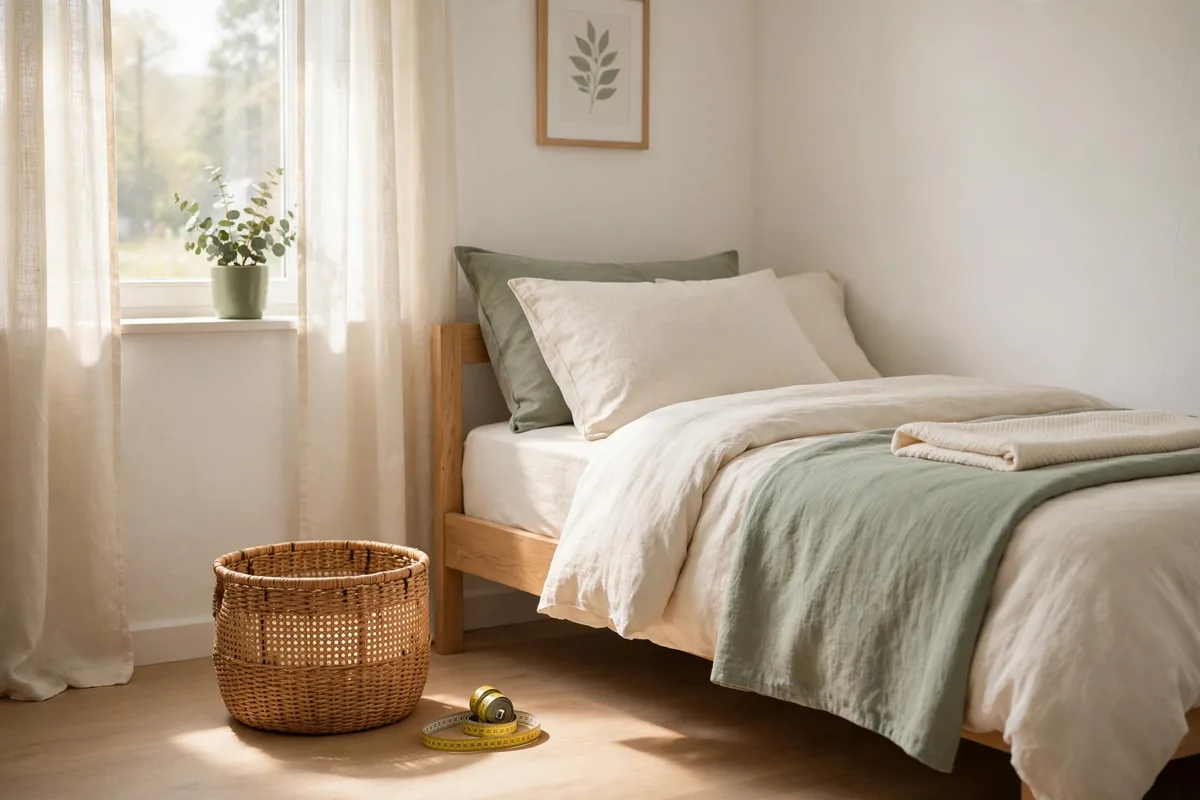
If twelve zones feel like a lot, ignore eleven of them. Pick the gap that annoys you most, the one you see every morning, and fill it this weekend. One honest measurement and one well-chosen bin changes how the room feels more than a cart full of organizers ever will. When you are ready to go beyond storage, this broader bedroom organization guide covers the declutter-first system behind it.
The rest of the gaps will still be there when you are ready, and by then you will know exactly what fits in each one. That is the real payoff of the tape measure: not just the first bin, but every decision after it, made with numbers instead of hope.