My first apartment after college had a bedroom with no closet at all. Not a small one, not a weird one: none. The previous tenant had left a single nail in the wall, and for two weeks my clothes lived on that nail and the floor around it. Then I bought a $35 garment rack from a discount store, and standing back to look at my whole wardrobe hanging on one rail felt like moving into a bigger apartment.
Bedrooms without closets are more common than people think: old buildings, converted spaces, guest rooms that were never meant to hold a full wardrobe. These small bedroom storage ideas without a closet build you a closet from furniture instead of architecture. Nothing here needs a renovation, most of it moves with you, and the whole system can cost less than one month of a storage unit. If you do have a closet to work with, these small closet organization ideas squeeze the most out of the one you already own.
Start With a Freestanding Wardrobe
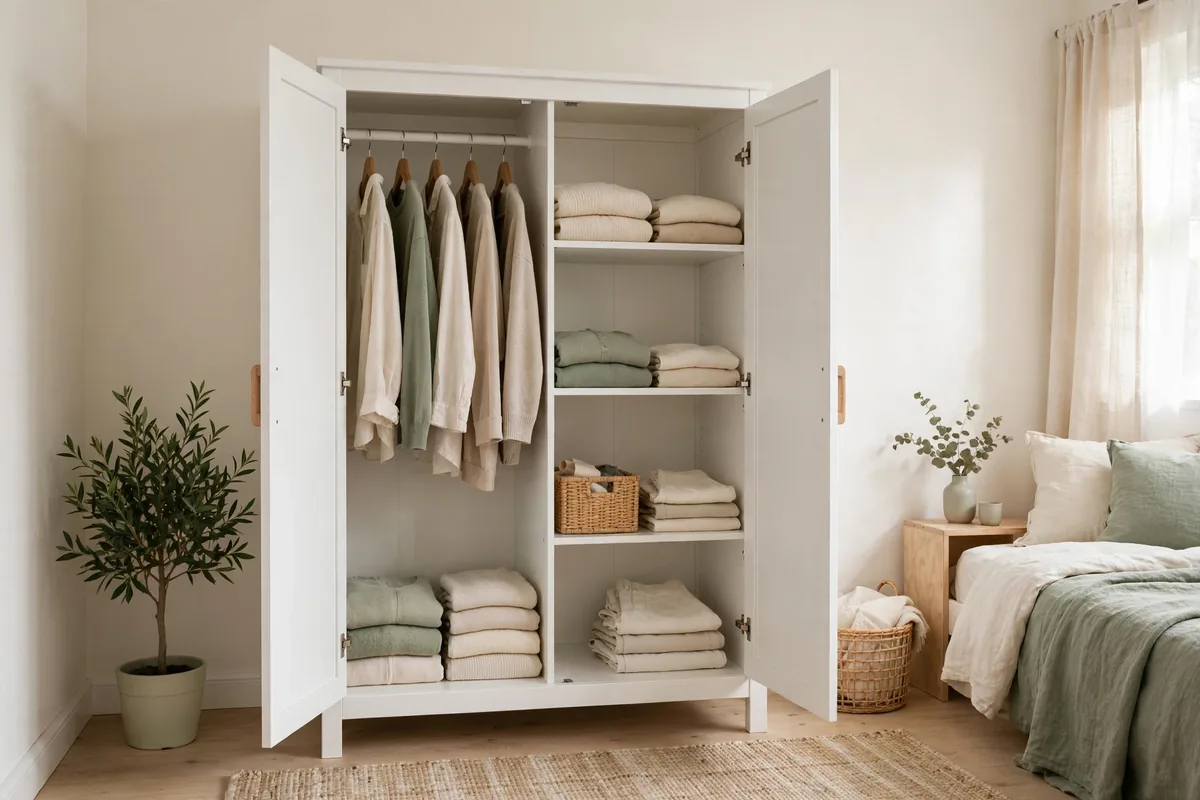
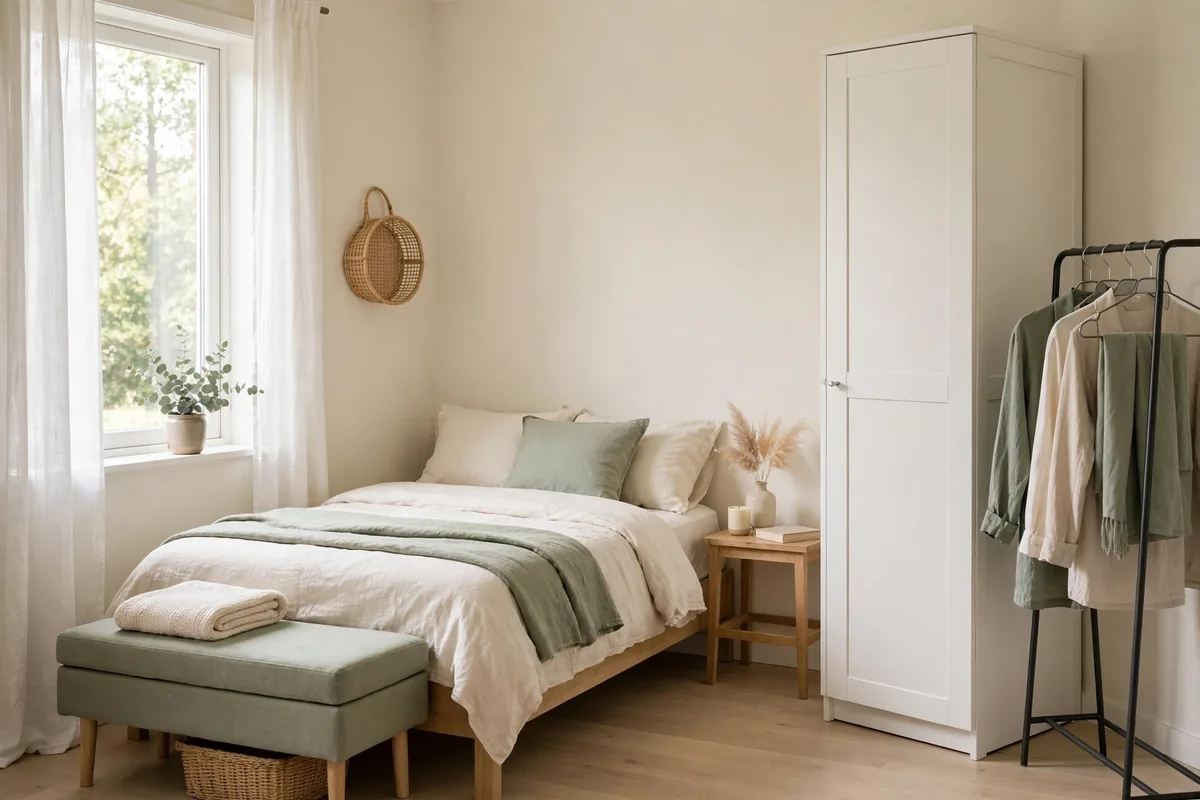
A freestanding wardrobe is the closest thing to a real closet you can buy. Look for one with a hanging rail plus shelves or drawers inside, so it handles both hanging and folded clothes in one footprint. A basic two-door wardrobe runs $80 to $150 at discount furniture stores, and flat-pack versions from IKEA start around the same range.
Measure the wall before you shop, and measure the doorways too. Wardrobes are the furniture most likely to arrive and not fit through the bedroom door. If the room is truly tiny, a single-door narrow wardrobe (about 20 inches wide) still holds a surprising amount: one rail of hanging clothes plus two shelves of folded items.
Anchor it to the wall. Tall wardrobes in small rooms get bumped, leaned on, and occasionally climbed by kids, and a $5 anti-tip strap kit prevents the nightmare scenario. Most wardrobes ship with the hardware in the box. Use it the day you assemble, not someday.
Check secondhand first. Wardrobes are the furniture people give away when they move, because nobody wants to move a wardrobe twice. Marketplace listings and thrift stores regularly have solid wood wardrobes for $30 to $50, a third of retail. Bring a friend and a tape measure: measure the piece, measure your doorways, and do not skip the second one. Most of this system is thriftable — these small-bedroom ideas on a tight budget squeeze more out of every dollar.
Try a Garment Rack Before You Commit
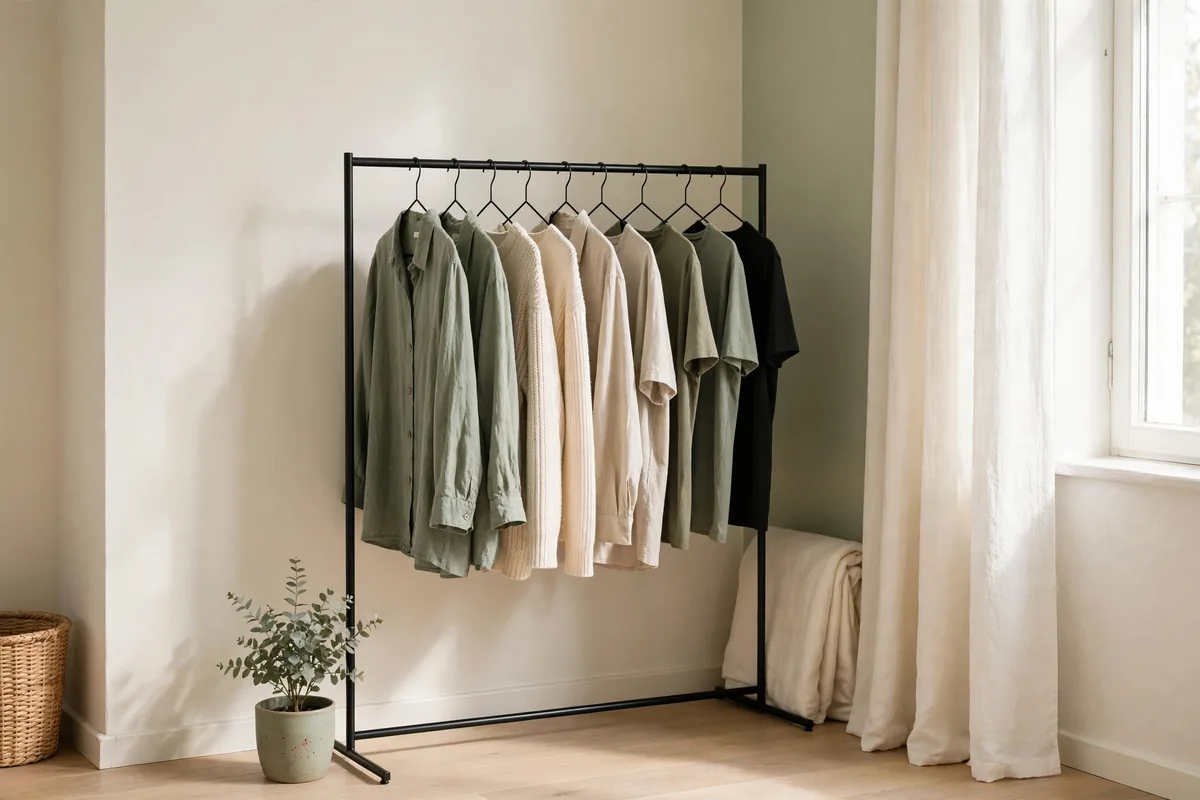
Not sure a wardrobe fits, or not ready to spend $100? A garment rack is the low-commitment version. Sturdy metal racks start around $25, assemble in twenty minutes, and hold a full wardrobe of hanging clothes in about four feet of wall space. If it does not work out, it disassembles flat and moves to the next apartment.
Curate what hangs on it, because a garment rack is always on display. Keep it to the clothes you actually wear this season and store the rest elsewhere. A rack of forty hangers looks like a store; a rack of twenty looks like a boutique. Designers often reach for a simple clothing rack as a closet stand-in when a room has no built-in storage, and the trick works in a primary bedroom just as well.
Make the Dresser Your Folding Closet
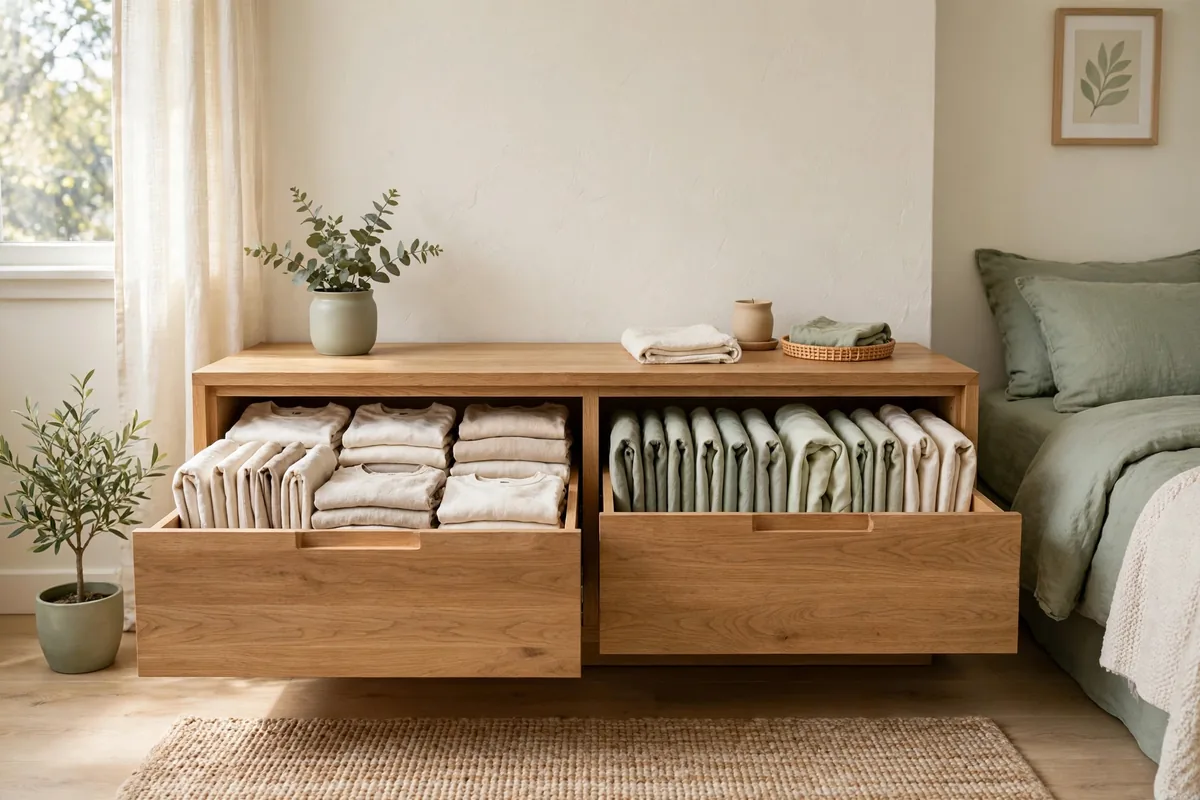
Without a closet shelf, the dresser becomes your folding zone. Every drawer should earn its keep: file-fold t-shirts, pants, and underwear upright so each item is visible from above, the way folders sit in a filing cabinet. You will stop wearing only the top three shirts because the other twenty are finally visible.
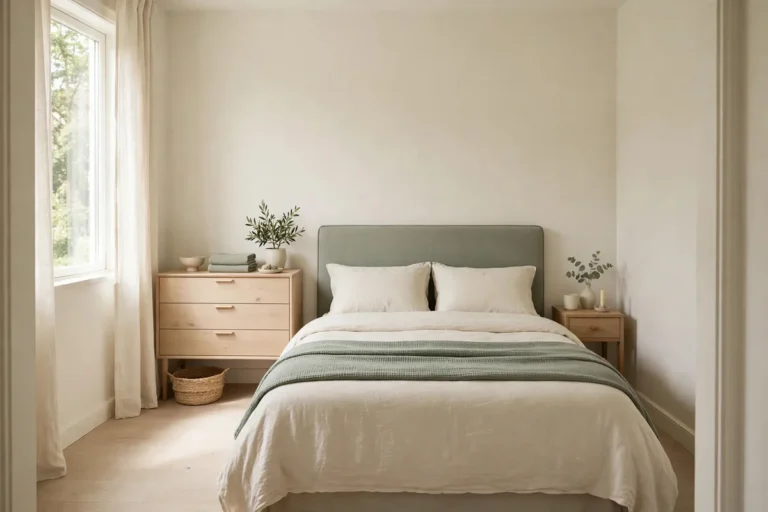
A wide dresser beats a tall one in a small bedroom. Tall dressers hold the same clothes but need a ladder’s worth of vertical clearance to open the top drawers comfortably, and they loom over a small room. A low, wide dresser doubles as a surface for the TV or the “getting ready” tray.
If you have no dresser yet, buy drawers before you buy anything decorative. A $60 three-drawer unit from a discount store does more for a closetless bedroom than any organizer. Pretty comes later; drawers come first. Where the dresser sits in the room matters as much as what is inside it — these small-bedroom furniture layouts cover placement, traffic lanes, and dead zones.
Turn the Bed Into Your Biggest Closet
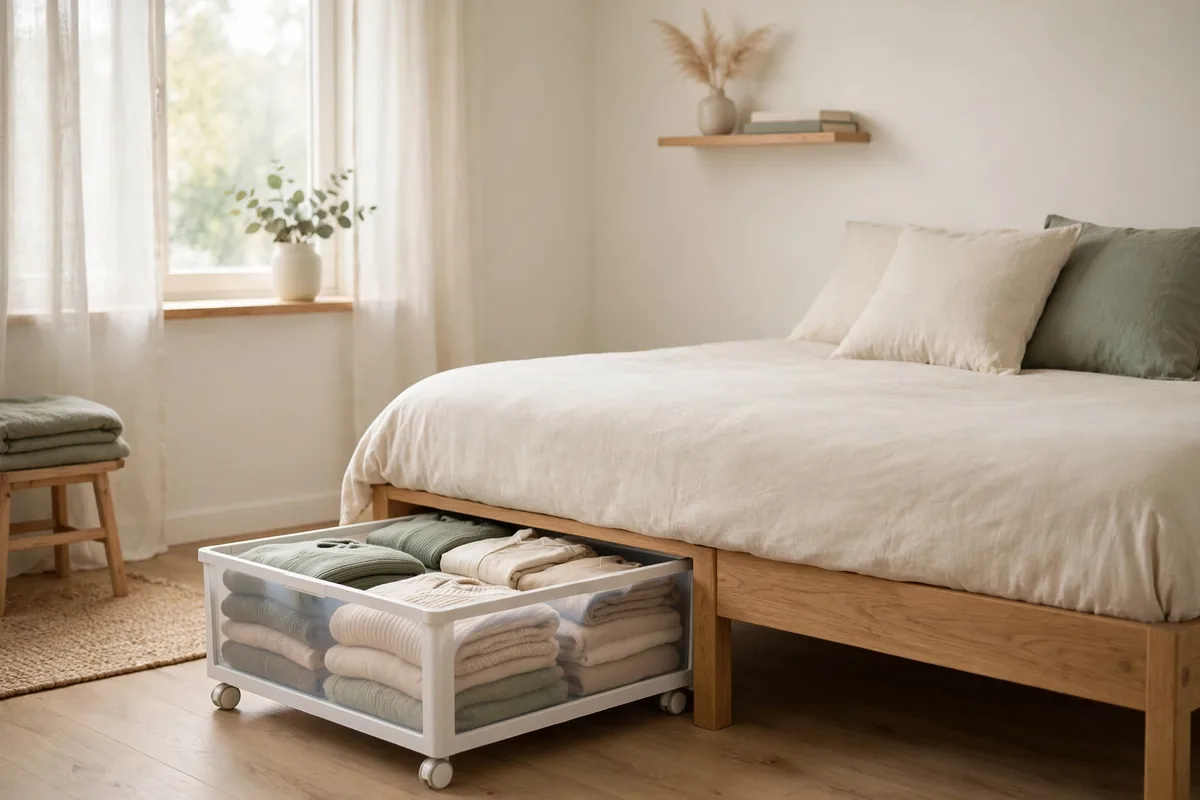
The space under the bed is the largest hidden storage zone in a closetless room, and it should carry real weight. Low-profile bins on wheels ($20 to $30 for a set) hold off-season clothes, extra bedding, and the shoes that do not fit on the rack. Measure the clearance first: most frames give you 7 to 8 inches. Under-bed storage is just one of these whole-bedroom storage ideas that work without a closet.
Treat under-bed bins like closet shelves, not junk drawers. Label the ends facing out, keep one category per bin, and never store anything there that you need weekly. If you are reaching under the bed every morning, that item belongs in the dresser or on the rack instead.
Build a Wall of Hooks and Ledges
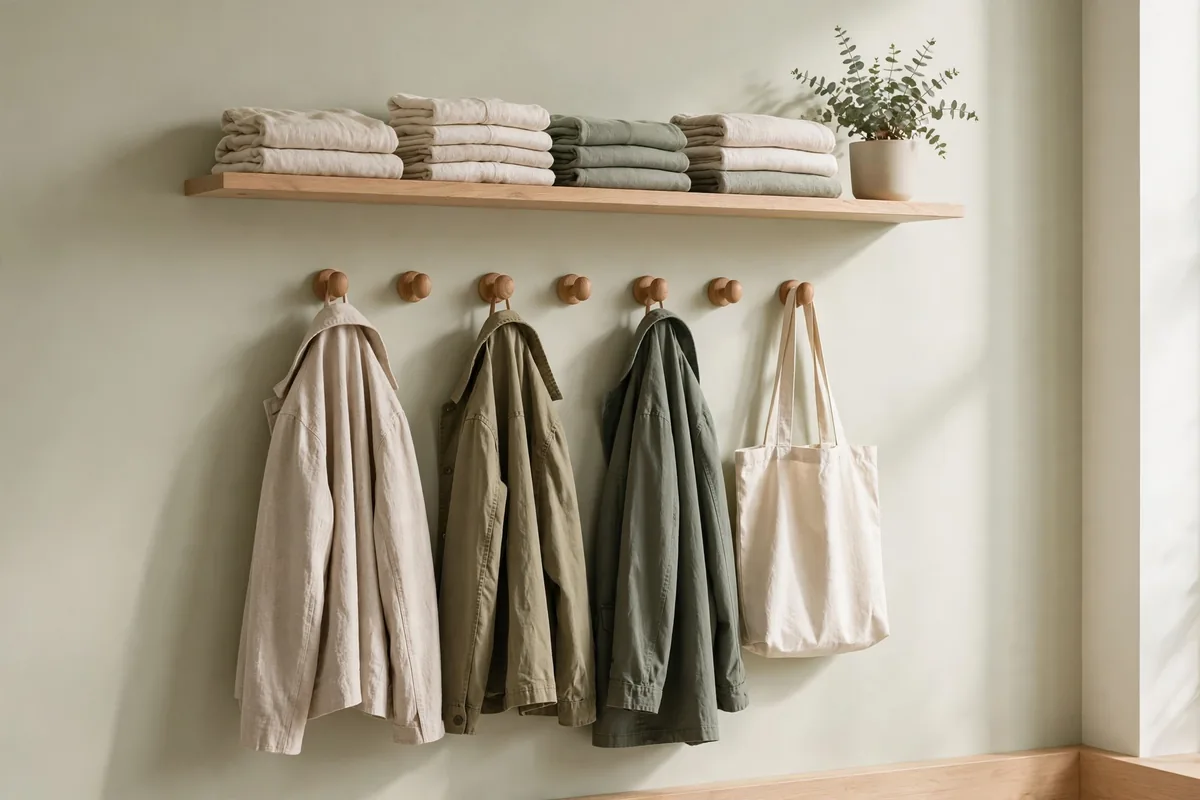
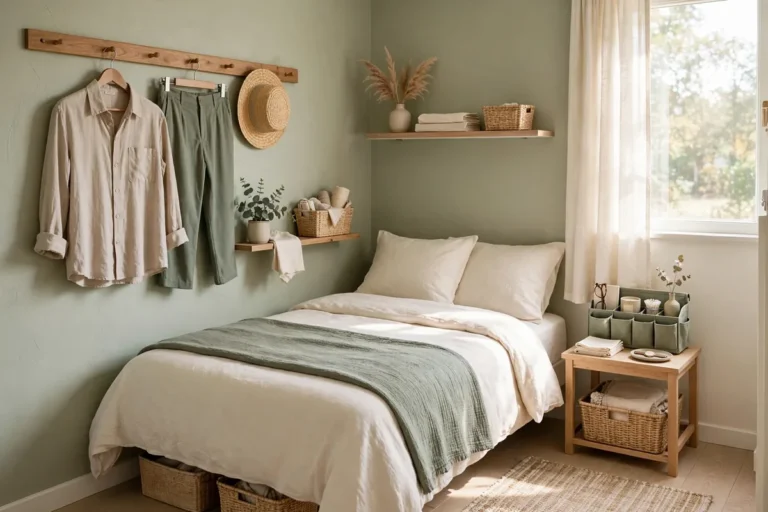
Walls are free square footage, and in a closetless bedroom they do the job the closet rod used to do. A row of sturdy wall hooks ($12 for a set of five) holds jackets, tomorrow’s outfit, the bathrobe, and the bag you grab daily. Mount them at a height you can reach half-asleep.
Add one floating ledge ($15 to $25) above or beside the hooks for folded items. A twelve-inch-deep shelf holds a stack of jeans, the watch tray, and the sunglasses that otherwise colonize the dresser. Together, hooks plus ledge form a complete “getting ready” station on about four feet of wall.
Renters have excellent options here. Heavy-duty adhesive hooks now hold up to 7 pounds each, which covers jackets and bags without a single nail hole. Test one hook with a heavy coat for a week before you trust the whole row. If it holds, you have a closet wall with zero damage.
Keep the wall curated. An open storage wall turns chaotic fast if every hook holds three things. One item per hook, one stack per ledge section. The moment a hook needs a second layer, something needs to be put away or let go.
Hang a Pegboard for the Small Stuff
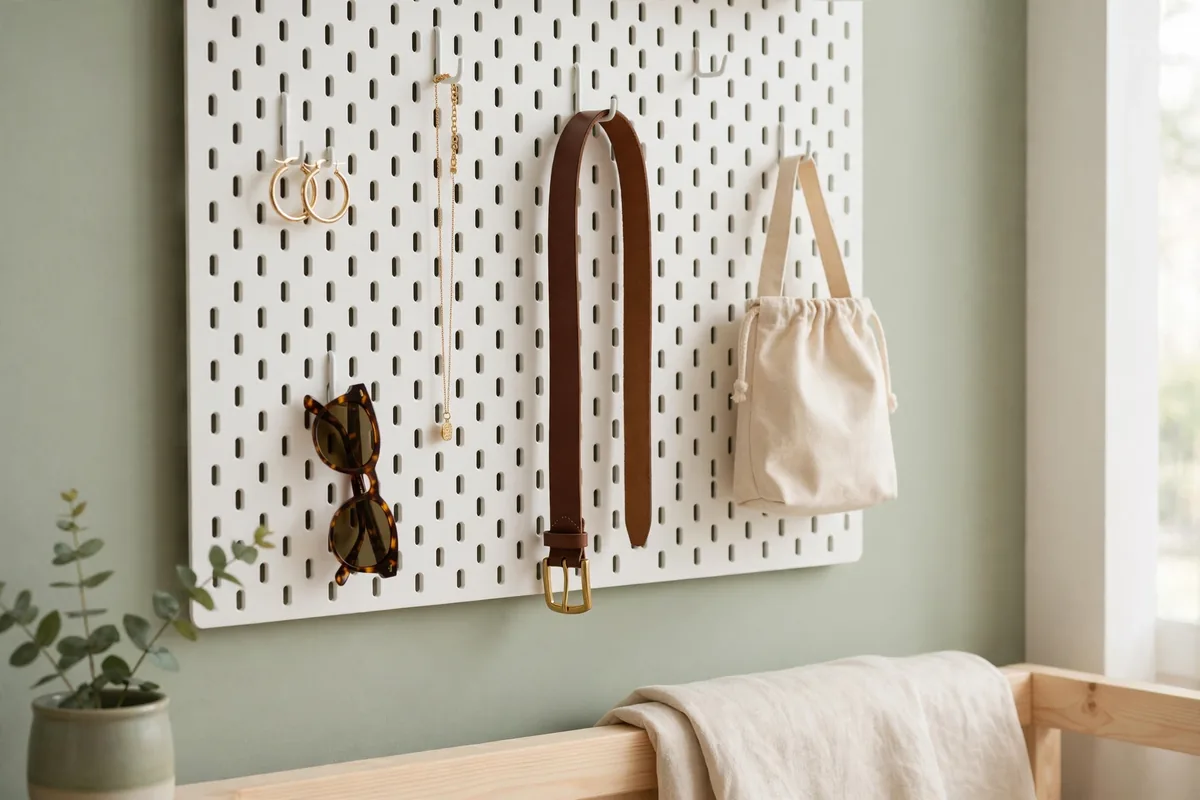
Closets hide the small stuff on shelves; without one, a pegboard does the job visibly. A two-by-four-foot pegboard panel ($20 to $30) with hooks holds jewelry, sunglasses, belts, headphones, and the small accessories that otherwise fill a junk drawer. Everything visible, nothing in a pile.
Hang it where you get dressed, not across the room. The pegboard works because it shortens the distance between you and the accessory: see it, grab it, wear it. A pegboard across the room is decoration. A pegboard beside the mirror is a system.
Float a Shelf Above the Door
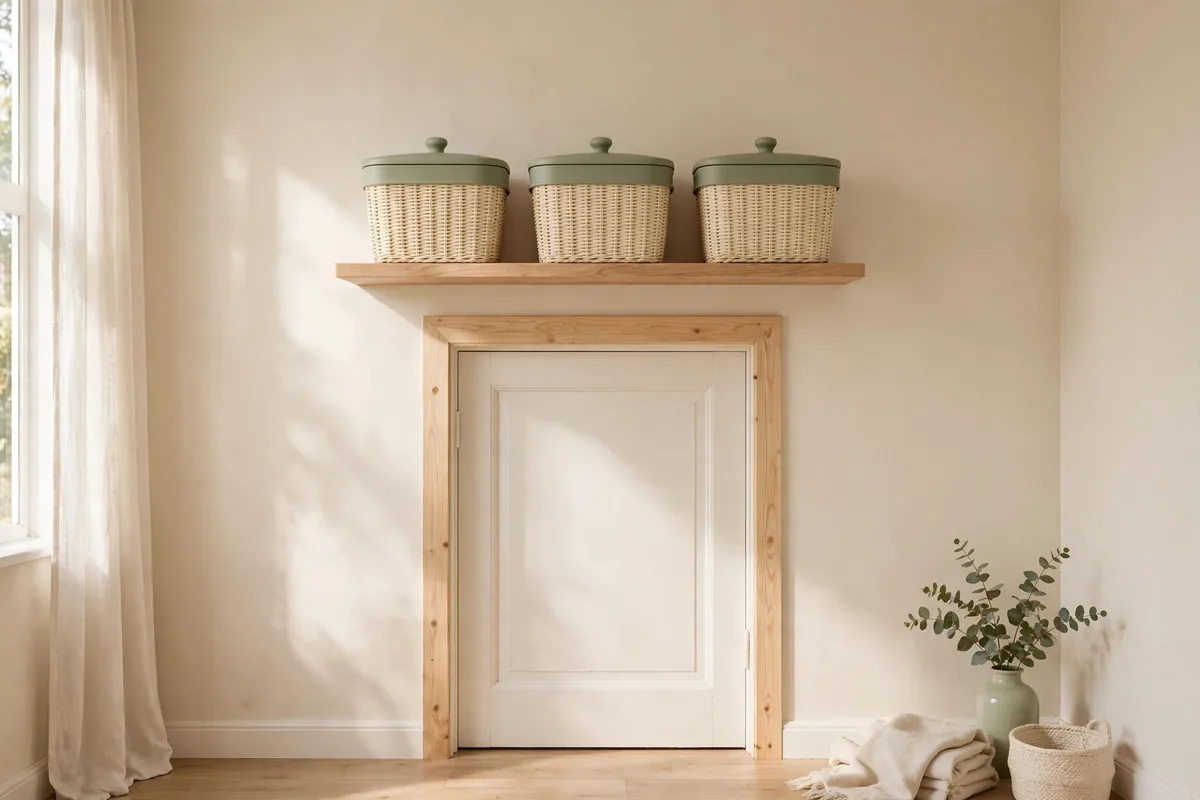
The wall above the bedroom door is dead space in almost every room, and in a closetless bedroom it is prime real estate. A single floating shelf mounted above the door frame ($15 to $20) holds labeled bins of off-season clothes, extra linens, or the luggage you use twice a year.
This is strictly long-term storage. If you need a step stool to reach it, that is correct: the shelf is for things you touch monthly, not daily. Home stagers swear by this exact trick; in professional no-closet setups, above-door storage sits alongside wardrobes and rolling racks as the go-to moves for closet-free rooms.
Keep the bins matching and lidded. One shelf of mismatched open boxes looks like clutter that floated upward. One shelf of identical lidded bins looks like built-in storage. The containers are the whole difference.
Corral Shoes on a Slim Rolling Cart
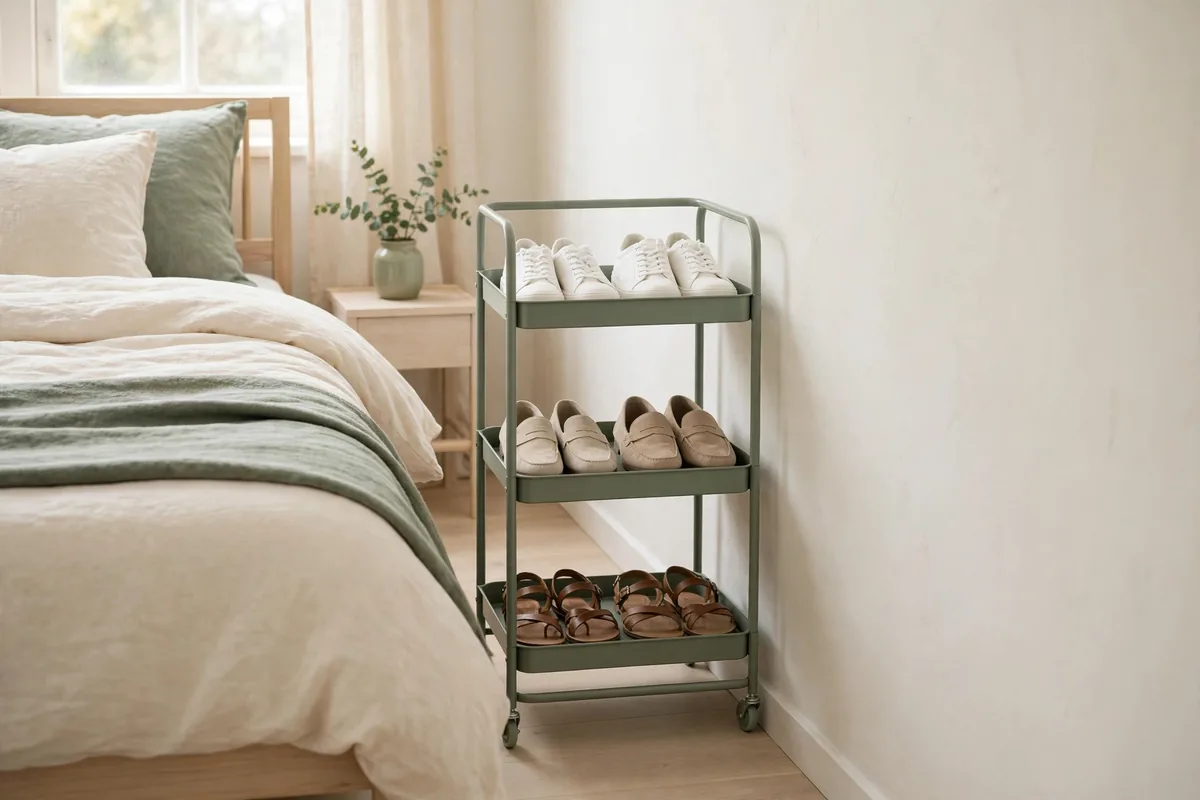
Shoes are the hardest closetless problem because they are bulky, dirty, and numerous. A slim rolling shoe cart ($25 to $35) holds eight to twelve pairs in a footprint barely wider than a shoebox, and it tucks into the gap between the dresser and the wall or beside the bed.
Enforce a one-in, one-out rule on the cart. When a new pair arrives, the least-worn pair leaves for the donation bag or the under-bed bin. A shoe cart with no limit becomes a shoe tower within a season.
Hang an Over-the-Door Organizer for Small Things
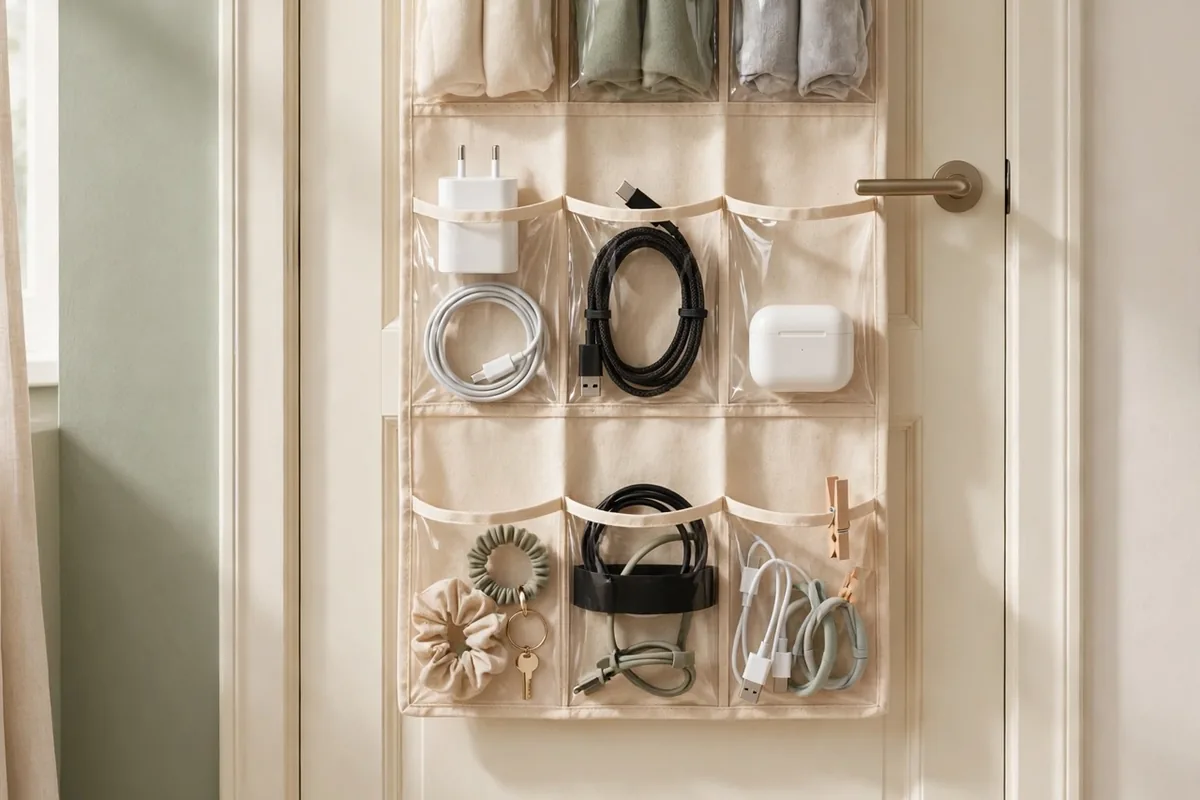
The bedroom door is a full extra wall. A hanging fabric organizer with clear pockets ($10 to $15) corrals socks, underwear, chargers, medications, and the small drawer refugees that have nowhere to live without a closet. Hang it on the bedroom door, not inside a wardrobe, so it stays reachable.
Assign every pocket a category and keep a few pockets deliberately empty. Empty pockets are breathing room: the system absorbs new small items without overflowing. An organizer packed to bursting is a junk drawer hanging vertically.
Check the door’s swing and the gap to the frame before you buy. Thick organizers stop hollow-core doors from latching, and a door that will not close is worse than no organizer at all. Slim pocket styles (under two inches deep) fit almost any door.
If the bedroom door gets heavy use, reinforce the top hooks with a small adhesive pad where they grip. Door organizers swing every time the door moves, and the swinging loosens cheap hooks over months. A two-minute reinforcement in week one saves the organizer from sliding down the door in month three.
Get a Bench That Stores and Seats
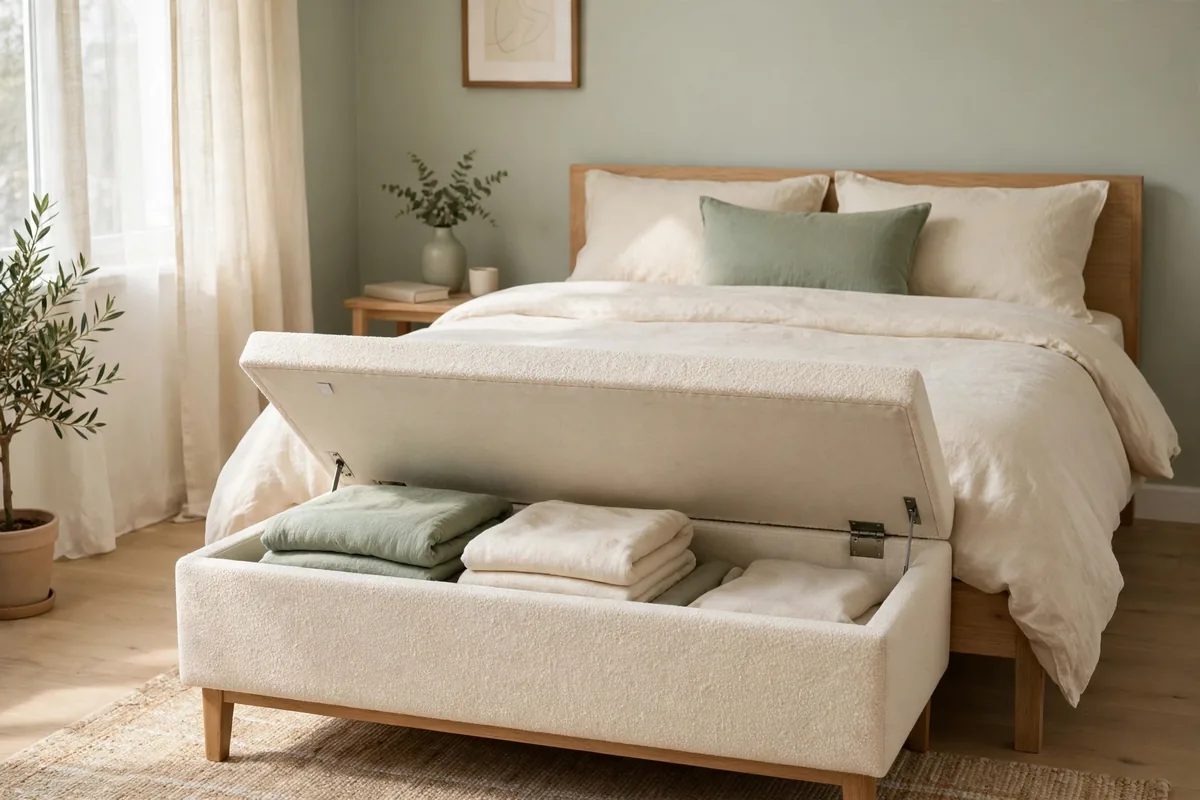
A storage bench at the foot of the bed ($60 to $100) does two jobs in the space of one piece of furniture. The inside holds extra blankets, off-season clothes, or the guest bedding; the top is a seat for putting on shoes and a landing spot for the bag you carry daily.
Choose one with a hinged lid, not a lift-off top. Lift-off lids end up leaning against the wall permanently, and then the bench is just an open bin you sit near. A hinged lid closes itself, which means the storage actually stays hidden.
Sort Laundry in a Vertical Sorter
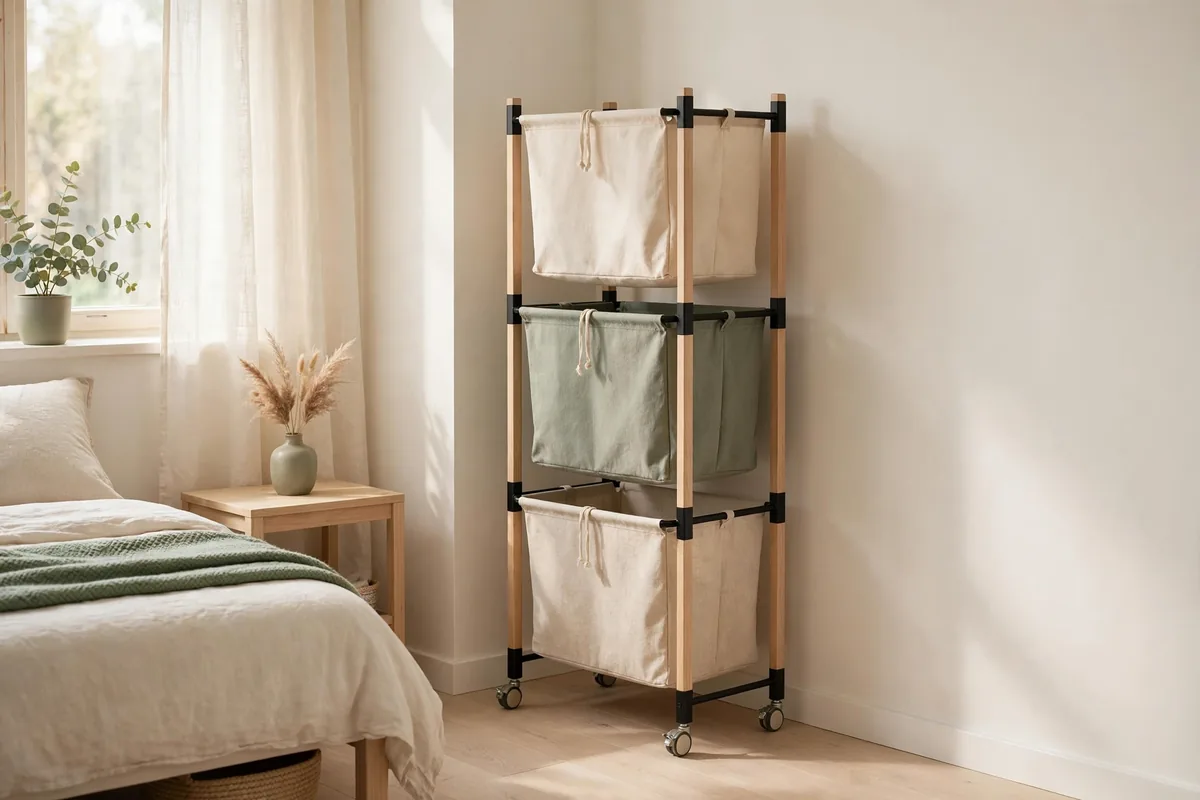
Without a closet hamper corner, laundry spreads. A vertical three-bag sorter on wheels ($35 to $45) holds lights, darks, and delicates in the footprint of a single hamper, and it rolls to the laundry room when full. Sort at the source and you never do the pre-wash sort again.
Park it where the closet would have been, beside the dresser or the wardrobe. Laundry systems fail when the hamper is across the room from where clothes come off. Put the sorter on the path between the bed and the door and dirty clothes will find it on their own.
Empty it on a schedule, not when it overflows. Pick a laundry day and defend it. A sorter that empties weekly never becomes the second wardrobe, which is what happens to every hamper without a schedule.
This Weekend: Build Your Closet Corner
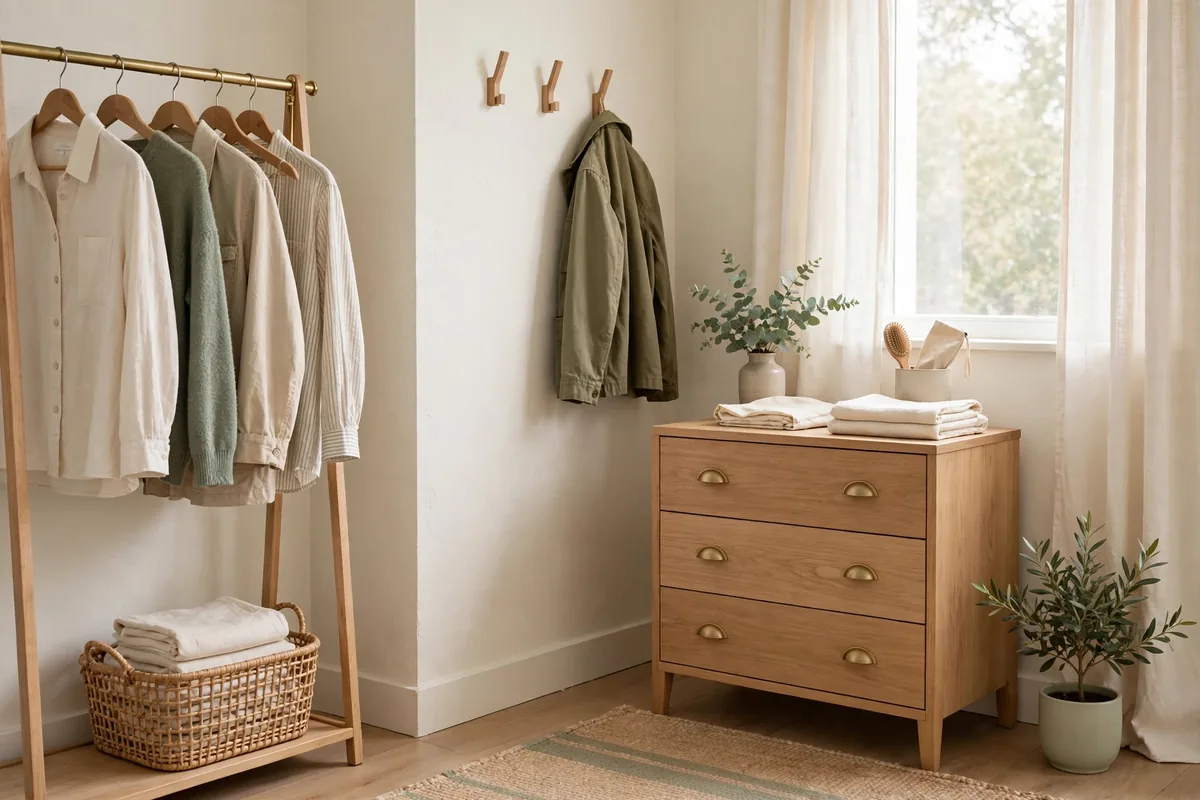
You do not need the whole system at once. This Saturday, pick one corner and build the starter closet: a garment rack ($25), a set of wall hooks ($12), and two under-bed bins ($20). Hang this week’s clothes on the rack, put tomorrow’s outfit on a hook, and move off-season stuff under the bed. Total cost is under $60, total time is about two hours.
Live with that corner for two weeks before buying anything else. You will learn exactly what is missing: maybe you need the dresser next, maybe the shoe cart, maybe nothing at all. Small bedroom storage without a closet works best when you add pieces in response to real friction, not in anticipation of it. Start with the corner, and let the room tell you what comes next. Once the closet system is running, step back to the bigger picture with these bigger-picture small-bedroom organization ideas.