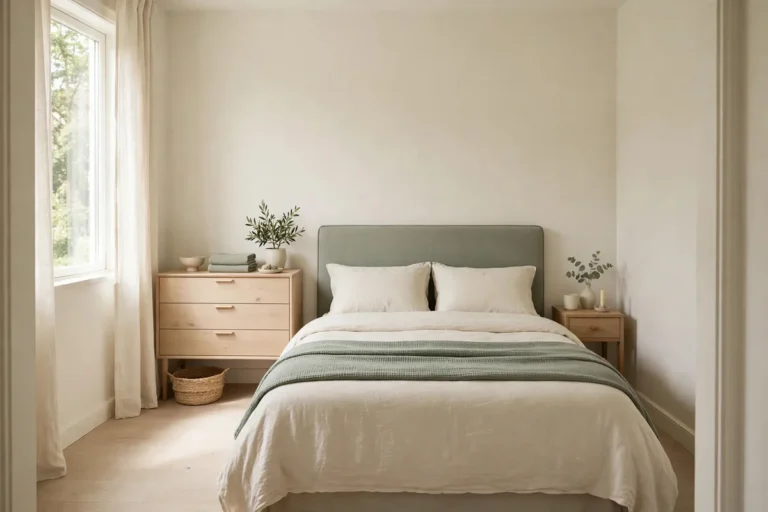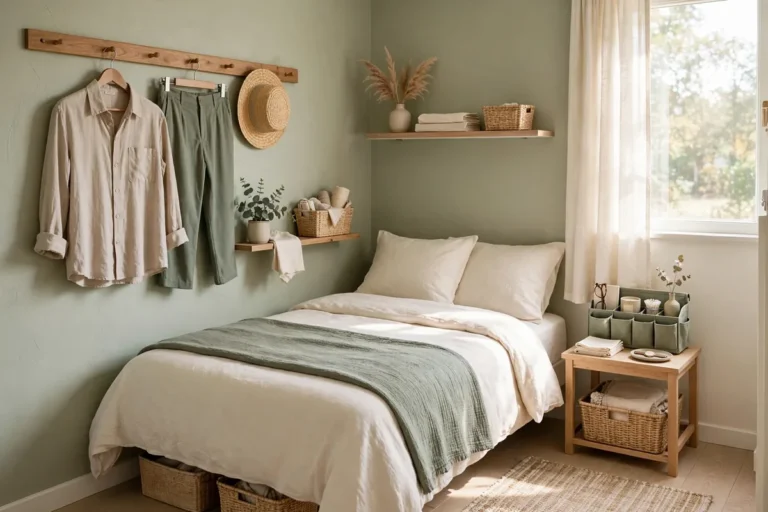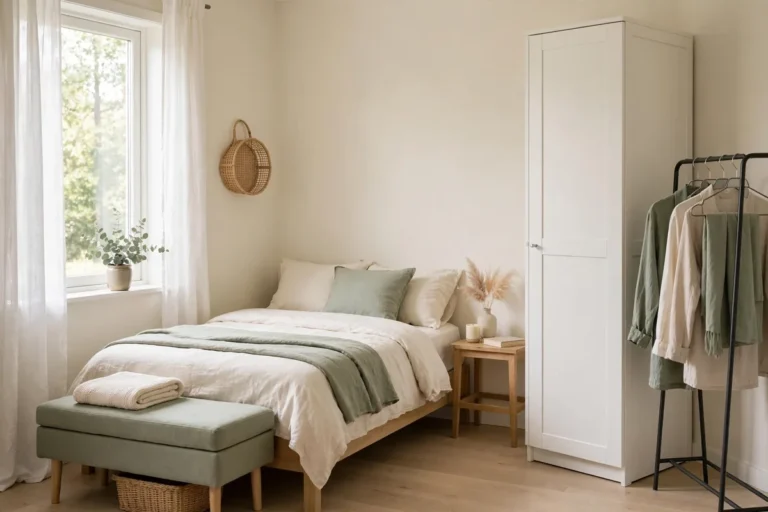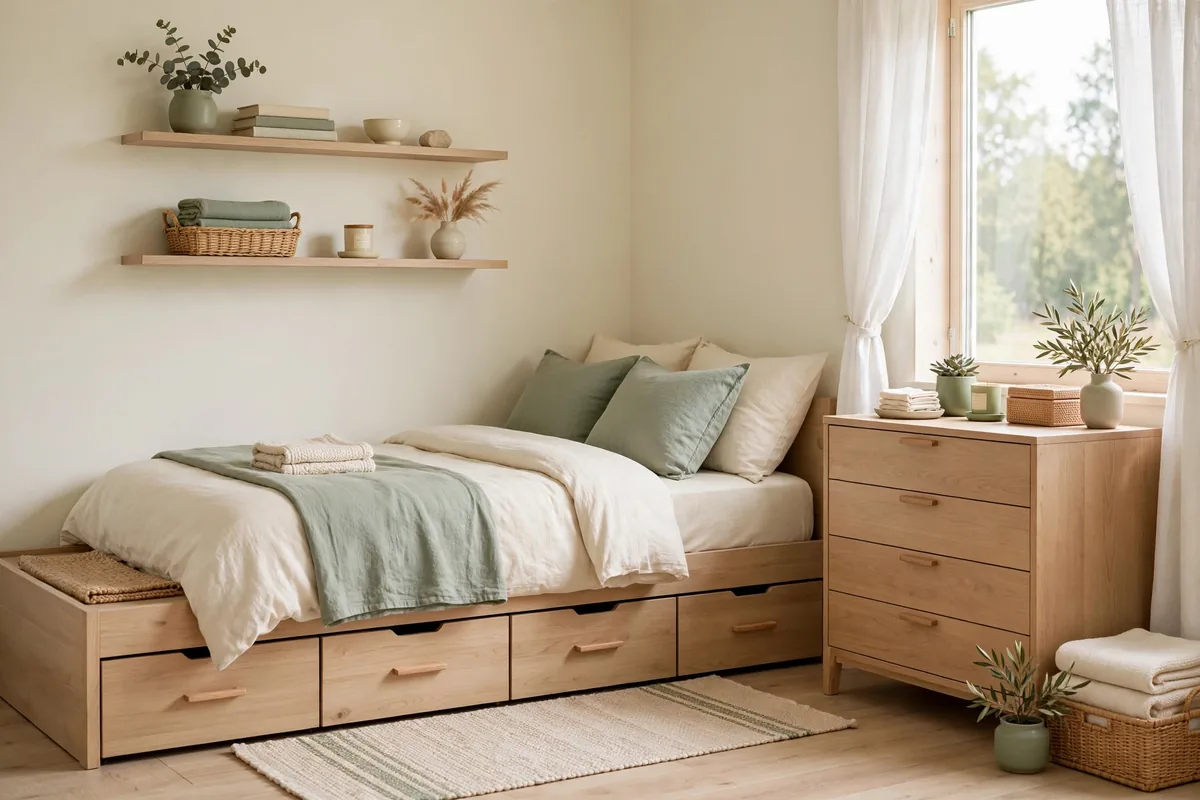
The first bedroom I ever had to organize on my own had a closet door that only opened halfway, because the bed was in the way. I sidestepped that half-open door for the better part of a year before it occurred to me that the bed was allowed to move. That is the whole game with small bedrooms: the room is usually fine, and the arrangement is the problem.
This guide goes zone by zone through a small bedroom: the bed, the walls, the closet, the drawers, the door, the corners, and the laundry situation. Most ideas cost under $30, many need no tools at all, and none of them require a bigger room. Bedrooms are also the room where clutter costs you the most, because it is the last thing you see at night and the first thing you see in the morning. Here is what actually works when every inch has to earn its keep.
Walk the Room With a Trash Bag First

Do not buy a single bin until you have walked the room with a trash bag. Bedrooms collect a special kind of clutter: the chair that became a closet, the nightstand drawer full of dead pens, the dresser top buried under things that live elsewhere. Fifteen minutes of honest purging clears more space than any organizer you can buy.
Be strict about duplicates and the aspirational stuff. The third throw blanket, the jeans that have not fit in two years, the magazines you will never reread. Bag it, box the donations, and get it all out of the room the same day. Organization only sticks when there is less to organize.
Start with the surfaces, since visible clutter drives that stressed feeling more than a messy drawer does. Clear the dresser top, the nightstand, and the chair. The drawers can wait for next weekend.
The Bed Is Your Biggest Storage Win
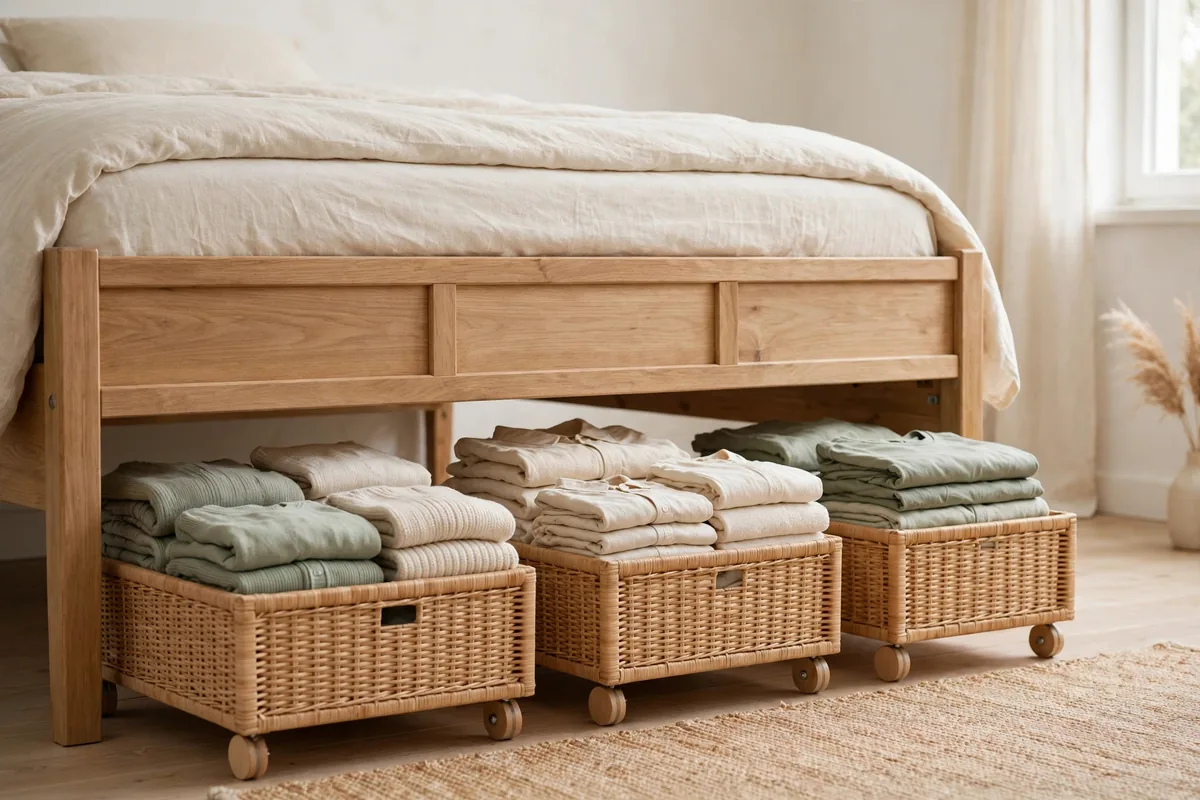
Your bed eats roughly a third of the room’s floor space, so it should be doing more than holding a mattress. The space underneath is the largest hidden storage zone in the house. Low-profile bins on wheels (about $20 to $30 for a set) turn it into a dresser you never see. Measure the clearance first: most frames give you 7 to 8 inches, and bins taller than that simply will not slide.
Put the right things down there. Off-season clothes, extra bedding, and shoes are ideal because you reach for them rarely. Daily clothes belong in the dresser or closet where you can grab them half-asleep. Label the ends of the bins facing out so you are not dragging out all four to find the winter coats.
If you are buying a frame anyway, get one with built-in drawers. A storage bed costs more up front than a basic frame, but it replaces a dresser, which in a small bedroom is worth more than the price difference. IKEA’s SKUBB cases ($9 to $13) are the default recommendation for a reason; you can browse IKEA’s under-bed storage range to compare sizes before you commit.
No clearance at all? Bed risers ($12 to $18 for a set of four) lift most frames and buy you instant bin space. Check that the frame’s legs sit securely in them, and skip risers entirely if anyone in the house is unsteady climbing into a taller bed.
Go Vertical: Walls Are Free Square Footage
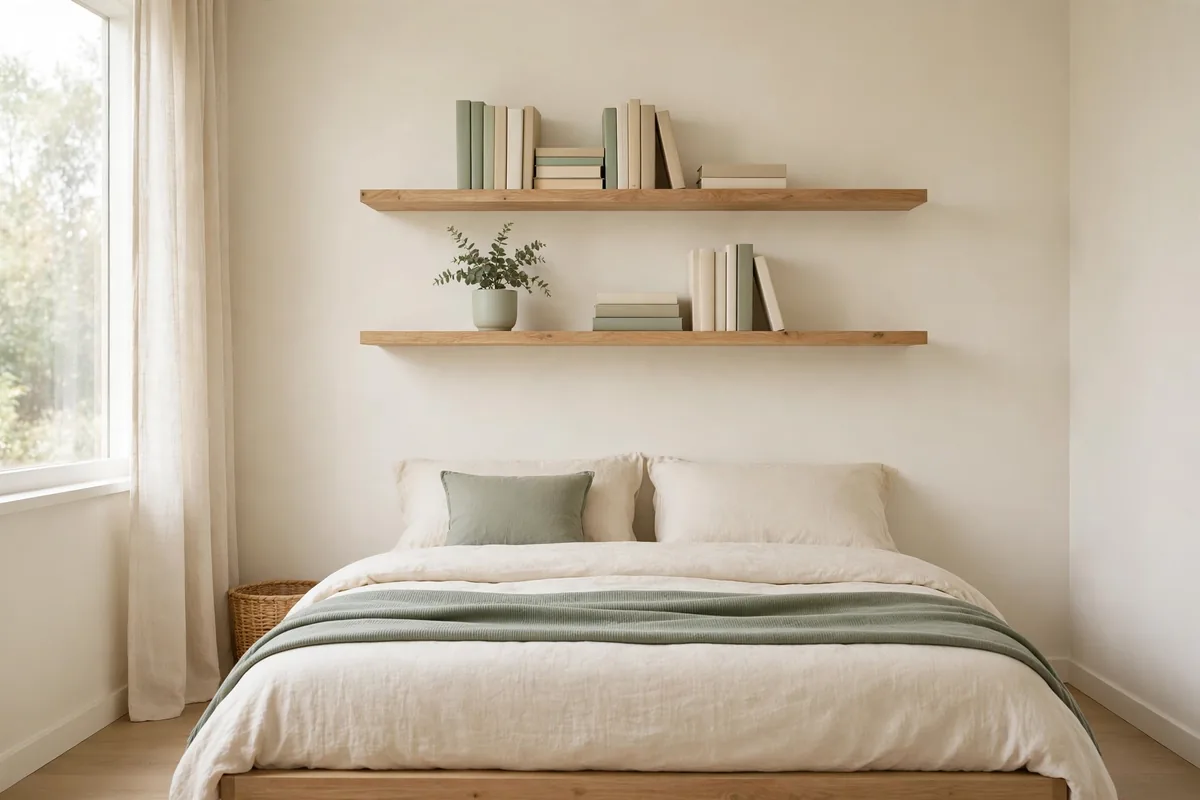
Floor space is finite; wall space is not. A pair of floating shelves ($15 to $25 each) above the bed or the dresser holds books, a plant, and the framed photo that was eating nightstand space. Mount them at a height you can reach without climbing, and keep the styling sparse. Crowded shelves just move the clutter upward.
Pegboard is the renter-friendly version of built-ins. A two-by-four-foot panel with hooks holds jewelry, sunglasses, headphones, and tomorrow’s outfit where you can see it all. Hang it inside the closet door or on the wall beside the dresser. Everything visible, nothing in a pile. A small ledge at the bottom of the panel catches the sunglasses and keys that otherwise end up on the dresser.
One caution: bedroom walls collect visual noise fast. One organized wall beats three busy ones. Pick the wall that bothers you most, usually the one facing the bed, and leave the rest alone. You can always add a second wall later; you cannot unsee a cluttered one.
Double Your Closet Without Renovating
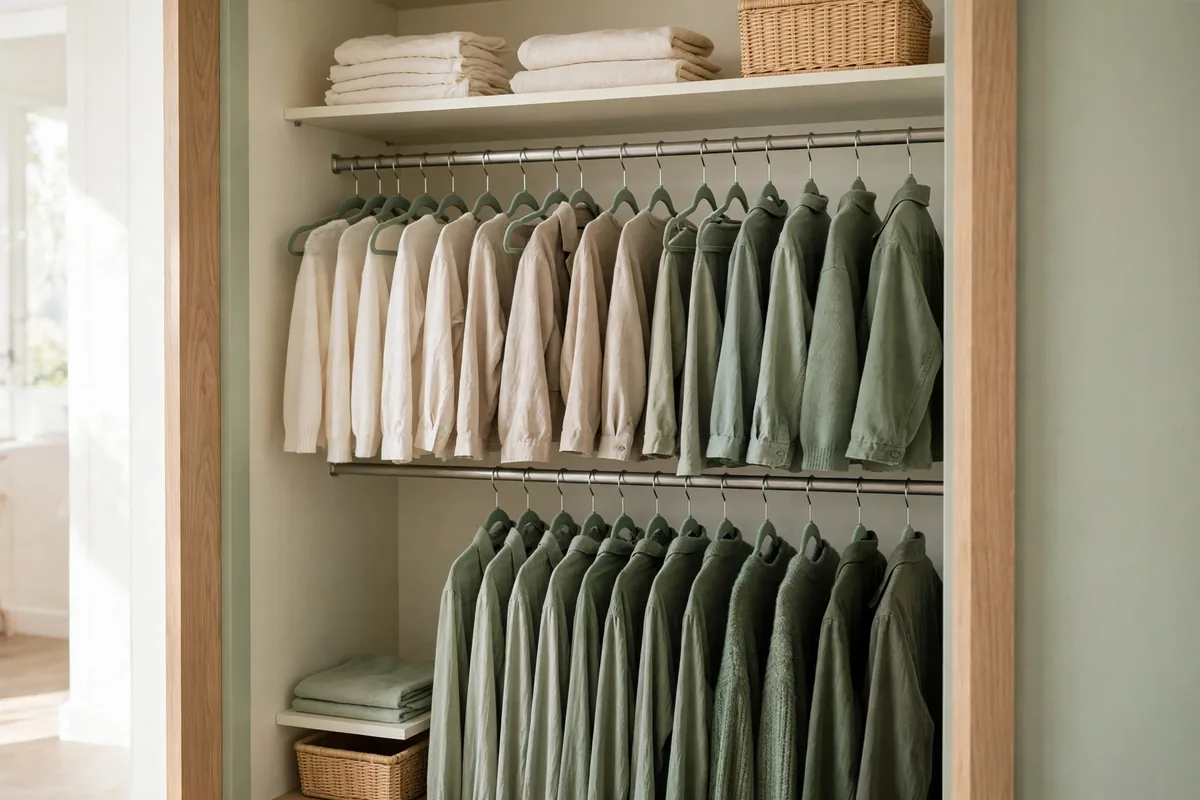
Most closets waste their best asset: vertical hanging space. A tension-mounted double-hang rod ($12 to $15) hangs from the existing rod and creates a second tier overnight. Shirts and folded pants live up top; longer items keep the bottom. You have just doubled the closet’s capacity for the price of lunch.
Then switch the hangers. Slim velvet hangers (around $15 for a 50-pack) are half the thickness of plastic ones, which across forty hangers reclaims several inches of rod. They also grip, so the silk blouse stops sliding onto the floor every week.
The shelf above the rod is usually a dead zone of leaning boxes. Shelf dividers ($10 for a set) turn it into cubbies that hold folded sweaters and bags upright. The closet floor fits a low shoe rack or a row of bins for the things that never earned hanger space.
What should live in the closet versus the dresser? A simple split that survives real life:
- Hang: anything that wrinkles, plus work clothes you grab in a hurry.
- Fold and file: knits, tees, jeans, gym clothes.
- Bin on the shelf: off-season items, accessories, the bag collection.
No closet to work with? Then skip this section entirely and use these storage ideas built for closetless bedrooms instead.
File Your Clothes Like Papers
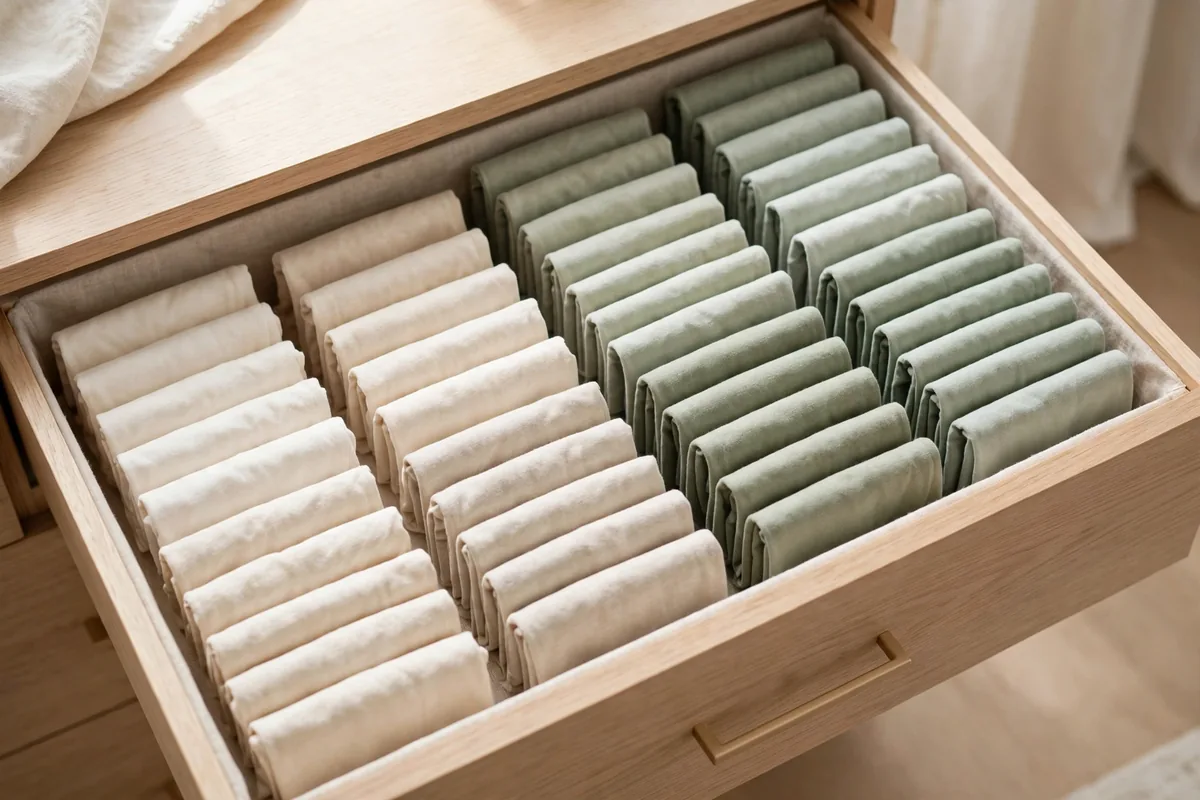
Stacked clothes are a lie: you wear the top three items and forget the rest. File-folding fixes it. Fold each garment into a rectangle that stands upright, then file shirts, pants, and underwear side by side in the drawer like folders in a cabinet. Every item visible, nothing buried.
The method takes ten minutes to learn and it genuinely changes drawers. Start with t-shirts: fold the sides in, fold into thirds, stand it up. If the fold holds its shape on the counter, it will hold in the drawer. Drawer dividers or even cut-down boxes keep the rows from slumping into each other through the week. Socks and underwear get the same treatment on a smaller scale, filed in a shallow tray so they stop forming a tangled layer at the bottom.
If you want the full technique with photos for every garment type, this step-by-step KonMari folding guide walks through shirts, pants, socks, and the rest. One honest warning: the first drawer takes twenty minutes. The fifth takes five.
The Nightstand Rule: One Surface, One Drawer
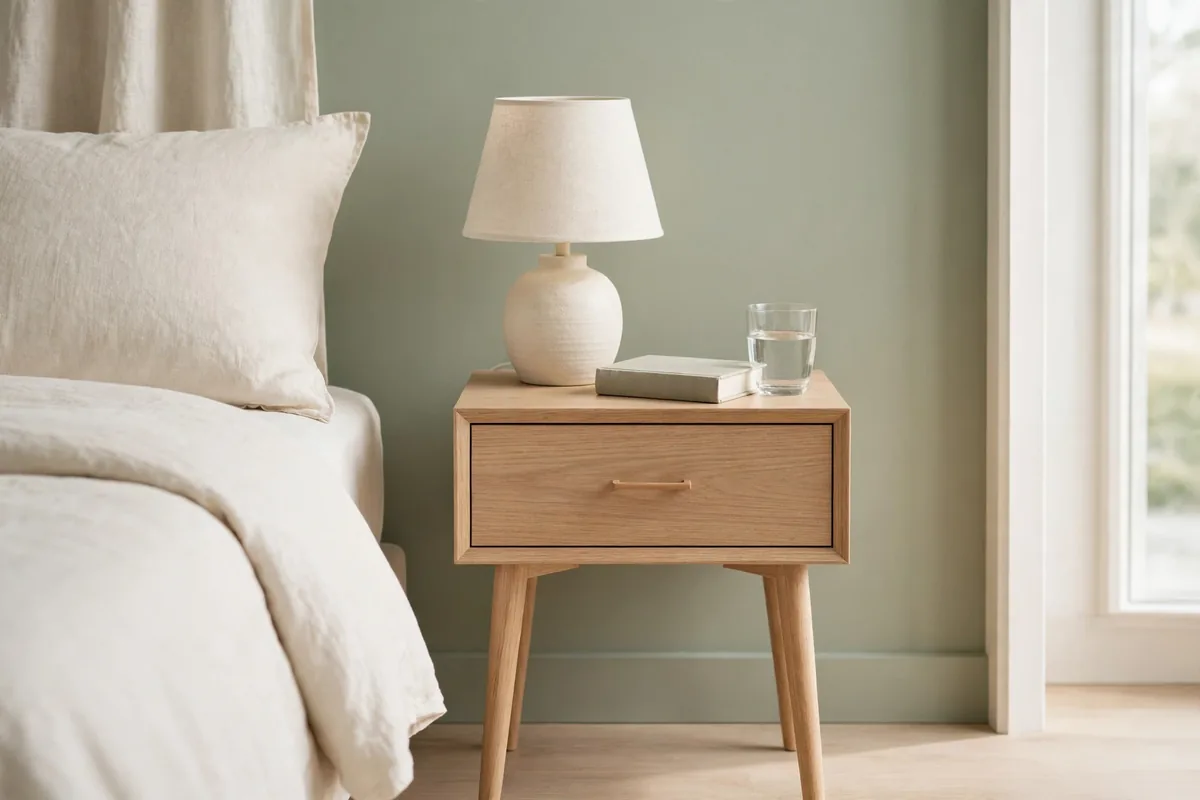
A nightstand has exactly two jobs: hold tonight’s things and hide the rest. Lamp, book, water, charger. That is the full guest list for the surface. Everything else migrates into the drawer, and the drawer gets one small tray so it does not become a junk drawer with a lamp on top.
No room for a nightstand at all? Mount a small floating shelf at mattress height, or hang a pendant light from the ceiling and skip the lamp entirely. The surface you free up is worth more than the furniture you skip.
If you share the room, give each side its own surface, even if one side is just a wall-mounted shelf. Nightstand space is personal space, and negotiating it every night gets old fast.
Put the Back of the Door to Work

The back of the bedroom door is a full extra wall that most people never use. Over-the-door hooks ($10 to $15) hold tomorrow’s outfit, the bathrobe, and the bag you grab daily. No screws, no damage, and installation takes about thirty seconds. If the door is hollow-core, stick to the hook-over style rather than anything you screw in, since screws do not hold well in hollow doors.
For smaller things, a hanging fabric organizer with clear pockets corrals accessories, chargers, and the random drawer refugees. Hang it high enough that it clears the floor when the door swings, and keep it to light items so the hinges never notice the extra load.
The one rule: the door still has to close. If the organizer stops the door from latching, it is too thick for that door. Measure the gap between the door and the frame before you buy, not after.
Corners Aren’t Dead Space

Every bedroom has a corner where furniture goes to be awkward. A set of corner floating shelves turns it into display and storage for books and small plants. Or give the corner the room’s tallest piece: a narrow bookshelf or leaning ladder shelf uses the height everyone forgets.
Also audit whatever is hogging the corner now. The floor lamp could become a wall sconce. The armchair nobody sits in could leave entirely. Corners work hardest holding one tall thing, not three short ones. If you are rethinking more than the corners, these ways to arrange furniture in a small bedroom cover the whole room layout.
Contain the Laundry or It Takes Over
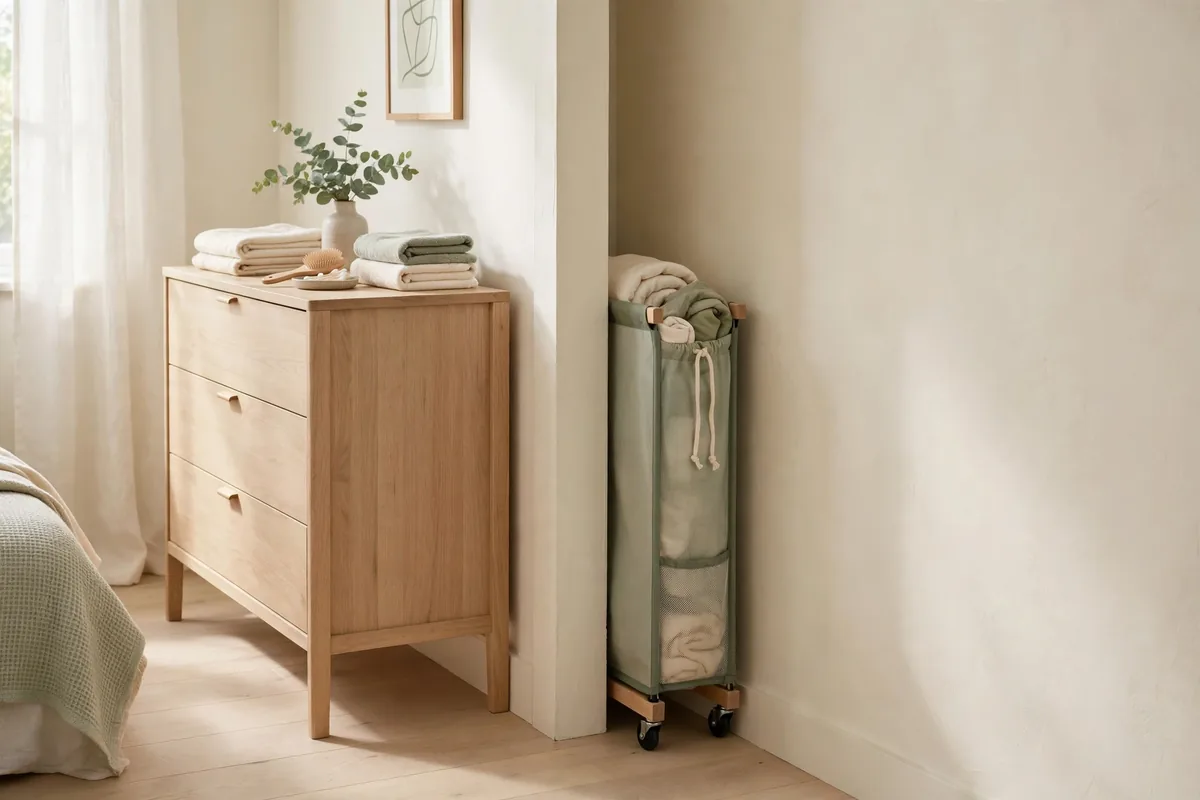
In a small bedroom, the laundry pile is not a pile, it is a roommate. Give it a strict container and a strict location. A slim rolling hamper ($25 to $35) slides into the gap between the dresser and the wall, or inside the closet. When it is full, that is the signal to wash, not the signal to start a second pile.
Sort at the source if you can stand it. A two-bag hamper keeps lights and darks separated without a sorting session on laundry day. Hang a mesh bag on the closet door for delicates so they stop vanishing into the main pile.
The real trick is the weekly rhythm, not the container. Pick a laundry day and defend it. A hamper that empties every seven days never gets the chance to become furniture.
Dresser Tops: Show Three Things, Store the Rest
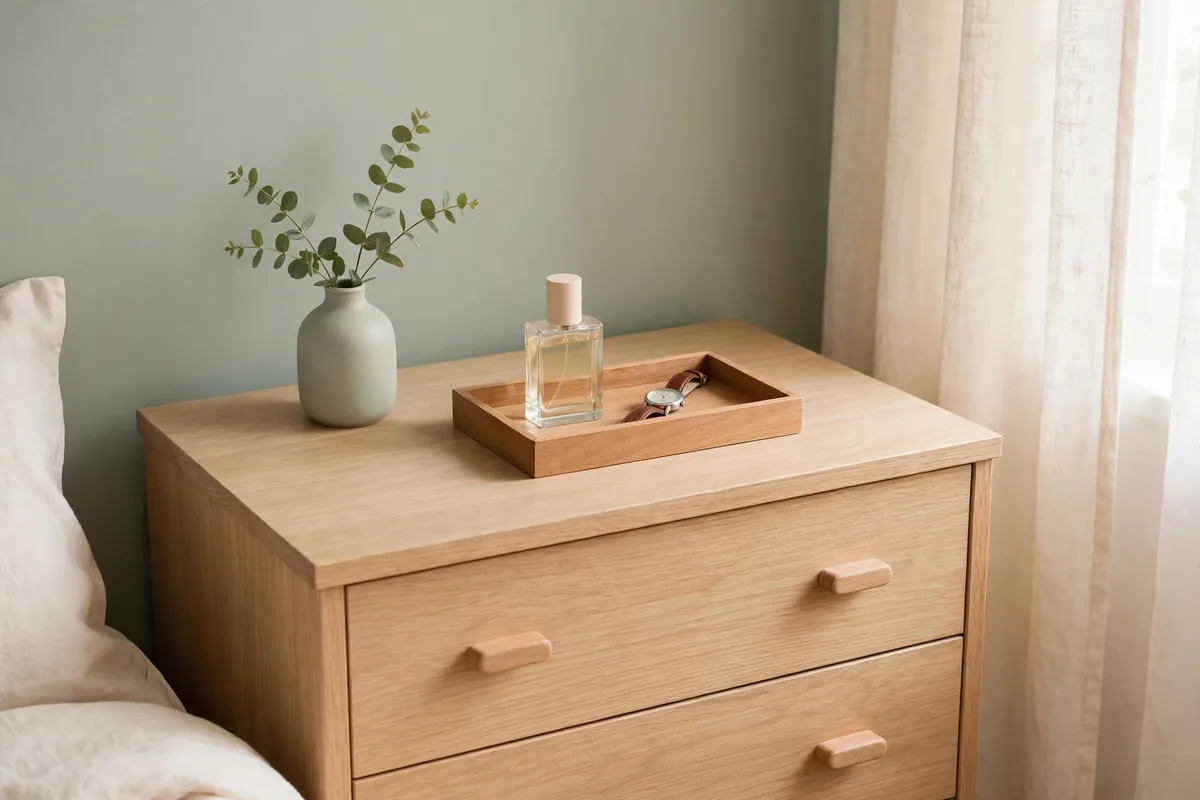
Dresser tops drift toward clutter because they are flat and convenient. Reset yours with a rule: three displayed things, everything else stored. A tray corrals the perfume and the watch; the rest goes in drawers. The tray is the whole trick. It draws a visible boundary that clutter has to cross.
What earns display? The things you use daily or love looking at. Everything else is just postponing a decision about where it lives. Keep the top clear for a week and you will notice how much calmer the room feels at night.
Light It Well and It Feels Bigger
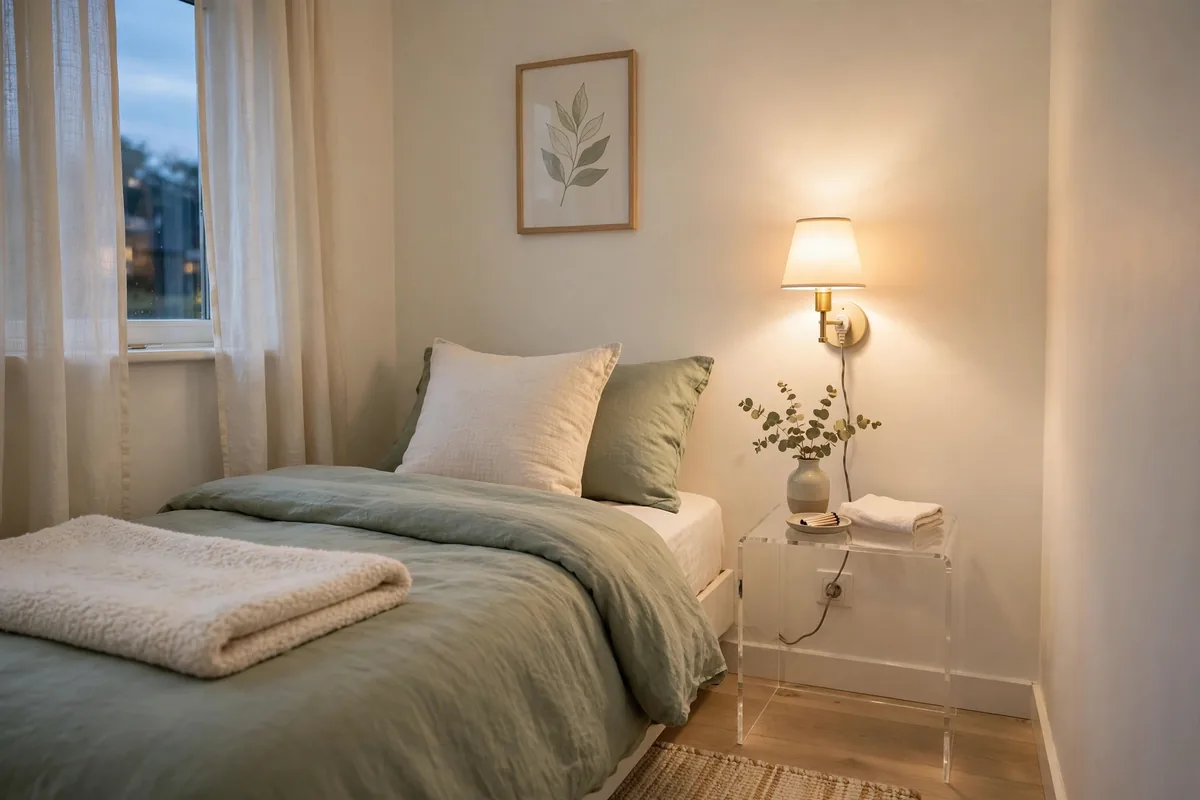
Bad lighting makes small bedrooms feel smaller: one harsh overhead bulb, dark corners, done. Swap the overhead for warm layers. A plug-in wall sconce ($30 to $50) beside the bed frees the nightstand surface entirely and throws light where you actually read. No electrician needed, and renters can use adhesive-mounted options that leave no marks.
Stick to warm white bulbs, around 2700K. Cool daylight bulbs make a small bedroom feel like an office, which is the opposite of the goal. If the overhead has to stay, put it on a dimmer or swap in a lower-wattage warm bulb and let the lamps do the real work. A $10 plug-in dimmer works on most existing fixtures with zero wiring.
Mirrors double whatever light you have. A full-length mirror on the closet door or leaning in a corner bounces the sconce light around and gives you a place to check the outfit. Two jobs, zero floor space.
The 10-Minute Nightly Reset
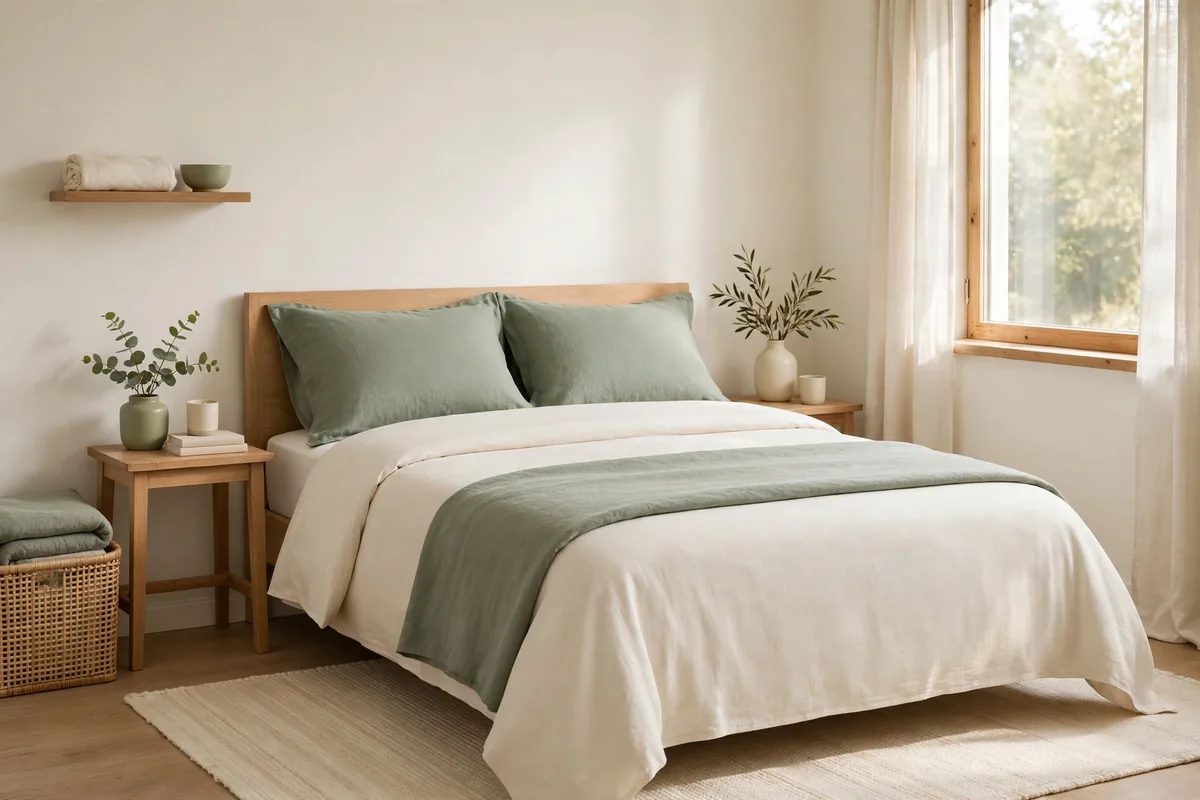
Systems fail without maintenance, and bedrooms drift faster than any room because you are tired when you use them. The same reset habit keeps other small rooms from sliding too: a bathroom version of this nightly reset does the same job for a cramped bathroom. The fix is a ten-minute reset before bed: hang up the clothes, clear the nightstand, toss laundry in the hamper, straighten the bedding. Set a timer the first week until it becomes automatic. Do it right before you brush your teeth so it chains onto a habit you already have.
This is the least glamorous idea in the guide and the one that matters most. Every organizer in this article only works if the nightly reset keeps the room at baseline instead of letting it slide all week. If you share the room, split it: two people doing five minutes each beats one person doing ten, and a shared reset becomes a habit faster than a solo one.
Start With the Bed This Weekend

If the whole list feels like a lot, ignore most of it and do one thing: the bed. Measure the clearance, buy two bins, and move the off-season stuff under it this Saturday. It is the biggest single storage win in the room, it costs less than dinner out, and you will feel the difference the same night.
Then pick the zone that annoys you most and do that one next weekend. Small bedrooms do not need total makeovers. They need one good decision at a time, in the right order.