The first time my closet fought back, I was late for work and reached for a sweater on the top shelf. The whole wire shelf gave a sad little bounce, and three sweaters, a shoebox, and something I had not seen in a year slid down onto my head. I stood there in my hallway with a cardigan over my face and finally admitted the truth: my closet was not small. It was just badly run.
Small bedroom closets get blamed for everything, but most of them fail for fixable reasons: one rod where two would fit, a top shelf that is really a junk drawer, doors that fight you, and a floor that became a shoe graveyard. These small bedroom closet organization ideas work with the closet you already have. No renovation, no landlord permission, and almost everything here costs less than a dinner out. If your bedroom has no closet at all, these storage ideas for closet-free bedrooms build one from furniture instead.
Start Your Small Bedroom Closet Organization With an Empty Closet
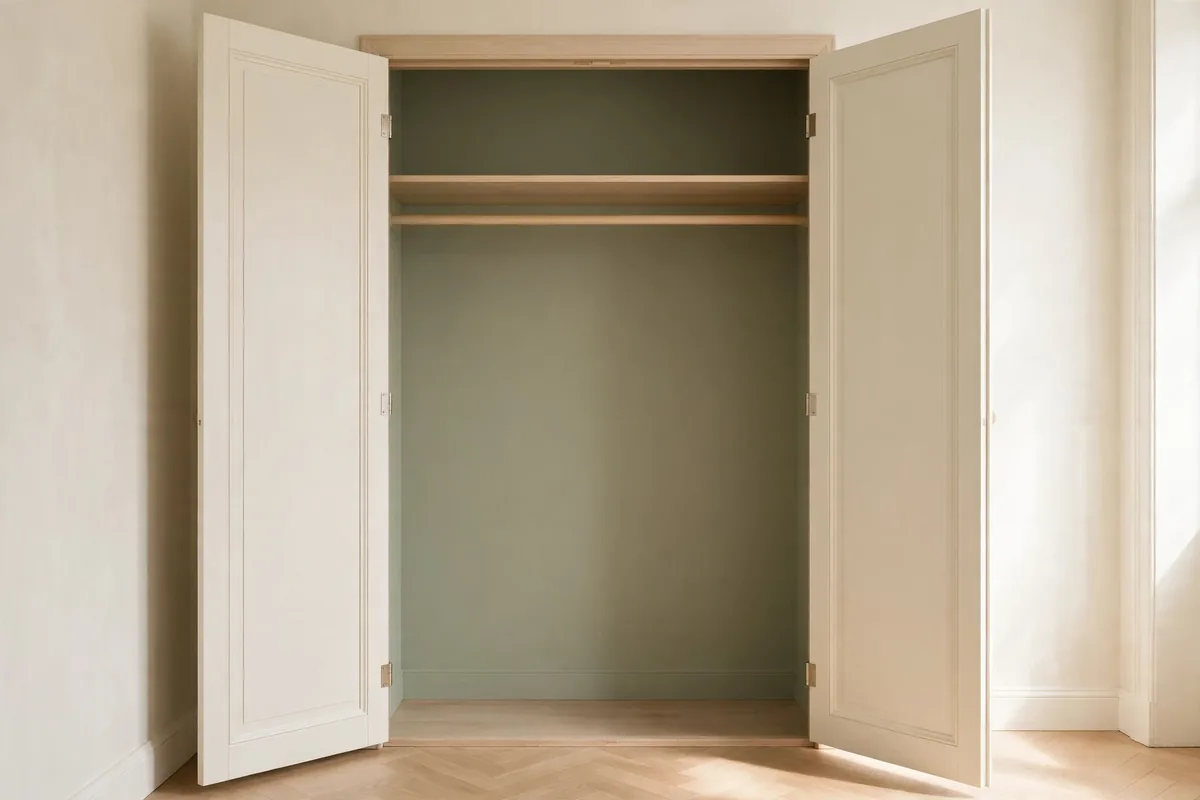
Take everything out. Every hanger, every shoe, every mystery box on the top shelf. This sounds dramatic, and it is supposed to be. You cannot see what the closet can hold while it is full of things that do not belong in it. Pile it all on the bed, wipe down the shelves and the rod, and look at the actual space for the first time since you moved in. If the whole bedroom needs this treatment and not just the closet, these ideas for organizing the whole small bedroom tackle the full room.
Now sort the pile into three groups: keep, donate, relocate. The relocate pile is the secret one. Half of most closet chaos is stuff that wandered in from other rooms: the Halloween costume, the gift bag stash, the toolbox that never found a home. Put those things back where they live before you put a single shirt back in the closet. You have probably just freed up a third of the space.
The Second Rod: A Small Bedroom Closet Organization Essential
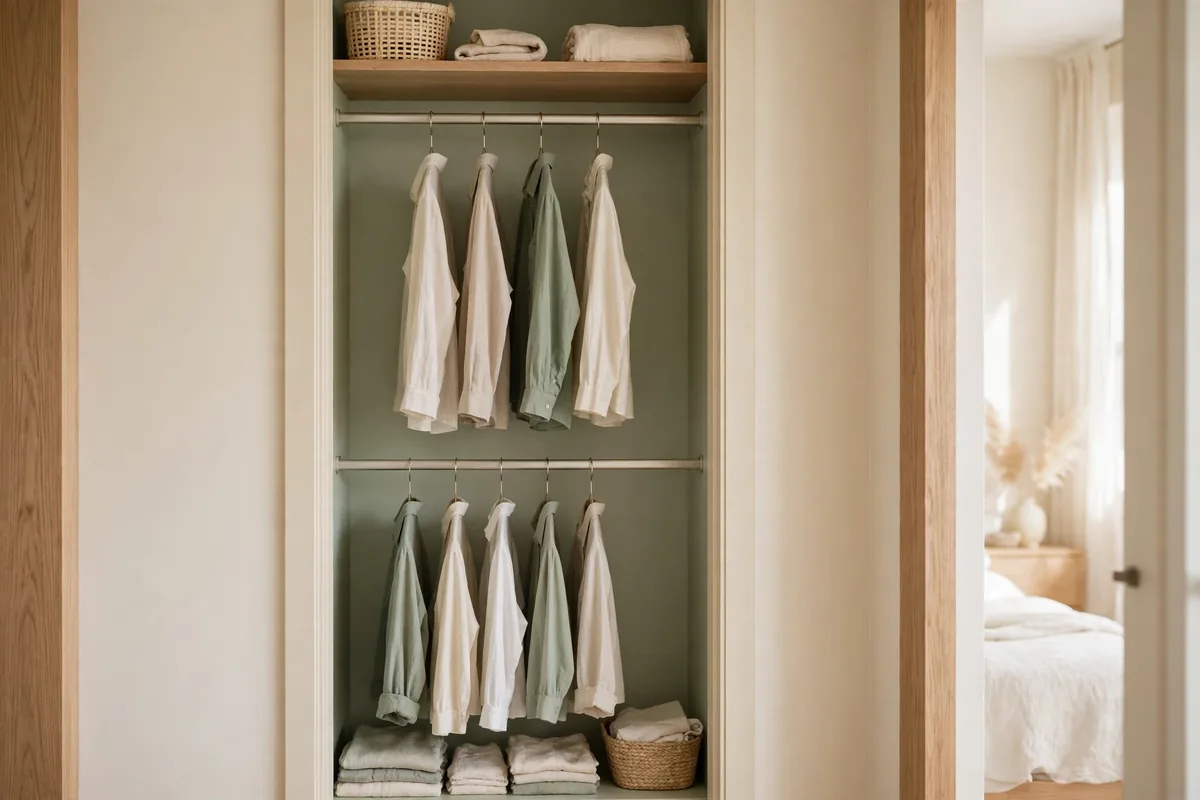
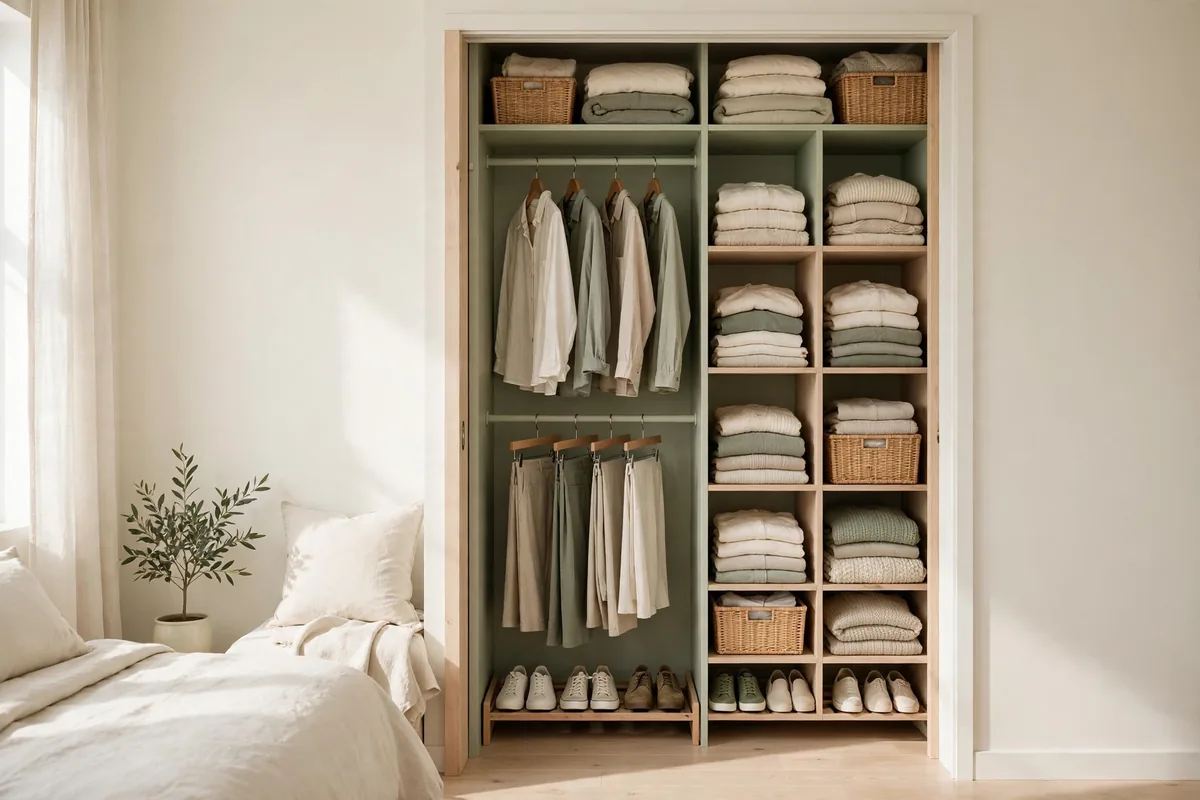
Most small closets waste their best asset: the empty air below the rod. A tension-mounted double-hang rod ($12 to $15) hooks over the existing rod and hangs a second one about halfway down. Shirts, blouses, and folded pants live on the upper tier. Skirts and shorter items take the lower one. You have doubled the closet’s hanging capacity for the price of lunch, with no drilling and no landlord conversation.
Measure your longest hanging item first. The lower rod needs to clear the floor, so long dresses and coats stay on the single-rod section or move to the bedroom door. In a standard reach-in closet, a full double hang fits across most of the width, with one short single-hang zone left over for the long stuff. Sketch it on paper before you buy; five minutes of planning saves a return trip.
If you are renting and the existing rod feels flimsy, tension rods are your friend. They grip the side walls without a single screw, and they come down cleanly when you move. Check the weight rating and keep heavy coats on the mounted rod, lighter shirts on the tension one. Physics still applies: a rod full of winter coats will test any tension mount.
Switch Every Hanger to Slim Velvet
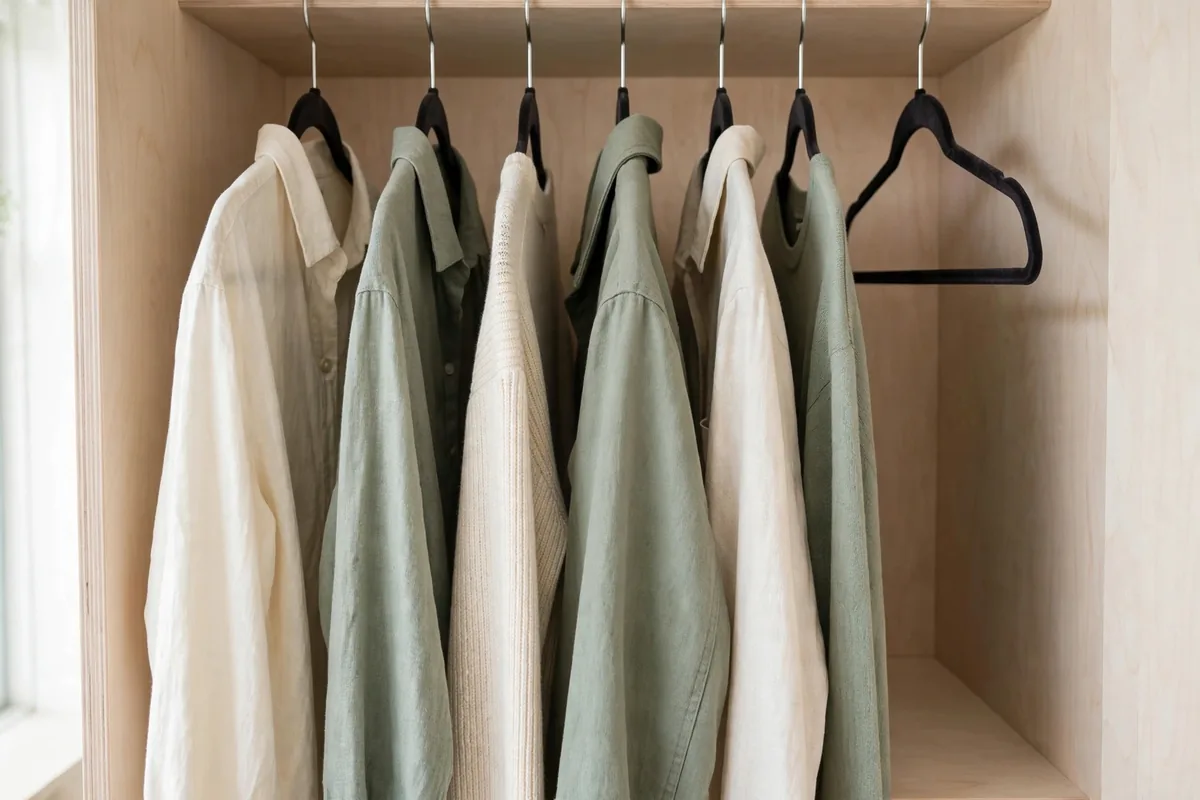
Bulky plastic hangers are quietly eating your closet. Slim velvet hangers (about $15 for a 50-pack) are half the thickness, so across forty hangers you win back several inches of rod. That is often the difference between clothes crammed shoulder to shoulder and clothes you can actually slide apart.
They grip, too. The velvet coating stops the slow slide of silk blouses and wide-neck tees that end up on the closet floor by Friday. Do the swap all at once, not gradually, because a mixed hanger closet looks chaotic even when it is organized. Keep ten old hangers for guests and donate the rest.
Divide the Top Shelf Into Cubbies
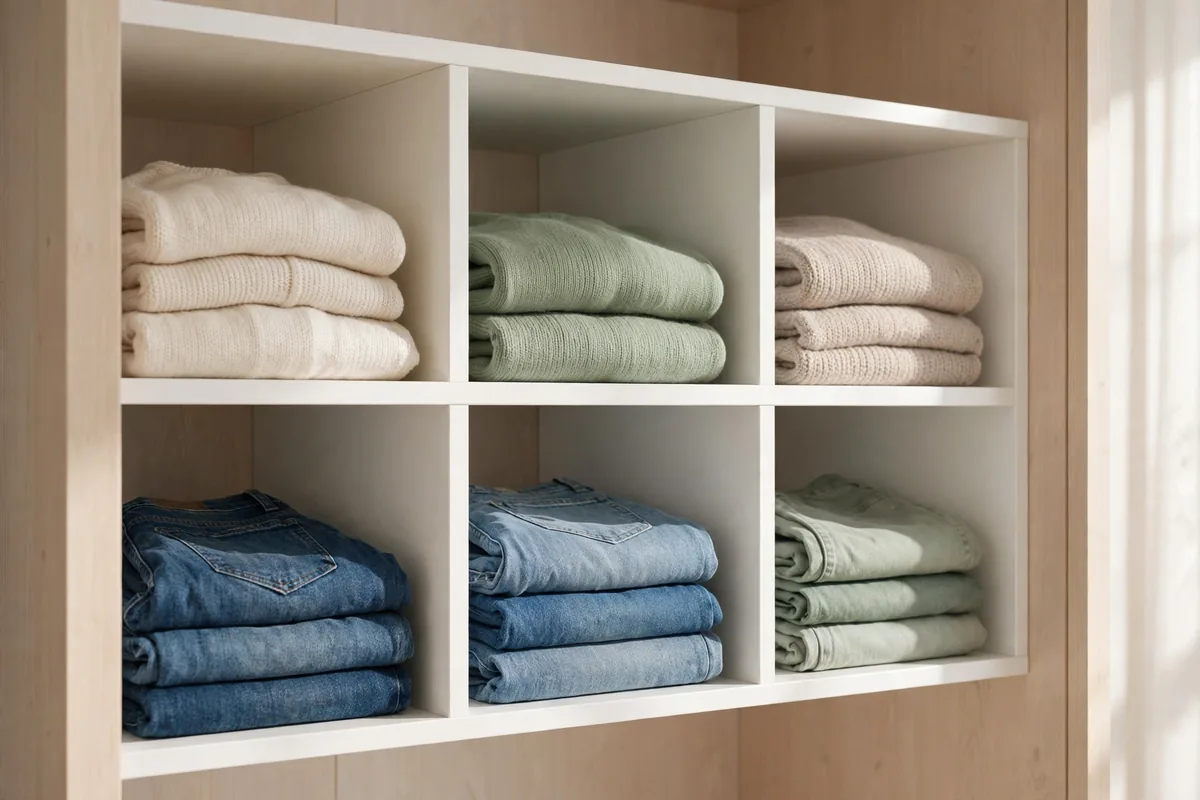
The shelf above the rod is where good intentions go to lean. Bags slump, sweaters topple, and boxes slide into each other until the whole shelf is one leaning tower. Shelf dividers ($10 to $12 for a set) clamp onto the shelf and carve it into upright cubbies. Folded sweaters, jeans, and bags each get their own slot, and nothing leans anymore.
Put the least-used stuff highest. Off-season clothes and the formal bag you carry twice a year belong in the back cubbies. Daily items stay at arm’s reach in front. If the shelf is deep, use the back half for storage you access monthly and the front half for weekly items. Depth is only useful if you can reach what is in it.
Wire shelving needs a small upgrade first. A sheet of foam board or thin plywood cut to the shelf size ($5 at a hardware store) lays flat over the wires and stops small items from tipping through. This is the wire-shelf disaster fix I wish I had known years ago: stable base, then dividers, then folding.
Reclaim the Dead Floor Space
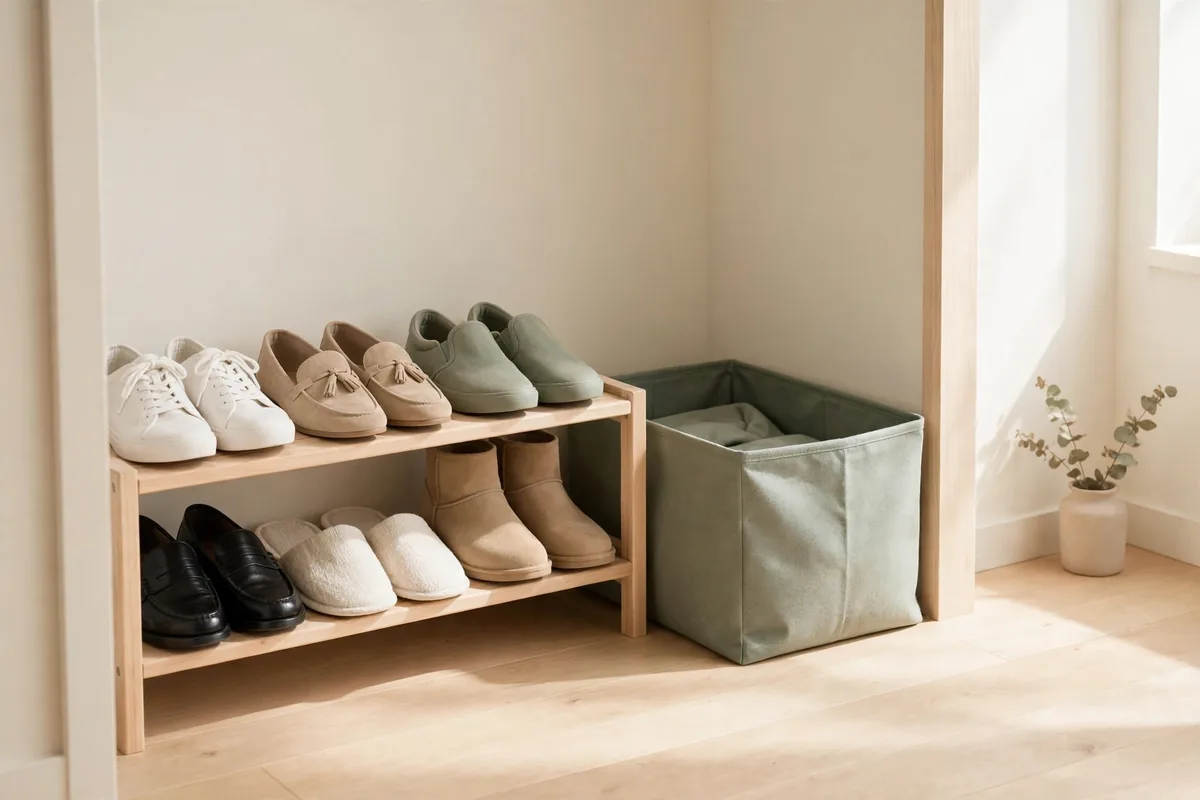
The closet floor is usually a shoe drift with a few bags on top. Claim it back with intention: a low two-tier shoe rack ($18 to $25) holds daily pairs in a footprint barely wider than the shoes themselves. Everything else goes up on the shelf or into a bin. The floor should have one job, not five.
If shoes are not the problem, shallow bins are. A pair of low fabric bins ($8 each) on the floor holds gym clothes, the travel kit, or the off-season accessories that used to live in a pile. Keep the bins shallow enough to pull out without moving anything else. Deep bins on a closet floor become black holes within a month. For storage problems beyond the closet — under the bed, behind the door, in the corners — these small-bedroom storage solutions cover the rest of the room.
Light Your Small Bedroom Closet So You Can See
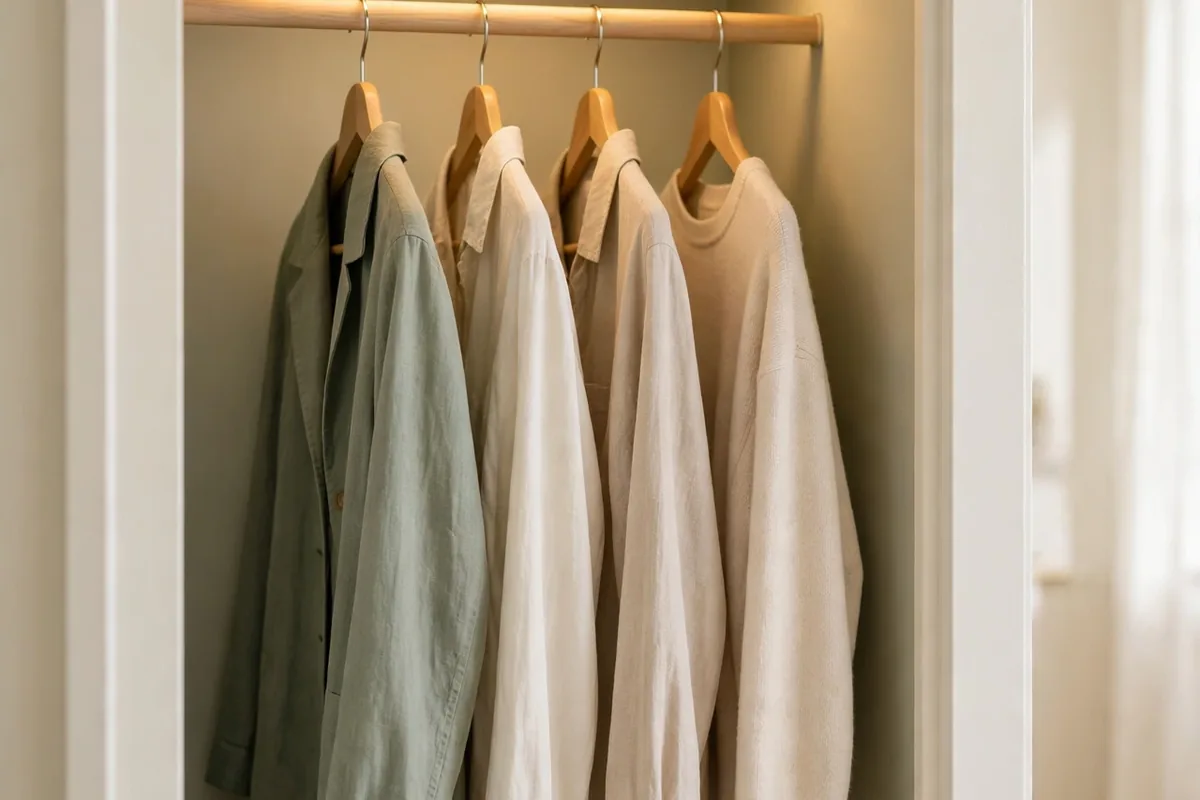
A dark closet makes every outfit decision harder and every item easier to forget. Stick-on LED light bars or puck lights ($12 for a 3-pack) mount with adhesive in minutes, no wiring, no electrician, fully renter-safe. Put one under the top shelf so it washes light down over the hanging clothes.
Motion-sensor versions are worth the extra couple of dollars. The light clicks on when you open the door and off when you leave, so you never think about it. You will be surprised how many “lost” clothes reappear once you can actually see the back of the rod.
Put the Inside of the Door to Work
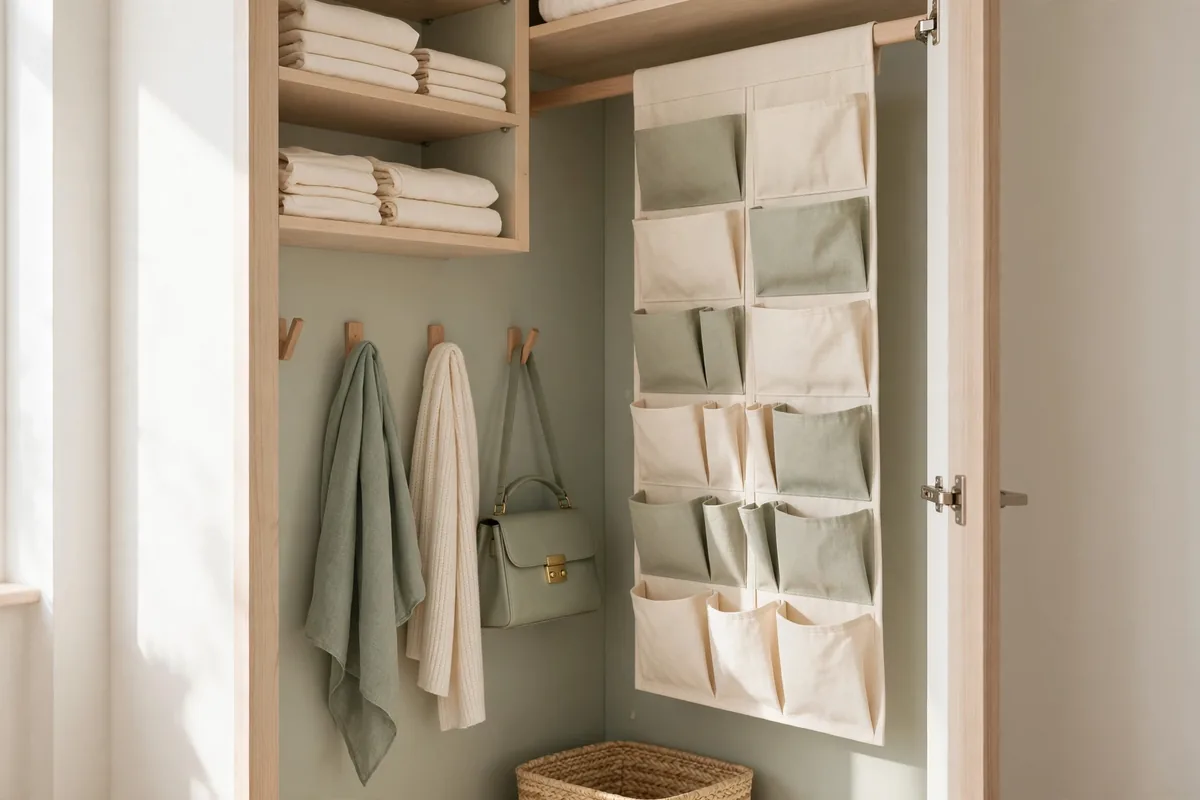
The inside of the closet door is a full wall of storage that came free with the apartment. A hanging pocket organizer ($10 to $14) holds scarves, belts, sunglasses, and the small things that vanish in drawers. Hang it high enough that it clears the floor when the door swings.
For heavier items, adhesive hooks or an over-the-door rail on the door’s interior hold tomorrow’s outfit, the bathrobe, or the work bag. If the door is hollow-core, skip anything you screw in and use the hook-over style that grips the top edge. Screws do not hold in hollow doors, and a hook that rips out takes paint with it.
Jewelry deserves its own mention. A small hanging jewelry organizer on the door keeps necklaces from tangling and puts everything visible at once. If your jewelry currently lives in a box where it forms a single knotted organism, the door is your rescue plan. For more ways to use every inch of a tight closet, browse photo roundups of real small closets — a dozen lived-in examples teach more than any single guide.
The one rule for door storage: the door still has to close. Measure the gap between the door and the frame before you buy anything, not after. An organizer that stops the door from latching is not storage, it is a new problem.
Hang a Shelf Cubby Unit for Bags and Knits
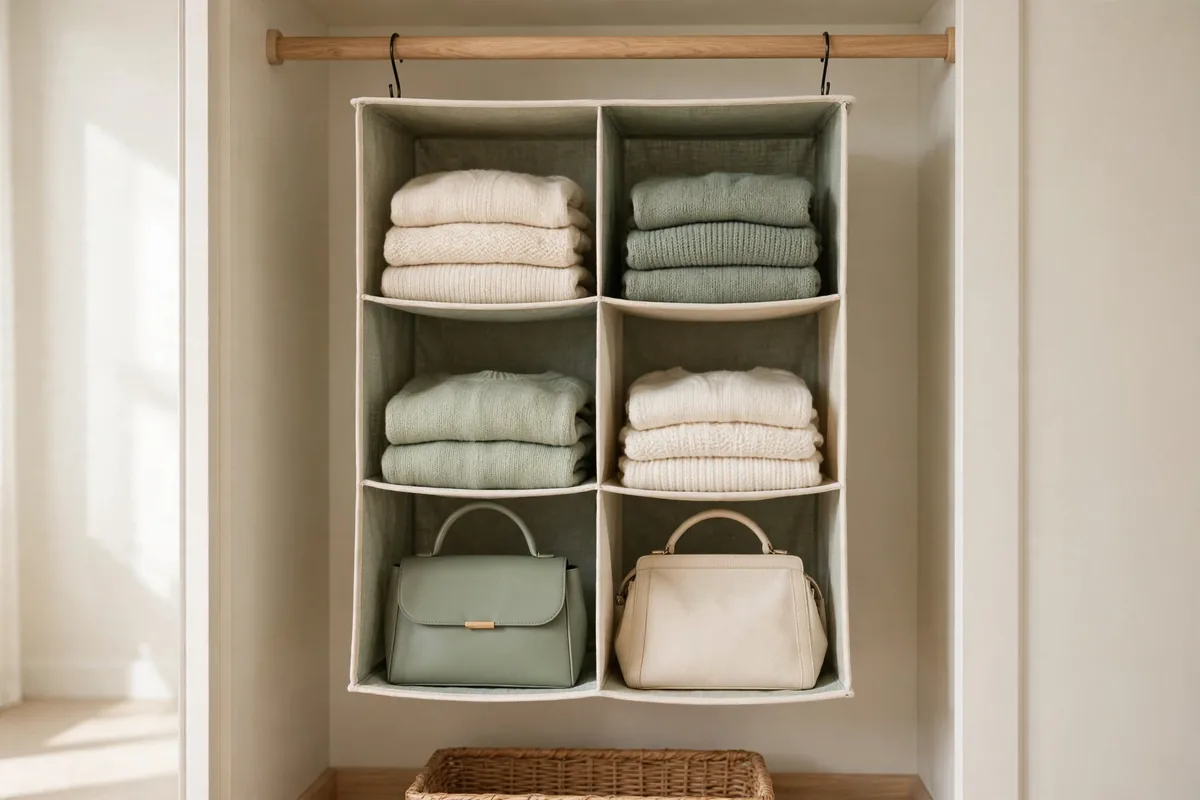
Hanging shelf cubbies ($12 to $18) loop over the rod and give you four to six instant shelves without a single tool. They are the fastest way to add structure to a closet that has nothing but a rod and a shelf. Folded knits go in the middle cubbies, bags and clutches on top.
Keep the cubbies shallow in your mind, even though they are not. Stack more than three items in one cubby and you are back to the leaning tower. One category per cubby: tees in one, sweaters in the next, gym clothes in the last. When a cubby gets messy, you know exactly which category overflowed.
Canvas versions breathe better than the clear vinyl ones, which trap that musty closet smell against folded knits. If your closet runs warm or humid, canvas is worth the small premium. A sachet of cedar or lavender in the bottom cubby keeps everything smelling like you meant it.
When the Layout Fights You, Kit It Out
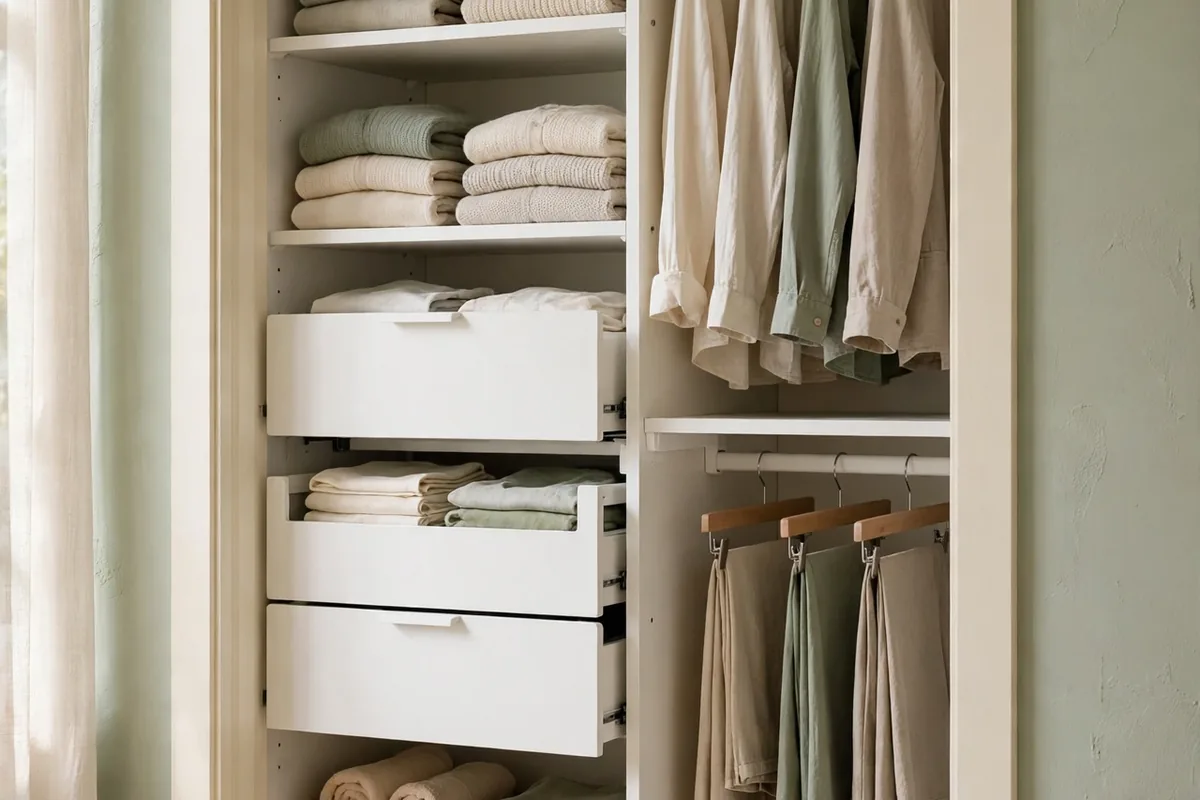
Some closets defeat piecemeal fixes: the rod sits at a weird height, the shelf is too deep to reach, nothing quite fits. That is when a modular closet kit earns its money. Systems like IKEA’s PAX, AURDAL, or the wall-mounted BOAXEL start around $60 for a basic frame and let you combine rails, drawers, and shelves to fit the exact weirdness of your closet.
The trick is planning before buying. IKEA’s guide to choosing a clothes storage system walks through which of their systems suits reach-in closets versus awkward nooks, and the online planner lets you build the layout before you spend a dollar. Measure the closet’s width, depth, and height, then design around the longest items you own.
Renters, check one thing before you commit: how the system mounts. Freestanding frames and tension-mounted systems come out cleanly. Anything that screws into the wall needs landlord approval or a willingness to patch holes later. A $60 kit is cheap; losing a deposit is not.
Doors: Slide Them, Remove Them, or Curtain Them
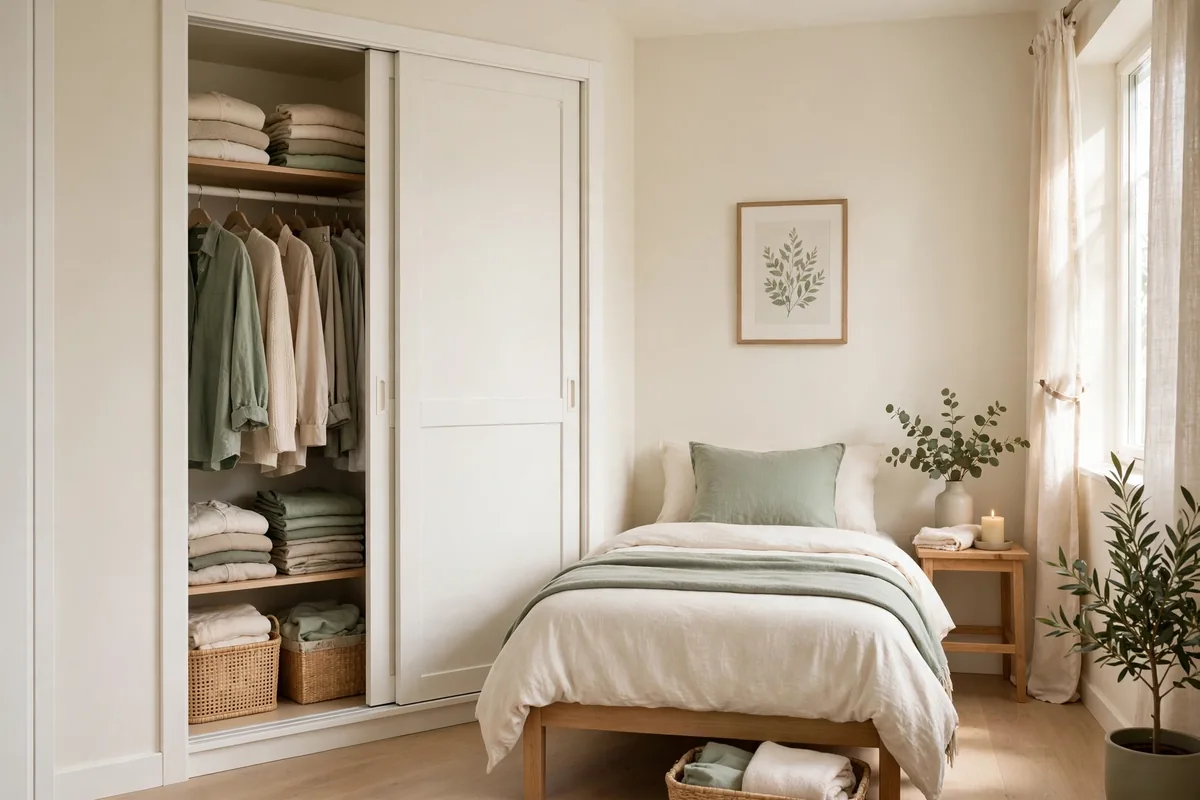
Closet doors are the part of the closet nobody thinks to question. But a door that swings out into a small bedroom eats a full arc of floor space every time you open it. If your closet has hinged doors, that swing zone is space you can never use for furniture. What you put around it matters just as much — these furniture arrangement ideas for small bedrooms show how to protect your walking lanes and dead zones.
Sliding doors fix the swing problem, and many hardware stores sell bypass door kits ($40 to $60) that convert a standard opening. It is a weekend project with a drill, and renters should check with the landlord first since it changes the door hardware. Keep the old doors in storage so you can swap them back when you move.
The free version: take the doors off entirely and hang a curtain. A tension rod across the opening ($8) plus a curtain panel hides the closet, costs almost nothing, and gives you full access to the whole opening. No more doors banging the bed, no more half-open squeeze. Choose a curtain that matches the room so the closet reads as a design choice, not a missing door.
Bifold doors get their own warning. The folding track is the first thing to break and the hardest to fix, and a stuck bifold turns the closet into a room you avoid. If yours still work, a drop of silicone lubricant on the track once a year keeps them gliding. If they are already broken, the curtain option is cheaper than the repair.
Sort by Category, Not by Favorite
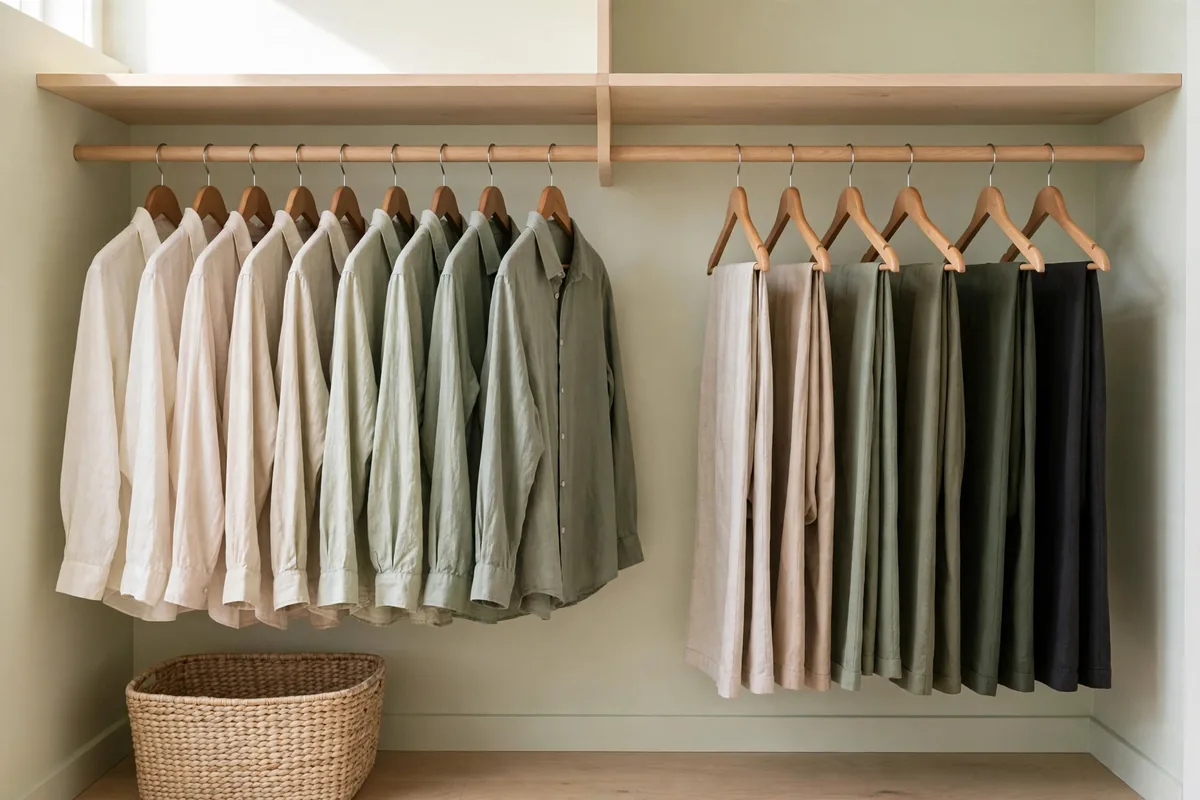
The closet that stays organized is sorted by category: all the shirts together, all the pants together, work clothes separate from weekend clothes. Then, within each category, arrange light to dark. Getting dressed becomes a two-step decision instead of a treasure hunt, and putting laundry away takes minutes because every item has exactly one home. If two people share the closet, split the rod and cubbies in half before you sort categories — these small-bedroom ideas for couples cover the rest of a shared room.
Most wardrobes break down into five piles:
- Work and going-out clothes, hung and visible.
- Everyday knits and tees, folded in cubbies or the hanging shelf unit.
- Bottoms, folded or hung by length.
- Activewear, in one bin, never scattered across three.
- Occasion and off-season pieces, stored highest and least reachable.
Do not sort by color alone. A rainbow closet looks great in photos and works terribly in real life, because you will pull the blue work shirt from between two blue t-shirts and wreck the whole gradient. Category first, color second. Function beats the photo.
Keep a Donation Bin and a Sunday Reset
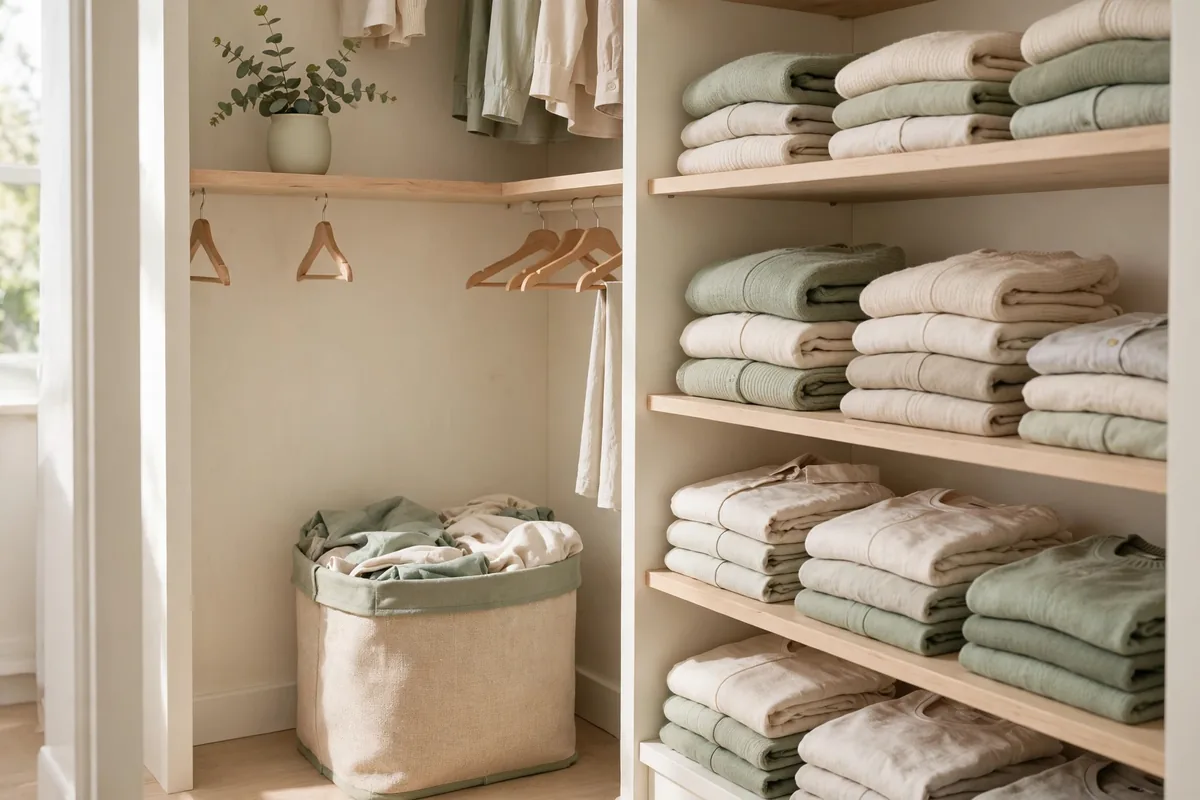
Clothes flow in constantly; if nothing flows out, the closet fills back up no matter how well you organized it. Keep a fabric bin or sturdy bag in the closet’s corner as a permanent donation station. When you try something on and it does not work, it goes straight in the bin instead of back on the rod. When the bin is full, it leaves the house the same week.
Then give the closet a ten-minute Sunday reset: rehang the strays, refold the cubbies that slumped, and pull anything from the week that belongs in the donation bin. Ten minutes a week beats a full reorganization every six months. The closet stays at the baseline you built instead of sliding back to the avalanche.
A small bedroom closet does not need more space. It needs a second rod, a few cubbies, light you can see by, and a habit of letting go. Do the empty-out this weekend, add one upgrade a week, and by next month the closet stops being the room’s problem child.