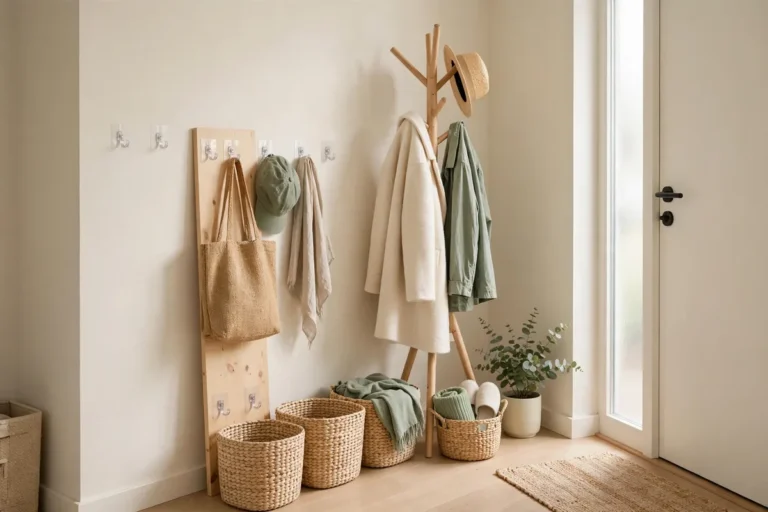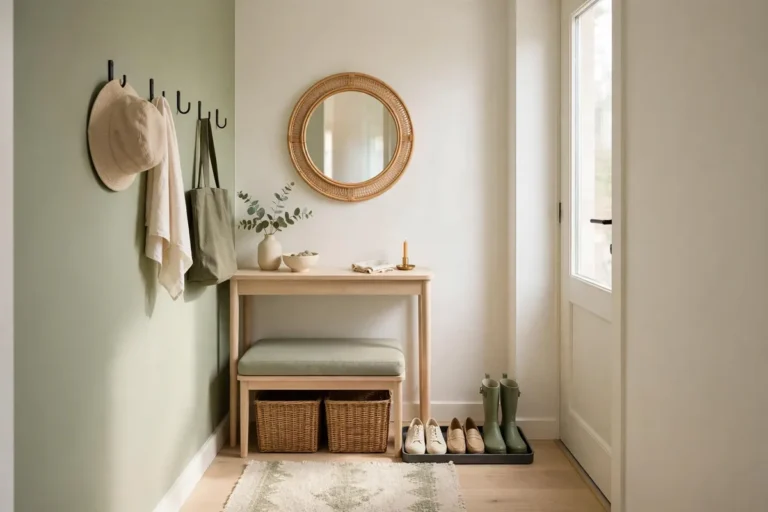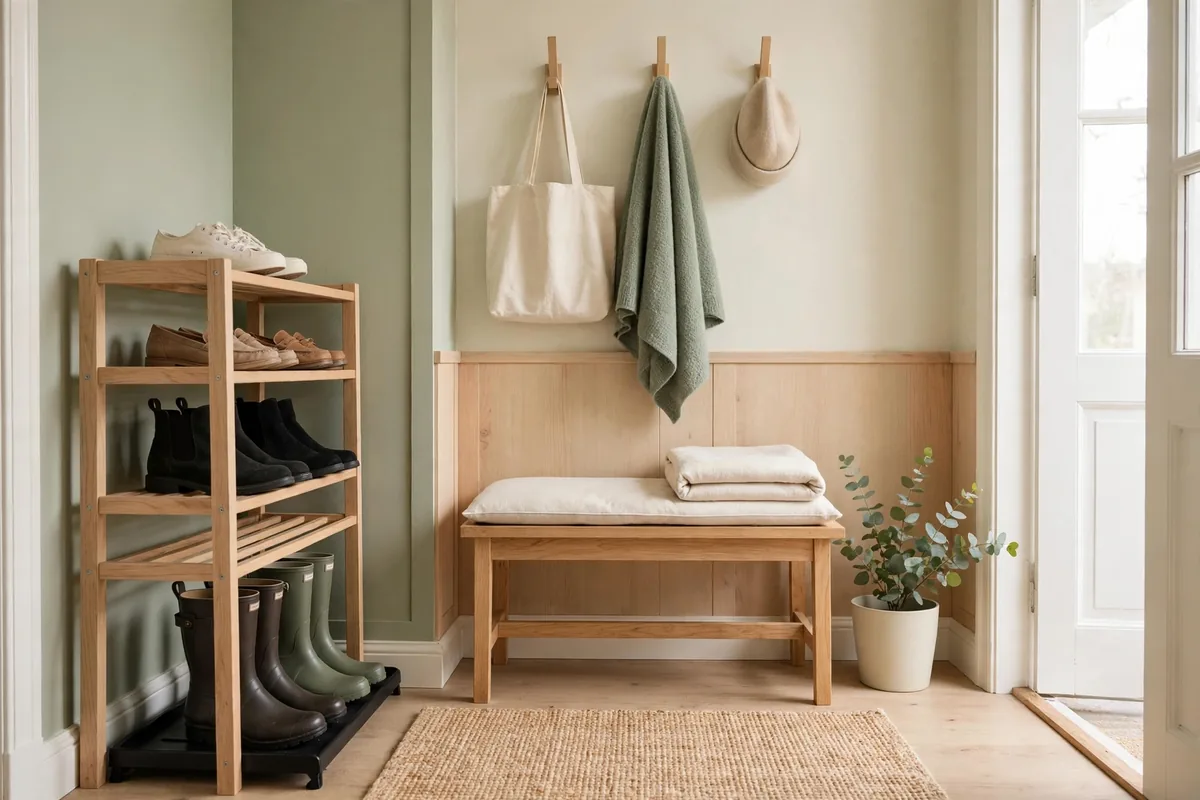
At one point I owned eleven pairs of shoes and a front door with about four square feet of floor in front of it. The math never worked. The breakthrough was not better storage, it was realizing the entryway is not a shoe store. It only needs to hold the shoes in use right now. Everything else can live somewhere less prime.
This guide is shoes only: eleven ways to store them in a small entryway without the pile creeping across the floor. Most ideas cost under $30, several need no tools at all, and every one of them assumes the entryway is tight. Here is how to end the shoe pile for good — and if the rest of the entry needs help too, our complete small entryway organization guide covers hooks, consoles, and mail in the same zone-by-zone style.
A Slim Two-Tier Rack Along the Wall
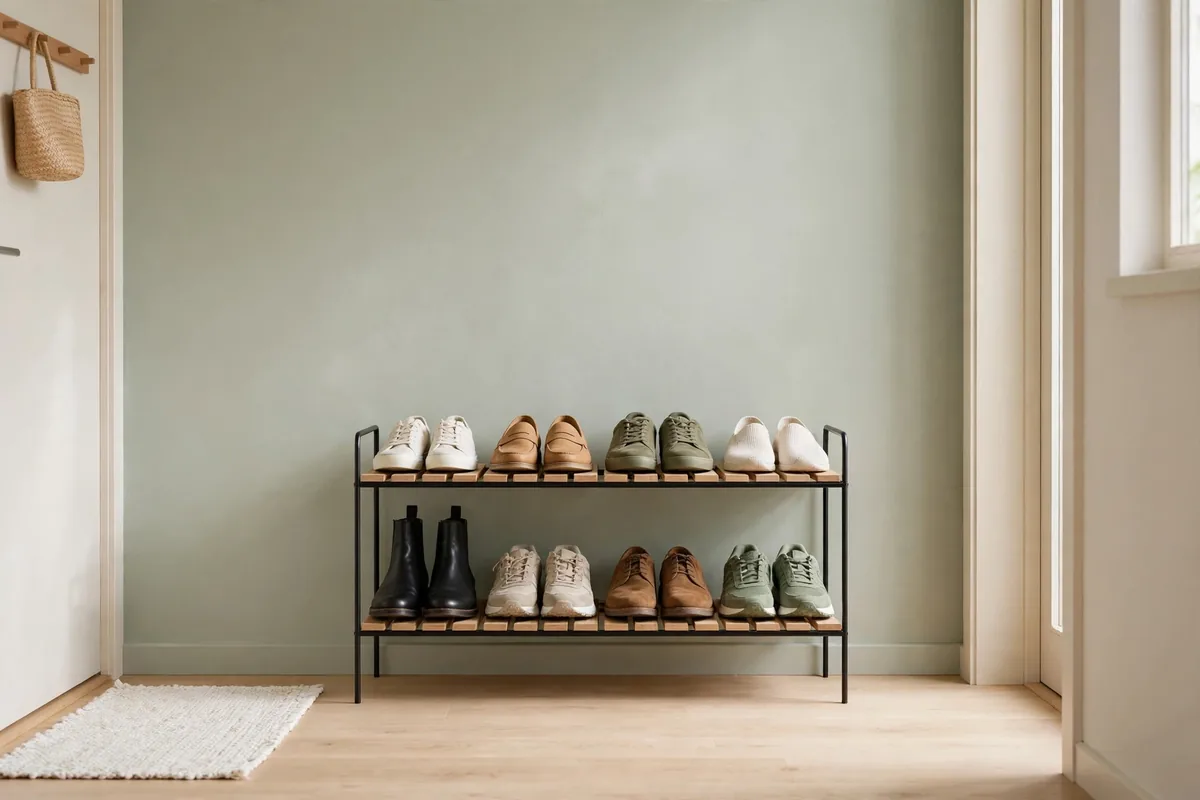
The classic entryway shoe rack earns its reputation. A two-tier freestanding rack ($20 to $30) holds six to eight pairs in about two feet of wall and zero floor depth to speak of. Put the daily pairs on the bottom tier where you can kick them off, and the less-worn pairs up top.
Buy the rack to fit your actual shoes, not the photo on the box. Men’s size 12s and chunky boots need taller tiers than ballet flats. If the household wears big shoes, look for a rack with adjustable or widely spaced shelves rather than the prettiest one.
One rack is a system; two racks is a collection. Cap the entryway at one rack and let the overflow rule push the rest into closets. The limit is the feature.
Wipe the rack down monthly. Entryway racks collect a surprising film of dust and road grit, and a damp cloth keeps the whole thing from looking tired. It takes two minutes and makes the shoes on it look better too.
Slide Bins Under the Entry Bench

If you already have a bench, the space under it is shoe storage waiting to happen. Low bins or a shallow tray ($10 to $15 each) slide underneath and hold two to three pairs each, out of sight and off the floor. Assign one bin per person so nobody’s sneakers eat someone else’s space.
Measure the bench clearance before you buy. Many benches sit 10 to 12 inches off the floor, and a bin that is half an inch too tall simply will not slide. Soft-sided bins forgive a tight fit better than rigid plastic, and they do not scratch the floor when you pull them out.
Over-the-Door Shoe Pockets

The back of a closet door or the entry closet door holds a hanging shoe organizer with clear pockets ($10 to $15), and each pocket takes one shoe. It is the highest-density shoe storage that exists: a full door holds twelve to twenty-four pairs in zero floor space.
It works best for flat and flexible shoes. Sneakers, flats, and sandals slide in easily; tall boots and rigid dress shoes fight the pockets and win. Use the door for the soft stuff and keep boots on a tray or rack where they belong.
Load it light. A fully packed shoe organizer is heavier than it looks, and cheap over-door hooks bend over time. Split very large collections across two doors rather than maxing out one.
If the door gets slammed a lot, shoes will walk out of the pockets. A strip of elastic or a small piece of hook-and-loop tape across the top of each row keeps everything in place without making the shoes hard to grab.
Wall-Mounted Shelves for a Floating Look
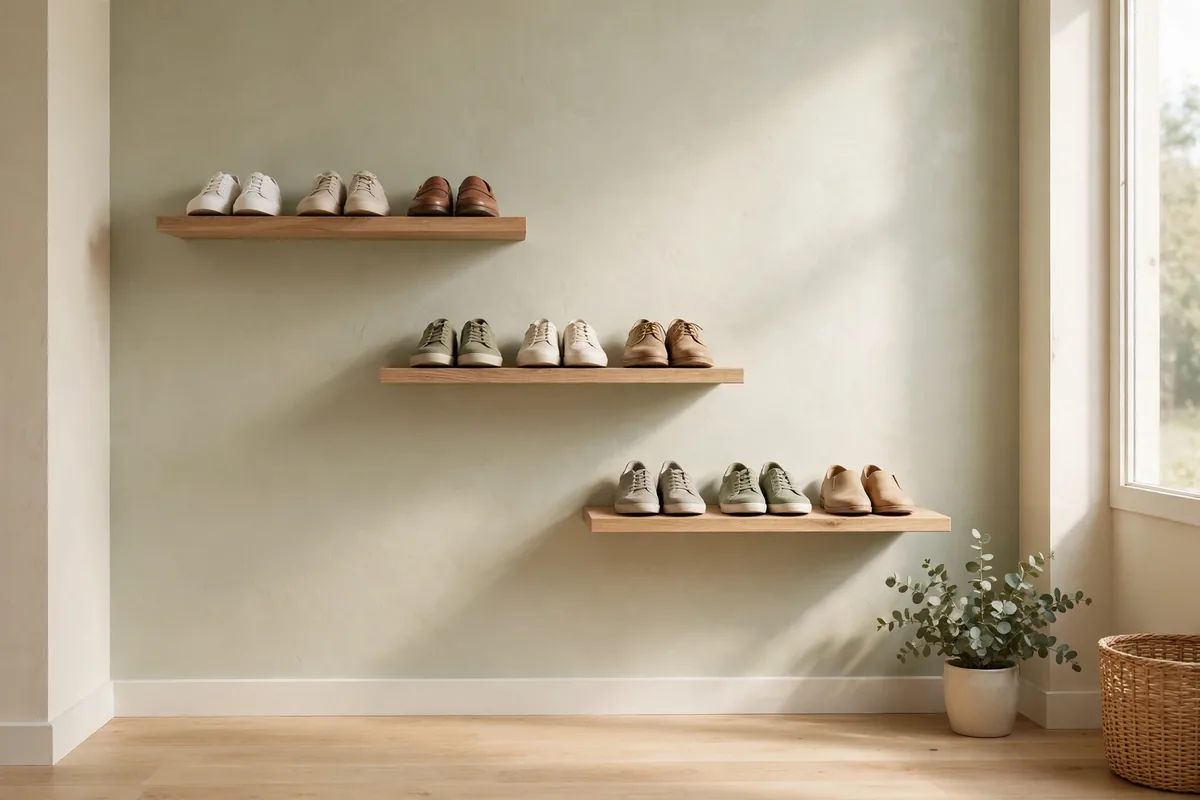
Two or three narrow floating shelves ($12 to $18 each) mounted low on the entry wall turn shoes into a display instead of a pile. Each 24-inch shelf holds three to four pairs, and the floor underneath stays clear for sweeping, which is half the battle in a small entry.
Mount them like stairs, not like a ladder. Staggering the shelves at slightly different depths looks intentional and keeps taller shoes from hitting the shelf above. Keep the lowest shelf high enough that the vacuum or mop fits underneath, about 6 inches off the floor.
Display the good-looking pairs and hide the beat-up ones. Floating shelves work best as a curated row: the clean sneakers, the nice flats. The muddy trainers stay on the tray by the door where they belong.
A Boot Tray That Catches the Mess
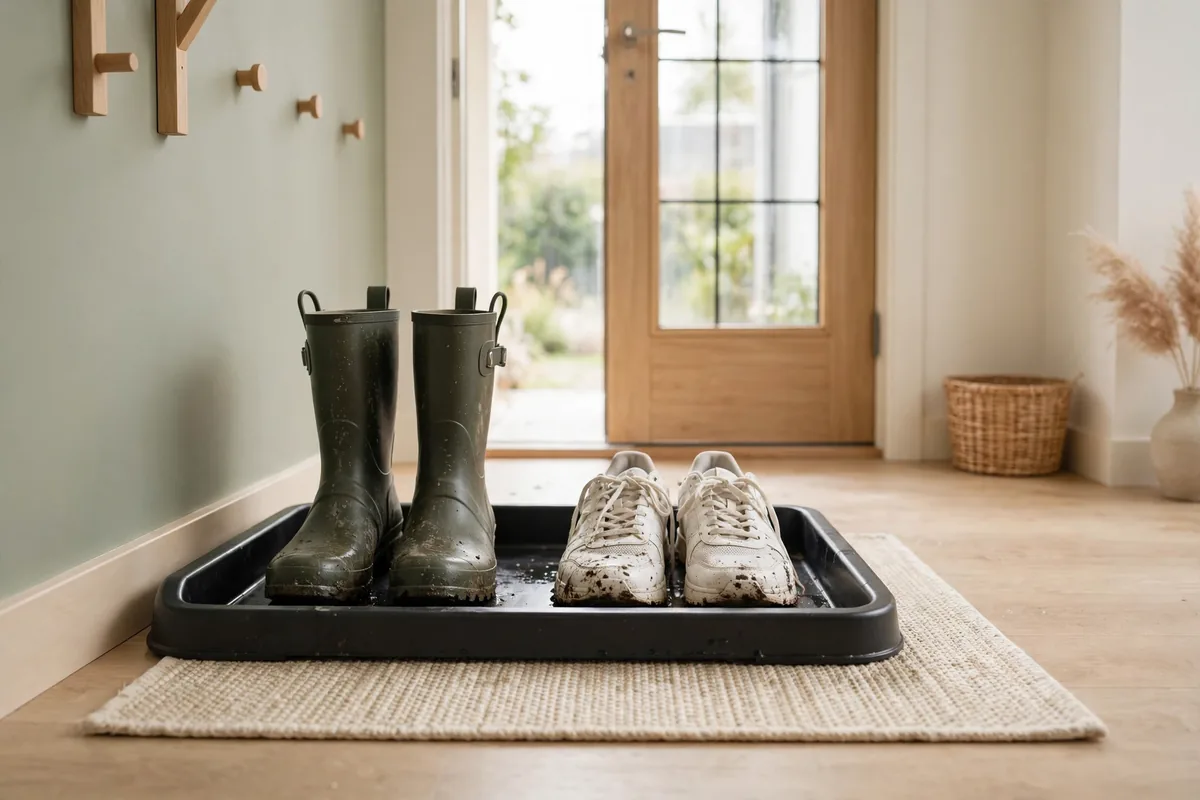
Some shoes are not a storage problem, they are a weather problem. A boot tray with a raised lip ($15 to $20) under the daily pairs catches rain, snow, salt, and the mud that would otherwise grind into the floor. In wet climates this one tray does more than any rack.
Size the tray to your actual wet-weather rotation. Two adults in a rainy city need a tray that fits four pairs, not two. A washable mat cut to fit inside makes cleanup a toss in the washing machine instead of a scrubbing session.
The tray is also your quarantine rule made physical. Wet shoes go on the tray, dry shoes go on the rack, and nothing damp ever goes into a closed bin where it can mildew. Say the rule once and the tray enforces it.
A Tilt-Out Cabinet That Looks Like Furniture
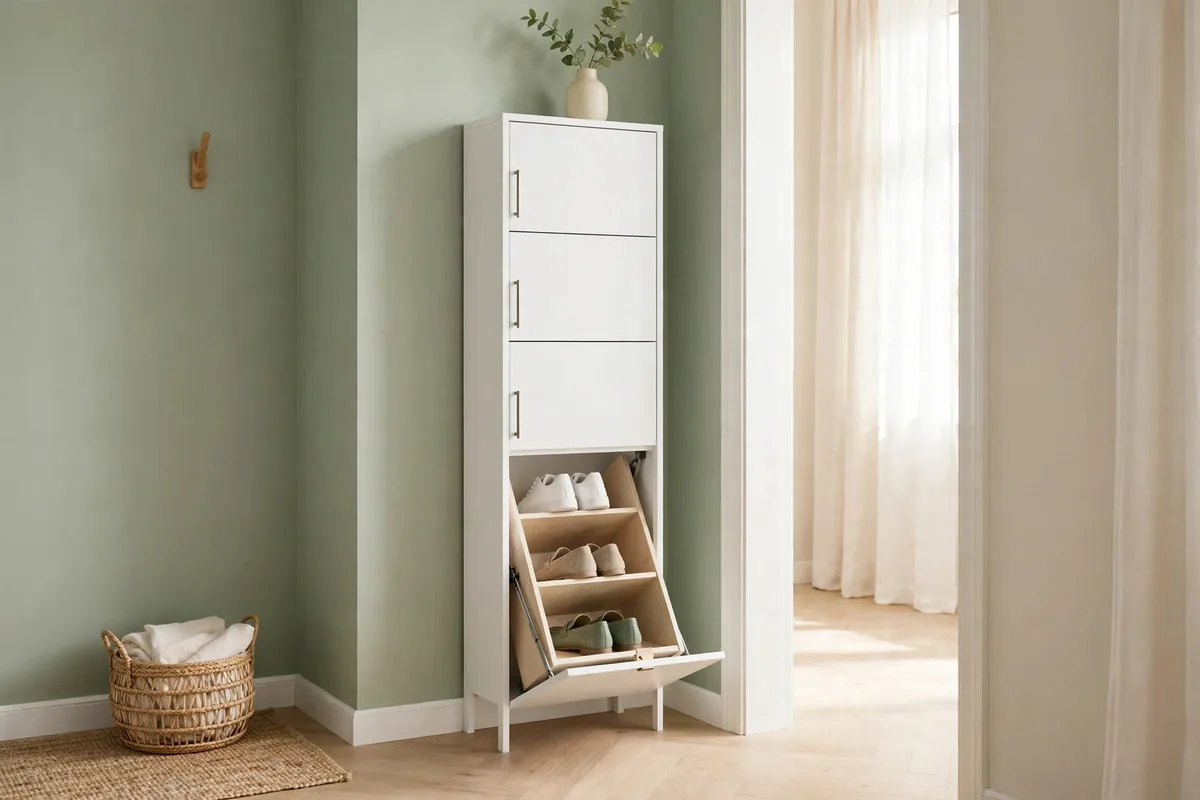
If you hate the look of shoe racks, a slim tilt-out shoe cabinet (about $70 to $100 for a two- or three-compartment unit) hides six to nine pairs behind what looks like a console table. The doors tilt open, the shoes sit on angled shelves, and the whole thing is only about 6 inches deep.
This is the best option for entries that open straight into the living room, where a shoe rack would be the first thing guests see. The closed front reads as furniture, and the top surface works as a key-and-mail drop. You get the console and the shoe storage in one footprint.
Give shoes a few minutes of air before they go in. A closed cabinet traps moisture, so kick off sweaty trainers onto the tray for an hour before tucking them away. Your shoes and the cabinet will both last longer.
Stackable Bins for the Overflow
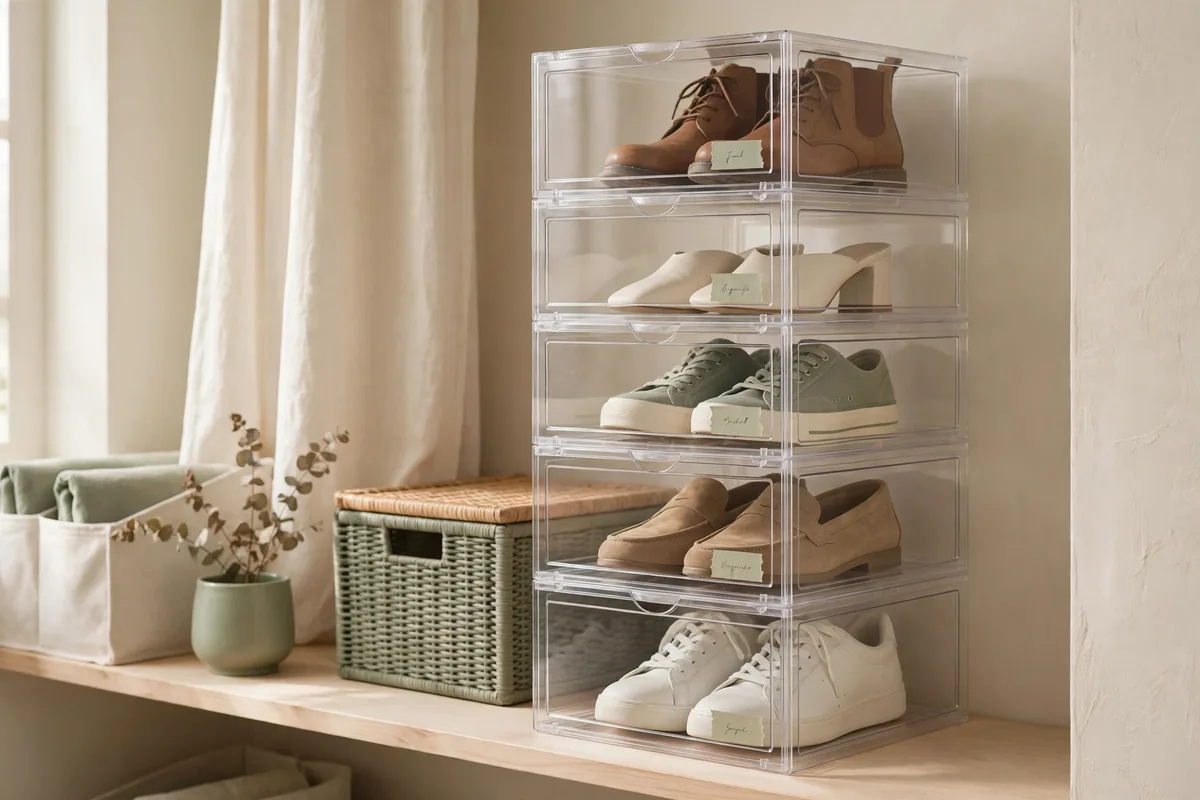
For pairs that do not earn daily-rack space, stackable clear bins ($4 to $7 each, Sterilite makes the standard ones) turn a closet shelf or the top of the entry wardrobe into organized shoe storage — a budget-first system along the lines of our closet organization ideas on a budget. One pair per bin, lids on, labels facing out. Clear matters: opaque bins become mystery boxes within a month.
Stack no more than four high. Taller stacks wobble when you pull a middle bin, and the whole point is that grabbing shoes stays easy. If the stack keeps growing, that is the signal to donate, not to buy more bins.
Label the short end of each bin, not the front. You usually see the stack from the side on a closet shelf, and a label on the visible end means you never pull three bins to find the black heels.
The Corner Tower
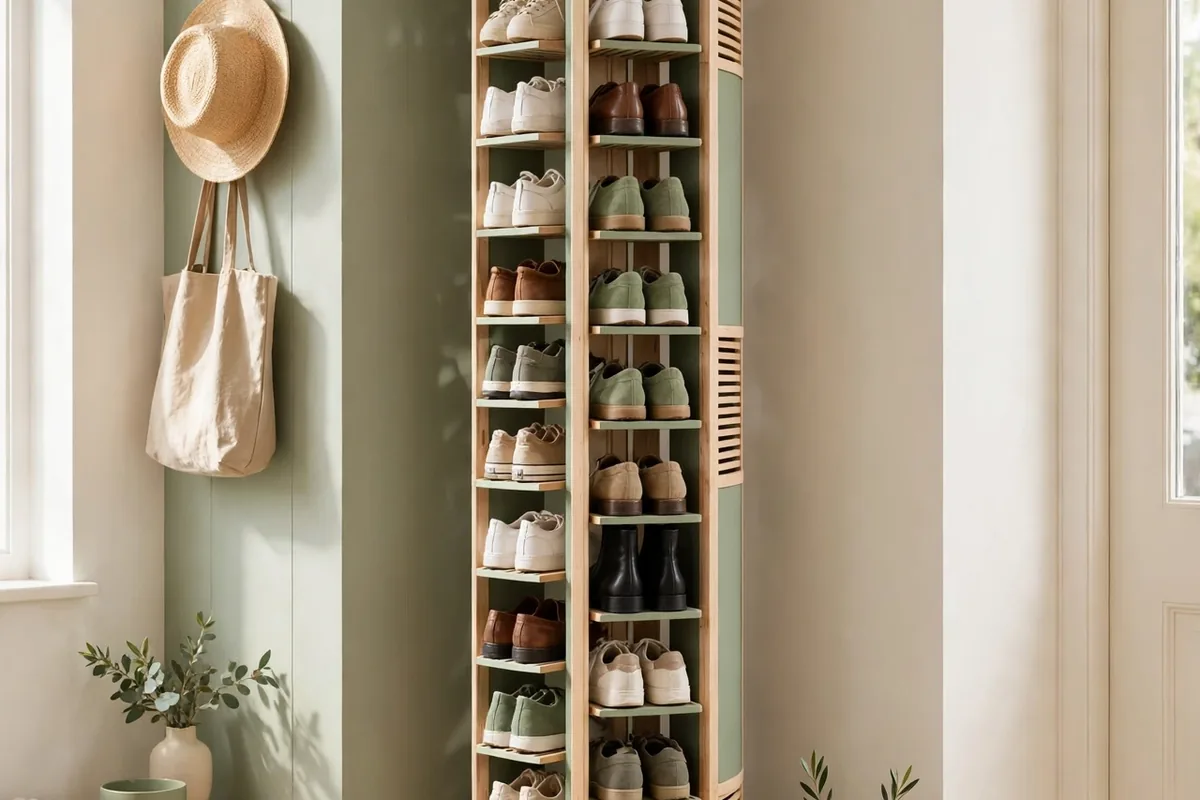
Corners in entryways usually hold nothing but dust. A tall, narrow shoe tower ($30 to $45) slots into one and holds ten to fourteen pairs vertically in about a square foot of floor. The spinning carousel style lets you see every pair without digging.
Anchor it if the household includes climbers. Tall narrow furniture and toddlers are a bad combination, and a $8 furniture strap into a stud (or a heavy-duty adhesive anchor for renters) removes the worry entirely. Stability first, storage second.
Use the top surface. A small tray on top of the tower becomes the key and sunglasses drop, which puts the two most-forgotten items exactly where you lace your shoes. It is a tiny habit loop that actually works.
Hang Pairs Inside the Closet Door
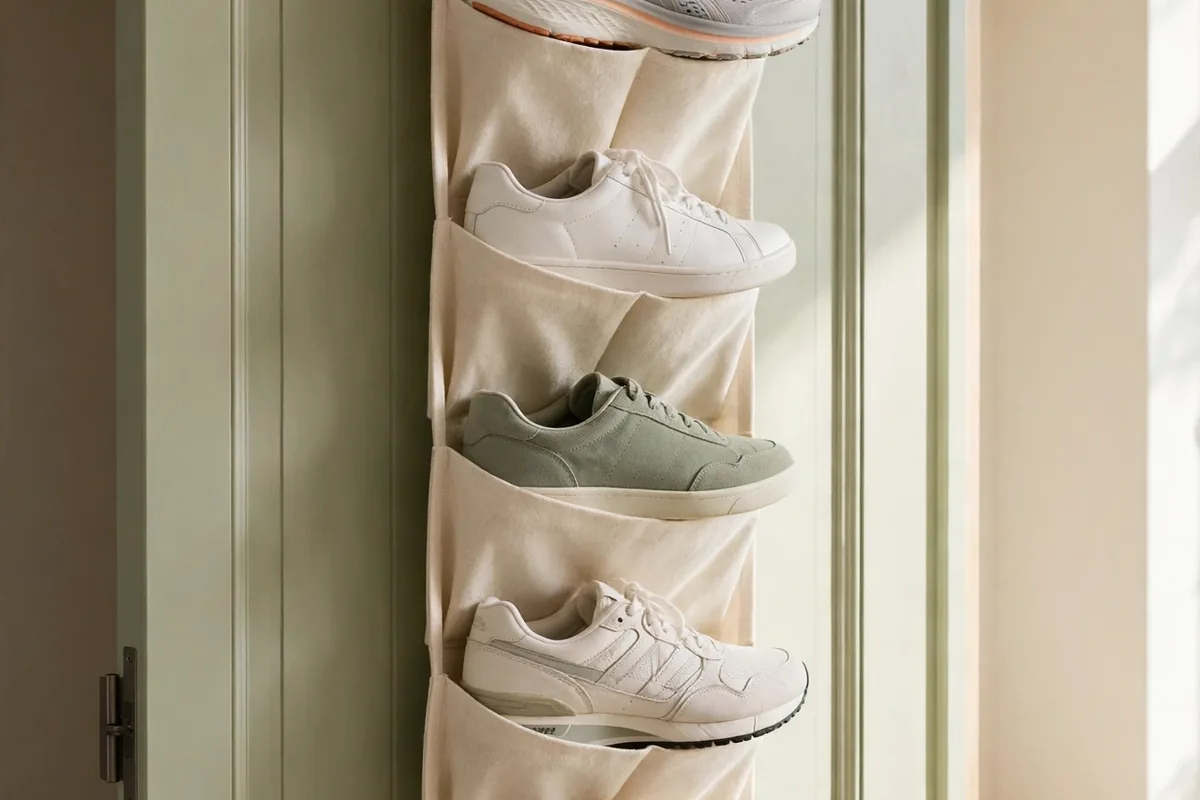
The entry coat closet door has an inside face that most people ignore. A slim hanging organizer or a row of adhesive hooks on that inside face ($10 to $15) holds the pairs you grab on the way out — a favorite damage-free trick for rental entryways: the running shoes, the everyday sneakers. They stay hidden, they stay paired, and they never touch the floor.
Keep it to the pairs you actually wear weekly. The inside of the door is prime real estate, so it should hold the starting lineup, not the benchwarmers. Seasonal and occasion shoes go to the bins on the closet shelf.
A Storage Stool That Seats and Stores
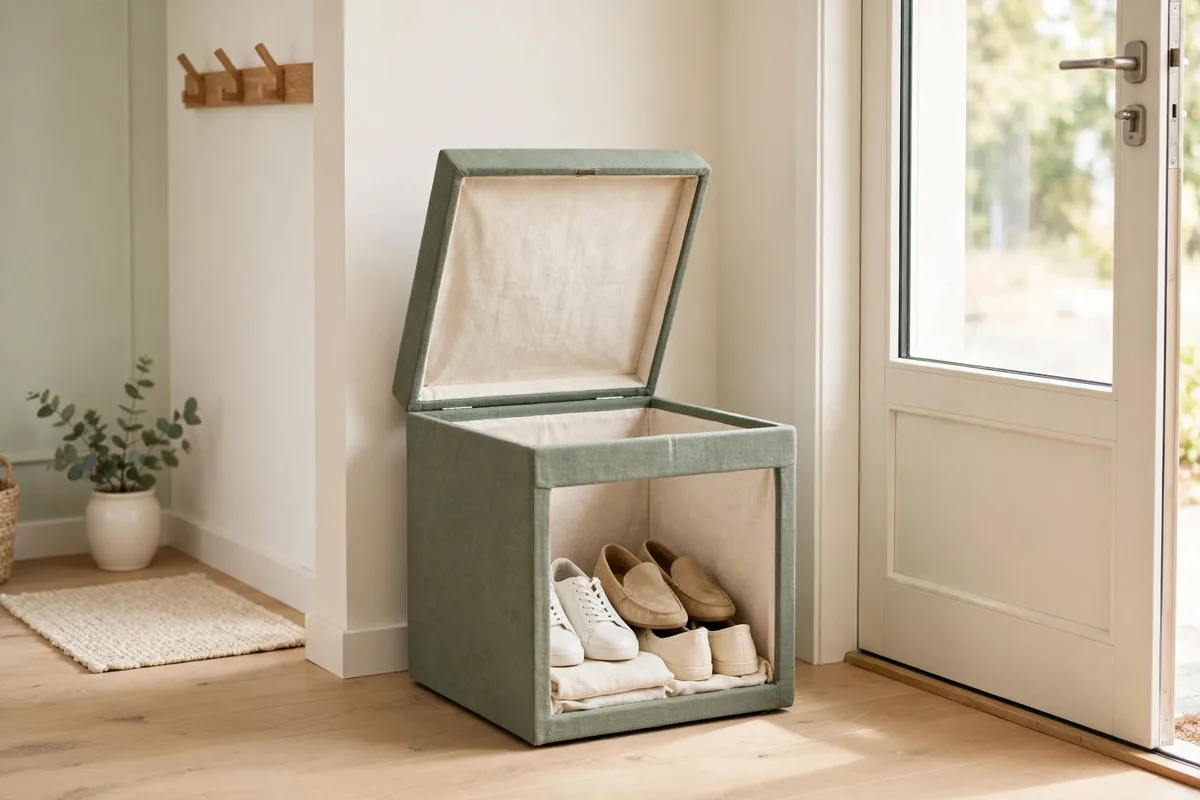
A storage ottoman or cube stool ($35 to $55) by the door does triple duty: a seat for lacing up, a hidden compartment for two to three pairs, and a surface for the bag. In entries too small for a bench, one cube stool covers the same jobs in half the footprint.
Pick one with a hinged lid that stays open on its own. A lid that slams shut while you are reaching in gets old by the third day. The cube style also stacks if you ever need two, which a bench cannot do.
Choose a wipeable fabric or faux leather. Entryway stools collect shoe-adjacent grime, and a cover you can wipe down beats one you have to spot-clean. Darker colors hide the wear between cleanings.
Box the Off-Season Pairs

The final idea is not storage, it is subtraction. Box the off-season pairs, label the boxes, and move them to a closet, under the bed, or the top shelf. Sandals do not need entryway space in January, and boots do not need it in July. Most households can cut their entryway shoe count nearly in half twice a year.
Do the swap when you swap the coats. Ten minutes, same afternoon, one trip to the storage spot. And audit while you box: the pair that sat unworn through its whole season does not get boxed, it gets donated.
Start With the One-Pair Rule Tonight
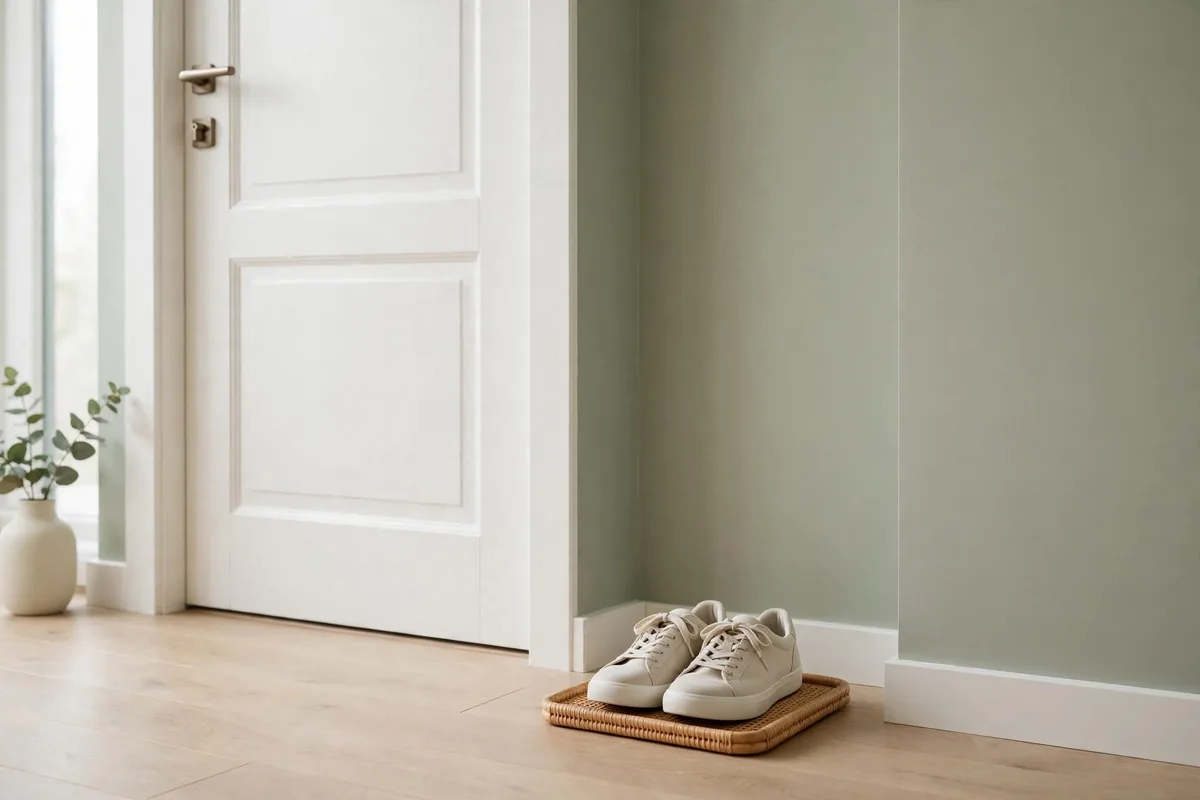
Before you buy anything, try the rule that makes every idea above work: each person gets their current pair plus one spare in the entryway. Everything else moves out tonight. It costs nothing, it takes twenty minutes, and most households find the pile was never a storage problem.
Once the rule is holding, buy the single piece of storage that fits your space: the tray, the rack, or the cabinet. One purchase, matched to the real problem you can now see clearly.