My first apartment had an entryway that was really just a front door opening straight into the living room. Every shoe I owned migrated across the rug until, one annoyed evening, I laid a cheap mat inside the door and declared it the landing zone. The shoes stopped wandering. That is the whole trick with small entryways: nobody needs more square footage, they need a defined job for each inch they have.
This guide works zone by zone through a small entryway: the door, the walls, the floor, and whatever closet or corner sits next to it. Most ideas cost under $40, several need no tools, and the whole thing can happen in a weekend. Here is how to make a tight entry work like it was designed that way.
Start With a Landing Zone, Not a Renovation
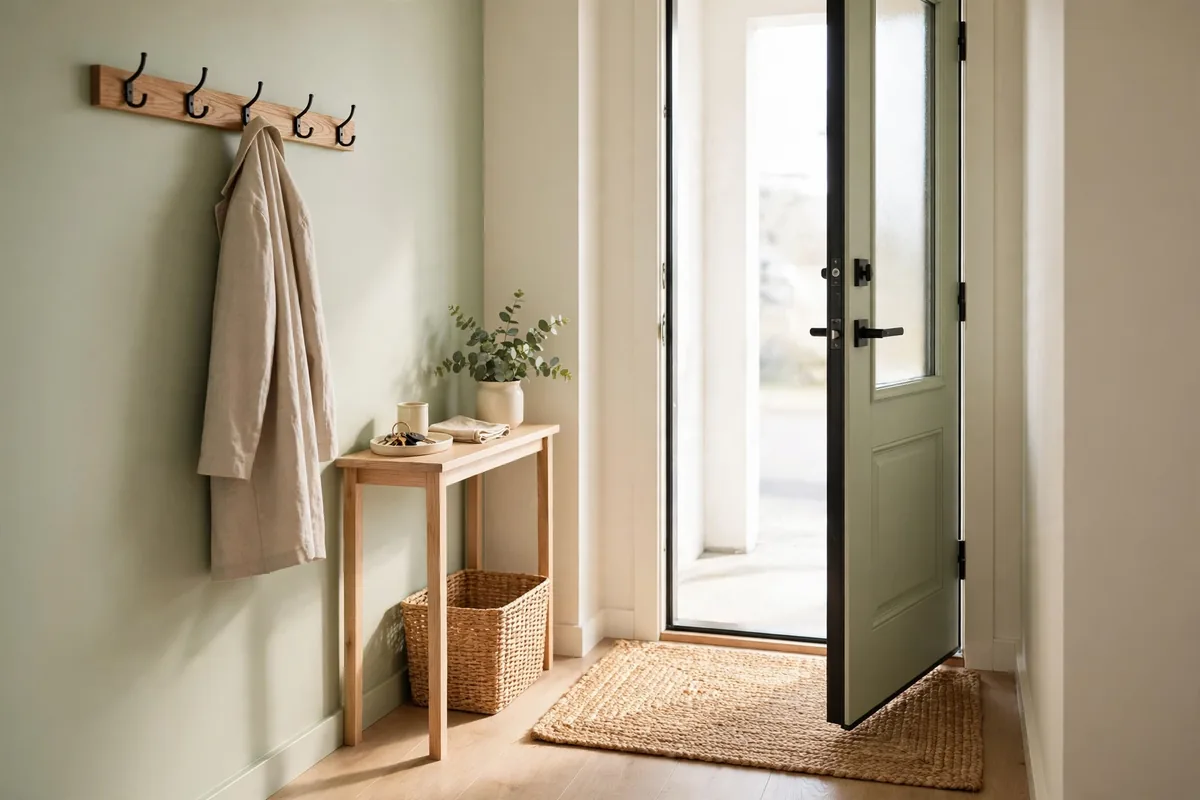
Before you buy anything, decide where the entryway begins and ends. A rug, a mat, or even a painted floor border tells everyone in the house where shoes come off and bags get dropped. For the shoes themselves, our guide to shoe storage for small entryways covers trays, slim racks, and door organizers that fit tight entries. Without that line, the entryway leaks into the living room, and no organizer can fix a boundary problem.
Keep the zone honest: it only has to hold what you use today. The coat you are wearing, today’s shoes, the bag you carried in, the keys. Everything else belongs in a closet or a bedroom. A landing zone that tries to store the whole household becomes a junk pile with a rug under it.
Guests learn the line faster than you expect. When the mat and the hooks clearly say “this is where things go,” visitors naturally put their shoes on the tray instead of kicking them into the living room. The zone does the hosting for you.
A Slim Console Table Does the Heavy Lifting

If you have even two feet of wall beside the door, a narrow console table (the 10-to-15-inch-deep kind, roughly $60 to $130) turns that wall into a drop station. IKEA’s LACK console table is a popular pick for this exact job: slim, cheap, and deep enough for a tray and a basket. Top surface gets a tray for keys and sunglasses; the shelf below gets a basket for the bag you grab daily.
The trap is the console that is too deep. Anything over 14 inches eats the walkway and becomes a bump hazard at night. Measure your clear path first, then shop for a table that fits the measurement, not the other way around. Wall-mounted folding consoles are worth a look in truly tight spots; they give you the surface only when you need it.
Hooks Win the Coat War

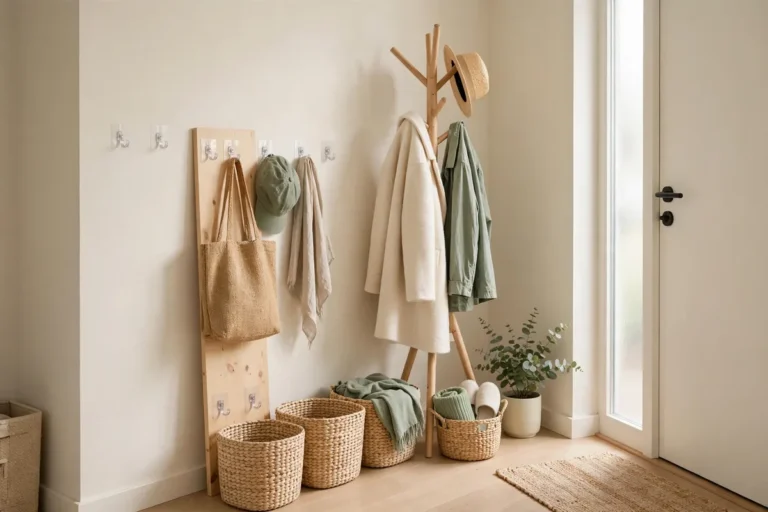
Coats on hooks get worn; coats that need hangers stay on hangers and never get worn. A row of three to five sturdy wall hooks ($15 to $25 for a set) near the door handles the coats, the dog leash, and tomorrow’s jacket better than any closet rail. Mount them at staggered heights if kids use the entry so everyone can reach.
Space the hooks generously. Hooks crammed six inches apart just make a clump of sleeves. Eight to ten inches apart lets each coat hang flat and dry properly, which matters when two of them come home wet from the rain. One heavy-duty hook by itself, rated for 15 pounds or so, earns its keep for the backpack or the diaper bag.
If drilling is off the table, as it is for most renters, large adhesive hooks hold a surprising amount — and our renter-friendly entryway ideas cover the full drill-free playbook. The strips rated for 7 to 8 pounds each handle winter coats fine on smooth paint or tile, and they come off clean when you move. Just follow the wait time on the package; the bond needs a full day to cure before it carries weight.
The Back of the Door Is Free Real Estate

The inside of your front door is a wall you already own. An over-the-door rack with hooks ($12 to $18) holds the umbrella, the reusable grocery bags, and the hat that otherwise lives on the console. No drilling, nothing permanent — the kind of damage-free entryway upgrade renters reach for — and it comes off in seconds when you move.
Check the door’s swing and the weatherstripping first. Thick racks can stop a door from latching or chew up the seal around the frame. Look for the slim hook-over style rather than anything with a bulky bracket, and test that the door still closes fully before you load it up.
Add small felt pads where the metal meets the door. Over-door racks rattle and can scuff paint over time, and two felt pads per hook cost almost nothing. It is a thirty-second job that keeps both the door and your sanity intact.
Corral Shoes With a Tray or a Slim Rack
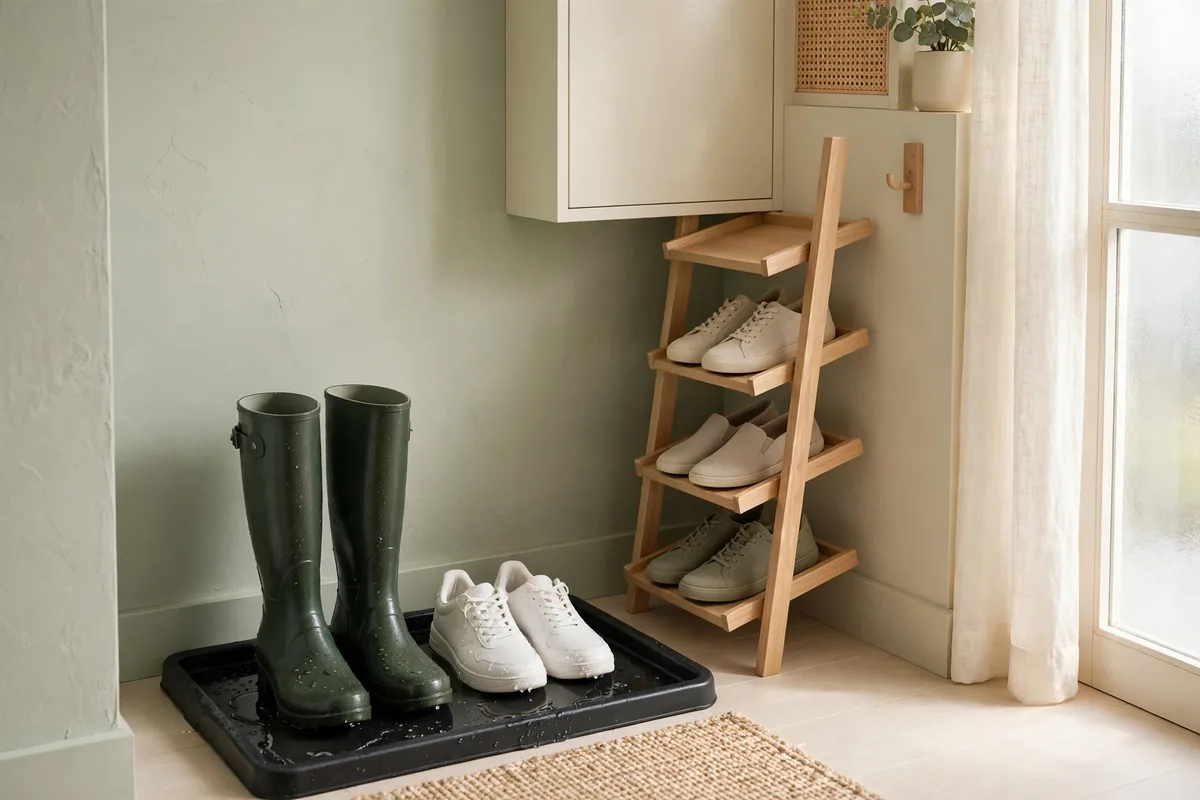
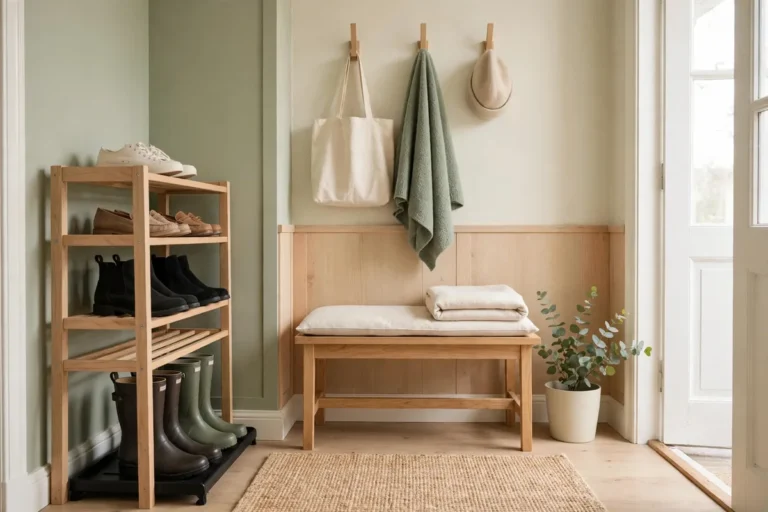
Shoes are the fastest way an entryway fails. A boot tray with a raised lip ($15 to $20) catches water, salt, and grit under two to four pairs and keeps the floor clean. It works best as a rule, not a decoration: shoes live on the tray or they do not live in the entryway.
If the household runs more than four daily pairs, upgrade to a slim shoe rack sized for small entries. The tilted-shelf kind sits about 6 inches deep against the wall and holds eight to twelve pairs in the footprint of a welcome mat. Keep the top tier empty for guests; nothing says welcome like a spot that is already waiting.
Wet climates need the tray even with a rack. Put the tray under the rack or beside it as the wet-pair quarantine zone. Dry shoes go on the rack, wet ones stay on the tray until morning.
Sort the Mail Before It Lands

Mail is entryway clutter with a stamp on it. A small wall-mounted sorter or a lidded basket on the console ($12 to $20) gives every envelope a first stop. The system is two piles and a trash can: act on it, file it, or recycle it the same day it arrives.
The real fix is the weekly ten-minute mail session. Once a week, everything in the sorter gets opened, decided, and gone. Junk mail goes straight to recycling at the door, never into the pile. An entryway with a mail system stays clear; one without it drowns by Thursday.
Cut the pile at the source while you are at it. Switch the bills and bank statements you can to paperless, and put a “no junk mail” note on the mailbox if your area allows it. Every envelope that never arrives is one you never have to sort.
Hang a Mirror for Light and the Last Look
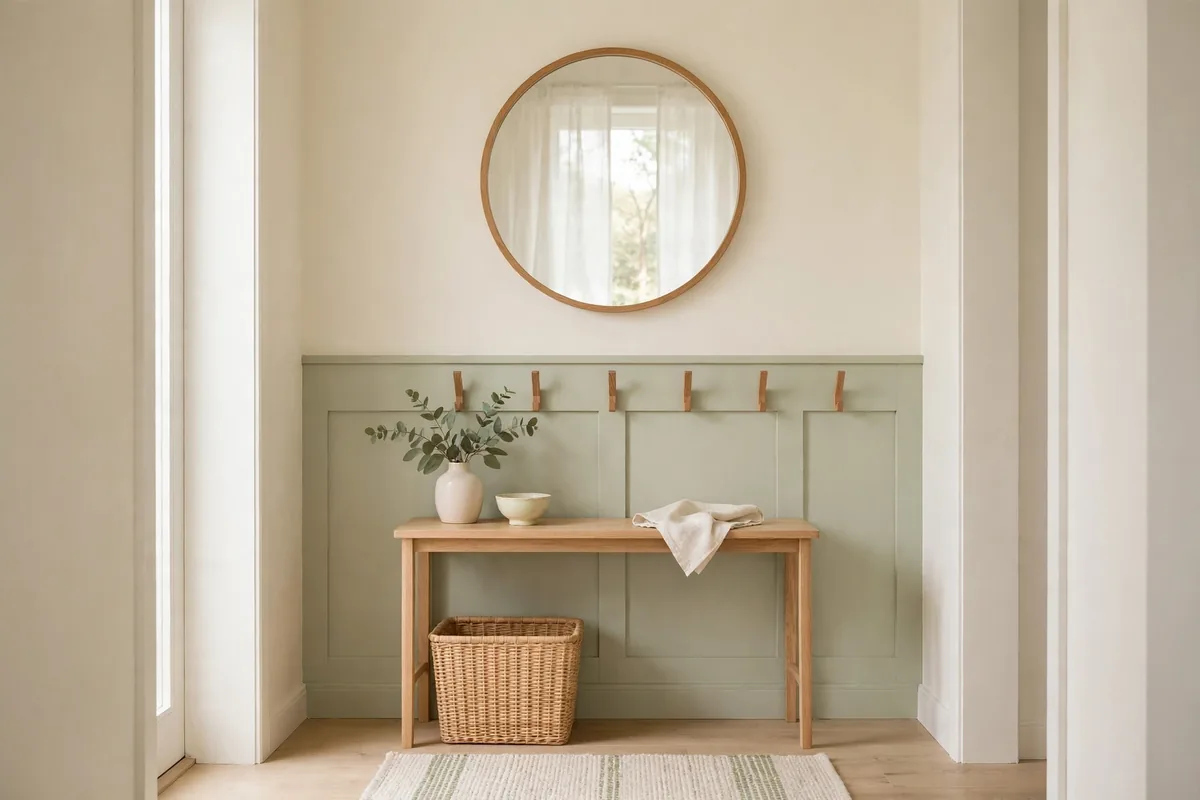
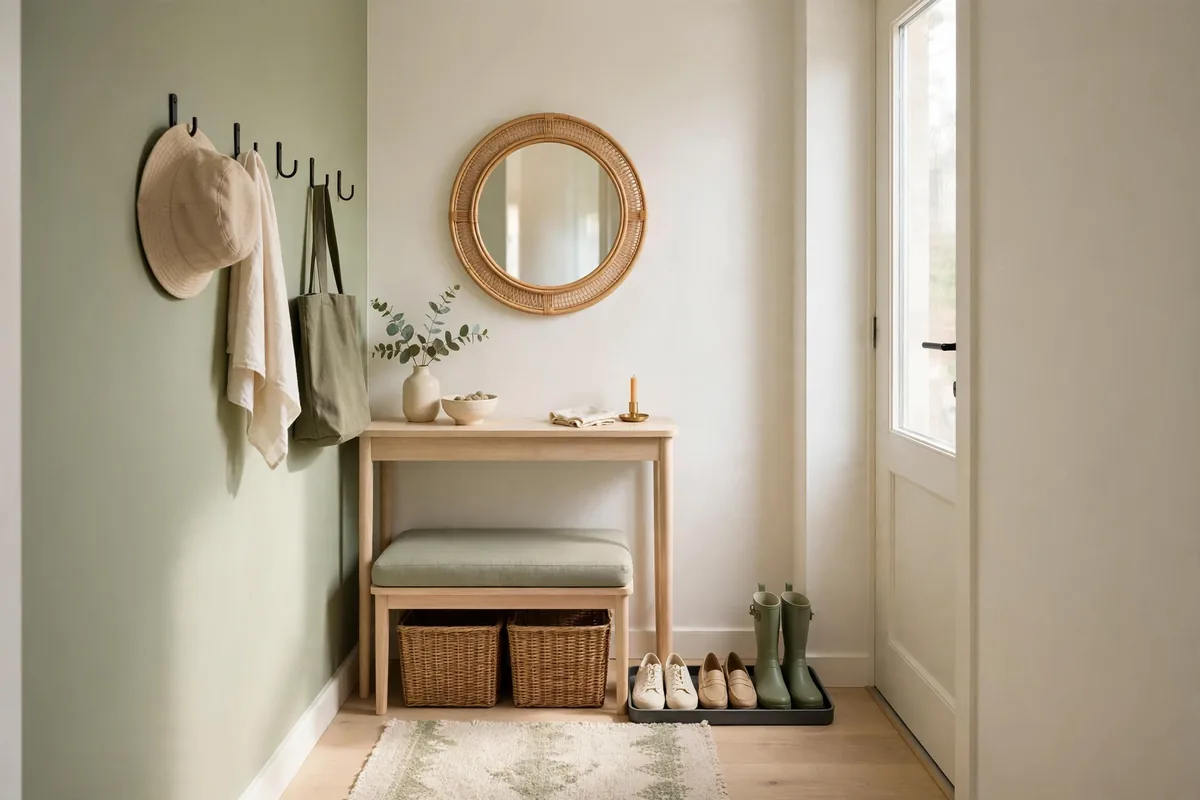
A mirror near the door does two jobs at once: it bounces light into a dim entryway and gives you the last look before you leave. A simple round or arched mirror ($25 to $40) hung at eye level works in almost any small space, and it makes a narrow entry feel noticeably wider.
Leaning full-length mirrors are the no-commitment option. They need no mounting hardware, they move with you, and a 16-inch-wide leaning mirror fits behind most doors. Angle it to catch the window light from the next room if your entry has no window of its own.
Steal Storage From the Nearest Closet

Most entryways sit next to a closet that is doing a bad job. If you have a coat closet within ten steps of the door, treat it as part of the entryway, not a separate room. Move the off-season coats to a bedroom closet, and suddenly the entry closet has room for the daily rotation plus a shelf of bins.
Fit the closet for entryway duty specifically. A low shoe rack or a row of bins on the floor handles overflow pairs; a small basket on the shelf catches gloves, hats, and the sunscreen that migrates with the seasons. Label the bins by person or by season so the closet stays honest about who owns what — our guide to organizing a small closet has more on zoning and bin systems.
If there is no closet at all, a freestanding wardrobe or an open garment rack ($50 to $80) against the nearest wall plays the same role. It is not as pretty as built-ins, but it is yours to take when you move.
A Bench That Stores as Well as Seats
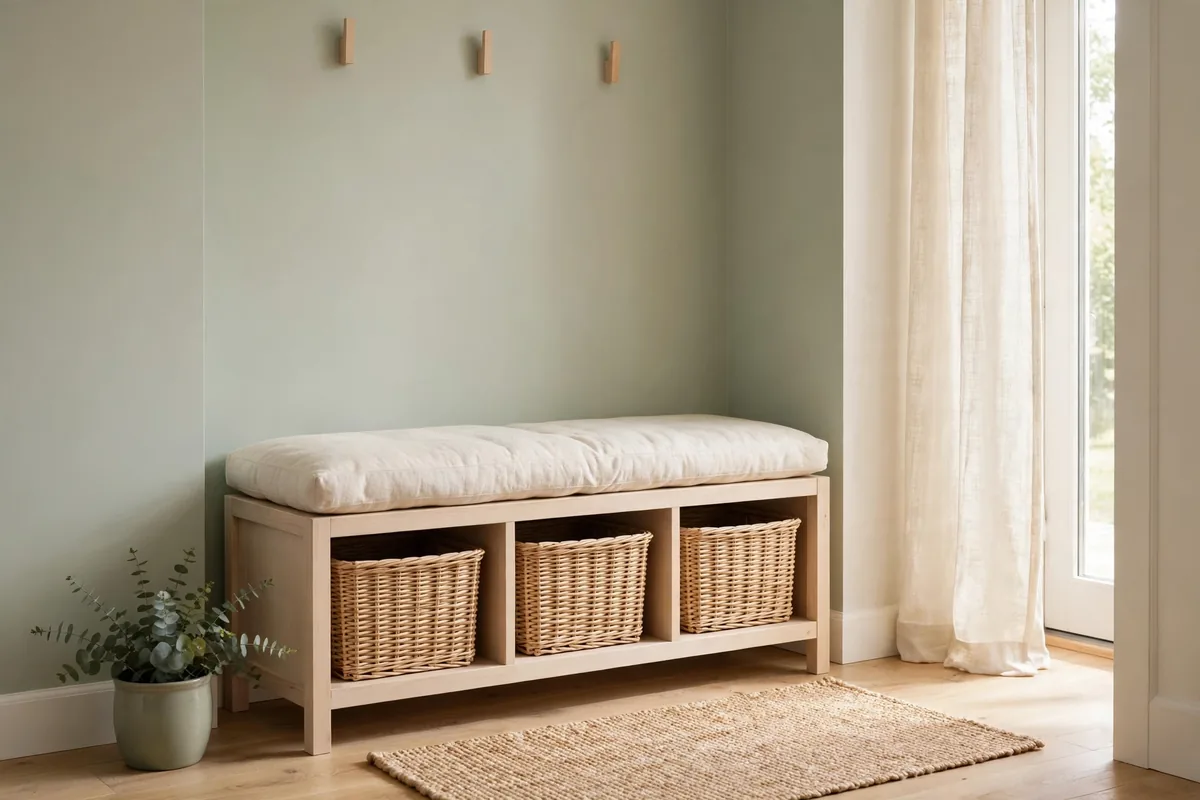
A storage bench ($70 to $120) is the single best furniture buy for a small entryway. You get a seat for putting on shoes, a surface for the bag, and hidden storage underneath for the things you do not want to see. Baskets inside the cubbies keep each person’s stuff separate.
Size it to the wall, not to your dreams. A 36-inch bench fits most entries and seats one adult comfortably. Anything longer starts blocking the walkway, and a bench nobody can walk past is a bench that becomes a dumping ground. If the budget is tight, a secondhand bench plus two $10 baskets beats a fancy new one with no bins.
Vacuum or sweep under the bench once a month. It is the spot where dust, lost receipts, and single socks go to hide, and a quick pass keeps the whole entry feeling maintained instead of just arranged.
One Basket Per Person Keeps the Peace
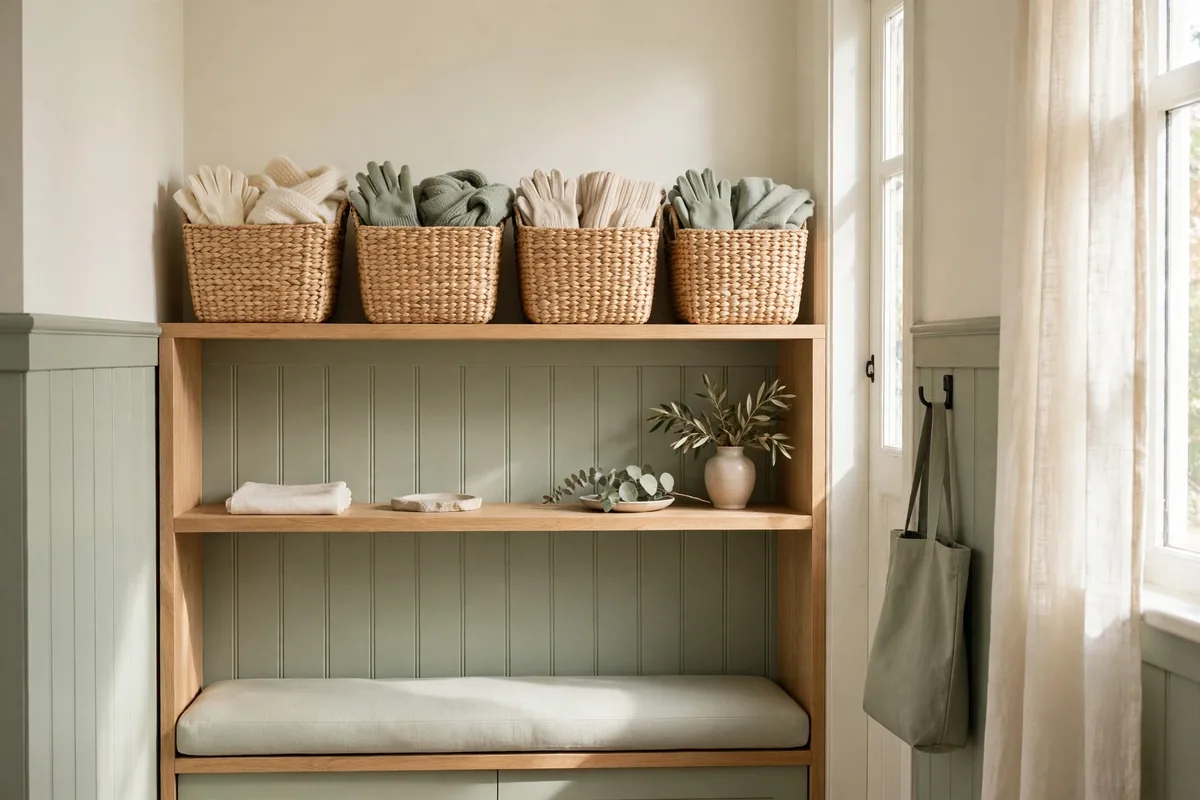
In a shared entryway, unlabeled communal storage turns into one person’s mess. Give each regular their own basket ($8 to $12 each) on a shelf or under the bench. Gloves, scarves, the spare house key, the library books. Whatever is in your basket is your problem, and whatever is not in a basket does not belong in the entry.
Keep the baskets shallow and open. Deep lidded bins in an entryway become black holes; you need to see at a glance whether your gloves are in there. A quick label on the front, even just masking tape with a name, ends the daily “where is my” conversation.
Rotate With the Seasons
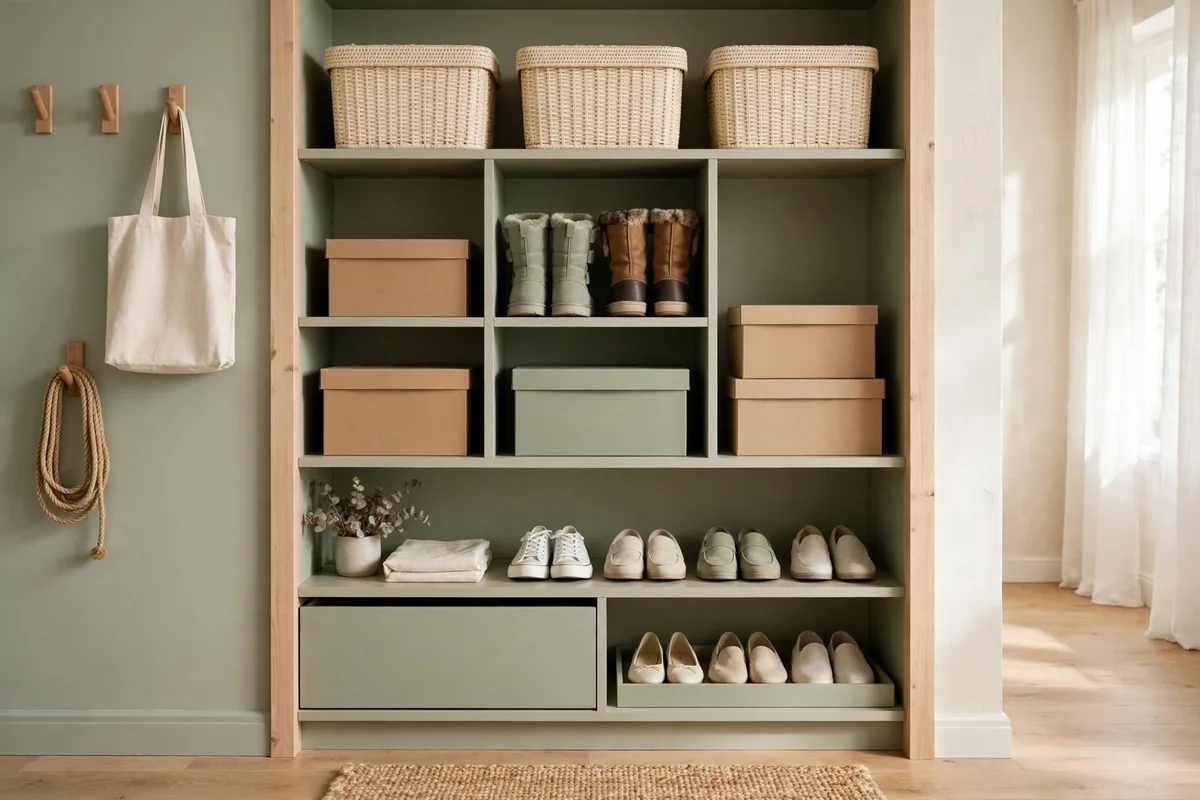
An entryway that stores all four seasons at once is storing three seasons too many. Twice a year, do a ten-minute swap: winter boots, heavy coats, and the ice scraper go into a labeled bin in the coat closet or under the bed, and the lighter gear comes out. The daily entry only ever holds the current season.
The swap is also your audit. If a coat did not get worn all winter, it does not earn entryway space next winter either. Donate it during the swap while you are already holding it. Seasonal rotation is half storage strategy and half permission to let things go.
The Two-Minute Arrival Reset
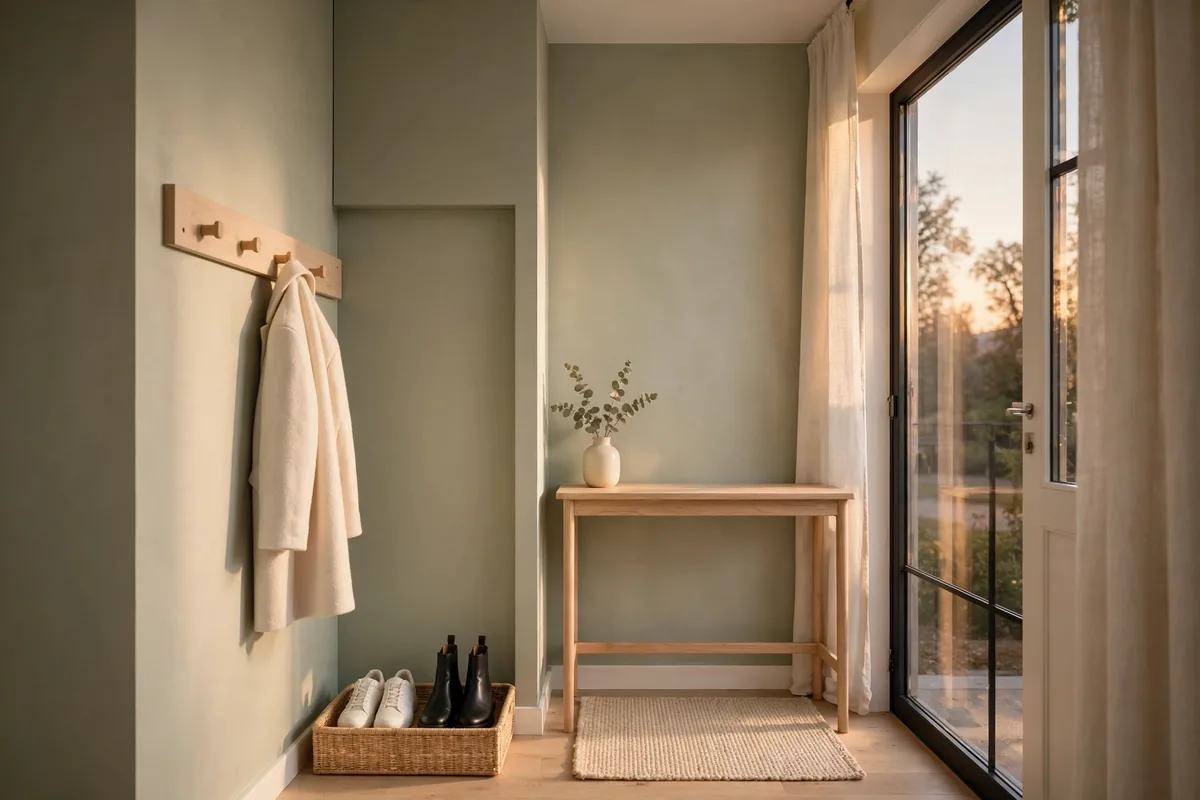
Every entryway system drifts, because arrivals are chaotic and departures are rushed. The fix is a two-minute reset when you get home: shoes on the tray, coat on its hook, bag on the bench, mail in the sorter. Do it before you sit down, because the couch has a gravitational pull that no organizer can beat.
This is the least exciting idea in the guide and the one that decides whether the rest work. The console, the hooks, and the baskets only hold the line if the daily reset keeps the entry at baseline. Teach it to everyone who uses the door, including guests, by making the right spot the obvious spot.
Start With the Tray and the Hooks This Weekend
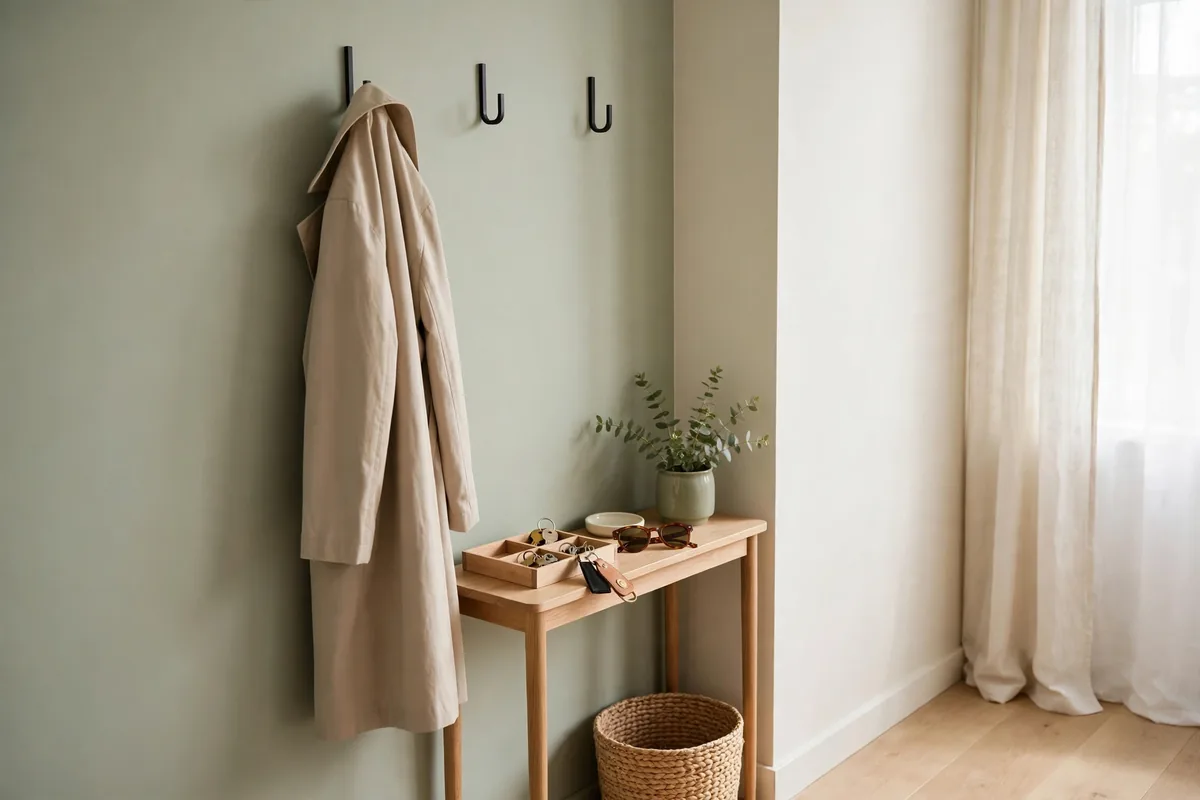
If the whole list feels like a lot, do the two cheapest things first: a boot tray for the shoes and a row of hooks for the coats. Together they cost less than $40, they take an hour to set up, and they fix the two messes that make every entryway feel chaotic.
Then live with it for a week before buying anything else. You will learn fast which zone actually bothers you, the mail pile or the shoe sprawl, and you can spend the next $50 on the real problem instead of guessing.