My old lease had the sentence every renter dreads: no holes in the walls, deposit at stake. For two years my entryway was a coat draped over a door handle and shoes in a heap, because everything I knew about organizing seemed to start with a drill. Then a neighbor showed me her entryway, held together entirely by adhesive hooks and one freestanding rack, and it looked better than mine ever had with screws.
This guide is entryway organization with zero drilling, zero damage, and zero deposit risk. Eleven ideas that use tension, adhesive, and freestanding pieces only. If your lease says no holes, or you just do not own a drill, here is the whole playbook — the no-drill companion to our full small entryway organization guide.
Adhesive Hooks Carry More Than You Think

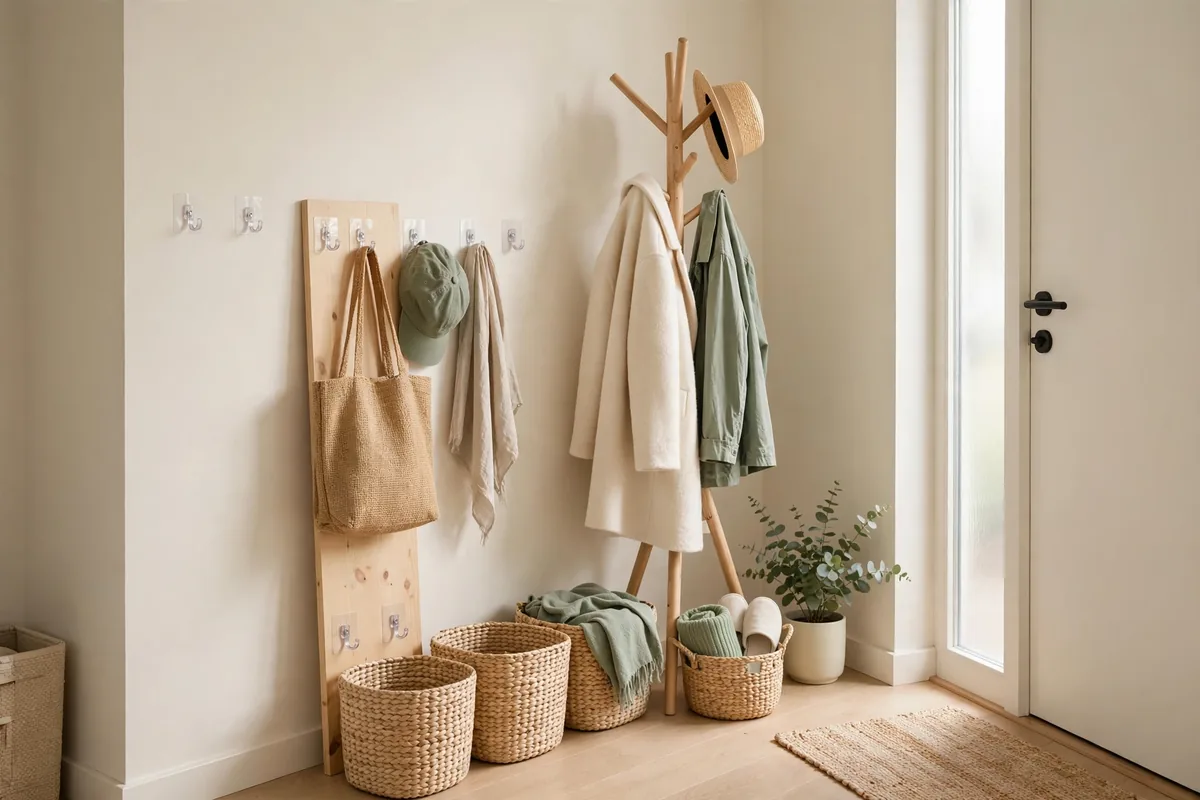
Large adhesive hook strips (the kind rated for 7 to 8 pounds per hook, about $12 for a multi-pack) are the renter’s answer to a coat rack. Two or three of them in a row by the door hold winter coats, the dog leash, and tomorrow’s jacket on any smooth painted wall or tile. Clean the spot with rubbing alcohol first; the bond lives or dies on the prep.
The part everyone skips is the cure time. The package says wait a full day before hanging weight on them, and it means it. Hooks that fail almost always failed because someone hung a coat on them an hour after sticking them up. Put them up on a Friday night and load them Saturday.
When you move, the removal is the whole point. Pull the tab straight down slowly and the strip releases clean. Warm the adhesive with a hair dryer for ten seconds first if it has been up for years; it comes off easier and takes no paint with it.
A Freestanding Hall Tree Needs No Wall at All
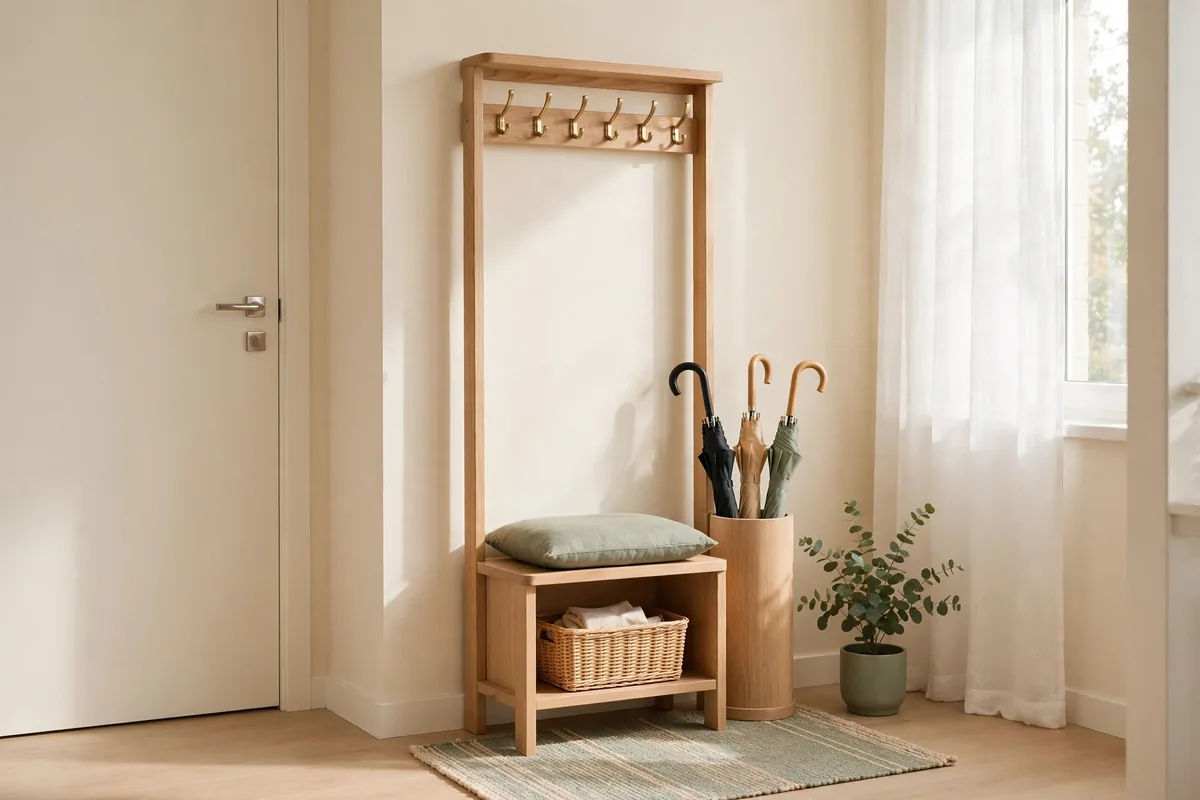
A freestanding coat rack or hall tree ($40 to $70) stands on its own feet and asks nothing of your walls. The tree style with hooks at two heights plus a small bench or umbrella base handles coats, bags, and shoes in one footprint. When you move, it moves with you in one piece.
Stability is the thing to check in the store. A tall rack with a narrow base tips the first time someone hangs a heavy winter coat on one side. Look for a wide tripod or four-leg base, and keep the heaviest items on the lowest hooks. A wobbly rack is worse than no rack.
Set a small tray at its base. A hall tree without a tray underneath still leaves shoes scattered around its feet, so the tray completes the setup. The whole station then handles coats above and shoes below with nothing attached to the building.
Tension Rods Create Storage Out of Thin Air

A tension rod ($8 to $12) wedged inside an entry alcove, a closet, or even a deep windowsill creates a hanging spot with zero hardware. Slide on a few S-hooks and you have a place for bags, scarves, and the umbrella. It installs in a minute and leaves no mark at all.
The trick is matching the rod to the span. Rods hold best at shorter widths; anything past about 3 feet starts to sag under real weight. Keep tension rods to light duty, bags and scarves rather than heavy coats, and check the tension every few months since they can loosen over time.
Inside a coat closet, a second tension rod hung lower than the main rail doubles the hanging space for kids’ jackets and short coats. No brackets, no screws, and the closet goes back to original in seconds at move-out.
Over-the-Door Organizers, Zero Screws

Over-the-door hooks and pocket organizers are the renter’s built-in: they hang on brackets that slip over the top of the door, no screws, no adhesive, nothing. A hook rack ($12 to $18) on the inside of the front door holds coats and bags; a pocket organizer ($10 to $15) on the closet door swallows gloves, hats, sunglasses, and chargers.
Mind the door’s clearance. Thick brackets can stop a door from latching or rub the frame. Slim metal hooks fit most standard doors; if yours is unusually thick or has tight weatherstripping, test the fit before you load it up. Felt pads on the contact points protect the paint.
Lean, Don’t Mount: The Mirror Trick

A leaning full-length mirror ($30 to $50) needs no mounting hardware at all. Stand it against the wall by the door, angle it slightly, and you get the last-look check plus a sense of depth that makes a small entry feel bigger. Most leaning mirrors come with a small anti-tip kit; the adhesive wall-pad version leaves no holes.
Keep it narrow. A 16-inch-wide leaning mirror fits behind most doors and in the dead strip of wall beside them. Wider mirrors look great but start eating the walkway, and a mirror you have to sidestep is a mirror you will eventually knock over.
Keep it out of the shoe blast zone. Leaning mirrors at floor level collect scuffs fast, so give it six inches of clearance from the shoe tray or rack. A quick wipe with glass cleaner once a week keeps it doing its light-bouncing job.
Freestanding Slim Shoe Storage

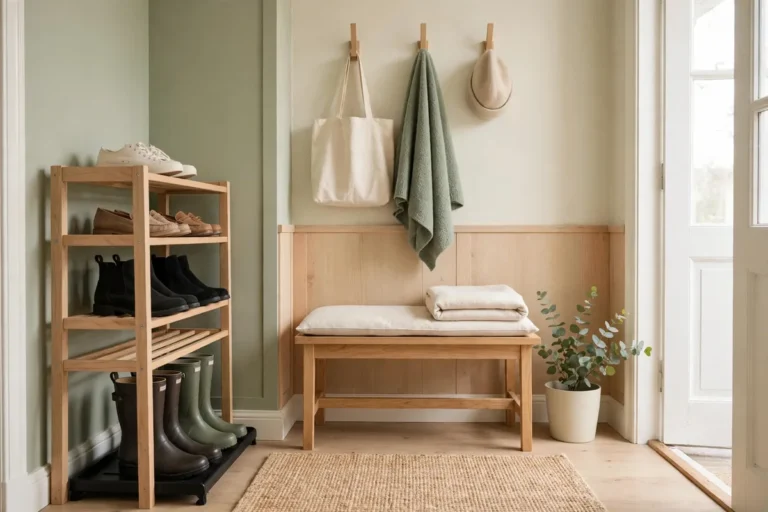
A freestanding slim shoe rack ($20 to $30) leans nothing on your walls and drills nothing — for more options, see our shoe storage ideas for small entryways. The tilted-shelf kind sits about 6 inches deep against the wall under its own weight and holds eight to twelve pairs. Stackable shoe boxes ($4 to $6 each) do the same job on a closet shelf with no installation at all.
Pair the rack with a boot tray ($15) for wet days. The tray catches the mess with no mounting, no adhesive, nothing but gravity. In a rental, the combination of tray plus freestanding rack covers the whole shoe situation without touching the walls once.
If you go the stackable-box route, label the end you actually see. On a closet shelf you view boxes from the side, so the label goes on the short end. One pair per box, and the whole shelf stays searchable.
A Tray on Any Table Becomes a Drop Zone
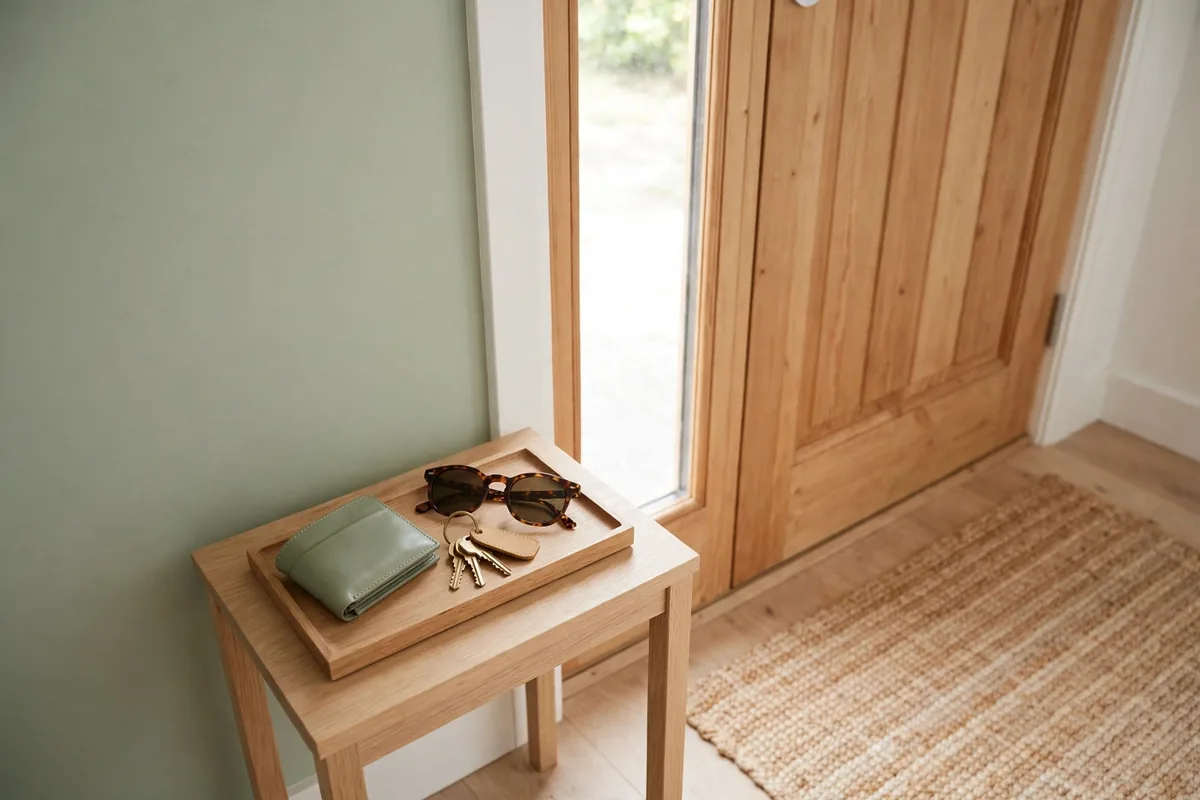
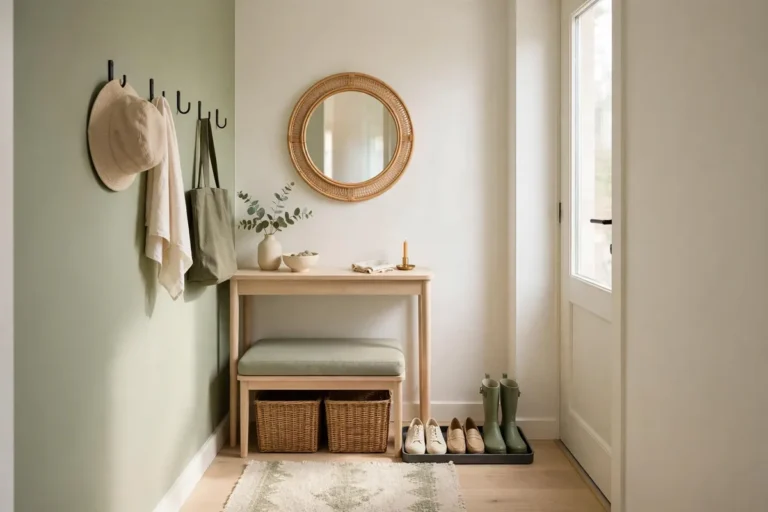
You do not need a special entryway console. Any small table, shelf, or even a sturdy stack of books near the door becomes a drop zone with one addition: a tray ($10 to $15). Keys, wallet, sunglasses go in the tray; the tray defines the spot. When you move, the tray moves.
The tray is also what makes a shared entry work without built-ins. One small tray per person on the same table, and everyone has a defined landing spot that required zero installation. Label them if the household needs the hint.
Keep the tray shallow and open. Deep bowls and lidded boxes in a drop zone become junk drawers you never open. You should be able to see your keys from the doorway.
Audit the tray monthly. Receipts, dead batteries, and single earrings migrate into every tray eventually. A thirty-second clear-out once a month keeps it a landing zone instead of a junk drawer with better branding.
Removable Adhesive Mail and Key Holders
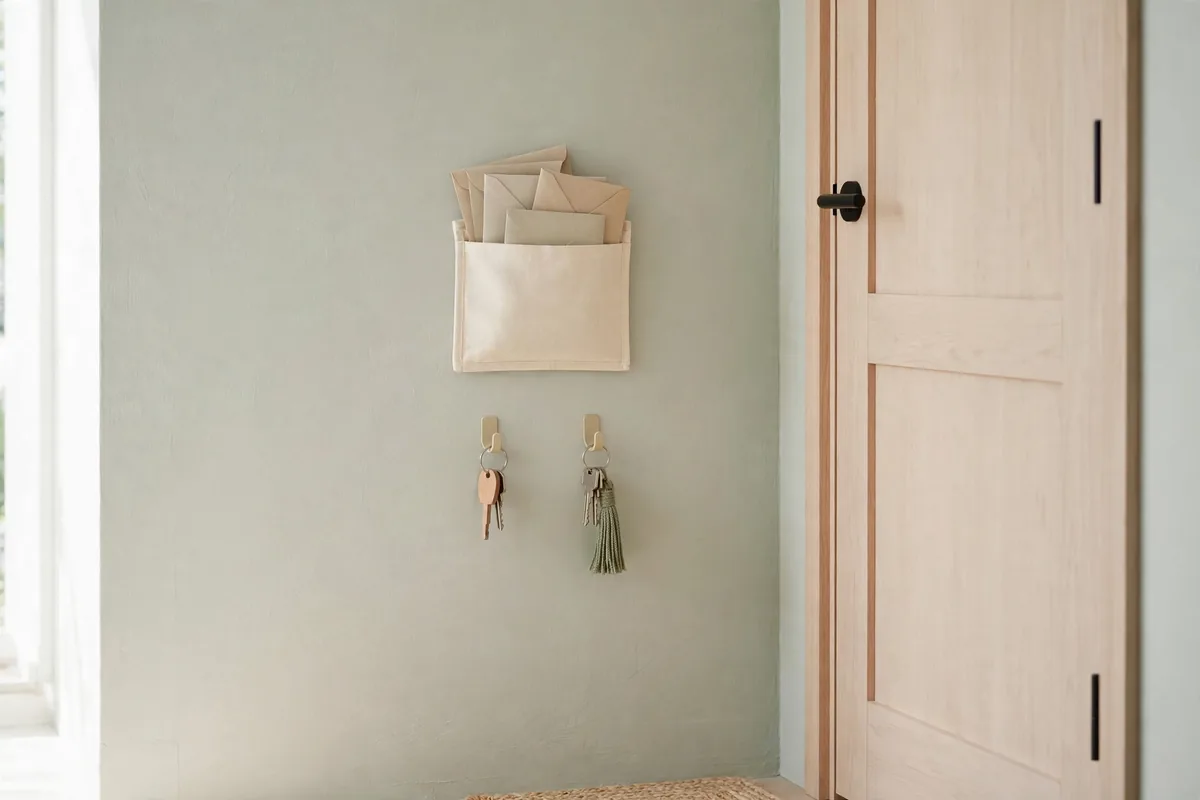
Small adhesive wall pockets and key hooks ($8 to $12) give mail and keys a home without a single screw. Stick a mail pocket and two key hooks on the wall or the side of a bookshelf at shoulder height by the door. The mail gets sorted into the pocket daily; keys land on the hooks on autopilot.
Work with the surfaces you have. Adhesive sticks best to smooth paint, tile, glass, and finished wood. On textured walls or brick, the bond is unreliable, so use the side of a smooth bookshelf or the inside of the closet door instead. Match the product to the surface and it holds for years.
Baskets Under a Bench (or Any Seat)
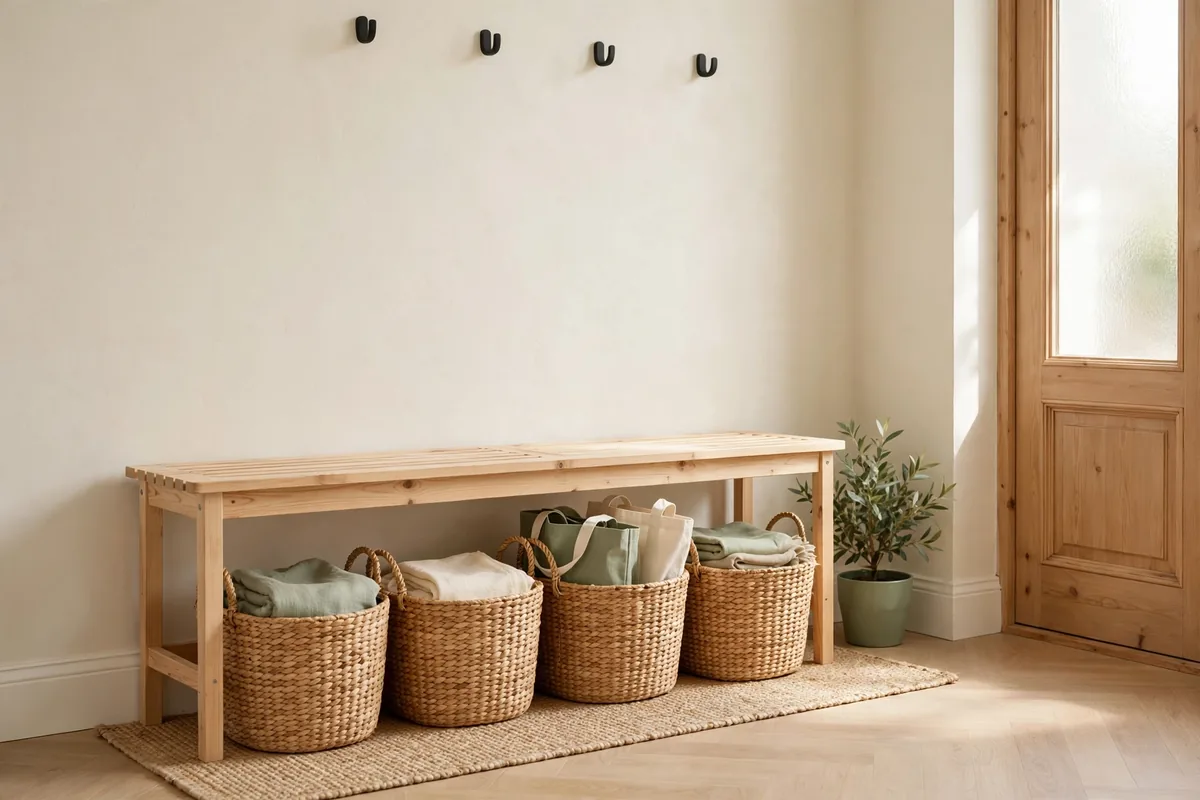
Baskets need no installation, no wall, no permission. Two or three baskets ($8 to $12 each) under a bench, under a small stool, or just lined up against the wall hold gloves, scarves, reusable bags, and the dog gear. Assign one per person or per category and the system runs itself.
Choose baskets with handles. You will pull them out daily, and handles turn a basket into a tote you can carry to the closet for the seasonal swap. Lidded baskets look tidier but get opened less; open baskets get used, which is the point.
Do the seasonal swap with the baskets, not around them. When winter ends, carry the whole basket to the storage closet and bring back the lighter-weather one. The basket is the unit of rotation, which makes the swap a five-minute job.
Adhesive Hooks Inside the Closet

The inside walls of the entry coat closet are usually bare, and they are perfect for adhesive hooks. A row of medium hooks ($10 for a pack) inside the closet door or on the side wall holds the umbrella, the reusable bags, and the scarf collection where they stay hidden but reachable.
This is also where the off-season gear lives without drilling a single shelf. Adhesive hooks hold lightweight bins’ worth of scarves and hats, and a hanging closet organizer ($12) on the existing rail adds cubbies for gloves and bags — more no-drill closet wins in our guide to organizing a small closet. The closet does double duty with nothing permanent added.
The Move-Out Test: Everything Leaves No Trace
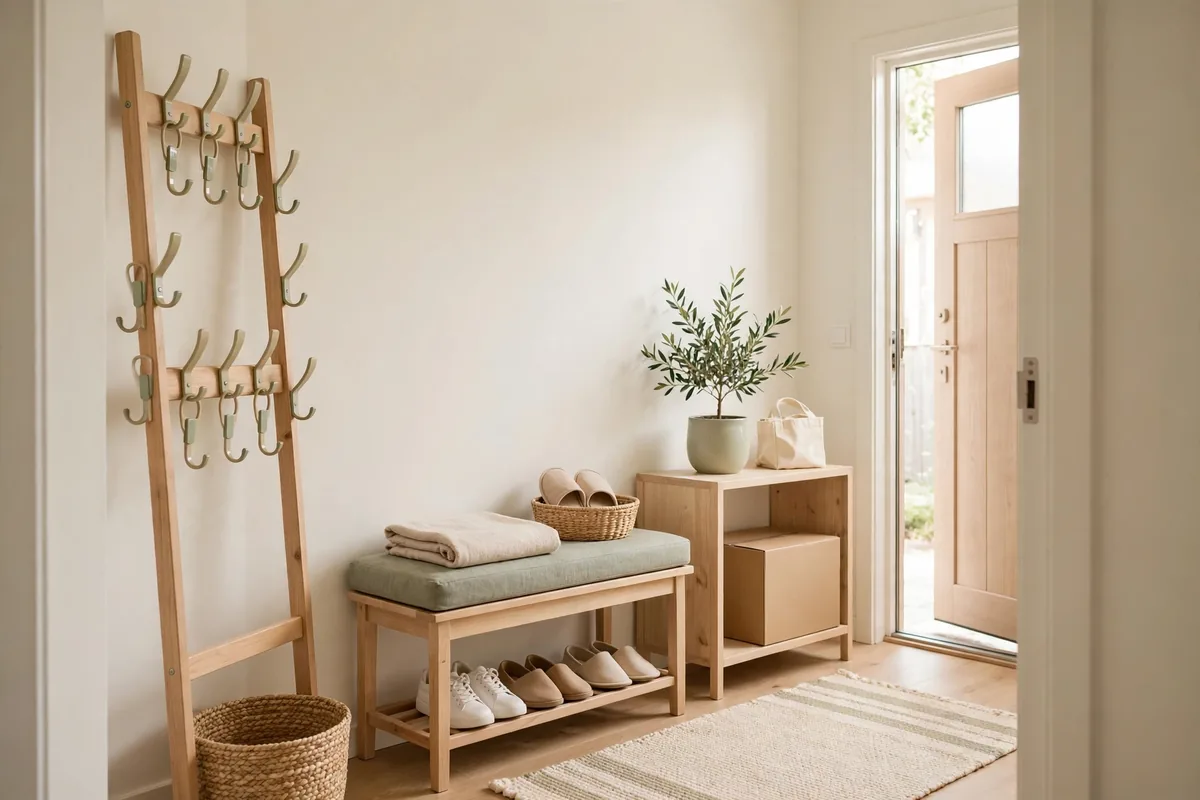
Here is the renter’s final check on every idea in this guide: can you remove it in under five minutes and leave the place exactly as you found it? Adhesive hooks pull clean, tension rods unscrew by hand, over-door racks lift off, freestanding furniture walks out the door. If the answer is yes across the board, your deposit is safe.
Keep the original packaging for the adhesive products, or at least a photo of the instructions. The removal technique (pull the tab straight down, slow and steady) is what makes them damage-free, and you will want the reminder in two years when you have forgotten which way the tab goes.
Start With Hooks and a Tray This Weekend
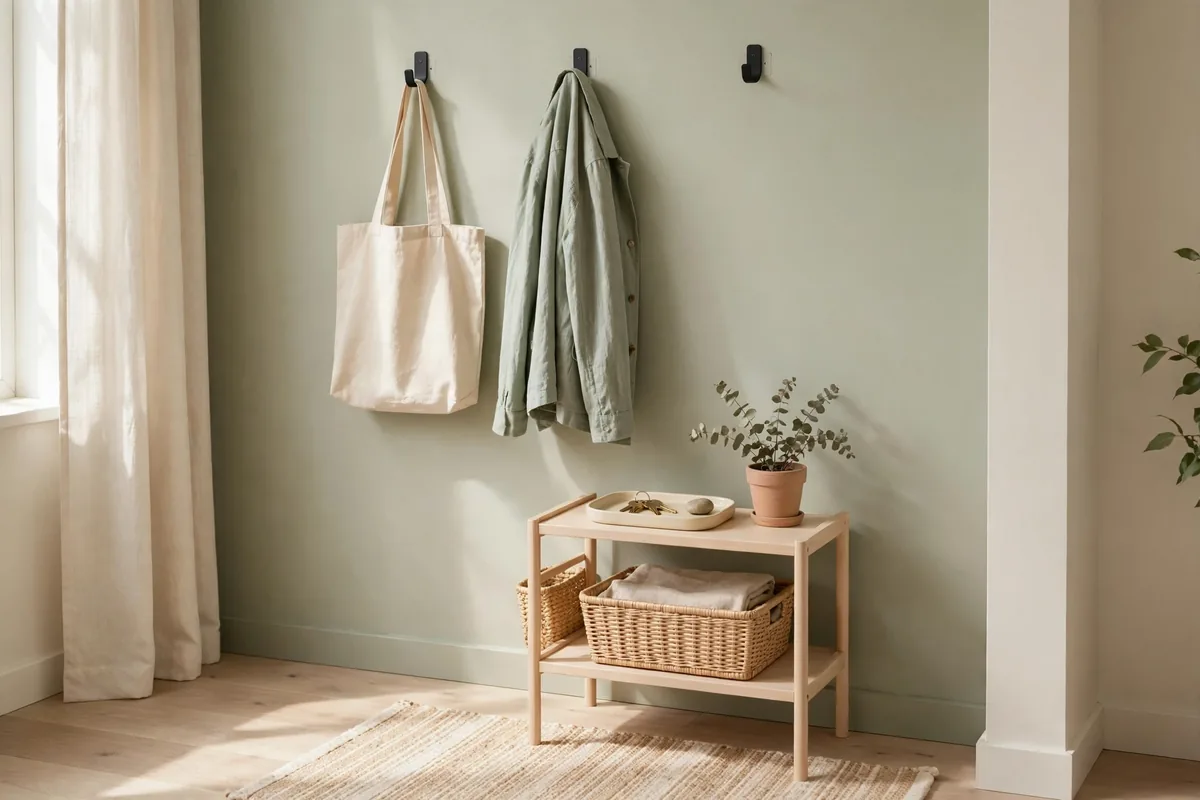
The fastest renter-friendly entryway upgrade costs under $25: a multi-pack of large adhesive hooks for the coats and a tray for the keys. Put the hooks up Friday night, load them Saturday, set the tray by the door. No tools, no holes, no landlord conversation needed.
Live with that for a week. You will quickly see whether you need the shoe rack, the mirror, or the mail pocket next, and every addition from here follows the same rule: nothing that cannot come back off.