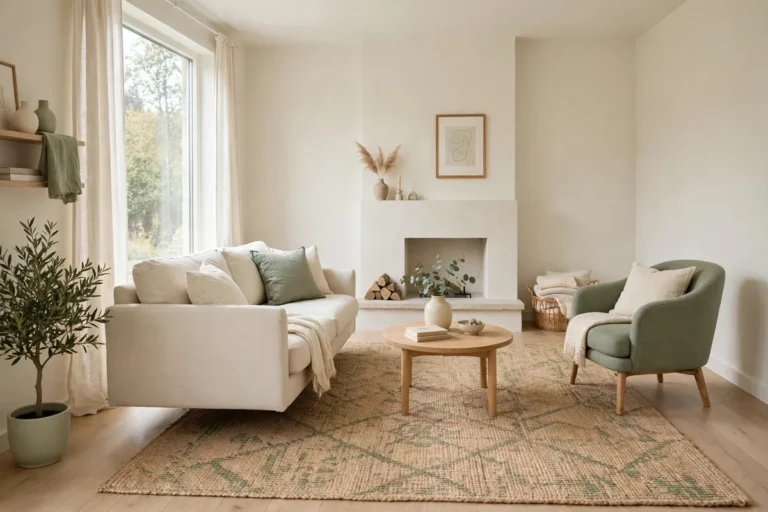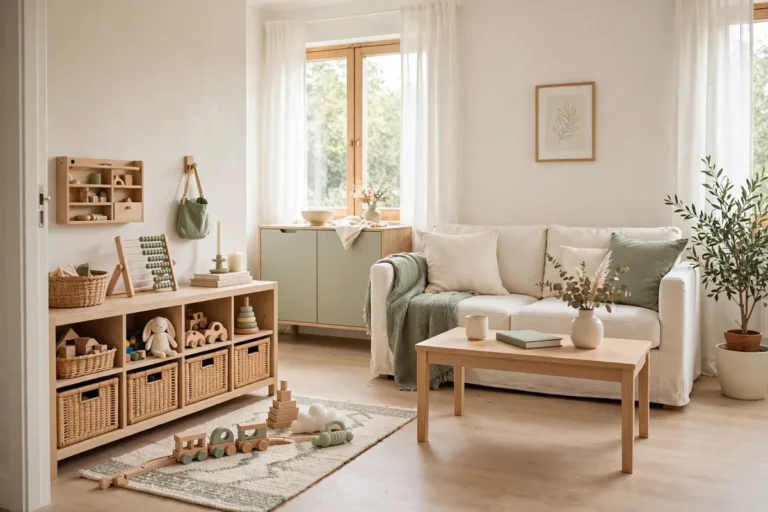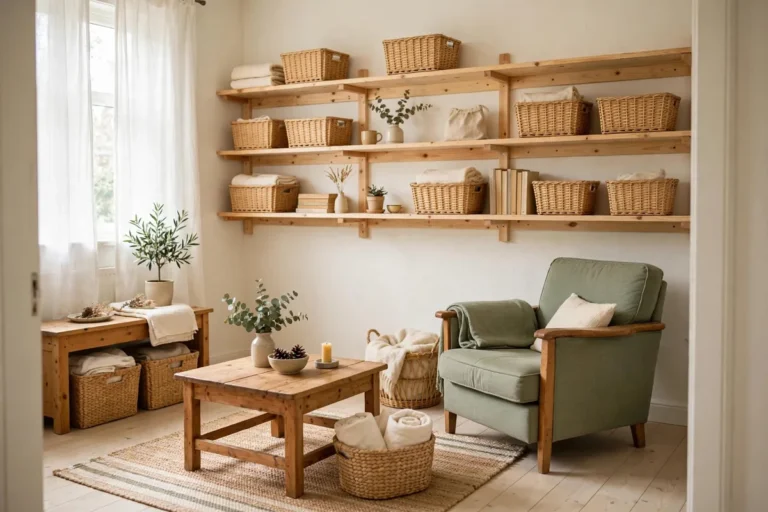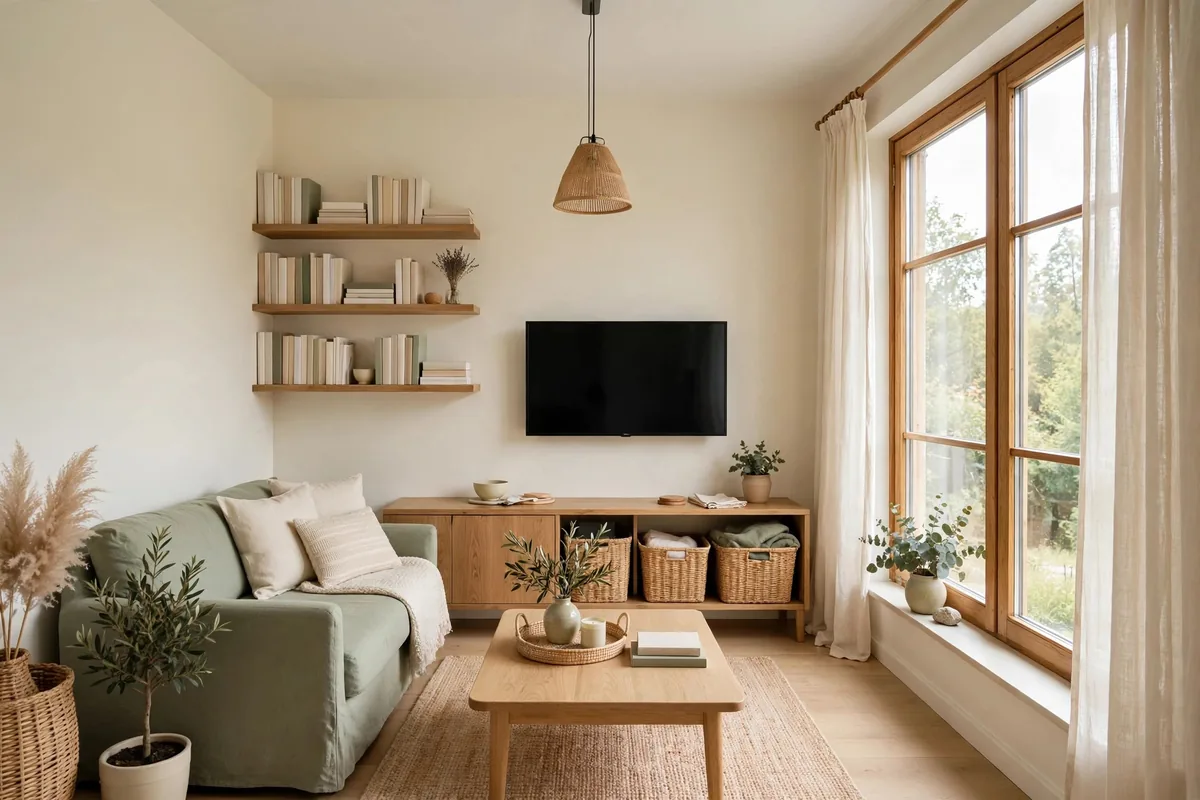
The first living room I ever had to make work on my own belonged to a studio apartment where the front door opened straight into it. For months every flat surface collected the same drift: mail, chargers, a jacket, two mugs, a stack of things I was “about to put away.” The room was not too small. Nothing in it had an assigned place, so everything landed everywhere. That is the whole game with small living rooms: the room is usually fine, and the zones are the problem.
This guide walks the room zone by zone: the sofa, the middle of the room, the media wall, the walls, the corners, the strip behind the sofa, the entry-adjacent corner, and the window wall. Most ideas cost under $40, many are renter-friendly, and none of them require a bigger room — and if money is the real constraint, the budget playbook for small living rooms gets the whole job done for $100. Here is what actually works when the living room has to be the lounge, the office, the playroom, and the guest room all at once.
Audit the Room Before You Buy Anything
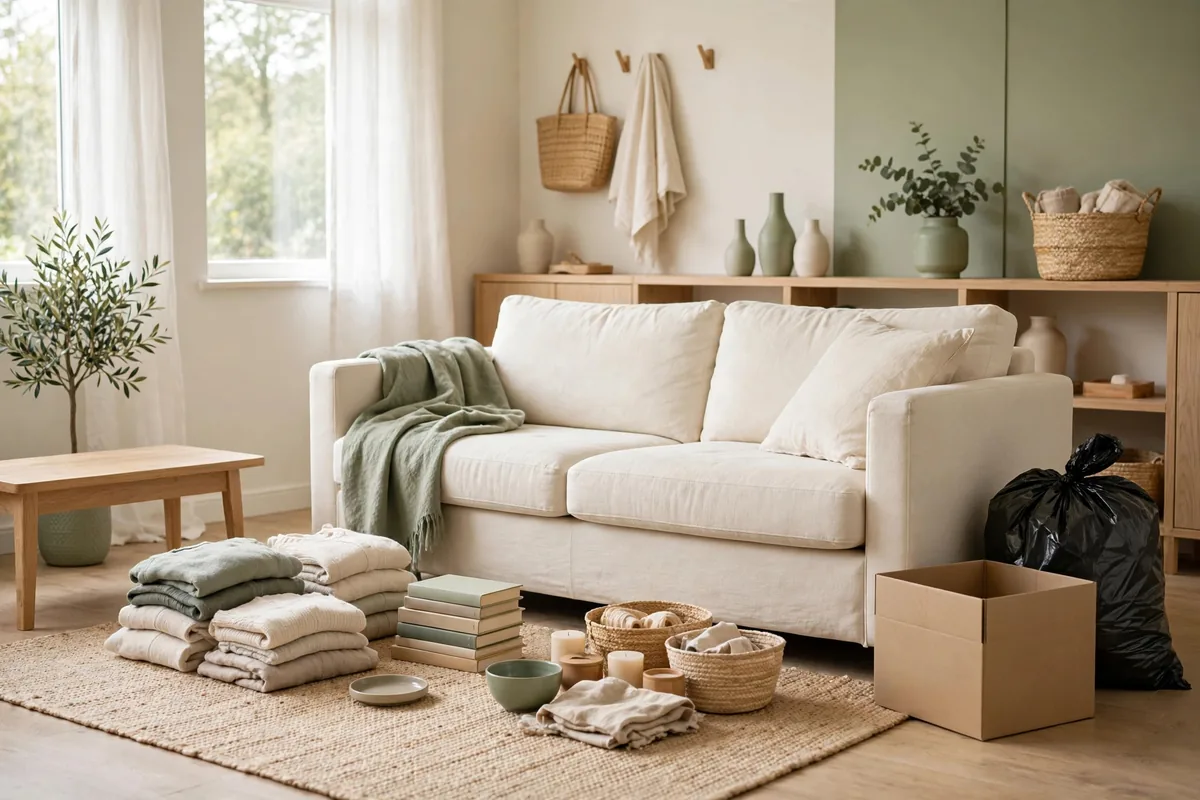
Do not buy a single basket until you have audited the room. Living rooms collect a special kind of clutter: the coffee table that became a mailroom, the armchair buried under clean laundry, the media console with four dead remotes and a drawer of cables nobody can identify. Fifteen minutes of honest sorting clears more space than any organizer you can buy.
Work zone by zone with three bags: trash, donations, and belongs-elsewhere. Be strict about the aspirational stuff: the board games nobody has opened in a year, the throw pillows that migrated from the bedroom, the stack of magazines you keep meaning to read. Bag it, box the donations, and get the belongs-elsewhere pile out of the room the same day. Organization only sticks when there is less to organize.
While you audit, notice where things actually land. The spot by the door where keys and mail pile up is telling you where the drop zone goes. The end of the sofa where the blanket always ends up is telling you where blanket storage belongs. Good organization follows your habits instead of fighting them.
The Sofa Zone: Where Everyone Lands

The sofa is the largest piece of furniture in the room and the one everyone gravitates toward, so treat the two feet around it as its own zone. A slim side table or a C-table that slides over the arm gives every seat a landing spot for a drink, a book, and a phone. Without one, all of that migrates to the floor or the coffee table.
If you are buying a sofa for a small room anyway, pick one that stores. A chaise with a lift-up seat or a sofa with built-in drawers hides throws, board games, and the spare bedding for the pull-out guest situation. Storage chaises run about $250 to $400, which stings until you realize they replace both a coffee table and a linen closet shelf.
The Center of the Room

The middle of a small living room is prime real estate, and a decorative-only coffee table wastes it. Whatever sits in the center should earn its footprint: drawers, a lift-up top, a lower shelf with baskets, or at minimum an open base that fits two lidded bins underneath. A coffee table with no storage in a small living room is a missed opportunity you walk around every day.
Keep the surface itself on a strict budget of space. One tray, and everything on the table lives on the tray: the remote, a coaster, the candle. The tray is a visible boundary, and it makes the five-minute reset possible because you can lift the whole tray instead of relocating six objects. When the tray is full, something gets put away instead of stacking.
No room for a coffee table at all? An oversized storage ottoman that works a second job in the middle does the same job and doubles as extra seating when people come over. About $80 to $150 buys one with a genuinely useful interior, and guests will fight over who gets to put their feet up.
The Media Wall
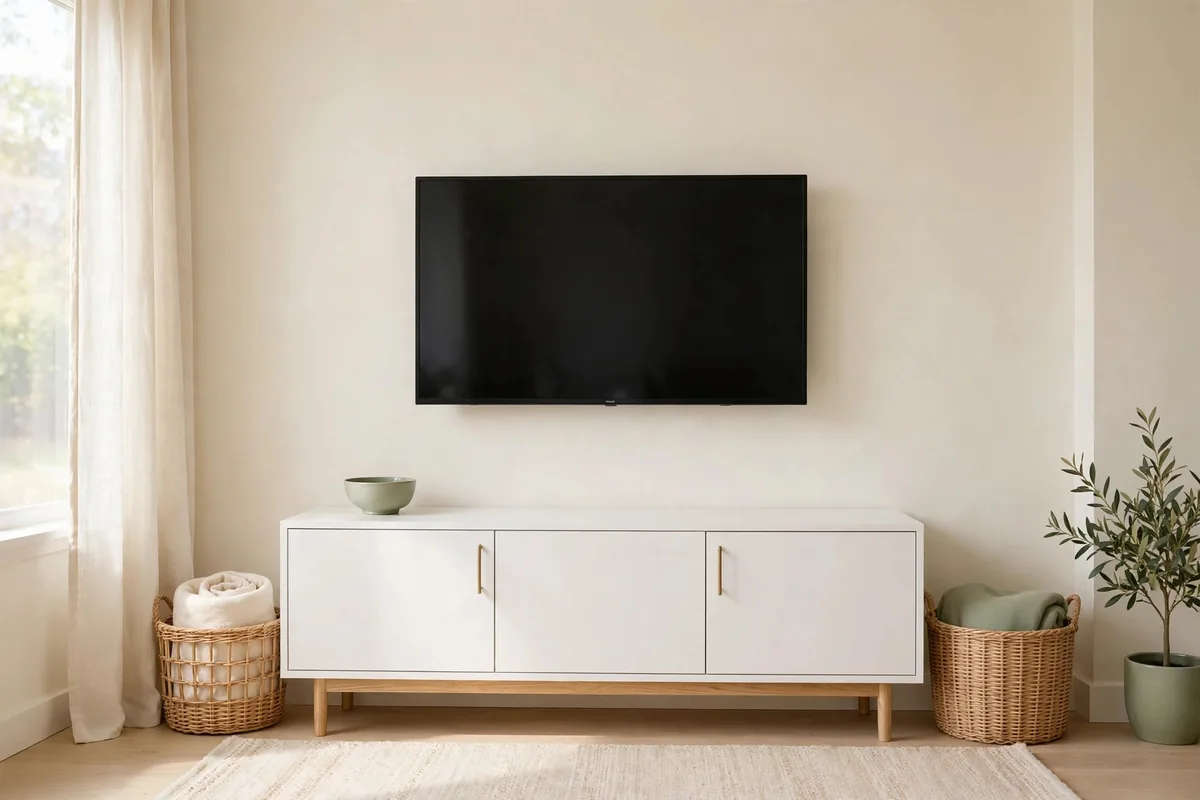
The TV wall is usually the biggest uninterrupted stretch in the room, which makes it the best storage wall too — and a natural pick for the room’s single focal point. A low, wide console with closed doors hides the router, the game controllers, the DVDs nobody admits to owning, and the cable tangle. Closed doors matter more than style here: media clutter is small, ugly, and constant, and open shelving just frames it.
Size the console to the wall, not the TV. A console that spans most of the wall’s width anchors the room and gives you dramatically more hidden storage than one that barely fits under the screen. Measure the wall first, then shop, because “close enough” consoles leave awkward dead gaps on both sides.
Mount the TV on the wall if you can. It frees the entire top of the console, which buys you a full shelf of storage or display without adding a single inch of furniture. A basic tilt mount costs $25 to $40, and most landlords allow it since the holes are small and easy to patch. Renters who cannot drill should look for a console tall enough that the TV-on-top arrangement still leaves usable surface on either side.
Cube shelving is the budget answer to the media wall. A 4×2 cube unit laid horizontally under a wall-mounted TV, like IKEA’s KALLAX (about $80), holds fabric bins that swallow controllers, games, and remotes by category. You can browse the KALLAX shelf unit to check dimensions against your wall before you commit. One bin per category, labeled, and the media wall stops being a junk drawer with a screen on top.
Take It Up the Walls

Floor space is finite; wall space is not. A pair of floating shelves ($15 to $25 each) above the sofa or beside the TV holds books, a plant, and the framed photos that were eating side-table space. Mount them where you can reach them without climbing, and style them sparsely. Crowded shelves just move the clutter upward.
Picture ledges are the underrated version of shelves. A narrow ledge ($10 to $18) holds frames, small art, and books with the covers facing out, and you can swap the display in seconds without rehanging anything. Two ledges stacked above the sofa give you a gallery wall that also stores the books you are actually reading.
Pegboard or a rail with hooks near the seating area handles the small stuff: headphones, the reading glasses, the dog leash by the entry-adjacent wall. Everything visible, nothing in a pile. One organized wall beats three busy ones, so pick the wall that bothers you most and leave the rest alone.
Corners Are Zones Too
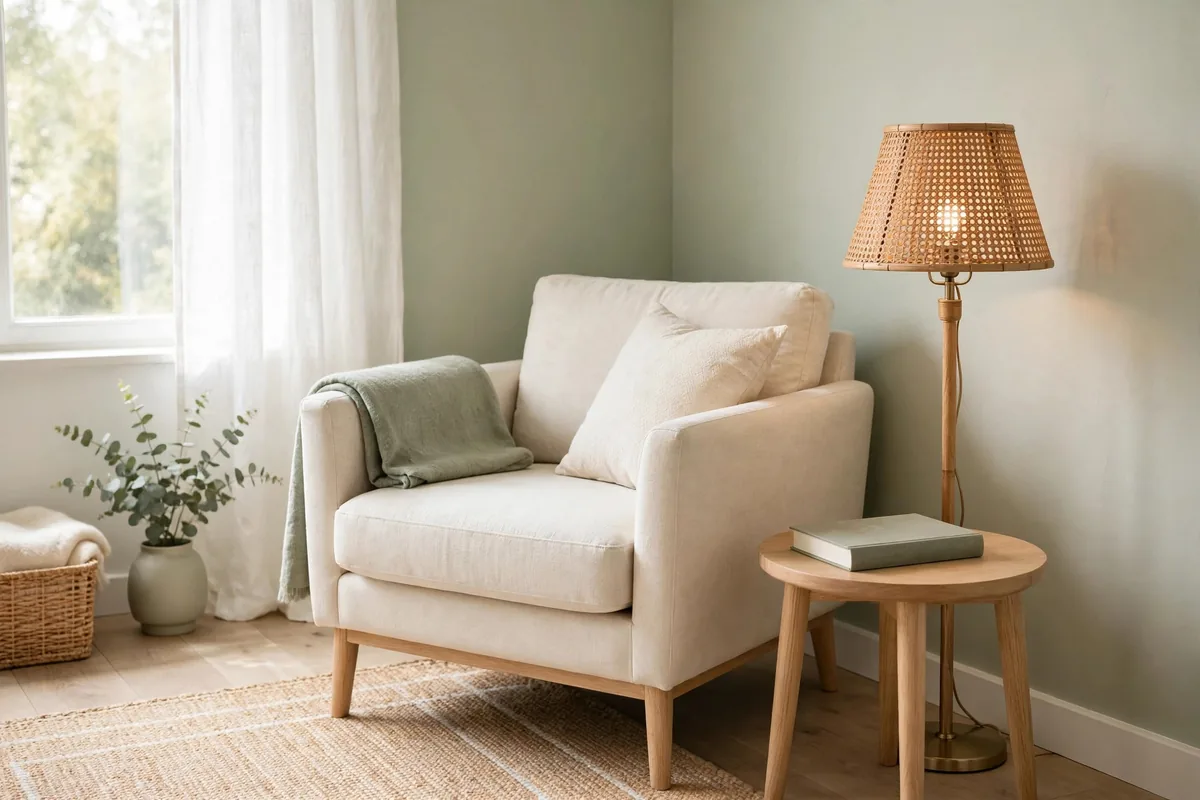
Every living room has a corner where furniture goes to be awkward. Give the corner one job instead of letting it collect strays. A tall, narrow bookshelf or a leaning ladder shelf uses the height everyone forgets, and it holds more than a wide low bookcase in half the footprint.
Or make the corner the reading zone: one comfortable chair angled in, a small side table, a floor lamp or wall-mounted reading light. A corner with a purpose stops being dead space and starts being the seat everyone fights over. The floor lamp can often become a plug-in wall sconce ($30 to $50), which frees the floor entirely.
The Strip Behind the Sofa
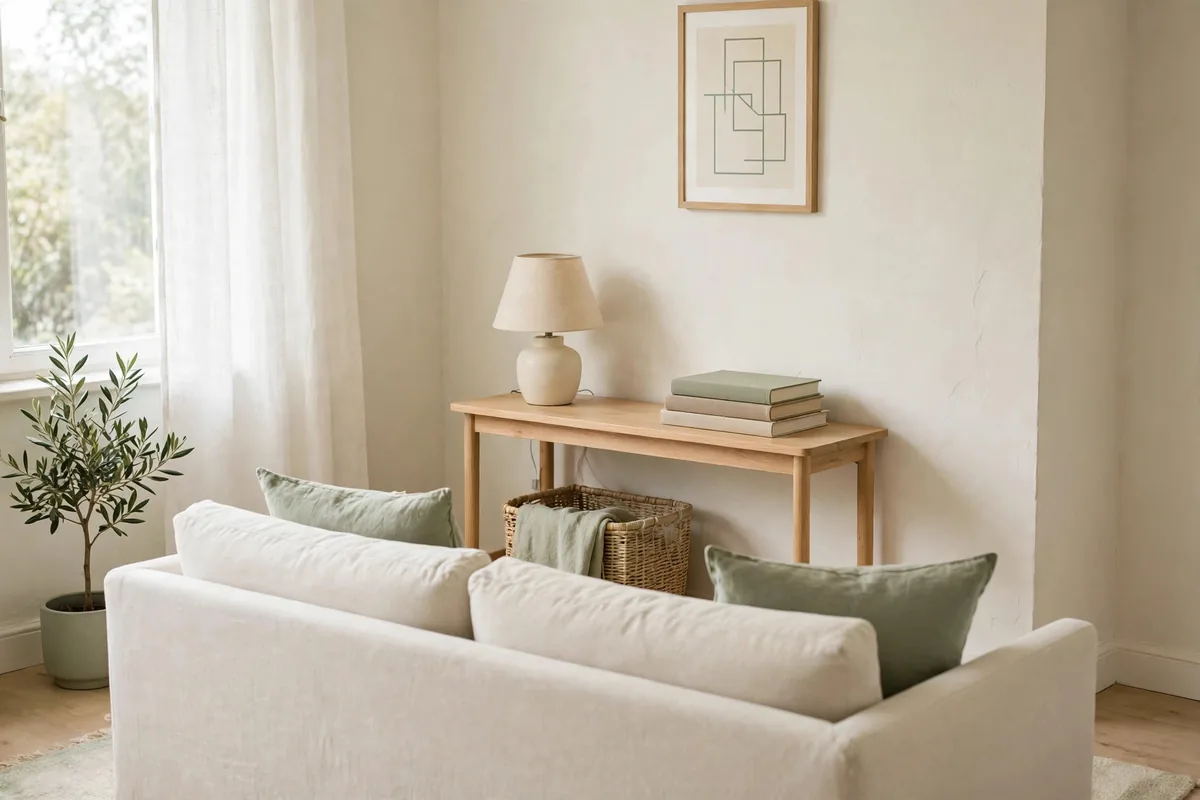
If your sofa floats even a foot off the wall, the strip behind it is a full extra surface hiding in plain sight. A narrow console table (10 to 12 inches deep, $60 to $120) back there holds baskets for throws, a charging station, and the books you are working through. It turns dead space into the room’s most useful shelf.
This is also the best home for the charging situation. A power strip on the console’s lower shelf with short cables means every device has a parking spot that is not the coffee table, the arm of the sofa, or the floor. When guests come over, the cables vanish behind the sofa instead of trailing across the walkway.
Style the top lightly so it reads as intentional, not as a shelf that fell behind the couch. A lamp, one stack of books, one basket. The lamp is doing double duty: it adds warm light at seating height, which makes the whole room feel calmer at night than a single overhead bulb ever could.
If the gap is too narrow for a console, a row of low lidded boxes or a flat storage bench still uses it. The rule is the same: every inch of the room should have a job, including the inches you cannot see from the doorway.
The Entry-Adjacent Corner
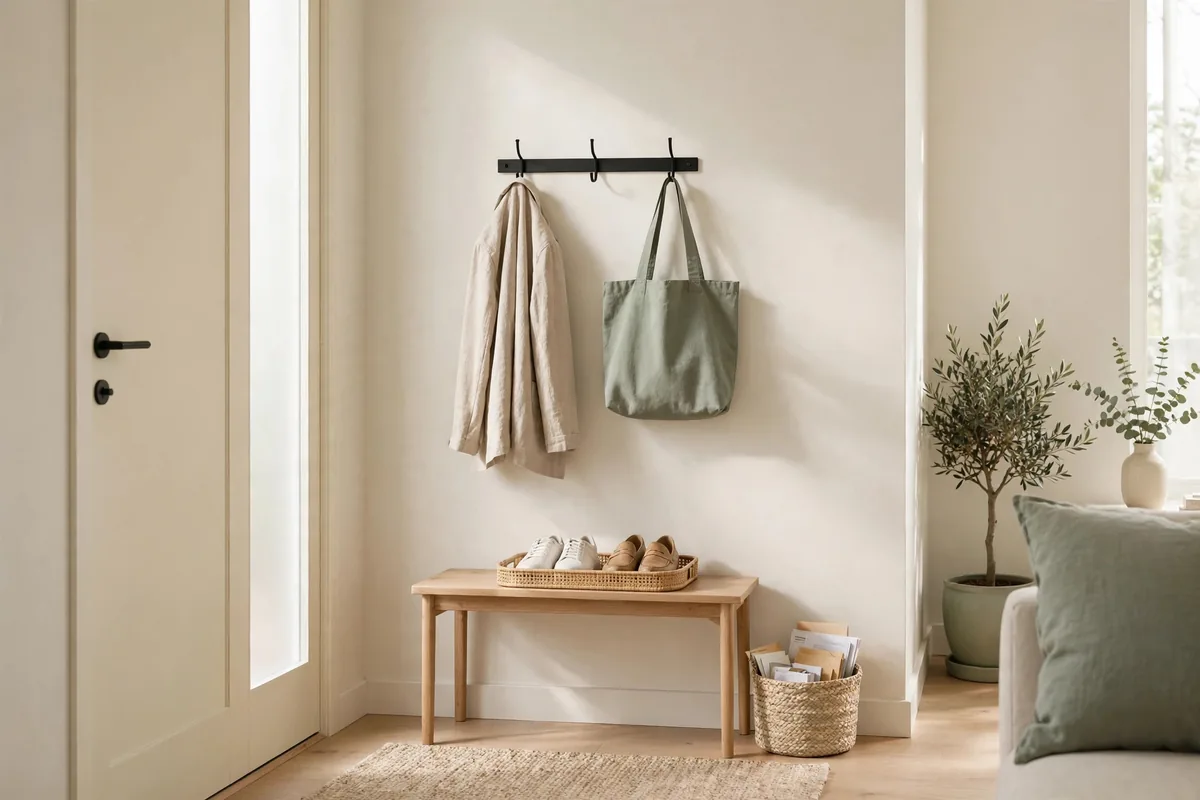
In small homes the living room often absorbs the entryway, which means keys, mail, shoes, and bags land wherever the door swings. Claim one corner or one wall section near the door as the drop zone and give it boundaries: a row of hooks at two heights, a slim bench or shoe tray, and one basket or tray for mail and keys. The full small entryway organization guide goes deeper on this corner.
Hooks beat a coat rack here because they use wall space instead of floor space. Four to six sturdy hooks ($15 to $25 for a rail) hold the daily jackets, the bag, and the dog leash. Keep it to what gets used daily; the out-of-season coats belong in a closet, not on the living room wall.
The mail needs a landing pad with an exit plan, not just a pile. A wall-mounted file holder or a single tray works if you sort it weekly: action items stay, everything else gets recycled or filed the same day. Mail is the fastest-growing clutter in any small home, and a weekly sort takes five minutes.
The Small-Things System

Remotes, chargers, coasters, reading glasses, lip balm: the small things are what make a living room feel messy even when the big things are fine. They need a system, not willpower. One lidded box or lidded basket per seating area, and every small thing lives in the box or in someone’s hand. No third option.
Corral the chargers specifically, because they multiply. A small lidded box with a power strip inside ($20 to $30 for the box, or any lidded basket with a hole cut discreetly in the back) parks every cable in one place. One charging station per room is enough; five cables trailing from five outlets is how living rooms start looking like server closets.
Blankets Without the Heap

Throws are non-negotiable in a living room, and the heap on the arm of the sofa is negotiable. Give blankets a real home: one large basket ($25 to $40) beside the sofa, and every throw gets folded or rolled into it. Rolled throws fit more per basket and look tidier than folded ones, and guests can actually find one without excavating.
Cap the collection at what the basket holds. The fourth and fifth throws are the ones that end up draped over everything because there is no room for them. If a new throw comes in, an old one goes to the bedroom or the donation box. Baskets work as natural limiters for anything soft: pillows, pet blankets, the kids’ loveys that migrated to the couch.
Washable matters more than beautiful here. A basket that cannot survive a trip to the sink or the washing machine will look tired in six months. Cotton rope and canvas baskets ($20 to $35) wash well and keep their shape; cheap seagrass looks great until the first spill.
The Window Wall
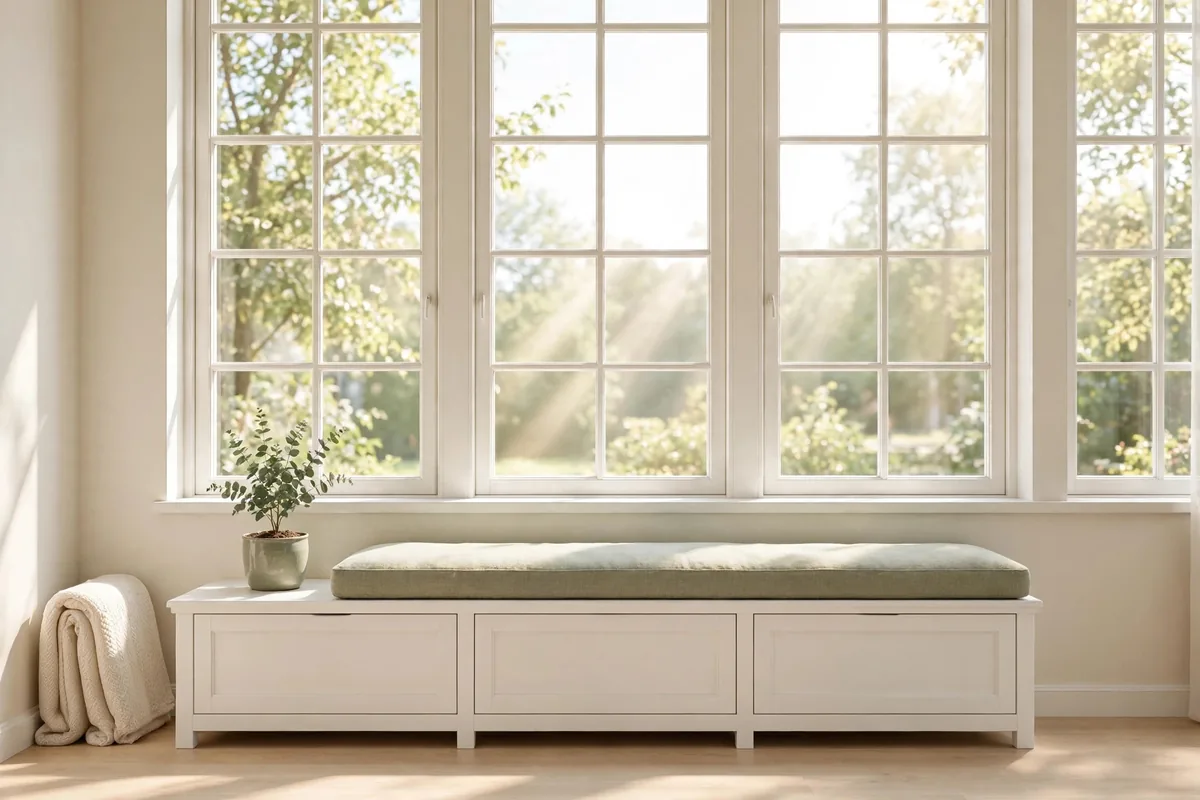
The wall under the window is often the emptiest stretch in a small living room, partly because people are afraid of blocking light. A low storage bench (around $70 to $120) under the window blocks nothing: light passes over it, and you gain a full bench of hidden storage plus a perch. It is the highest-value seat in the room on a sunny afternoon.
Keep the window wall visually light so the room keeps feeling bright. Closed storage in a pale finish, or open cubbies with matching bins, reads as calm rather than bulky. Avoid tall furniture on this wall; height here is what makes a small room feel boxed in.
Plants earn their place on the window wall, but contain them. One or two plants on the bench or a narrow plant stand beat a scattered collection that turns the brightest wall into a jungle. A hanging planter ($12 to $20) uses zero surface space and puts greenery at eye level where it actually gets noticed.
Decide What the Room Is For
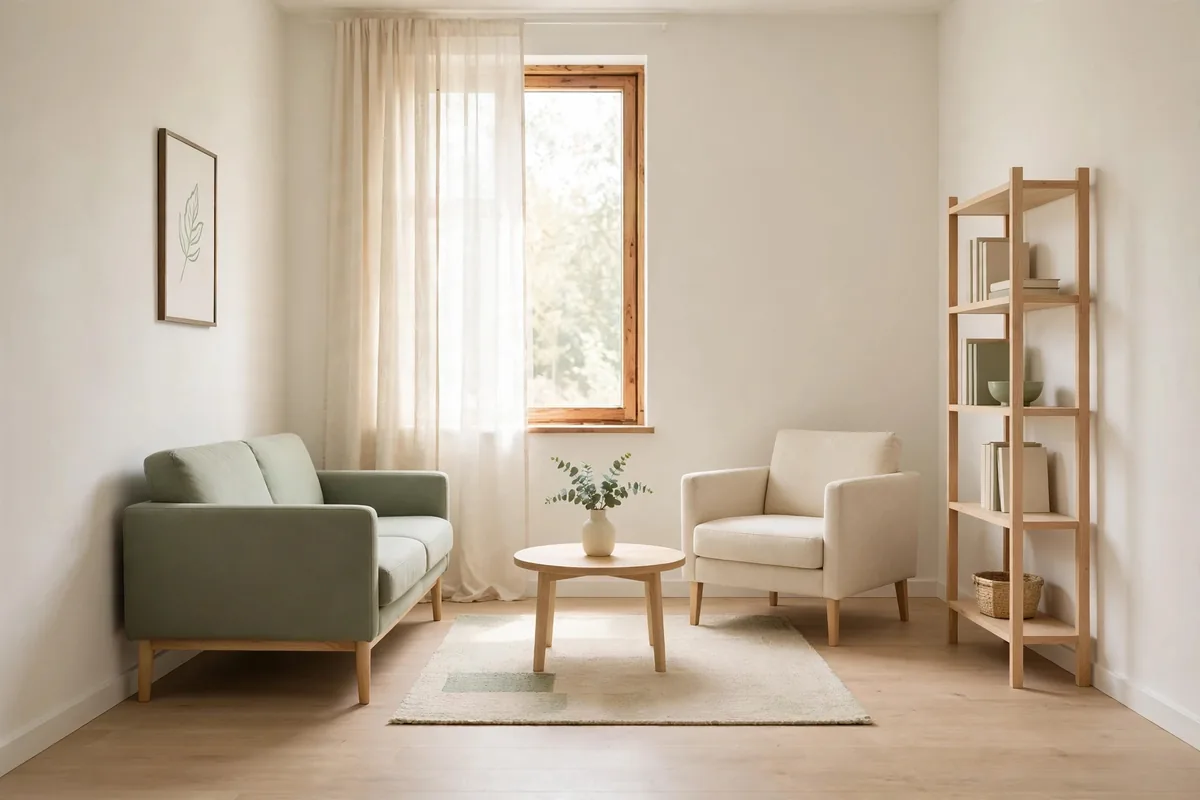
Every small living room is secretly trying to be five rooms, and organization fails when the room has no defined job list. Write down what actually happens in yours: lounging, TV, reading, a bounded toy zone for kids’ play, working from the couch, guests sleeping over. Then check every object against the list. The treadmill nobody uses, the formal dining chairs “for someday,” the boxes that belong in storage: they are all failing the job interview.
This is the step that makes everything else work, because storage cannot fix a room holding things that do not belong in it. The gaming setup stays if gaming happens daily; it goes to the bedroom if it happens monthly. Be honest about the monthly things. They are renting your best square footage.
Once the list is set, defend it. Every new object that enters the living room has to pass the same interview. A defined room stays organized with half the effort of an undefined one, because the decisions are already made.
The Five-Minute Nightly Reset
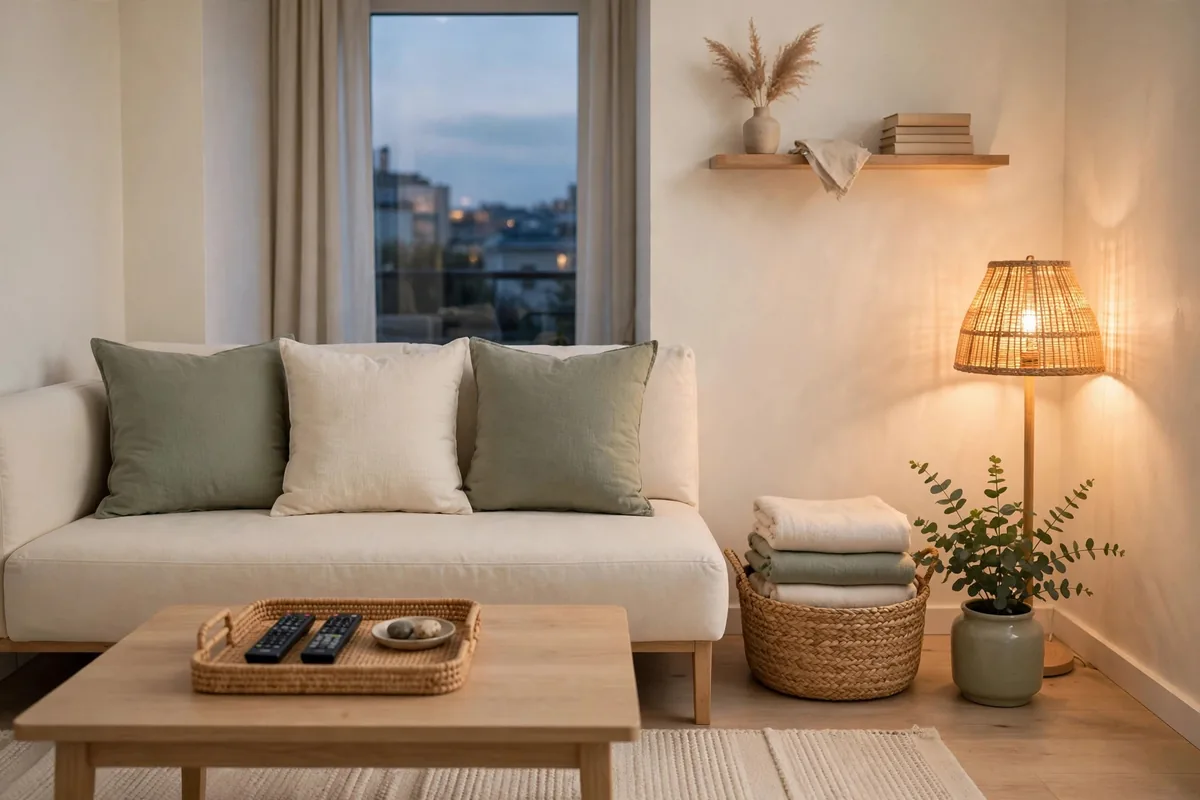
Systems fail without maintenance, and living rooms drift faster than any room because everyone uses them. The fix is a five-minute reset before bed: blankets into the basket, remotes into the box, mugs to the kitchen, cushions straightened. Set a timer the first week until it becomes automatic.
This is the least glamorous idea in the guide and the one that matters most. Every organizer in this article only works if the reset keeps the room at baseline instead of letting it slide all week. If the whole household does it together, five minutes is honest, not aspirational.