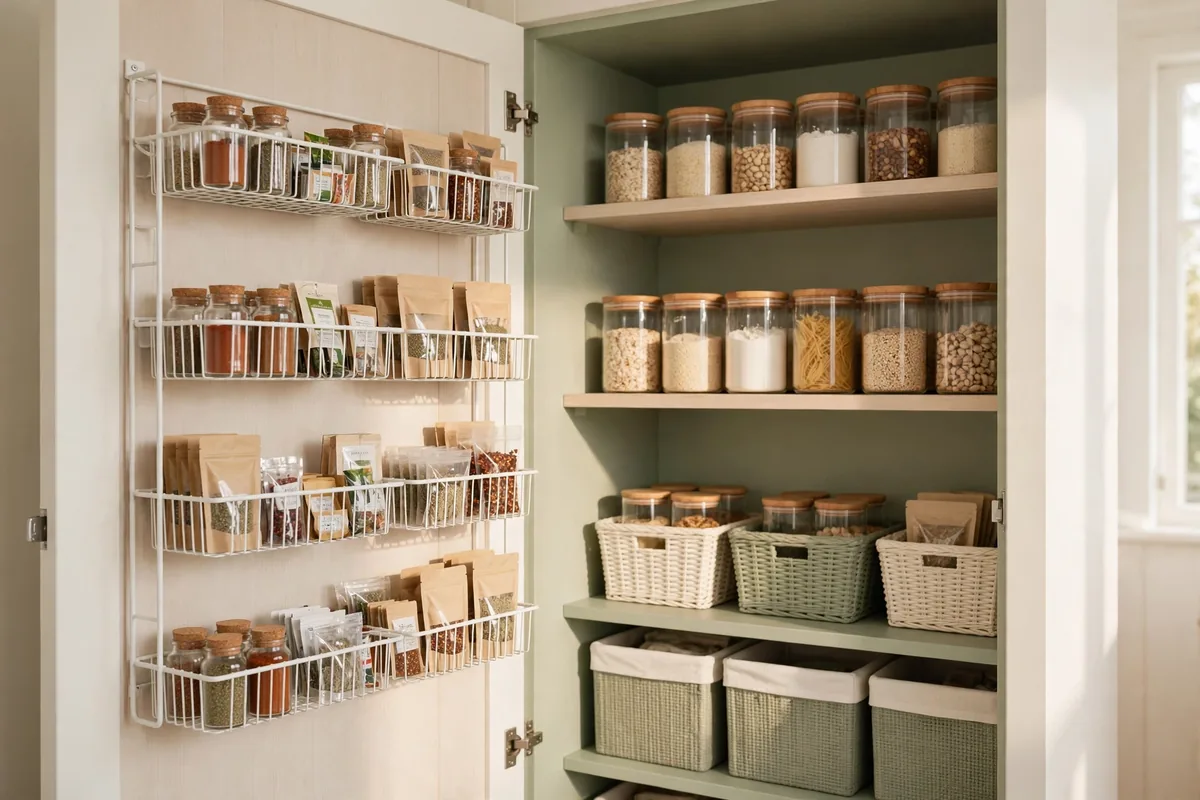
The most valuable storage in my pantry isn’t a shelf. It’s the back of the door: a full six square feet of vertical space I ignored for years while cans crowded my shelves. Once I started treating the door as a storage wall, I freed an entire shelf without removing a single item.
These small pantry door organization ideas work because the door is already there, already empty, and already at the perfect grabbing height. Whether you have double doors, one narrow door, or a rental you can’t drill into, there’s a door-storage method below that fits. Measure your door, pick your mounting style, and claim that free real estate.
Match the Mount to Your Door: Hooks, Screws, or Adhesive
Before you buy anything, figure out how your door allows things to attach.
Hollow-core doors, the lightweight kind in most apartments, hold screws poorly but take over-the-door hooks beautifully. Solid wood doors accept screws happily. And if you rent, removable adhesive strips or tension-mounted racks keep your deposit safe.
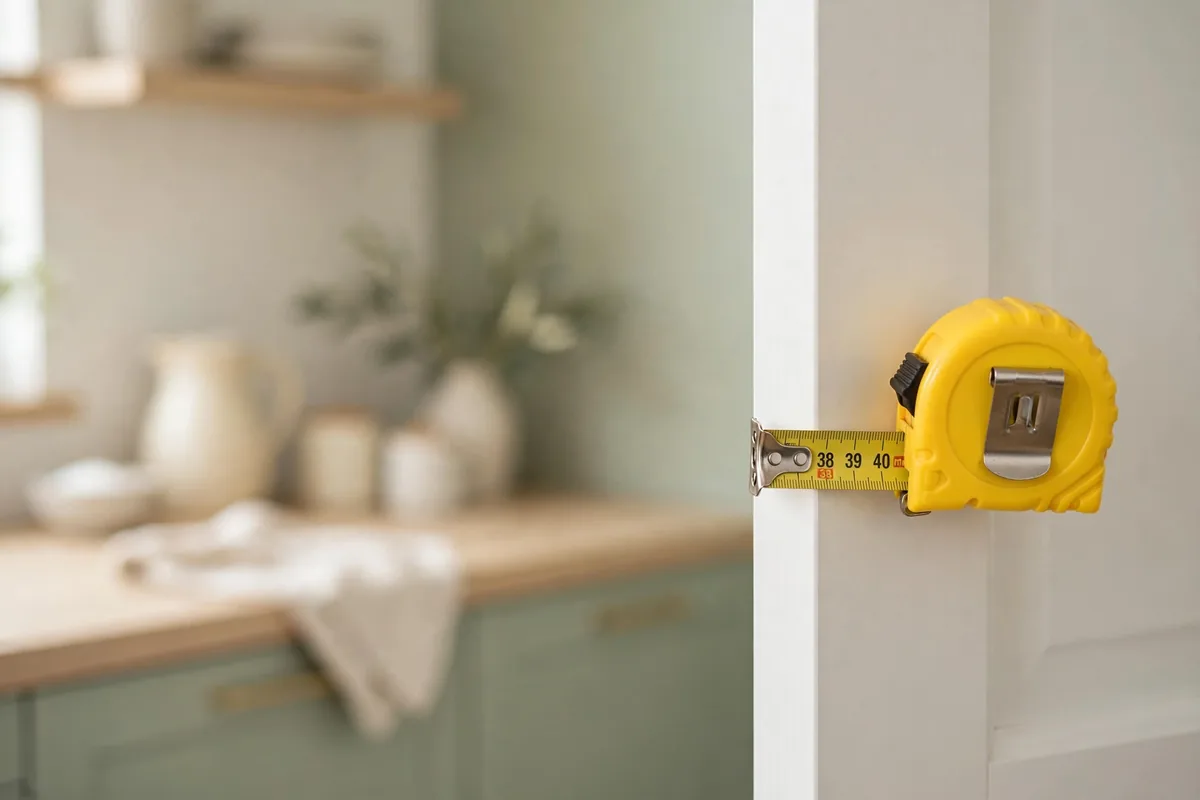
Check three measurements before you buy:
- Door thickness. Most are 1⅜ inches, and hooks are sized for this.
- Clearance between the door and the frame when closed. Shallow racks need at least an inch.
- Clearance to the nearest shelf. Deep baskets can block the door from closing if shelves sit too close.
Close the door slowly on a strip of cardboard taped where you plan to mount, and you’ll see exactly how much depth you have to work with. This two-minute test prevents the most common door-organizer regret: a rack that fits the door perfectly and the pantry not at all. When in doubt, go hook-over. It works on every door type.
Hang an Adjustable Over-the-Door Basket Rack
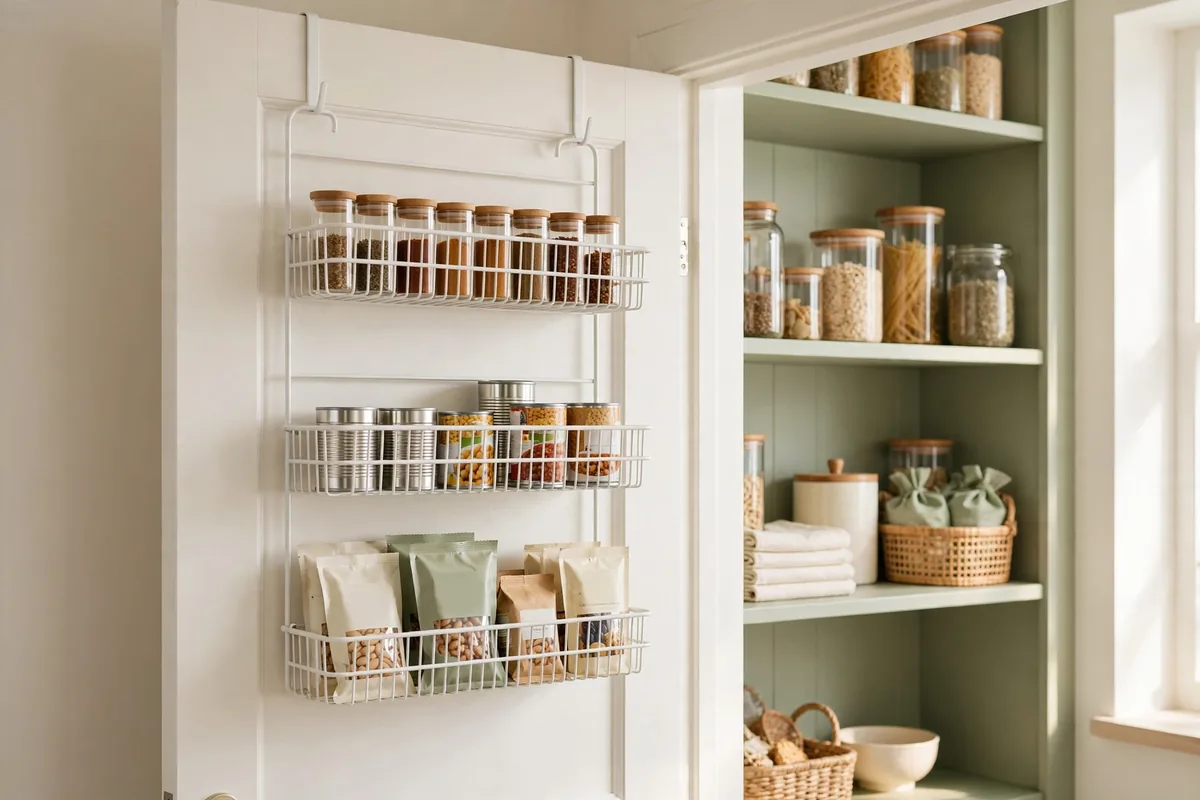
The classic over-the-door wire rack is classic for a reason: no tools, no damage, and it adds the equivalent of two extra shelves in about thirty seconds. Hang it over the top of the door, adjust the basket heights, and load it with the items you grab daily.
Look for racks with adjustable, removable baskets rather than fixed tiers. Raising one basket for tall olive oil bottles makes the whole thing twice as useful. Expect to pay $15 to $25 for a sturdy one; the flimsy $10 versions wobble and eventually warp. Reserve it for light, high-frequency items: spices, seasoning packets, snack bars, small cans. Keep total weight under 15 pounds or the hooks strain and the door starts swinging oddly.
Try a Slim Clear Pocket Organizer for Packets
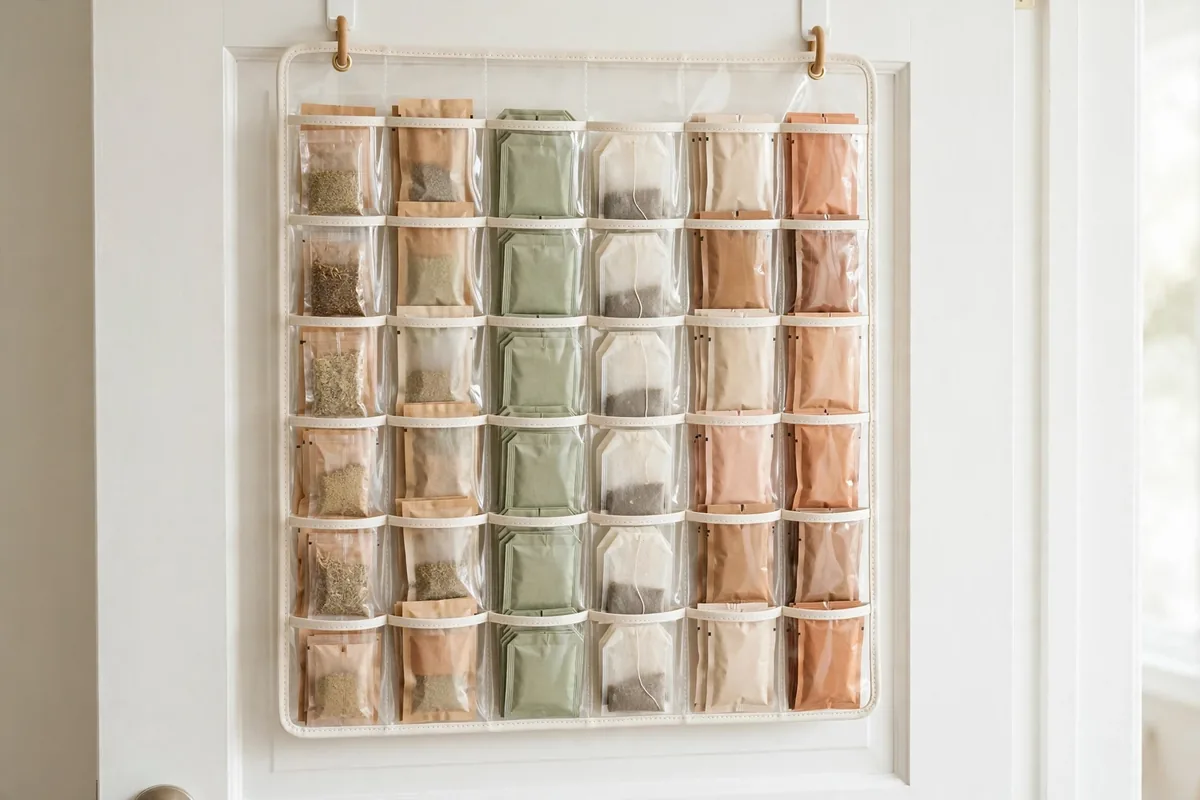
If a wire rack feels too bulky for your door, a clear over-the-door pocket organizer is the slim alternative. The vinyl pockets — originally designed for shoes — are exactly the right size for seasoning packets, gravy mixes, tea bags, and sauce sachets, and you can see everything without unzipping or unstacking.
These cost $8 to $12 and hang from the same over-door hooks, but sit nearly flat (under two inches deep), so they work on doors with tight shelf clearance where baskets won’t fit. Sort pockets by category:
- Seasoning packets and gravy mixes.
- Tea bags and coffee sachets.
- Sauce packets.
- Snack bars.
One caution: cheap vinyl pockets tear at the seams under daily use. Look for canvas-backed organizers with stitched pockets; they cost a few dollars more and last years instead of months.
Wipe the pockets occasionally. Spice dust settles everywhere.
Screw In Narrow Wooden Shelves for a Built-In Look
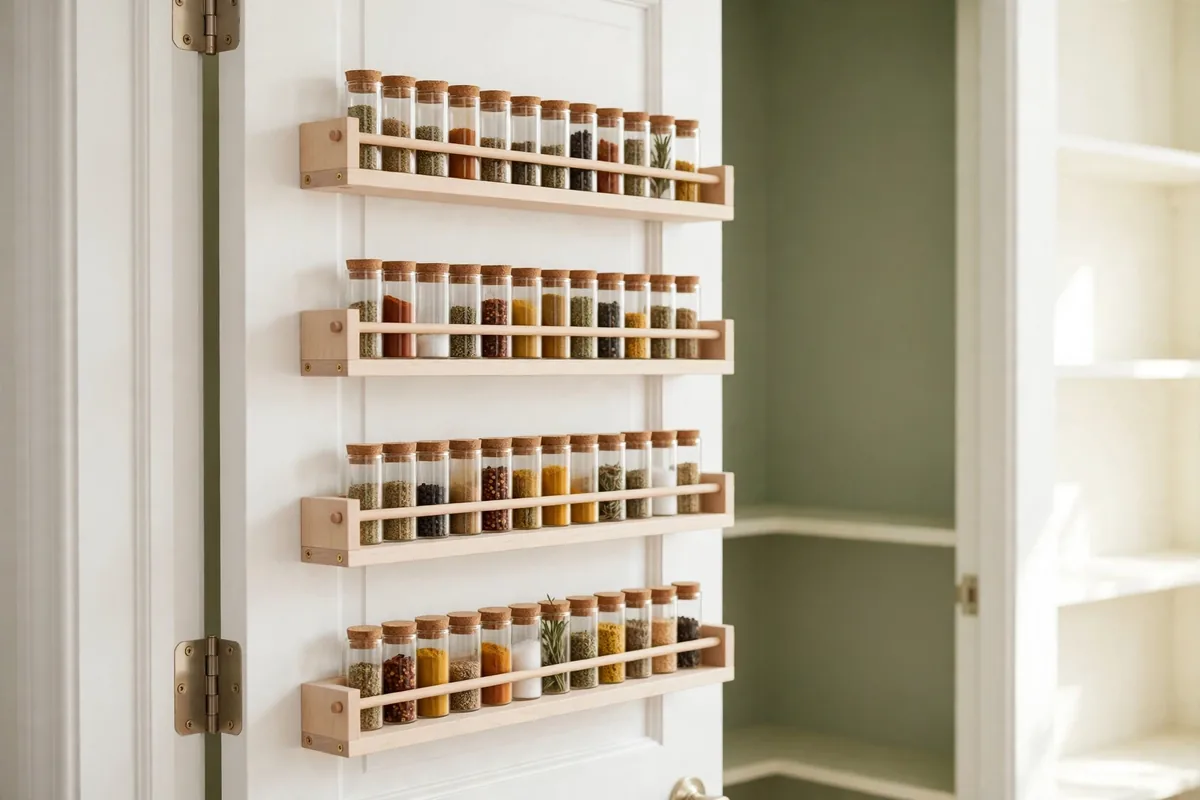
For homeowners, nothing beats the custom look of slim wooden shelves screwed directly to the inside of the door. A few 1×3 pine boards, small L-brackets, and a guard rail of dowel or leather strap cost under $20, and the result looks like the pantry was designed that way. Keep shelves shallow: three inches deep holds spice jars perfectly and still lets the door close. Stain or paint the wood to match your pantry shelves so it reads as built-in rather than bolted-on.
Pre-drill every screw hole to avoid splitting the door, and use screws short enough to never poke through the front face. On hollow-core doors, skip this approach entirely. Screws pull out of hollow doors within weeks.
Mount a Magnetic Board for Spice Tins
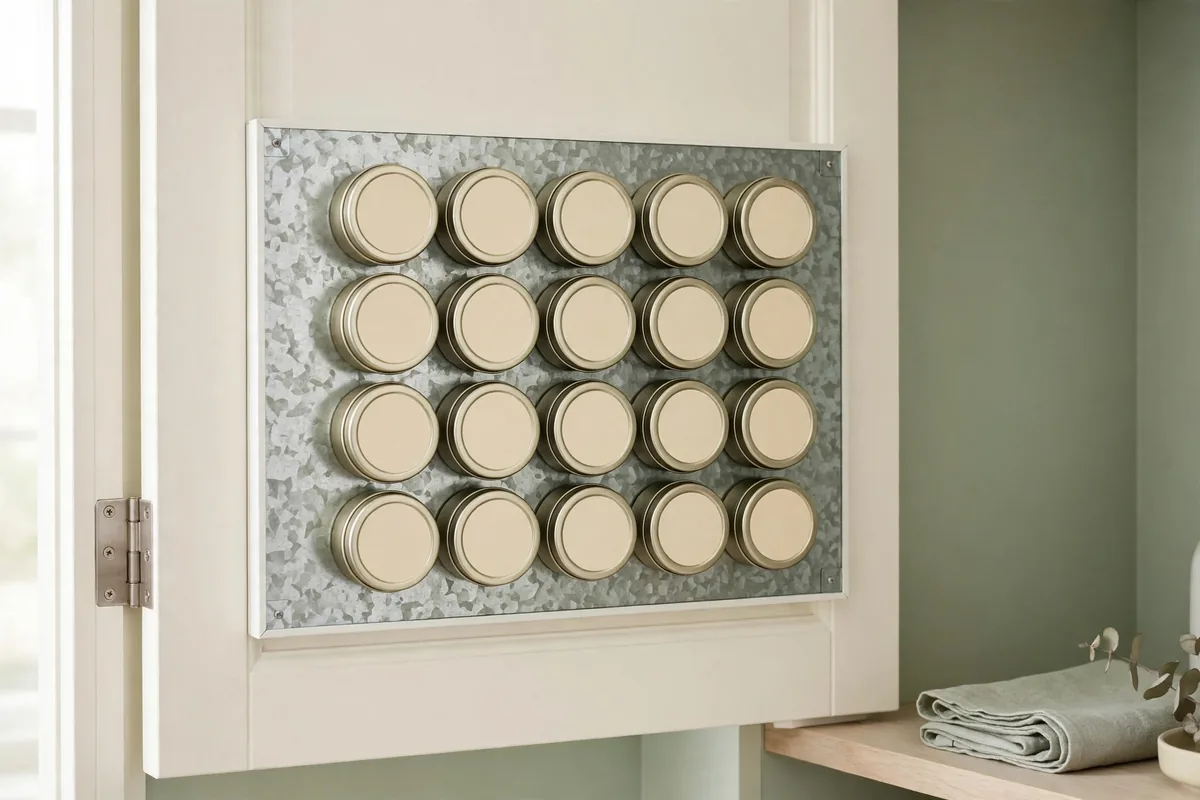
Here’s a small pantry door storage trick that feels like magic: screw or stick a thin steel sheet to the inside of the door, fill small magnetic tins with spices, and your entire spice collection floats on the door in a tidy grid. Every label faces you; nothing hides behind anything.
A 12×18-inch galvanized steel sheet costs about $10 at a hardware store, and a set of 12 magnetic tins runs another $12 to $15. Stick the sheet up with heavy-duty removable strips if you rent, or screw it for a permanent install. Decant spices into the tins and label the lids. A label maker survives pantry humidity better than chalk labels. Keep the tins small (2 to 4 ounces); large tins get heavy and slide.
Add an Adhesive Pegboard Panel With Movable Hooks
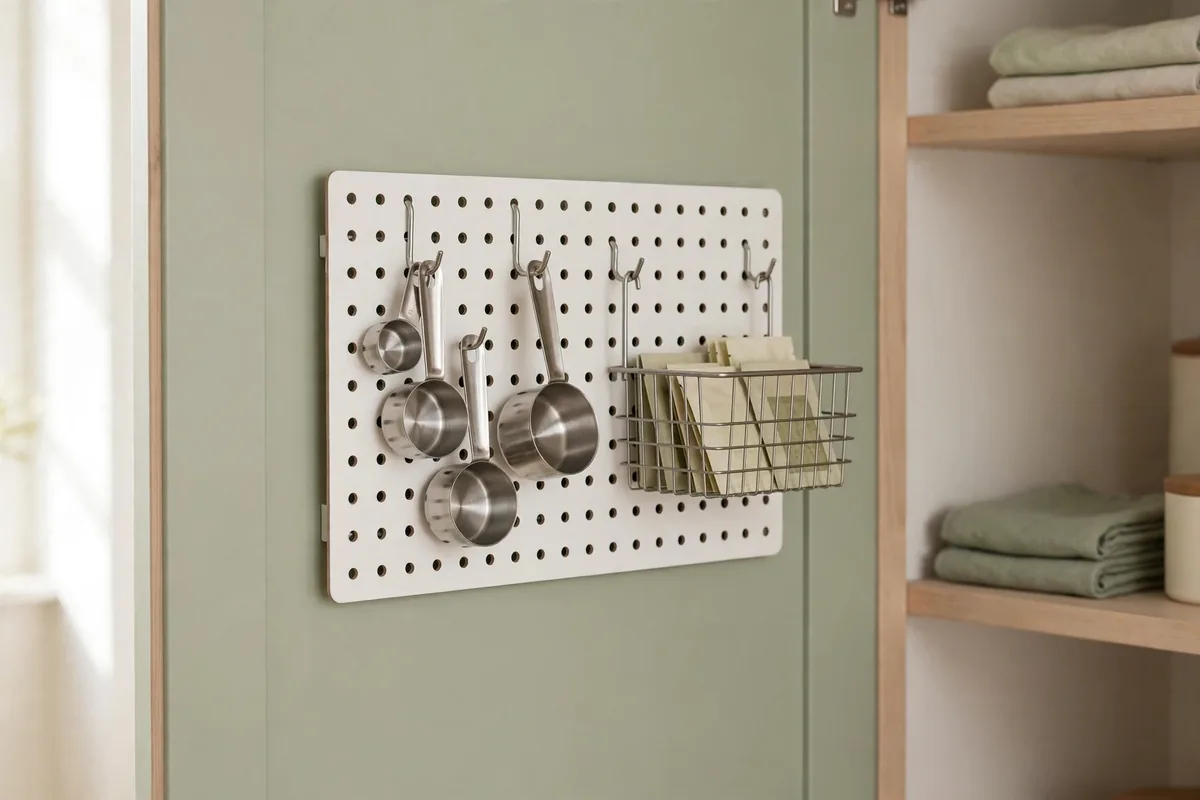
A small pegboard panel stuck to the door interior with removable adhesive strips gives you fully rearrangeable storage: hooks for measuring cups, small baskets for packets, clips for shopping lists. When your needs change, the layout changes in seconds.
Buy the lightweight composite pegboards rather than heavy hardboard. A 12×24-inch panel weighs under two pounds and a $8 pack of hooks and baskets completes the kit. Standard 1-inch hole spacing fits every accessory on the market.
Map your layout on the floor before sticking the panel up, because adhesive strips forgive one repositioning at most. Put daily items at eye level and relegate the rarely-used to the bottom (use locking-tab hooks, since standard ones fall out when the door slams).
Turn the Door Into a Wrap and Foil Station
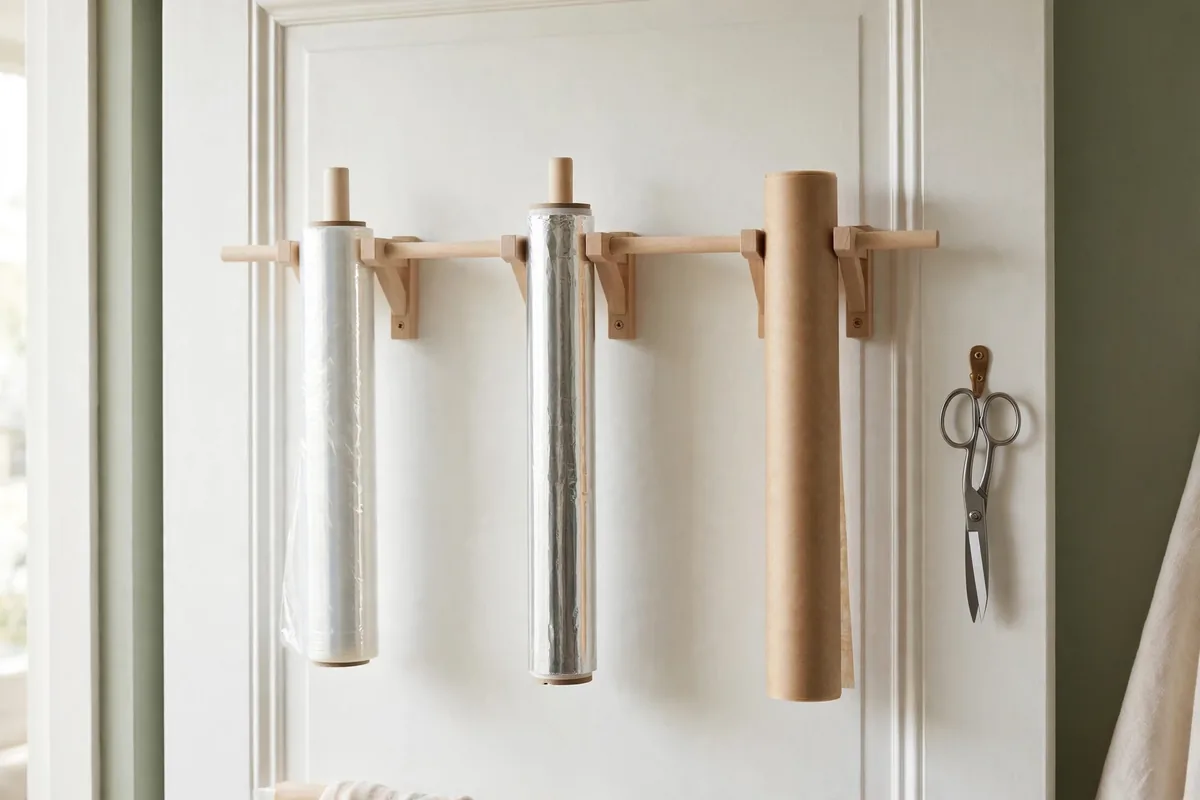
Plastic wrap, foil, and parchment boxes are long, awkward, and always in the way on shelves. Mounted horizontally on the door interior, they become a tidy dispensing station: pull, tear, done. Two short tension rods or a pair of wooden dowels on brackets hold the rolls; the boxes’ built-in cutters still work fine.
Space the rods about 4 inches apart vertically so each roll spins freely without rubbing the one below. This works best on doors with at least 3 inches of clearance to the nearest shelf, so measure before you commit.
Add a small adhesive hook beside the rolls for scissors and a bag of twist ties, and the whole wrapping station lives in one vertical column.
Stick Adhesive Hooks Inside for Tools and Lists
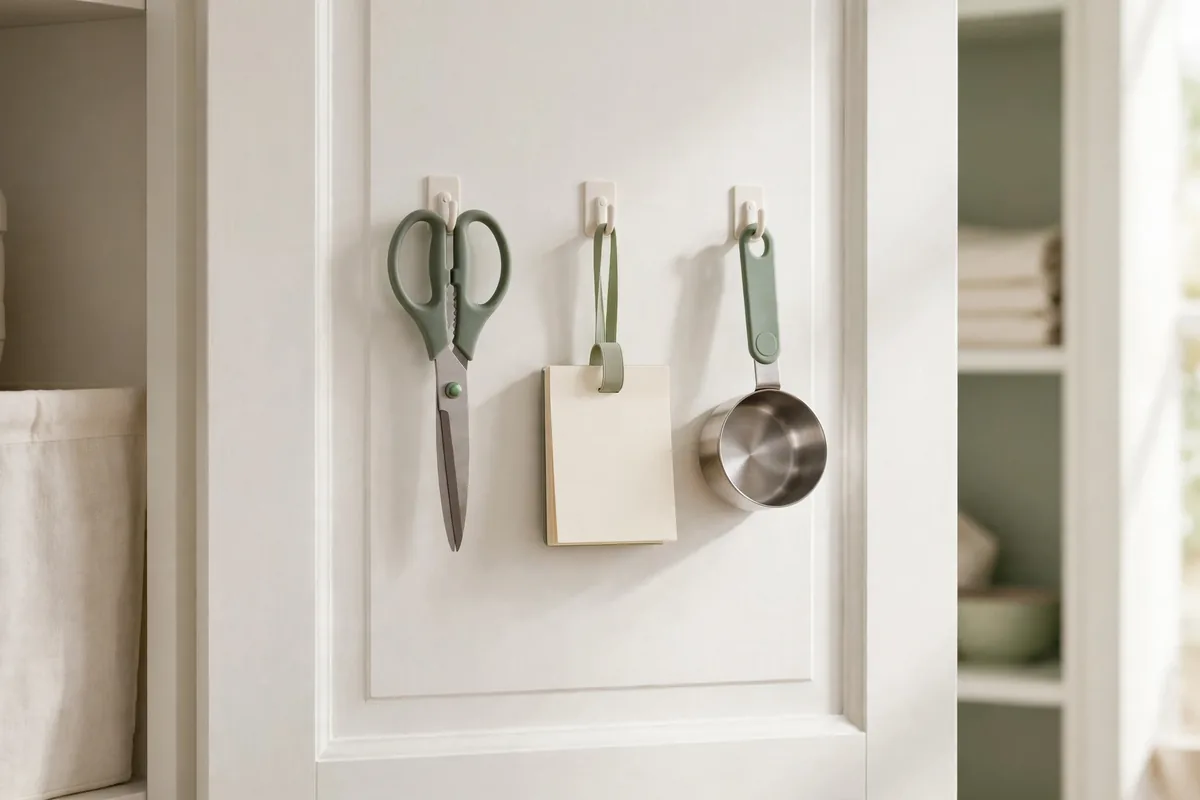
Not everything needs a rack. A handful of removable adhesive hooks on the door interior handles the small stuff brilliantly: the grocery list on a clipboard, a magnetic notepad for the meal plan, kitchen shears, the thermometer you can never find.
Cluster hooks by zone so the layout makes sense at a glance:
- List-keeping tools at eye level, where you’ll actually write on them.
- Utensils lower down, away from the list zone.
- Leave one hook empty for whatever you grab next week.
A $6 pack of assorted hooks covers a whole door, and since they’re removable, you can experiment with placement until it feels right.
Hang a small dry-erase board on two hooks and it doubles as your running inventory. Write down what’s running low as you cook, snap a photo before grocery shopping.
Double Doors? Split Categories Across Both
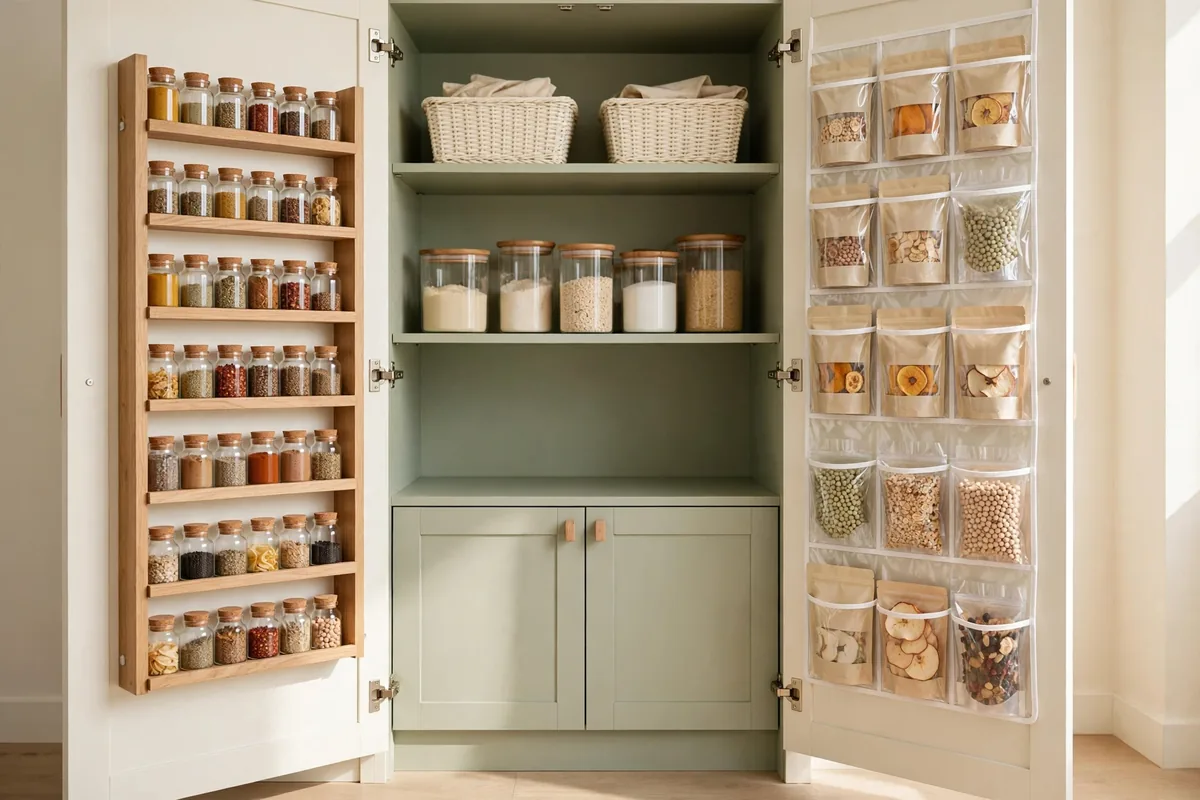
Small double door pantry organization has one golden rule: don’t mirror, specialize. Give each door a job: door one holds cooking essentials (oils, spices, wraps), door two holds snacks and breakfast. Everyone in the house learns the system in a day. Matching racks look intentional, but buy for the contents, not the mirror image. A deep basket rack suits the cooking door; a slim pocket organizer fits the snack door’s lighter items.
Keep both doors’ total added weight balanced so neither swings or sags differently from the other. And leave the center meeting edge clear — organizers that collide when both doors close are the fastest way to hate a good system.
One Narrow Door? Go Ultra-Slim and Vertical
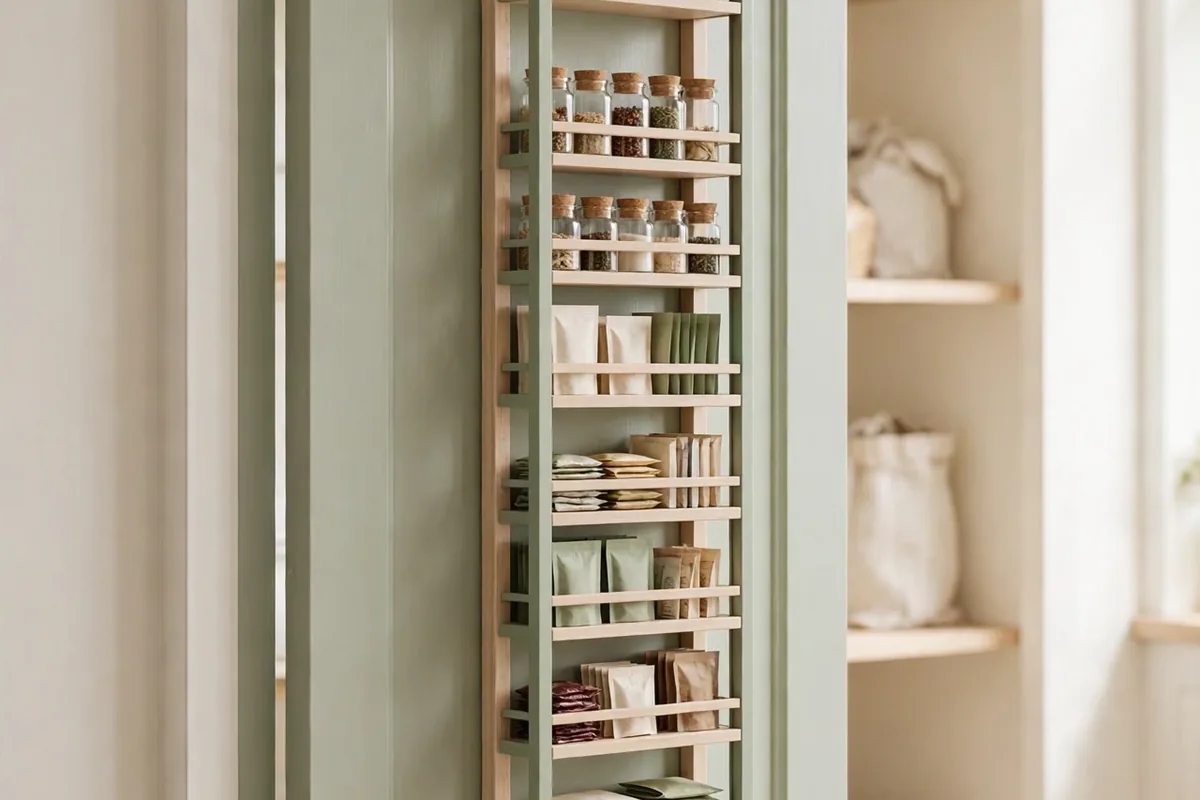
Small one door pantry organization is a different game: one narrow surface, often with shelves close behind it. Here depth is everything. Choose organizers under 2 inches deep, stack them vertically, and think in columns rather than shelves.
A narrow pantry door organizer like a slim 3-tier spice rack (under $15) uses vertical height instead of depth. Stack two if your door is tall enough, keeping daily spices at eye level and backstock up high. Adhesive-mounted narrow ledges work too, one per category.
On truly narrow doors, skip racks entirely and go hooks-plus-board: a magnetic strip for spice tins up top, hooks below for tools. Six inches of door width, fully exploited, beats a bulky rack that stops the door from closing.
Common Mistakes
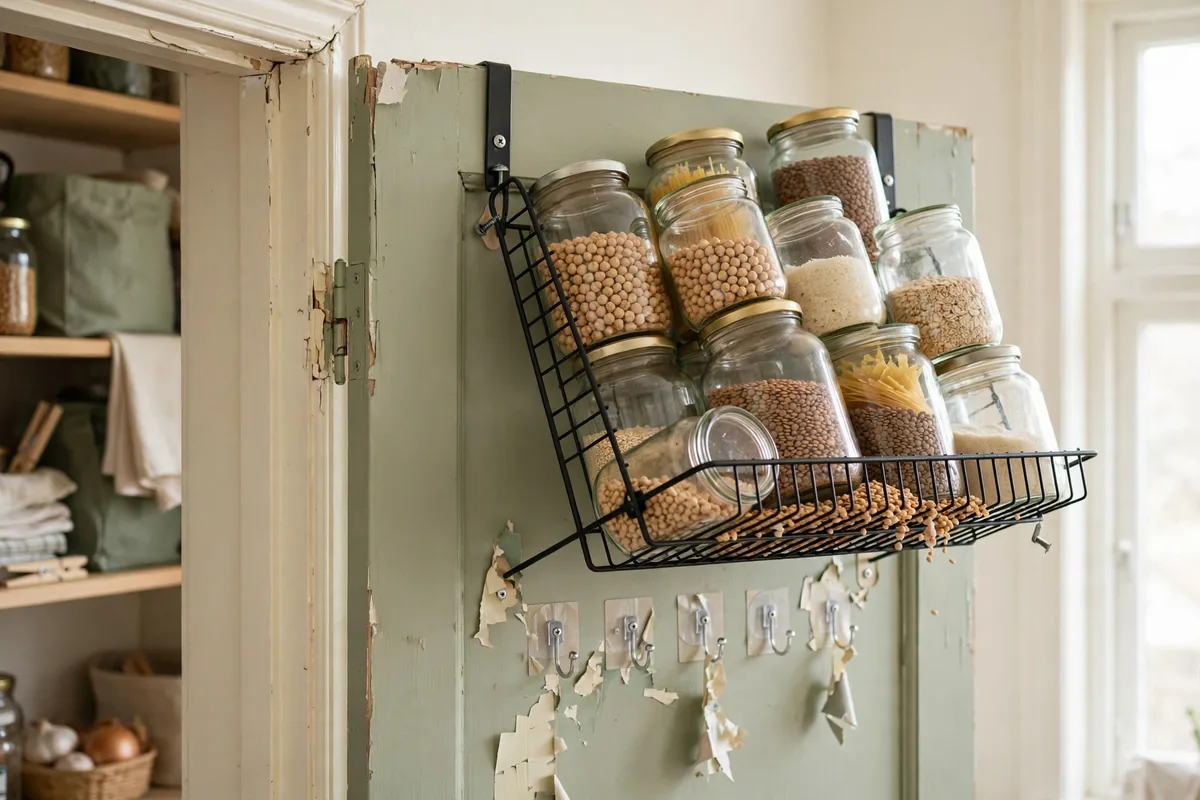
A pantry door will hold a surprising amount, right up until it won’t. Overloading is the fastest way to turn a clever organizer into a door that won’t latch. Keep door storage under 15 pounds total, favor light items, and distribute weight evenly top to bottom.
Second: skipping the clearance check. Measure door-to-shelf depth with the cardboard trick before buying, and confirm the door still closes and latches with everything loaded. An organizer that technically fits but practically fights you gets ripped off within a month.
Third: mounting for your current groceries instead of your habits. Design around what you grab daily: cooking oils, the snacks kids reach for. The right layout is the one your routine shaped.
Where to Start

Learn the door before you load it: its type, its thickness, and how much clearance it has. Pick one mounting style, over-the-door hooks for renters or screws for solid-door homeowners, and install a single rack or pocket organizer. Take a “before” photo; you’ll want it for the comparison later. Live with it for two weeks before adding more. When the door is done, these small pantry cabinet organization ideas will help you sort the shelves behind it.
One well-chosen door organizer frees a full shelf and changes how the whole pantry feels. Add a second piece only when you know exactly what’s still homeless. For everything behind the door, these small pantry organization ideas complete the system.